Category Archives: Audi

News and reviews of Audi electric cars (including plug-in hybrids).

Tesla Cybertruck (Image: Tesla)

In Tesla’s shadow, Audi and Mercedes electric SUVs get no love

A couple of weeks ago, Mercedes-Benz quietly announced the price for its all-electric EQC sports-utility vehicle.

A $67,900 starting price for a luxurious, 200-mile, 402-horsepower luxury crossover is a good start for the EQC brand. But the announcement got completely lost in the shuffle in a week filled with buzz about Tesla’s bulletproof, stainless-steel Cybertruck. Even the deserved attention given to Ford’s Mustang-inspired electric SUV was cut short. So where does that leave the play-it-safe luxury electric SUVs from Mercedes-Benz, Audi, and BMW?

Mercedes-Benz EQC (Image: Mercedes-Benz)

As we reported a week ago, the $75,000 Audi e-tron has not been a big hit. Don’t get me wrong. Audi loyalists and traditional luxury car buyers appreciate the e-tron’s smooth, comfortable, and safe ride. But relatively low sales numbers suggest that the e-tron is not energy-efficient enough. And it doesn’t have enough range at 204 miles. Or it’s being produced in low numbers. Or there aren’t other stand-out attributes besides being a well-made automobile. Who knows?

Audi e-tron (Image: Audi)

But whatever the reason, the first of four all-electric e-tron variants did not stir a big response. Not when it’s facing competition for mindshare from the Cybertruck or an electric Mustang.

Tesla Cybertruck (Image: Tesla)

Read more: Electrek

It’s Time to Go Green!

If you would like to know more about Solar Panels and the PowerBanx range of home battery systems, and get a free instant quote, please complete our online form:

Audi e-tron Sportback (Image: Audi.com)

Audi E-tron Sportback revealed as electric coupe SUV

Improved aerodynamics and rear-wheel drive bring extended 278-mile range for Audi’s second EV

Audi has revealed its second bespoke electric vehicle, the E-tron Sportback, which already has a raft of technical improvements over its E-tron sibling launched last year.

Revealed at the Los Angeles motor show, the coupe is the same weight, length and height as the E-tron and from the B-Pillar forward is identical. The lower part of the rear door, bumper and rear lights are also the same, while the obvious difference – the rear roof line – was cut from the A7.

Audi e-tron Sportback (Image: Audi.com)

That roofline makes the car slightly more aerodynamic than the E-tron, with a 0.25 Cd compared with the E-tron’s 0.27, giving the Sportback an extra 6.2 miles of range.

Changes from the E-tron include decoupling the front and rear axles so the model can be rear-wheel drive, which adds another 6.2 miles of range. Brake pads have been optimised with stronger springs so there’s no friction when not required, creating an extra 1.9 miles of range. Audi has also swapped two water pumps for battery cooling to one larger one, saving weight and cost and using less energy, which adds up to 1.2 miles of range. The useability of power from the battery has increased by 88% to 91% stage of charge, creating more than 6.2 miles of range.

Read more: Autocar

It’s Time to Go Green!

If you would like to know more about Solar Panels and the PowerBanx range of home battery systems, and get a free instant quote, please complete our online form:

Electric cars with the longest range

EV range is a hot topic right now so we’ve listed the new electric cars with the longest range you can buy now…

The first question most people have when a new electric car comes out is how much range it has. ‘Range anxiety’ is a phrase often thrown around to describe the fear EV owners could face when driving their electric car with a level of remaining battery charge that may not get them to their destination. As a result, there’s a certain kudos attached to the electric cars with the longest range as well as a valuable competitive advantage manifested as electric car buyers are attracted to them. If you’re wondering which electric car has the longest range, you can find out below.

Manufacturers have quickly realised the importance of range to existing petrol or diesel car owners and now some electric cars can travel just as far on a single charge as an internal combustion engined (ICE) equivalent can manage on a full tank – all the while producing zero emissions at a cheaper running cost to the owner. The fact that most drivers will very rarely travel the kind of distances in a single day that would deplete a modern electric car’s battery is seen as less important than the need to reassure motorists considering the switch to the new technology.

There’s no doubt that the UK’s charging infrastructure still remains a stumbling block for electric cars and their owners. Charging points are increasing in number across the country and charging times are dropping but the chargers that there are are still often in use compounding the fact that recharging an EV is still noticeably slower than filling up a petrol or diesel vehicle.

With increasing investment from the Government and charging infrastructure providers to improve EV charging options coupled with the appeal of emission-free motoring and cheaper running costs than ICE vehicles, electric cars are more appealing than ever. Manufacturers too are in a race to develop enhanced batteries and electric car technology that will increase the range available in electric cars to the point that range anxiety will become a thing of the past.

Read more: Auto Express

Audi e-tron (Image: Audi)

Audi introduces new cheaper reduced-range e-tron

Audi’s smaller battery pack and lower power e-tron 50 quattro should offer more fleet appeal for the company’s first pure-electric car.

Audi’s new lower-range e-tron 50 quattro sports a 71kWh battery pack and a 186-mile WLTP range, reducing the pack size by 24kWh – the same as the original Nissan Leaf – compared to its big brother e-tron 55 quattro, which offers a 95kWh battery and 241-mile WLTP range potential. The lower weight of the e-tron 50’s battery and by using the front motor only when absolutely necessary, Audi claims the car to be more efficient

Audi e-tron (Image: Audi)

Consequently, the new smaller battery cannot take the same maximum charge rate as its larger sibling, and drops to 120kW from 150kW. Despite the degradation in charge rate, because the battery is smaller, Audi says it will take approximately the same 30 minutes to charge from 0-80% as the more powerful variant at compatible rapid charge stations. An optional connect charging system, available later this year, adds smart charging functions such as off-peak charging, enabling customers to benefit from variable electricity rates by charging their Audi e-tron at more inexpensive times.

The new e-tron 50 quattro is designed to open the e-tron model to a wider audience and it has been confirmed for series production and will launch in the UK in 2020.

Read more: Fleet World

Audi e-tron (Image: Audi)

The best cars eligible for zero per cent benefit in kind in 2020

The government has announced that it is reducing the amount of company car tax that buyers of electric vehicles will be charged in a bid to accelerate the switch to zero-emission vehicles.

For 2020, buyers of all-electric vehicles will be charged zero per cent benefit in kind, with this increasing to one per cent in 2021 and two per cent in 2022.

That means there are potentially massive tax benefits to be had for company car drivers who make the switch – but which EVs are best to take advantage of these savings? We’ve outlined some of our favourites.

Audi e-tron

If you’re looking for a company car, premium appeal, lots of space and a long range are important – and that’s where the e-tron comes in.

Audi e-tron (Image: Audi)

Audi’s first vehicle built to be an EV from the ground up has won plaudits for being a great-to-drive electric SUV that doesn’t require compromises to own. With a range of 237 miles and the ability to charge at 150kW, range anxiety should be a thing of the past.

Read more: AOL

Mercedes-Benz EQC (Image: Mercedes-Benz)

Has the country that invented the car fallen behind on tech?

The relief was palpable from Berlin to Munich when Germany – announced its latest GDP figures.

After months of gloom, modest growth of 0.4pc in the first quarter was heralded as a sign Europe’s largest economy might weather the global slowdown better than most experts predict.

For the first time in six months, Germany is growing again, and the figures follow last week’s announcement that exports rose unexpectedly by 1.5pc in March.

That such lean figures are seen as something to celebrate is a clear indication of how Europe’s industrial powerhouse has slowed – and behind the numbers lurk unpalatable truths.

That there is any growth is down to the service sector and a construction boom fuelled by housing shortages.

Mercedes-Benz EQC (Image: Mercedes-Benz)

The manufacturing sector that is the engine of the German economy, in particular its fabled car industry, is in trouble. Automotive orders fell 5.3pc in the first quarter. In mechanical engineering, the outlook is more bleak, with orders down 7.3pc.

But its growth strategy is built around industrial exports, and that has left it exposed. The car industry – the jewel in Germany’s economic crown – has been through a torrid time since the emissions scandal in 2015, when Volkswagen admitted it had installed software in millions of cars to help cheat emissions tests.

This year EU regulators accused BMW, Mercedes-Benz owner Daimler and VW of colluding to block the development and introduction of clean air technology, raising the spectre of multi-billion euro fines.

Already facing expensive recalls, carmakers have run into the growing wave of diesel bans as cities struggle to bring air quality within EU limits. In Germany alone, Berlin, Hamburg, Munich, Stuttgart and Frankfurt have outlawed older diesel cars.

VW announced investment in a new battery cell production plant this week but German carmakers lag far behind US and Chinese rivals in battery technology. The country that invented the car is rapidly falling behind.

Read more: Stuff

Hyundai Kona Electric (Image: Hyundai)

EV sales stalling as customers left waiting more than a year for a car

Britain’s electric vehicle revolution is being hampered by a “bottleneck” in global battery production, as demand far outstrips supply of zero-emission vehicles.

An investigation by the Press Association found that some dealers were telling customers they could be waiting more than a year if they placed an order for an EV today, with some manufacturers confirming they couldn’t guarantee the number of vehicles coming to the UK in the future.

Kia and Hyundai appear to be the worst affected, with the former’s e-Niro and latter’s Kona and Ioniq Electric experiencing 12-month-plus wait times.

Hyundai Kona Electric (Image: Hyundai)

Jaguar, Tesla, Nissan, Smart, Audi and Volkswagen are all also experiencing delays with their electric vehicle offerings of between two and five months.

A Kia spokesperson blamed global demand and battery supply, calling the e-Niro “a victim of its own success” and adding that the South Korean firm’s 2019 UK allocation of about 800 cars sold out within two weeks of going on sale in January.

He said: “The simple fact is our battery suppliers cannot make battery packs quickly enough for the demand, and if we haven’t got battery packs, we cannot sell the cars.”

Both Kia and its sister company Hyundai said they were taking reservations for 2020 deliveries and would contact interested customers once pricing and delivery time frames were clearer.

Read more: Evening Express

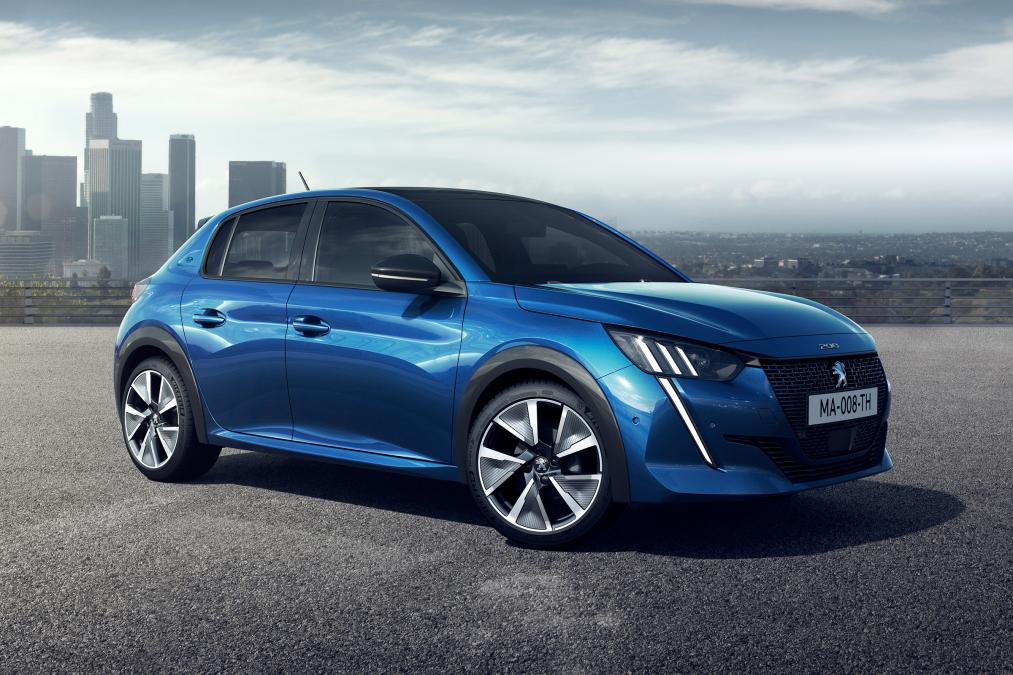
Peugeot e-208 (Image: Peugeot)

More new models, tougher CO2 rules poised to boost EVs, plug-in hybrids

A lack of choice has been one reason that buyers in Europe have not fully embraced full-electric and electrified plug-in hybrid cars.

But that is quickly changing as automakers prepare to launch more models to prepare for tougher CO2 emissions regulations that start to take effect in 2020.

The number of EVs on sale in Europe will increase to 24 this year from 18 last year as new vehicles such as the Audi e-tron, Tesla Model 3, Mercedes-Benz EQC, Mini EV and full-electric Volvo XC40 crossover hit the market, according to LMC Automotive data — which excludes very-low-volume niche models. The number of plug-in hybrids will nearly double to 53 this year from 27 in 2018, LMC says.

But the real jump will come in 2020, when the number of full-electric cars on sale doubles to 48 and plug-in-hybrid choice reaches almost 100, according to LMC data.

Peugeot e-208 (Image: Peugeot)

Next year battery-powered cars underpinned by Volkswagen Group’s flexible MEB electric-car platform and aimed at the mass-market will go on sale. VW brand’s Golf-sized I.D. hatchback will come first but it will soon be followed by MEB cars from the Audi, Skoda and Seat brands. They will have ranges of more than 550 km (342 miles), to ease range anxiety fears among car buyers.

It’s no coincidence that 2020 is also when the EU will start fining automakers if they miss their stricter CO2 reduction targets that are being implemented to help reduce greenhouse gas emissions blamed for contributing to climate change.

“We have only one target, which is to be compliant for CO2 targets for 2020, so 2019 will be the launch of all our electric and plug-in hybrid vehicles,” Maxime Picat, PSA Group’s operations director for Europe, told journalists in January.

Read more: Auto News

VW e-Golf (Image: Volkswagen.co.uk)

Who’s Winning the Electric Vehicle Race?

Automakers are focused on developing models, but ad spending surge is sure to follow

Oil-rich Texas is an unlikely spot for an electric vehicle demand surge. But John Luciano, general manager of a Volkswagen dealership in Amarillo, says his customers are juiced about EVs, suggesting the market might finally emerge from niche status nationally.

“If there is interest in Amarillo, Texas—which is truck country—there is definitely interest,” he says.

Automakers are banking on it. Billions of dollars are flowing into the sector, with Ford, General Motors, Nissan, Honda and other big auto brands making grand pronouncements about their electric vehicle ambitions. Volkswagen Group, whose brands include Audi and Porsche, last week announced it will launch an estimated 70 new electric models in the next 10 years—up from its previous 50-model projection—accounting for 22 million vehicles globally. Audi last month ran a Super Bowl ad touting its claim that one-third of its new models will be electrified by 2025. “A thrilling future awaits. On Earth,” the ad boasted.

VW e-Golf (Image: Volkswagen.co.uk)

But there could be plenty of chills along with the thrills as brands look to overcome long-held consumer concerns about EVs. These include their relatively expensive pricetag when compared to similar gas-powered models, and so-called “range anxiety,” which refers to fears of being stranded, out of power, with no charging station in sight.

Technological advances, including investments in charging infrastructure, will quell some of the angst. But it will be up to marketing departments to get the word out with advertising that reaches beyond tree-hugging EV loyalists or wealthy, tech-obsessed buyers—all without overspending on a sector that remains unpredictable.

Read more: Adage

BMW i3 All-Electric (Image: BMW)

The Three Horsemen of the Apocalypse

By the middle of the next decade, the world as we know it will end. This end is not written in stone, it was not predicted by the Mayans, and it was not foretold by UFO religions.

This end has been sung in the past few years in press releases, statements and interviews. It is the prophesied end of the internal combustion engine. And its killers, the three horsemen of the apocalypse, are finally here, waiting for the fourth to join them.

Until September 2018, the electric car segment has been one of marginal delight, laughter, and discord. Caught between the flamboyant statements showing the impressive sale figures for the Nissan Leaf, the pot-smelling tweets of Elon Musk, and promises made from all over the industry to go all electric, the world watched in amusement and amazement what until now amounted to nothing more than good television.

But no more. The big boys came out to play this month, and their way of playing the game will change the industry. As Turkish used to say, Ze Germans are here. And they are here because they saw something they like.

The three heralds of doom are Daimler, BMW, and Volkswagen. All three, be it in their own name or that of some of their subbrands, revealed in the past two weeks the three horsemen that will shape the future: the EQC, the Vision iNext, and the e-tron SUV.

BMW i3 All-Electric (Image: BMW)

How will they end the ICE world? Through sheer strength, numbers, and services.

Strength. The three are the biggest players in the automotive industry, period. Combined, their power – read sales numbers, financial figures, pretty much everything – dwarfs any competition.

And it is power that gets noticed. Try as it might, Tesla is incapable of single-handedly change centuries of habits and patterns, of changing rules and regulations, of getting enough government support. But when the likes of Daimler, BMW and Volkswagen step into the room, everything changes.

Numbers. Daimler plans to have on the roads ten different all-electric cars by 2022. BMW has 12 of them in the works, all to be released by 2025. Volkswagen shames both of them with plans to launch 80 new models across its brands by the same year.

Read more: Auto Evolution