Category Archives: Solar Power

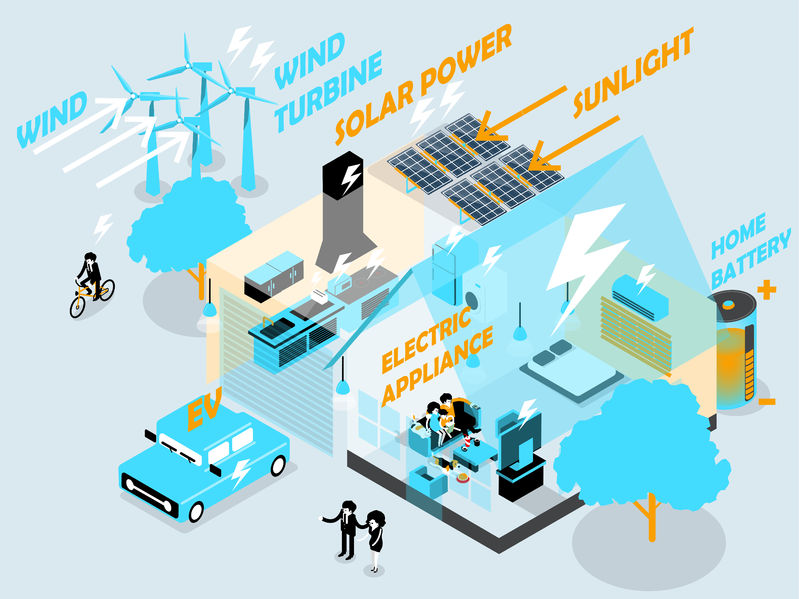
The Transition Trinity: Electric Car, Solar and Home Battery

Fuel Included was founded in 2014 in response to the threat of global warming. Our aim is to promote sustainable technologies at affordable prices, a mission that becomes ever more important as global climate changes accelerate.

59210374_EnergyHome_IsometricGraphic_123RF
Initially we concentrated on electric cars but as they become increasingly mainstream we are able to focus on other green technologies. We now offer our own home battery system, the PowerBanx, to go along with solar panel installs.

While the Global Energy Transition often seems to be about big infrastructure projects, like offshore windfarms and grid battery storage, what’s happening at the home level is arguably more important, in terms of the impact on the individual and on the future requirements for national grids.

For years we have seen the rise of solar power as it becomes cheaper and undercuts other forms of power generation. More recently, we have seen the spread of electric vehicles (EV), as the replacement of fossil fuel vehicles accelerates.

Finally we are seeing the widespread introduction of battery systems (such as our PowerBanx) into homes; all already have solar and many already have an EV.

Read more: LinkedIn


UK’s ‘largest solar carport’ – with additional storage – planned for St Ives Park & Ride

Cambridgeshire County Council has received planning permission for what it claims will be the UK’s largest solar carport.

The installation, which will be developed at the site of St Ives’ Park & Ride, is anticipated to be 948kW in size and combined with a battery storage system as part of a wider demonstrator project with collaboration from distribution network operator UK Power Networks (UKPN).

Planning documents associated with the proposals do not include any prospective size of the storage unit.
The council is combining with central government, St Ives town council, UKPN and local businesses in a bid to turn the scheme into a replicable model for future smart grid deployment. Should it prove successful, it is hoped that further systems of similar size and scope could be deployed elsewhere.

The £3 million cost of the project is to be supported by European Regional Development funds, which will provide half, while the council will invest the remaining funds.

The car park will be covered by three main canopies fitted with solar modules. Generated electricity will be used first and foremost to power LED lighting and adjacent electric vehicle charging points.

Any surplus will be stored using the battery system and sold to local customers, helping to finance the project’s development.

Read more: Solar Power Portal

China just built a 250-acre solar farm shaped like a giant panda

The Panda Power Plant in Datong, China. China Merchants New Energy/Panda Green Energy

The Panda Power Plant in Datong, China.

Most solar farms align their solar arrays in rows and columns to form a grid.

A new solar power plant in Datong, China, however, decided to have a little fun with its design. China Merchants New Energy Group, one of the country’s largest clean energy operators, built a 248-acre solar farm in the shape of a giant panda.

The first phase, which includes one 50-megawatt plant, was completed on June 30, according to PV magazine. The project just began delivering power to a grid in northwestern China, and a second panda is planned for later this year.

Called the Panda Power Plant, it will be able to produce 3.2 billion kilowatt-hours of solar energy in 25 years, according to the company. That will eliminate approximately million tons of coal that would have been used to produce electricity, reducing carbon emissions by 2.74 million tons.

China Merchants New Energy Group worked with the United Nations Development Program (UNDP) to make the Panda Power Plant a reality. The project is part of a larger effort to raise awareness among young people in China about clean energy, the UNDP wrote in a statement.

The Panda Power Plant in Datong, China will stretch 1,500 acres when complete.

The groups hope to build more panda-shaped solar plants throughout China in the next five years.

Source: Business Insider

Tesla install to bring Europe’s largest community battery to Nottingham

What is expected to be Europe’s largest community battery is set to be installed at an innovative regeneration scheme in Nottingham, with a 2MWh Tesla battery to be deployed in September as part of a housing scheme alongside community solar.

The £100 million Trent Basin project is a new housing development built at the site of an inland dock previously derelict for around two decades. It is expected to deliver 500 homes over five phases with 375kW of rooftop and ground mounted solar and the Tesla battery to be installed by EvoEnergy.

Representatives of the energy consortium behind Trent Basin gather to mark the launch of the pilot scheme. Image: Blueprint

In an innovative use of the solar farm, planning permission has been granted on the basis that the site shall be cleared by 28 February 2020. By this time, the panels from the ground mounted installation will be removed and installed on new homes built as part of the development.

With the addition of the battery storage facility and ground source heat pumps which will also be used on site, Trent Basin is intended to provide a new way to use renewable energy sources by generating, storing and distributing all at a neighbourhood level. A local energy company, Trent Basin ESCO, has already been set up to facilitate the local energy services.

According to project lead Blueprint, the battery will store energy from the local renewable generation to be used on site while also performing grid arbitrage and smoothing out the peaks and troughs of supply and demand.

Read more: Solar Power Portal

Solar pioneer David Mills’ life in the burbs – with PV, two EVs, and battery storage

Solar pioneer David Mills says if he can do it, almost anyone can. And by doing “it”, he means powering his suburban house and his two electric vehicles largely through rooftop solar, and storing excess output in battery storage.

For the last two years, Mills  has been been working on integrating solar PV with battery storage, a hot water system and two EVs – a Tesla Model S85 and a BMW i3 – all in a conventional grid-connected home.

And, he admits, it is not a particularly energy efficient home, or even very well placed for solar. His home is angled about 45°C from the north, and one of his two solar arrays is shaded by trees, particularly in winter.

The house – built in 1921 – has no special seals, window coatings or double glazing. In other words, it is not particularly energy efficient. And it is not exactly low usage either. Apart from the demands of the EVs, there are five adults and three of them are young “profligate” users of electricity.

But here is his cheerful and re-assuring message, particularly for the many people in the suburbs looking at how they can reduce their soaring electricity bills.

“If our home can do it, then any home can do it.”

Mills estimates that if solar PV was being installed today, then almost 2/3 of the energy could be supplied for this house and the two EVs. Were the site less shaded by trees, it had better insulation, and if higher quality solar PV panels were included, then solar could provide a lot more.

“The impact of storage is also likely to be significant,”

he says.

“It can almost eliminate peak and shoulder period imports on many days, even in rainy and cloudy weather if the storage draws from the grid during off-peak periods. Such storage should make the grid more stable, especially in hot weather as experienced in eastern Australia in February.”

Read more: One Step Off The Grid

Solar Charge Points charging electric cars (Image: T. Larkum)

‘Spectacular’ drop in renewable energy costs leads to record global boost

Falling solar and wind prices have led to new power deals across the world despite investment in renewables falling

The Solar Charge Points at Devon Cliffs - and only 2/3 of the cars shouldn't be parked there! (Image: T. Larkum)
Solar Charge Points for electric cars (Image: T. Larkum)

Renewable energy capacity around the world was boosted by a record amount in 2016 and delivered at a markedly lower cost, according to new global data – although the total financial investment in renewables actually fell.

The greater “bang-for-buck” resulted from plummeting prices for solar and wind power and led to new power deals in countries including Denmark, Egypt, India, Mexico and the United Arab Emirates all being priced well below fossil fuel or nuclear options.

Analysts warned that the US’s withdrawal from the Paris climate change agreement, announced last week by Donald Trump, risked the US being left behind in the fast-moving transition to a low-carbon economy. But they also warned that the green transition was still not happening fast enough to avoid the worst impacts of global warming, especially in the transport and heating sectors.

The new renewable energy capacity installed worldwide in 2016 was 161GW, a 10% rise on 2015 and a new record, according to REN21, a network of public and private sector groups covering 155 nations and 96% of the world’s population.

The new record capacity cost $242bn, a 23% reduction in investment compared to 2015, and renewables investment remained larger than for all fossil fuels. Subsidies for green energy, however, are still much lower than those for coal, oil and gas.

New solar power provided the biggest boost – half of all new capacity – followed by wind power at a third and hydropower at 15%. It is the first year that the new solar capacity added has been greater than any other electricity-producing technology.

“A global energy transition [is] well under way, with record new additions of installed renewable energy capacity, rapidly falling costs and the decoupling of economic growth and energy-related carbon dioxide emissions for the third year running,”

said Arthouros Zervos, chair of REN21.

Read more: The Guardian

Tesla In-Car App To Soon Offer Solar Roof & Powerwall Monitoring

Soon Tesla owners will be able to check solar roof and powerwall status, as well as manage settings via an in-car app.

Elon musk went on a bit of a Tweetstorm again recently, and out of it came some new information. Being that Musk believes that eventually most customers will also go solar, and invest in a Powerwall, the company has already taken steps to further integrate the products.

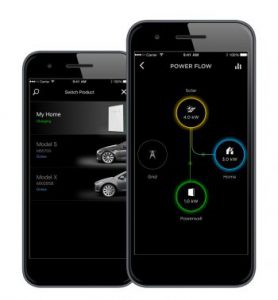
The updated mobile app allows those with solar roofs and Powerwalls to check power status and adjust settings via their devices. This is simply on par with many of the new home management systems in which users can mobily adjust their thermostat, engage or disengage alarms, monitor energy usage, etc.

Basically, with access to the app, Tesla owners can check how their home system is using power. Is the power coming from the Powerwall, or the solar system, or from the local grid? This way, you can see exactly what is happening at any given time.

We recently reported about YouTuber, DeRage, tapping into Tesla’s API to create a program that shows vehicle and home data all in once place. He used a program called Splunk to design dashboards for such information.

Mobile App now shows Powerwall and Solar energy flow

Soon, if you own a Tesla vehicle and a home solar system, you will be able to do this yourself, using the car’s touch screen. Being able to see vehicle energy consumption, along with home energy consumption, and especially being able to tie them together, will be a helpful tool. If you happen to have a non-Tesla home system, something like DeRage designed would be the next best thing.

This is just another way for Tesla and Musk to further tie all products together, in hopes that consumers will come to Tesla for all their needs, instead of a third party.

Source: InsideEVs

Consumer Reports Runs The Numbers On Tesla’s Solar Roof

Consumer Reports, which six months ago was skeptical about the viability of Tesla’s Solar Roof product, has once again “done the math” using newly announced pricing estimations.

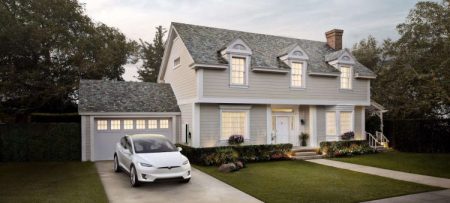
Tesla Solar Roof in Slate, Due for Release in 2018

According to CR, it’s not easy to weigh value of the offer, as company’s online calculator

“relies upon some important assumptions and predictions that delve deep into the economy of residential solar power in the U.S.”

In its first analysis, CR said that costs need to be below $24.50 per square foot to match costs of conventional roofs (including the cost of Powerwall batteries, but excluding solar incentives or rebates). A 3,000-square-foot Solar Roof would then cost $73,500.

Tesla announced an estimated cost at $21.85 per square foot, which would be $65,550 for the same example house.

After using Tesla calculator for example homes in New York, Texas and California and a 30 years period, CR found out that in some cases Tesla offers a good savings opportunity, although in other cases, it doesn’t look so good.

However, even if one’s first calculations seem tempting, CR advises to answer some questions before placing deposit.

Read more: Inside EV’s

How Much Does Solar Panel Battery Storage Cost?

Your solar panels are converting light into electricity. This means that they are generating electricity during the day, when the house is often empty. Most commonly, this electricity is fed back to the grid.

Light, efficient, eco-friendly battery technology is advancing very fast in response to market demand. It is not by any means cheap yet, but prices are falling as the technology improves and battery storage is beginning to offer a genuine option for increasing savings, reducing your dependence on the grid and further reducing your carbon footprint.

Once you are sure that you are a good candidate to benefit from adding battery storage to your solar panels, the key factor in calculating the cost and potential return lies in the size of battery you will need and the amount of surplus electricity you generate.

What is your load profile?

Homes with 2.5kW to 4kW solar panel systems are generating somewhere between 1,700kwh and 3,400kWh per year. Suitability to benefit from adding or including battery storage will depend on what is called your Load Profile. Put simply this is the way in which you consume your electricity. If you are already using all or most of the electricity you generate then battery storage will bring you little value. If, however, you are generating a significant amount of your electricity when you are not in your house to use it then battery storage becomes a better option.

A qualified solar engineer will help you [choose] the size of battery you require to store your excess solar electricity. Installation costs tend to remain similar no matter the size of the battery. The size of the battery will, of course, affect the cost.

Tesla Powerwall 14kW

The new Tesla 14kW Powerwall battery will cost you approximately £6,500 including installation.

Sonnen

The German company Sonnen, offer a modular system starting at 2kW with additional 2kW batteries available up to a total of 16kW. Approximately £3,200 will install the basic 2kW system including inverter and controls which can take you up to the full 16kW. Each 2kW add-on will then cost a further £850.

LG Chem

The LG Chem range includes 3.3kW, 4.2kW and 9.8kW options for which you can expect to pay £2,200, £3,300 and £5,500 respectively. You should add approximately £1,000 to these prices for installation.

Calculating the savings you can expect from adding battery storage is complicated and requires both the expertise of a qualified installer and knowledge of your own particular system and load profile. If you think that battery storage would be a viable option then your next step should be to book a visit from a solar specialist who will be happy to do the calculations with you and advise you on your best options.

Read more: Green Business Watch

Solar panels, EV chargers required in new homes in Fremont, CA

Half a century ago, the General Motors assembly plant was the largest employer in Fremont, California, and the town was known for its dragstrip.

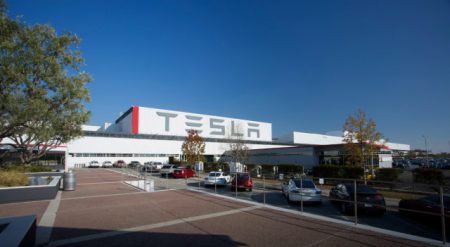
Today, that plant makes Tesla electric cars and Fremont is a part of the San Francisco Bay Area’s Silicon Valley, creating advanced technology for the world.

Tesla Factory, Fremont, California

The city has now taken another step into the future, requiring that all new houses be delivered ready for the installation of electric-car charging stations.

According to the East Bay Times, the city of Fremont has announced that any new housing project must include both solar panels and the electrical wiring required for the installation of a charging station.

The town, across the bay from Palo Alto—where a similar regulation was adopted in 2013—prides itself on being the ZIP Code with the highest concentration of electric-car owners in the state.

That makes it likely to have the highest such concentration in the U.S.

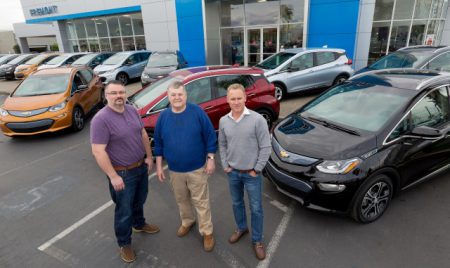
First 2017 Chevrolet Bolt EV Buyers, Fremont, California: Bobby Edmonds, Bill Mattos and Steve Henry

When the first 2017 Chevrolet Bolt EV electric cars were sold in December, Fremont Chevrolet was the site—because it sells more Chevy Volt plug-in hybrids than any other dealer in the country.

It’s exactly 3 miles from the dealer to the Tesla factory, formerly the GM-Toyota joint venture known as New United Motor Manufacturing Inc. or NUMMI.

The required coverage of the solar panels will be determined by the size of the new project.

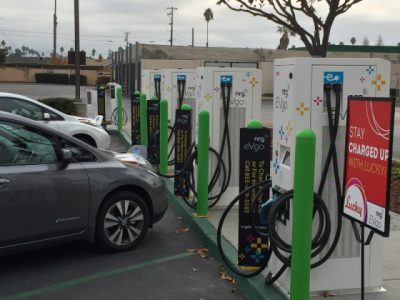
EVgo DC Fast-Charging Site in Fremont, California.

As for the charging stations, the wall hardware itself will not be mandatory.

New buildings will, however, have to be equipped with the electrical setup needed for later installation.

For commercial or multifamily projects, the ruling goes even further, requiring that at least 10 percent of the parking spaces have charging stations installed

Read more: Green Car Reports