Category Archives: Pollution

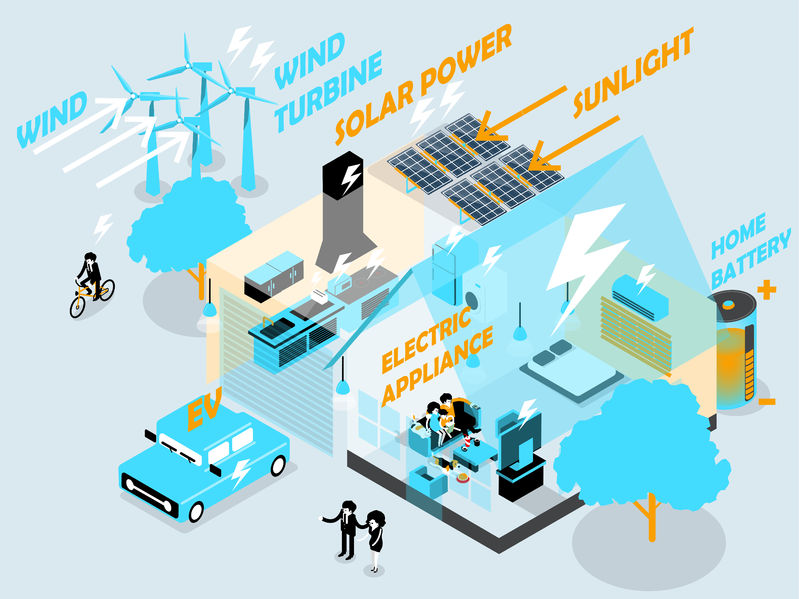
The Transition Trinity: Electric Car, Solar and Home Battery

Fuel Included was founded in 2014 in response to the threat of global warming. Our aim is to promote sustainable technologies at affordable prices, a mission that becomes ever more important as global climate changes accelerate.

59210374_EnergyHome_IsometricGraphic_123RF
Initially we concentrated on electric cars but as they become increasingly mainstream we are able to focus on other green technologies. We now offer our own home battery system, the PowerBanx, to go along with solar panel installs.

While the Global Energy Transition often seems to be about big infrastructure projects, like offshore windfarms and grid battery storage, what’s happening at the home level is arguably more important, in terms of the impact on the individual and on the future requirements for national grids.

For years we have seen the rise of solar power as it becomes cheaper and undercuts other forms of power generation. More recently, we have seen the spread of electric vehicles (EV), as the replacement of fossil fuel vehicles accelerates.

Finally we are seeing the widespread introduction of battery systems (such as our PowerBanx) into homes; all already have solar and many already have an EV.

Read more: LinkedIn


£12.50 London Ultra-Low Emission Zone expansion confirmed

London Mayor Sadiq Khan has confirmed the London Ultra-Low Emission Zone (ULEZ) will be expanded to reach the North and South circular roads from 25 October 2021.

It will be an expansion of the upcoming central London ULEZ, which goes live in April 2019.

Non-compliant vehicles will be charged £12.50 a day to enter the ULEZ – and, unlike the London Congestion Charge, fees apply 24 hours a day, 365 days a year.

Controversially, the ULEZ is particularly onerous for diesel car drivers. Only vehicles meeting Euro 6 emissions standards, introduced in 2014, will be exempt from the charge. The rules are more lenient for petrol vehicles; only those that don’t meet Euro 4 standards, introduced in January 2005, need to pay the charge.

It means that by 2021, says the Mayor of London’s office, petrol cars aged up to 15 years old will be exempt from the charge – but only diesel cars no more than six years old will escape it.

Expanding the 2019 central London Ultra-Low Emission Zone in 2021 will see it become 18 times larger. The Mayor’s office estimates this will affect 100,000 cars, 35,000 vans and 3,000 lorries a day.

Read more: Motoring Research

Sir Richard Branson: Ditch diesel for electric cars before 2040

Sir Richard Branson says plans to ban the sale of new petrol and diesel vehicles from 2040 need to be brought forward.

The Virgin founder funds a team in Formula E, the motorsport which is pioneering new technologies for electric cars.

He says the deadline should be brought forward to 2025, in line with some other European countries.

Roads minister Jesse Norman says 2040 is a “sensible compromise”.

Newsbeat has spent the last seven months following Formula E, the competition where electric cars reach 140mph racing on streets around the world.

We’ve followed DS Virgin Racing, the team owned by Sir Richard, who says that “every month the technology is getting better and better”.

“The teams want to be the best out there, so they’re pushing for improvements in battery technology.

“That will mean that when more cars are driving on batteries, they’ll be able to go hopefully a few hundred miles rather than maybe 150 or 200.”

Read more: BBC

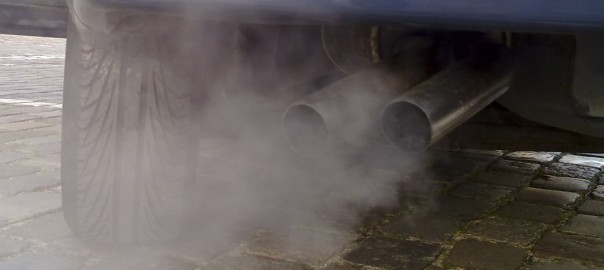
Car exhaust pollution (Image: Wikipedia)

An average car in inner London will be responsible for almost £8,000 in health costs

An average car in inner London will be responsible for almost £8,000 in health costs during the course of its lifetime, researchers say.

Pollution produced by vans and cars costs almost £6 billion in damage to health annually in the UK, according to experts from Oxford and Bath universities.

They said that exposure to nitrogen oxides and fine particulate matter caused by vehicles – particularly those which run on diesel – is linked to about 40,000 premature deaths a year.

Car exhaust pollution (Image: Wikipedia)

This translates into billions of pounds in associated costs for healthcare and “life years lost”, the study, released ahead of Clean Air Day on June 21, found.

On average across the country, health costs from air pollution that could be attributed to a typical UK car running on fossil fuels over its 14-year lifetime amount to £1,640, while a van costs £5,107 over its nine years on the road.

Read more: Standard

Car exhaust pollution (Image: Wikipedia)

Westminster schools to be protected by new ‘no-pollution zones’

The council has promised to invest £1 million in creating pollution barriers around its primary schools.

The clean air fund aims to cut harmful emissions by bringing in road closures, banning polluting vehicles, replacing old boilers and planting gardens around the schools.

The zones will be funded by Westminster City Council’s D-charge — a surcharge of £2.45 an hour for pre-2015 diesel vehicles parking in areas of the city. The surcharge has raised more than £1 million in its first nine months and reduced the number of polluting vehicles driving through the borough by 14 per cent.

Car exhaust pollution (Image: Wikipedia)

The council said it will also extend its D-charge across the whole borough in phases.

Council leader Nickie Aiken said: “As parents we all want to ensure our children can grow up in a safe and healthy environment.

“Air quality is the number one concern for our residents and it is crucial that we tackle poor air quality for the young people in our schools.

“Introducing the first no-pollution zones in Westminster will cut the number of vehicles around schools, encourage cleaner, greener habits and make a big difference locally.”

Read more: EcoBuild

New UK real-world diesel test to cut NOx emissions by 66%

A new real-world test for diesel vehicles will begin later this week to more accurately measure emissions of vehicles sold in Britain.
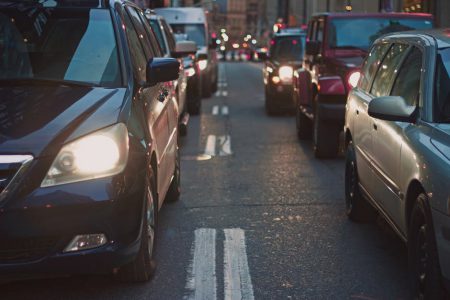
Starting from 1 September, tested cars will be driven on urban and rural roads as well as motorways, with measuring equipment placed on their exhaust system.

The evaluation, which replaces current lab-based tests, will last 90 minutes and focus on cars due to reach market in Britain in the coming months. From 1 September 2019, all existing cars on sale will also be retested with this new system.

Government estimates suggest the stricter tests, rolled out as part of European-wide reforms following the Volkswagen Dieselgate scandal, will help to cut nitrogen oxide emissions from new diesel vehicles by two-thirds.

The Government claims that this reduction will be possible because where some cars were shown to have performed better in the lab than in real life, now they will have to conform to emissions limits in public – something that will force manufacturers to produce even cleaner powertrains.

A diesel-testing programme last year found that several Euro 6 diesel cars were emitting around six times more nitrogen dioxide in the real world than in the lab.

Certain models, such as those caught up in Dieselgate, were engineered to perform better in lab conditions, therefore deliberately skewing their CO2 and NOx outputs in order to be categorised as lower-emitting vehicles. Others saw rises in emissions after 20 minutes – the duration of the lab test process.

Transport Minister Paul Maynard said the new testing structure came as part of broader ambitions to improve air quality in Britain. From 2020, councils will be given power to enforce tougher restrictions on the highest polluters of nitrogen oxide.

“We are taking strong action to clean up our air and these tough new emissions standards will reduce dangerous pollutants,” he said. “This will ensure all vehicles meet rigorous standards when driven on our roads – and we are going even further by tightening requirements again in 2020.”

Earlier this year, the UK Government revealed plans to ban the sale of pure combustion engine cars from 2040. Some critics, including Aston Martin CEO Andy Palmer, believe the legislation will have little impact, because the market is naturally heading in this direction.

Source: MSN /Autocar

Getting Poisoned in my Electric Car

I’m on my way down the M1 from Northampton to Milton Keynes and the motorway has come to a halt. It’s not clear exactly what’s happened, but a bit of Googling on my phone indicates there’s an on going ‘police incident’. Apparently a suspicious object has been found under a bridge near Newport Pagnell. This started an explosive device incident. However, further investigation seems to have turned it into a chemical spillage incident. Anyway, the motorway is shut both ways between Junction 15 and J14. I joined the back of the queue about 8.30am and it’s now 11.30. People are milling around and chatting, and generally behaving well. However it’s shocking how many drivers keep their engines running. For the first couple of hours you couldn’t walk around without being assaulted by the noise, smell and fumes from three rows of diesel. Now, three hours in, most are off with just a few diehards keeping them on continuously.

Being in an electric car saves me from the noise, but unfortunately I can’t avoid breathing the fumes. I look forward to the day when we can all leave poisonous fumes in the past.

Renewable energy boost allows for reduction in EV pollution

A new study has found that electric vehicles (EVs) are more environmentally friendly than they were five years ago, based on the energy they draw from the UK’s National Grid, affirming their use in reducing pollution.

The research has been carried out by Imperial College London, and was commissioned by power supplier Drax. It suggests that due to the increase in renewable energy production such as solar farms and wind turbines, the amount of CO2 produced by charging an EV has dropped considerably. For example, charging a Tesla Model S would create around 124 grams of CO2 per kilometre (g/km) in 2012, however this is halved to 74g/km in winter and 41g/km in summer. The seasonal difference is down to the energy generated by solar farms, which is far less in colder and darker months. The shortfall is instead made up by gas power stations.

Dr Iain Staffell from Imperial College London explains: ‘It is widely accepted that electric cars dramatically reduce air pollution in cities, but there is still some debate about how clean they actually are – it varies depending on where the electricity to charge them with comes from.

‘According to our analysis, looking at a few of the most popular models – they weren’t as green as you might think up until quite recently, but now, thanks to the rapid decarbonisation of electricity generation in the UK, they are much better. Smaller electric cars like the Nissan Leaf and BMW i3 can be charged for less than half the CO2 of the cleanest non-electric car on the market – the Toyota Prius hybrid.’

To use small cars as an example, the Nissan Leaf uses 58g/km in winter and 32g/km in summer, compared with 97g/km in 2012, while the BMW i3 uses 48g/km (winter) and 27g/km (summer) compared to 81g/km in 2012. For context, a 2 litre Range Rover Evoque emits 125g/km and a Toyota Prius emits 70g/km based on data from the government’s Vehicle Certification Agency.

Read more: Autovista Group

Industry gears up for WLTP introduction

In just a week’s time, the EU’s new more rigorous emissions test, the Worldwide Harmonised Light Vehicle Test Procedure (WLTP) will finally be rolled out, two years after news of the Volkswagen emissions scandal first broke.

It will apply to all new car type model approvals from September 2017 onwards, replacing the previous NEDC procedure, and incorporate real world driving conditions into the test for the first time, as well testing with optional equipment fitted, to give a truer impression of vehicle emissions on the road.

It is hoped the new WLTP test, alongside software updates and scrappage incentive schemes announced following the Berlin diesel summit earlier this month, will help restore political and public confidence in the EU emissions testing procedure following Dieselgate, and avert costly diesel driving bans.

The new WLTP emission test has enormously far-reaching implications, affecting pricing, residual values, sales volumes and revenues. Premium brands who previously NEDC-tested their vehicles without popular optional equipment installed are likely to see the greatest increase in their fuel economy and emissions figures, due to the additional weight these add to the car.

Japanese and Korean OEMs such as Toyota and Hyundai are expected to benefit the most from the new testing procedure, due to their typical strategy of including higher levels of specification in their cars as standard to compete with their European rivals, at a similar price point.

Some more confident OEMs have already started publishing WLTP CO2 and mpg (miles per gallon) figures for their new models alongside the NEDC figures. However, with all new models launching from September forced to publish WLTP figures, and with some manufacturers having developed more sophisticated methods to optimise their vehicles for the outgoing NEDC test, it is expected that a considerable number of headline-grabbing shocks are on the cards. Figures from some models could suddenly be significantly higher than competitor models they previously outperformed, and this could also result in changes to marketing strategies.

Read more: Autovista Group

Ford offers both diesel and petrol scrappage scheme in the UK

Ford has become the latest vehicle manufacturer to offer a scrappage scheme in the UK, following the likes of BMW and Volkswagen (VW) in offering drivers the opportunity to save on their new vehicle by trading in their old one for scrap. With the largest fleet in the UK, this could have a significant benefit for drivers and air quality levels in the country.

However, unlike its scrappage plan in Germany, which followed the country’s government led diesel forum, for the UK market the company will take both petrol and diesel vehicles. These have to be pre-Euro 5 vehicles registered by 31 December 2009, with customers being offered £2,000 (€2,181) against a new Ford vehicle.

However, the manufacturer does not yet offer a pure electric vehicle (EV) in the country, and the scrappage scheme does not include the company’s Mondeo model, the only vehicle the company offers with a hybrid option. Furthermore, the Focus EV is expected to launch in the UK during 2018, while the scrappage deals only run until 31 December 2017, meaning drivers will simply be trading in for a new petrol or diesel.

‘Ford shares society’s concerns over air quality’,

said Andy Barratt, Chairman and MD of Ford of Britain. ‘Removing generations of the most polluting vehicles will have the most immediate positive effect on air quality, and this Ford scrappage scheme aims to do just that.

‘We don’t believe incentivising sales of new cars goes far enough and we will ensure that all trade-in vehicles are scrapped. Acting together we can take hundreds of thousands of the dirtiest cars off our roads and out of our cities.’

According to data from the Society of Motor Manufacturers and Traders (SMMT) there are around 19.3 million pre-Euro 5 vehicles on the road in the UK. Therefore, Ford believes it will be aiding the reduction of that number, which, together with other scrappage schemes from other manufacturers, could have the effect of reducing CO2 by 15 million tons per year.

Read more: Autovista Group