Category Archives: Energy and Climate Change

News and articles on climate change, vehicle pollution, and renewable energy.

Government buys more diesel cars than electric despite zero emission pledge by 2027

A Freedom of Information request has revealed just 3.5% of the Home Office fleet is electric despite a 2021 pledge for a zero-emission fleet by 2027 – just years away

Tories have been accused of talking hot air over cars – after we found the Government still buys more diesels than electric models.

That is despite a 2021 pledge for a zero-emission fleet by 2027.

Since then, one department has bought nearly three times as many diesel vehicles as electric ones.

The Home Office added 168 diesel guzzlers to its fleet of 1,617 vehicles, and 62 electric motors.

Just 3.5% of its fleet is electric, data obtained under Freedom of Information laws revealed.


Motoring writer Quentin Willson, who founded the FairCharge campaign to make electric cars affordable, said: “These figures show the massive hole between what the Government say and what they do.

“If the UK is going to reap the benefits of electric cars, with high-paid jobs, cleaner air and less reliance on foreign oil, the Government needs to be leading the charge.”

Our research also found that since 2021, the Department for Transport has added 67 diesels compared with 54 electric vehicles, which make up 9.5% of its fleet.

Shadow Transport Secretary Louise Haigh said: “Hapless Tories are stuck in first gear. Labour’s plans will turbocharge electric vehicle manufacturing and bring good jobs back to industrial heartlands.”

Read more: Mirror

It’s Time to Go Green!

If you would like to know more about Solar Panels and the PowerBanx range of home battery systems, and get a free instant quote, please complete our online form:

Octopus Energy launches new combined solar, battery and EV tariff

Octopus Energy has launched a brand new tariff for customers with solar, a battery and an electric vehicle at home.

Octopus Flux will be able to save customers more than £326 a year compared to the suppliers next more appropriate tariff, it noted.

“We’re delighted to launch our next generation import/export tariff, ‘Octopus Flux’, for those with solar panels and a battery at their home,” an Octopus spokesperson said.

“Octopus Flux customers will receive the best rates for both the power they use and the power they sell back, benefiting from three hours of cheap rates overnight and generous peak export rates.”

It builds on the company’s previous export tariff options, which include;

  • Agile Outgoing – Export rates are linked to wholesale pricing, changing daily to reflect the wider energy market. Over the last six months, Octopus has paid customers an average of 32.05p/kWh during peak times. In December, customers were paid up to £1.48/kWh for electricity exported back to the grid amid the wider high power prices.
  • Fixed Outgoing – This tariff offers customers a fixed 15p/kWh for electricity exported back to the grid, this is three times more than any other supplier in the UK, according to Octopus.
  • Octopus Energy’s Smart Export Guarantee (SEG) tariff is set at  4.1p/kWh for every unit of power customers export.

Read more: SolarPowerPortal

It’s Time to Go Green!

If you would like to know more about Solar Panels and the PowerBanx range of home battery systems, and get a free instant quote, please complete our online form:

The carbon footprint of different travel options is a misleading guide to action

Some time ago an eco-conscious friend of mine told me he preferred to drive his family to the Peak District as it was more environmentally friendly than taking the bus. With all the bus cuts it is undoubtedly more convenient and cheaper to drive but more environmentally friendly?

Really?

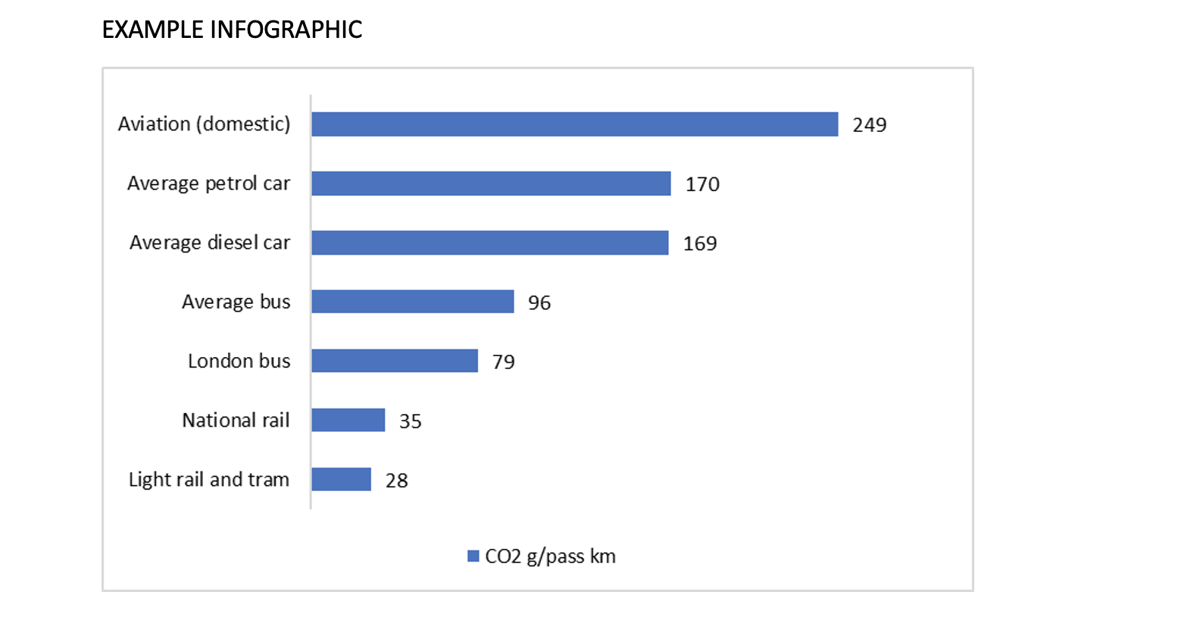
The information my friend was using as the basis for his decision was a well known infographic derived from Government statistics which compares the emissions per passenger kilometre from different modes of transport. This typically shows that a bus emits more than twice the carbon dioxide per passenger km than a car with four passengers.

For example, the latest 2022 Defra statistics show that an average petrol car emits 170g of carbon dioxide vs 96g for an average bus, and 35g for national rail per passenger km.

emissions chartIf you assume there are four passengers in a car then the emissions per passenger km reduces to a quarter or around 43g which many of the infographics show. But for some reason they don’t do the same with a bus or train. In fact, in our heads for a family of four travelling by bus we tend to multiply the emissions by four as you would when estimating how much it would cost to take the bus or train. This produces a highly inaccurate representation of what is the most eco-friendly form of travel. Hey presto, driving is the new veganism.

Read more: SmartTransport

It’s Time to Go Green!

If you would like to know more about Solar Panels and the PowerBanx range of home battery systems, and get a free instant quote, please complete our online form:

EU approves 2035 ban on selling petrol and diesel cars

No more emissions from 2035 for cars and vans sold in Europe

The EU has today voted to approve legislation effectively banning the future sale of petrol and diesel cars and vans. In order to sell vehicles in Europe, carmakers will have to cut emissions by 100 per cent by 2035 compared to 2021 levels, which means that all new cars and vans are going to be CO2-emission-free.

Though carmakers with small production numbers – less than 1,000 cars annually – will have exemption until 2035, mass production manufacturers are being encouraged with some pretty big carrots to create zero-emission and “well-performing plug-in hybrids” between 2025 and 2029. The 2035 zero-emissions standard is more aggressive than originally planned.

EU spokesperson Jan Huitema said: “This regulation encourages the production of zero- and low-emission vehicles. It contains an ambitious revision of the targets for 2030 and a zero-emission target for 2035, which is crucial to reach climate neutrality by 2050.

“These targets create clarity for the car industry and stimulate innovation and investments for car manufacturers. Purchasing and driving zero-emission cars will become cheaper for consumers and a second-hand market will emerge more quickly. It makes sustainable driving accessible to everyone.”

In a campaign entitled ‘Fit for 55’, the EU is aiming to reduce CO2 emissions by 55 per cent by 2030 compared to 2021 levels. To support this, passenger cars and light commercial vehicles sold from 2030 and 2035 respectively will have to comply with new emissions standards by law.

Read more: TopGear

It’s Time to Go Green!

If you would like to know more about Solar Panels and the PowerBanx range of home battery systems, and get a free instant quote, please complete our online form:

6 reasons to drive an EV

Sometimes, picking a new car is as simple as seeing a vehicle you just know you want. More often, it’s a complicated decision where you weigh up a range of factors before selecting the best option for you. If you’re in this position, here are six electric car advantages to make you think EV.

  1. You’re helping the environment

One of the main EV benefits is the reduced environmental impact they have on our world. Electric cars aren’t completely free of CO2, though. A lot of the electricity they use comes from non-renewable sources. Plus, they have to be built and transported, which is likely to involve emissions as well.

However, it seems safe to say that they are still a lot better for the environment than petrol or diesel engines. It generally produces less CO2 to create energy in a power station than it does to do it in a car engine. And some of your electricity will likely come from renewable sources as well.


“The response from police drivers to the BMW i3 has been very positive. It’s actually a very quick car.”

On top of that, an electric engine is around **three times for efficient** than a petrol engine in terms of how it uses its. All in all, you can be confident you’re making a difference.

Read more: FleetPoint

It’s Time to Go Green!

If you would like to know more about Solar Panels and the PowerBanx range of home battery systems, and get a free instant quote, please complete our online form:
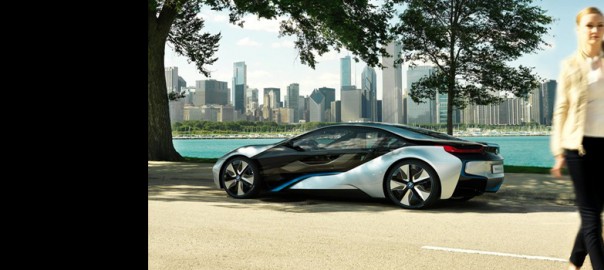
BMW i8 Concept (Image: BMW)

Surprise! Electric cars are already making California healthier

From the “duh” department, California is already becoming more healthy because of electric car penetration, which has resulted in cleaner air in areas where electric cars are more prevalent, according to a new study.

The study was published last week by the Keck School of Medicine at the University of Southern California. It tracked real-world pollution levels, electric car penetration, and emergency room visits across California between 2013 and 2019, and controlled against overall improvements in California air quality during the study period.

Completely unsurprisingly, the study found that clean air vehicles actually resulted in clean air, with the benefits being stronger in areas where there were more of them. Amazing. Who knew.

Each increase of 20 cars per 1,000 people (which is roughly equivalent to 2% of cars – since CA has 840 cars per 1,000 people) was associated with a .41ppb (parts per billion) drop in nitrogen dioxide concentrations in the atmosphere. California law sets average NOx standards at 30ppb, so a drop of .41 is a pretty big chunk, especially when compared to just 2% of EV penetration.

It stands to reason that taking gas cars off the road would reduce NOx, because nitrogen dioxide is a form of pollution particularly associated with vehicle tailpipes, and is the major contributor to the formation of smog, with a variety of negative health effects.

Read more: Electrek

It’s Time to Go Green!

If you would like to know more about Solar Panels and the PowerBanx range of home battery systems, and get a free instant quote, please complete our online form:

Cheap cars for sale

Calls for VAT relief on electric car ‘street charging’

Electric car owners with driveways are paying less to power their vehicles at home than those forced to rely on on-street charging points.

The disparity risks “undermining the Government’s net-zero transport strategy”, claim critics. Campaigners are now calling for VAT on public charging points to be slashed from 20 per cent to the domestic rate of five per cent.

The Government plans to ban the sale of new diesel and petrol cars from 2030.


But Bath MP Wera Hobhouse said: “Not everyone has access to home EV charging. In dense urban areas many do not have a driveway, so charging a vehicle at home is not an option.”

The RAC is calling for VAT on public charge-points to be cut to five per cent. Spokesman Simon Williams said: “A quality charging infrastructure will be key to helping people switch from conventional vehicles to electric ones.

“We must ensure those without driveways are not penalised with higher costs, otherwise there’s a risk the Government’s net-zero transport strategy will be undermined.”

But treasury minister Victoria Atkins said: “VAT relief for public EV charging would impose additional pressure on the public finances, to which VAT makes a significant contribution. VAT is the UK’s third largest tax, forecast to raise £157billion in 2022-23, helping to fund key spending priorities such as the NHS, education and defence.”

Read more: Express

It’s Time to Go Green!

If you would like to know more about Solar Panels and the PowerBanx range of home battery systems, and get a free instant quote, please complete our online form:

Electric Vehicles Might Save the Derestricted Areas of the Autobahn

Over the past few years, there’s been some talk from German government officials about potentially removing the derestricted areas of the Autobahn. Adding speed limits (albeit likely high ones) to all sections of the Autobahn was proposed to reduce emissions and reduce nationwide fuel consumption. There’s also a question of safety, as cars have become far faster than ever before. However, the increase in electric vehicle usage might actually save the Autobahn’s derestricted zones.

Germany’s Federal Transport Minister Volker Wissing told Bild am Sonntag (h/t to Car Throttle) that EVs are slowing down the way people drive, so as to conserve batteries. So not only do EVs tend to reduce the number of people driving at incredible speeds but those that do drive quickly in EVs are producing no emissions doing so. Even highly efficient internal combustion cars produce more emissions at the top end of their rev ranges while trying to hit top speed. EVs do not.


Two on-demand Renault Zoe autonomous taxis will be deployed in Rouen, Normandy. Pictured is the standard version of the 2016 Renault Zoe. (Renault)

The great irony of this is that EVs are often look at as the death of fun in performance cars by many car enthusiasts. Those same enthusiasts also hate the idea of Germany speed-restricting all of the Autobahn. However, it’s EVs that might actually save those unrestricted areas for the very enthusiasts that hate them.

Read more: BMWBlog

It’s Time to Go Green!

If you would like to know more about Solar Panels and the PowerBanx range of home battery systems, and get a free instant quote, please complete our online form:

Which cars are Ulez compliant as London zone is set to be expanded? From Nissan Leaf to Honda Jazz

Cars that meet certain emission standards are exempt from the £12.50-a-day levy

The Ultra Low Emission Zone (Ulez) will be extended to all of London’s boroughs in an effort to promote public health and clean up the city’s air from August 29, 2023.

The Ulez was launched in 2019 and expanded to cover the inner boroughs in October 2021.

Mayor of London Sadiq Khan’s decision to expand it further has provoked mass opposition, but he has vowed to press ahead with his plans. “I don’t want anyone to come to our city and breathe in poison.” he said on Monday.

The initiative means that 15 per cent of vehicles registered in the new outer London zone, about 200,000 at present, will be liable for a £12.50-a-day levy.


But an estimated five million Londoners will breathe cleaner air, according to City Hall. This is due to the likely impact of a city-wide zone further accelerating the switch to cleaner vehicles in the suburbs.

More than 96 per cent of cars in the existing zone, which extends to the inner boundaries of the North and South Circular Roads, comply with the exhaust-emission rules and do not have to pay the 24/7 charge.

But which cars are Ulez compliant and what does the acronym mean?

Read more: EveningStandard

It’s Time to Go Green!

If you would like to know more about Solar Panels and the PowerBanx range of home battery systems, and get a free instant quote, please complete our online form:

Mythbusting the world of EVs: are energy prices killing electric cars?

With electricity prices on the rise, what’s cheaper? And what’s the underlying issue at play here?

MYTH: “Energy prices are killing EVs”

Spiking electricity prices have brought a spate of screaming headlines: “Shock – charging an electric car is as expensive as refuelling a diesel.” Yes, on average, the electricity price has gone skyward. But it’s still easy to travel cheaper per mile than diesel, and actually the public charger price is falling from its peak. Like the diesel price, which you might have noticed also had a convulsion.

Actually you could have done an ‘electricity dearer than diesel’ trip any time in the past three years. Underlying all this is the extreme – and extremely upsetting – variability at any given time of electricity prices. The dearest high power DC chargers, Ionity, have been 69p/kWh since they began trading three years ago. That’s well over 20p a mile, meaning if a diesel is doing better than 40mpg it’s cheaper.

But no one regularly charges at those. If you use public (not home) 7kW AC you’ll probably be around half that Ionity rate. If you plug in at home and have a tariff that responds in real time to local demand, you might still pay perhaps 10p/kWh overnight, or about 3p a mile.

Read more: TopGear

It’s Time to Go Green!

If you would like to know more about Solar Panels and the PowerBanx range of home battery systems, and get a free instant quote, please complete our online form: