Category Archives: Energy and Climate Change

News and articles on climate change, vehicle pollution, and renewable energy.

Big Oil, Utilities are Lining Up for an Electric Vehicle War

  • BP and Shell have bought electric-car charging companies
  • Power utilities are boosting sales to homes, chargers on roads

A red-hot electric vehicle market has triggered a face-off between Big Oil and utilities.

Oil majors, who’ve sold fossil fuels to cars for a century, are now moving into an electricity sector that’s preparing for exponential growth. The problem is that utilities, the primary power suppliers for a century, have the same idea.

BP Plc predicts electric vehicle sales will surge by an eye-watering 8,800 percent between 2017 and 2040, making it an attractive business for oil companies as demand for gasoline and diesel are forecast to slow. Big Oil will have to battle the traditional utilities for charging at people’s homes, on the road and even offices of green-car owners.

Read more: Bloomberg

Oil industry is ‘peddling misinformation’ about electric vehicles

  • Electric vehicles are cleaner and more efficient than conventional vehicles.
  • Reports against EVs are coming from oil-backed studies, leading to skewed public perceptions of battery-run autos.
  • Electricity powered transportation will cause less pollution and less asthma, cancer and other illnesses associated with pollution from the burning of fossil fuels.

When technological innovation threatens to upend the status quo, the status quo fights back. Every time. I try to keep that in mind when observing oil industry-backed efforts to discredit electric vehicles (EVs) and dismantle progress on transportation electrification by peddling misinformation through industry-funded studies.

To give you a sense of the absurdity of these efforts, imagine Bell Communication publishing a report suggesting cell phones are less convenient than landlines. Or Blockbusters paying for an analysis showing Netflix makes watching movies more difficult.

The vast majority of research institutions and environmental public interest groups support accelerated EV adoption because the science is clear that EVs are much cleaner than conventional vehicles.

Consider this: electric vehicles don’t have tailpipes. They run on electricity, and across the country, our electricity sources are getting cleaner. Even factoring in emissions from electricity used to power EVs today and pollution from battery manufacturing, electric vehicles are already significantly to vastly lower in emissions than conventional vehicles, depending on how the electricity is produced in different regions of the country.

Read more: CNBC

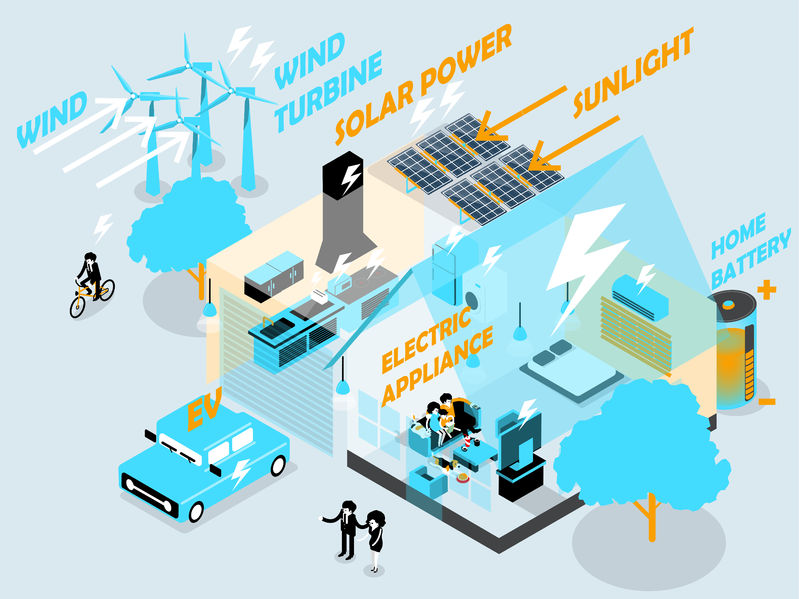
The Transition Trinity: Electric Car, Solar and Home Battery

Fuel Included was founded in 2014 in response to the threat of global warming. Our aim is to promote sustainable technologies at affordable prices, a mission that becomes ever more important as global climate changes accelerate.

59210374_EnergyHome_IsometricGraphic_123RF
Initially we concentrated on electric cars but as they become increasingly mainstream we are able to focus on other green technologies. We now offer our own home battery system, the PowerBanx, to go along with solar panel installs.

While the Global Energy Transition often seems to be about big infrastructure projects, like offshore windfarms and grid battery storage, what’s happening at the home level is arguably more important, in terms of the impact on the individual and on the future requirements for national grids.

For years we have seen the rise of solar power as it becomes cheaper and undercuts other forms of power generation. More recently, we have seen the spread of electric vehicles (EV), as the replacement of fossil fuel vehicles accelerates.

Finally we are seeing the widespread introduction of battery systems (such as our PowerBanx) into homes; all already have solar and many already have an EV.

Read more: LinkedIn


Tesla Powerwall display (Image: T. Larkum)

Mercedes-Benz turns coal power plant into energy storage system with electric car batteries

Daimler, through its subsidiary Mercedes-Benz Energy and with partners, is turning a coal power plant into a large energy storage facility using over a thousand modules from its electric car battery packs.

Like Tesla and its ‘Tesla Energy’ division, Mercedes-Benz is leveraging its experience with battery packs for electric cars into making stationary energy storage projects.

They created a ‘Mercedes-Benz Energy’ subsidiary and launched several projects.

One of them was a residential battery pack to compete with Tesla’s Powerwall.

Tesla Powerwall display (Image: T. Larkum)


Earlier this year, the company killed the project after admitting that their product was too expensive and overengineered for its application.

While they got out of the residential market, they are still going strong with bigger-scale projects.

Their latest project was unveiled today and it consists of a 8.96 MW/9.8 MWh project using a total of 1,920 battery modules installed in Elverlingsen on the site of the former coal-fired power station that was built in 1912 and recently shut down.

Read more: Electrek

£12.50 London Ultra-Low Emission Zone expansion confirmed

London Mayor Sadiq Khan has confirmed the London Ultra-Low Emission Zone (ULEZ) will be expanded to reach the North and South circular roads from 25 October 2021.

It will be an expansion of the upcoming central London ULEZ, which goes live in April 2019.

Non-compliant vehicles will be charged £12.50 a day to enter the ULEZ – and, unlike the London Congestion Charge, fees apply 24 hours a day, 365 days a year.

Controversially, the ULEZ is particularly onerous for diesel car drivers. Only vehicles meeting Euro 6 emissions standards, introduced in 2014, will be exempt from the charge. The rules are more lenient for petrol vehicles; only those that don’t meet Euro 4 standards, introduced in January 2005, need to pay the charge.

It means that by 2021, says the Mayor of London’s office, petrol cars aged up to 15 years old will be exempt from the charge – but only diesel cars no more than six years old will escape it.

Expanding the 2019 central London Ultra-Low Emission Zone in 2021 will see it become 18 times larger. The Mayor’s office estimates this will affect 100,000 cars, 35,000 vans and 3,000 lorries a day.

Read more: Motoring Research

Electric cars charging in Milton Keynes (Image: T. Larkum)

Electric vehicle growth will start hurt tanker shipping by 2025

Come 2025 the switch to electric vehicles (EV) will start to impact the demand for gasoline, which will be bad news for shipping.

While charging infrastructure and range limits remain a concern for EVs the fact they are much cheaper to manufacture on a large scale than their petrol powered cousins will see a shift in the market by the middle of the next decade according to James Leake, an analyst at NS Lemos.

Electric cars charging in Milton Keynes (Image: T. Larkum)

Speaking at the Bimco Power Panel at Posidonia 2018 Leake said:

“EVs do represent a serious threat but not for the time being, if you ask me to put a date on it 2025 would be the point where it really starts to hurt.

“What is to me the killer fact is ultimately manufacturing an electric vehicle is much cheaper than manufacturing an internal combustion engine when you are producing them on scale.”

An electric powered car requires significant less components than one with an internal combustion engine making the structural production cost lower if the scale is large enough, and this why Leake said the likes of Volkswagen is investing $40bn into electric cars with an aim to be the world’s number one player in electric mobility by 2025.

With lower production costs car manufacturers will be much more keen to sell electric powered vehicles than petrol ones. “We will educated as customers to buy the product that will give them a higher profit.”

Read more: SeaTrade Maritime

Sir Richard Branson: Ditch diesel for electric cars before 2040

Sir Richard Branson says plans to ban the sale of new petrol and diesel vehicles from 2040 need to be brought forward.

The Virgin founder funds a team in Formula E, the motorsport which is pioneering new technologies for electric cars.

He says the deadline should be brought forward to 2025, in line with some other European countries.

Roads minister Jesse Norman says 2040 is a “sensible compromise”.

Newsbeat has spent the last seven months following Formula E, the competition where electric cars reach 140mph racing on streets around the world.

We’ve followed DS Virgin Racing, the team owned by Sir Richard, who says that “every month the technology is getting better and better”.

“The teams want to be the best out there, so they’re pushing for improvements in battery technology.

“That will mean that when more cars are driving on batteries, they’ll be able to go hopefully a few hundred miles rather than maybe 150 or 200.”

Read more: BBC

Volkswagen Golf GTE (Image: T. Larkum)

Volkswagen admits it can’t cope with new emissions tests

Germany’s Volkswagen has warned its main factory in Wolfsburg faces temporary shutdowns later this year, owing to new emissions test standards.

It plans “closure days” to prevent a build-up of vehicles that have yet to be approved for sale.

From September, more rigorous EU standards apply, designed to replicate real driving conditions more closely.

Now VW says it does not have enough testing equipment to cope and fears that a backlog of cars will ensue.

Volkswagen Golf GTE (Image: T. Larkum)

At a meeting with unions on Wednesday, chief executive Herbert Diess admitted that meeting the new requirements, and getting new cars approved for sale, was proving a challenge.

Closure plan

“We will only build vehicles after the works holiday that fulfil the new standards. The deliveries will take place gradually as soon as the necessary approvals are there,” Mr Diess told staff.

“But many vehicles will have to be warehoused in the meantime. To make sure their numbers don’t become too large, we will have to plan closure days through the end of September,” he added.

VW is still facing fallout from the scandal over its emissions cheating, which erupted in September 2015.

Read more: BBC

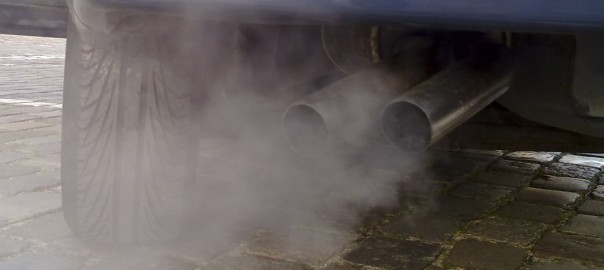
Car exhaust pollution (Image: Wikipedia)

An average car in inner London will be responsible for almost £8,000 in health costs

An average car in inner London will be responsible for almost £8,000 in health costs during the course of its lifetime, researchers say.

Pollution produced by vans and cars costs almost £6 billion in damage to health annually in the UK, according to experts from Oxford and Bath universities.

They said that exposure to nitrogen oxides and fine particulate matter caused by vehicles – particularly those which run on diesel – is linked to about 40,000 premature deaths a year.

Car exhaust pollution (Image: Wikipedia)

This translates into billions of pounds in associated costs for healthcare and “life years lost”, the study, released ahead of Clean Air Day on June 21, found.

On average across the country, health costs from air pollution that could be attributed to a typical UK car running on fossil fuels over its 14-year lifetime amount to £1,640, while a van costs £5,107 over its nine years on the road.

Read more: Standard

Car exhaust pollution (Image: Wikipedia)

Westminster schools to be protected by new ‘no-pollution zones’

The council has promised to invest £1 million in creating pollution barriers around its primary schools.

The clean air fund aims to cut harmful emissions by bringing in road closures, banning polluting vehicles, replacing old boilers and planting gardens around the schools.

The zones will be funded by Westminster City Council’s D-charge — a surcharge of £2.45 an hour for pre-2015 diesel vehicles parking in areas of the city. The surcharge has raised more than £1 million in its first nine months and reduced the number of polluting vehicles driving through the borough by 14 per cent.

Car exhaust pollution (Image: Wikipedia)

The council said it will also extend its D-charge across the whole borough in phases.

Council leader Nickie Aiken said: “As parents we all want to ensure our children can grow up in a safe and healthy environment.

“Air quality is the number one concern for our residents and it is crucial that we tackle poor air quality for the young people in our schools.

“Introducing the first no-pollution zones in Westminster will cut the number of vehicles around schools, encourage cleaner, greener habits and make a big difference locally.”

Read more: EcoBuild