Category Archives: Energy and Climate Change

News and articles on climate change, vehicle pollution, and renewable energy.

Car prices after Brexit: should you buy now?

Find out how manufacturers plan to change car prices in response to a no deal Brexit, and how you can avoid being caught out

Car buyers should complete their purchases soon to avoid the risk of price rises from a no-deal Brexit outcome, Which? has learned. Find out what impact car manufacturers say a no-deal Brexit will have on them and what it could mean for you. Car manufacturers are announcing their plans in the event the UK leaves the EU without a deal at the end of the Brexit transition period on 31 December. Any additional costs in manufacturing and importing cars risks price rises for car buyers. Manufacturers, including Ford, Mercedes-Benz, Peugeot and Vauxhall have confirmed the prices of their cars will rise in the event of a no-deal Brexit, with others saying it would lead them to review their prices. Some manufacturers have told Which? that they’re committed to honouring the price of cars bought before the end of the transition period, but which are delivered after that date. The approach varies from manufacturer to manufacturer. Find out below how much extra you could pay, plus what key car manufacturers have told us.

How much more could you pay for a car? Around 70% of cars registered in the UK are currently imported from the EU. At the moment there are no tariffs on cars imported from the EU because the UK is following EU trade rules until the transition period ends on 31 December. If the UK leaves the EU without a trade agreement, in line with World Trade Organization (WTO) rules, after this date a 10% tariff will apply to finished cars imported from the EU. If a manufacturer passed on the full 10% import tariff, that would then lead to a 6.3% increase in the price you pay for a car (based on average prices and according to industry body the Society of Motor Manufacturers and Traders). This is because import tariffs are levied on the customs price of a vehicle at the time of import, rather than the final price of sale. When a vehicle is sold in the UK, it will have additional taxes such as VAT and Vehicle Excise Duty added to it. Costs can also be impacted by changes in vehicle demand. In the table below, we’ve added this 6.3% increase to the purchase price of the top five bestselling UK cars to see how much prices could rise in the event of a no-deal Brexit.

An industry insider told us overall car costs would rise by around £1,800, on average, if a 10% tariff is introduced. The increase will be even more for premium-priced cars. The popular BMW X5 SUV starts from £59,135. With the 6.3% increase applied, potential buyers would see its price rise by around £3,726 to £62,861.

Will Ford put up its car prices if there’s a no-deal Brexit?
Ford makes some of the UK’s bestselling cars, including the Ford Fiesta and Ford Focus. Ford has confirmed to Which? it will price-protect orders placed prior to leaving the transition period without a deal. Ford of Britain managing director Andy Barratt said: ‘In a no-deal scenario and the imposition of a WTO 10% tariff regime on new vehicles, prices for Ford’s most popular passenger and commercial vehicles would rise by between £1,000 and £2,000. Ford said: ‘We will provide more details if or when the situation dictates.’ Ford of Europe communications executive director, John Gardiner, also said: ‘We continue to hope that all sides can reach an agreement to ensure the UK leaves the EU with a deal in an orderly manner.’ Adding that despite taking actions to mitigate the impact of not having a deal, it’s ‘impossible to avoid disruption in such a scenario’.

Read more: Which

It’s Time to Go Green!

If you would like to know more about Solar Panels and the PowerBanx range of home battery systems, and get a free instant quote, please complete our online form:

Nissan Leaf 3.Zero e+ (Image: Nissan)

Nissan Re-Leaf EV provides mobile power in natural disasters

Nissan has created an electric concept car to show how EVs can help restore power during natural disaster outages

The Nissan Re-Leaf concept has been created to show how 100% zero emissions electric cars can provide mobile power in natural disaster zones

Natural disasters are the biggest cause of power outages and the electric car concept from Nissan aims to show how EVs can come to the rescue.

The Nissan Re-Leaf is derived from a regular Nissan Leaf electric car, and is equipped with a range of external sockets to power devices from the lithium ion battery.

Nissan says it can power an electric jack hammer, an intensive care medical ventilator and a 100-watt LED floodlight all for a full 24 hours.

Nissan Leaf 3.Zero e+ (Image: Nissan)

The Re-Leaf also has uprated suspension, wheels and tyres so it can be driven into a disaster zone to provide the fully mobile power service.

The Leaf’s bi-directional charging ability is behind the mobile power functionality, allowing it to both ‘pull’ power from the grid, but also ‘push’ it back to electronic devices.

In disaster zones, power typically takes a day or two to be restored: the Re-Leaf provides electricity during the outage, and can then be recharged once power comes back online.

Nissan says the concept also shows how electric cars can help support the broader electricity network for additional resilience against power cuts.

Nissan Europe’s Helen Perry said: “Concepts like the Re-Leaf show the possible application of EVs in disaster management.

“Electric vehicles are emerging as one of the technologies that can improve resilience in the power sector.

“By having thousands of EVs available on standby, either as disaster-support vehicles or plugged into the network through Vehicle-to-Grid (V2G), they’re uniquely capable of creating a virtual power plant to maintain a supply of energy during a major outage.”

RJN, a UK engineering and motorsport firm, carried out the modifications that include raised suspension giving 225mm of ground clearance.

Read more: Motoring Research

Renault Attacks Idling Pollution At Schools

I’m currently waiting for my daughter to get out of school. Being Florida, it’s hot as he**. So, everyone else sitting here is running their car.
I prefer to not think about the pollution that is rising up around us and that kids will have to walk through as they get out of school. There are perhaps 7 or 8 Teslas in the pickup area, but that’s nothing compared to the many, many more that are burning gasoline. While it won’t help me, I’m happy to see that Renault is doing something about this problem in the UK.

Despite not being a scorching hot mess, 27% of parents in the UK admit to idling while waiting for their children — men more than 50% likely to do so than women (or more than 50% likely to admit it). As a result, “1 in 3 children in the UK breathe unsafe levels of air pollution,” according to Renault.

Interestingly, in the UK, sitting in a car and idling with the engine running is illegal! Didn’t know that? Don’t worry, neither did 60% of respondents. What is there to do about the idling problem if it’s already illegal? Yep — raise awareness around the problem, the law, and solutions. Hence, Renault has launched the “Be Mindful, Don’t Idle” awareness campaign.

The stakes? According to Renault, “More than 8,500 schools, nurseries and colleges in England, Scotland and Wales are located in areas with dangerously high levels of pollution.”

“The fact that the majority of people don’t realise that idling is illegal just highlights the scale of the problem,” explains Matt Shirley, Senior Manager, Electrification & New Mobility. “Every minute a car is idling it produces enough emissions to fill 150 balloons. It goes without saying, if the 27% of school run journeys stop idling, there would be a significant improvement in the air quality for their children.”

Naturally, the easiest solution to enjoy your air conditioning or heater without causing harmful pollution where your kids are walking around is to go electric. Renault’s awareness campaign may be partly or even mostly altruistic, but it’s also a marketing campaign. Renault is a leader in the electric vehicle market, and the more people see the benefits of an electric car, the more ZOEs it’s going to move.

So far in 2020, the Renault ZOE is the top selling electric vehicle in Europe. Indeed — it’s even outselling the Tesla Model 3 so far this year. We’ll see what happens as the year closes out, but the ZOE is certainly in the running for best selling vehicle of the year even at the end of December.

In the UK, where this awareness campaign is focused, the ZOE also sells well, and plugin vehicle vehicle sales overall have risen to 10% of automobile sales in the market.

Read more: Clean Technica

It’s Time to Go Green!

If you would like to know more about Solar Panels and the PowerBanx range of home battery systems, and get a free instant quote, please complete our online form:

Nissan Ariya EV SUV (Image: Nissan)

EVs spell crude’s doom

THE issue of climate change is beginning to impact the ‘crude’ horizon.

Last Tuesday, at its “Battery Day” Tesla unveiled plans to develop an in-house, “tabless” battery. This battery would improve the range and power of its electric cars, Tesla CEO Elon Musk announced. It could dramatically reduce costs and lower the cost per kilowatt-hour of Tesla cars significantly. It would allow Tesla to eventually sell electric vehicles for the same price as gasoline-powered ones, Musk emphasised. Many experts agreed, saying it could allow Tesla to lower the price of its cars, making them far more accessible.

Interestingly, while car sales collapsed in Europe owing to the pandemic, sales of electric vehicles (EVs) continued to grow. And this does not defy logic. The purchase prices of EVs in Europe are coming tantalisingly closer to the prices for cars with gasoline or diesel engines.

Government subsidies are largely responsible for this near price parity, cutting more than $10,000 from the final price. Carmakers are offering deals on electric cars to meet stricter European Union regulations on carbon dioxide emissions. In Germany, an electric Renault Zoe can be leased for 139 euros a month, or $164, reports indicate.

The recent advances in batteries are going to make the price gap between the internal combustion engines and EVs still less. A few years ago, the industry was expecting 2025 to be the turning point. Now, this could be earlier.

Nissan Ariya EV SUV (Image: Nissan)

This threat to crude consumption is coming from various quarters. Indeed, the slow, yet gradual, switch over to EVs is making a major difference. But other factors are also getting into play. The pandemic is changing life patterns. A greater number of people are opting to work from home. Jet fuel was another area of crude consumption growth. With fewer few people taking flights, jump in jet fuel consumption is also getting into question.

Another possible area of crude consumption was the use of crude as a feedstock to produce petrochemicals. That is also now under clouds. Green, or sustainable, chemistry could undermine Big Oil’s petrochemical ambitions, especially in an increasingly environment-conscious world writes Tsvetana Paraskova in Oilprice.com.

The chemical sector is the largest industrial consumer of both oil and gas, accounting for 15 per cent, or 13 million barrel per day, of total primary demand for oil on a volumetric basis and 9pc of gas, according to the International Energy Agency (IEA).

Chemical sector emissions need to peak in the next few years and decline towards 2030 to stay on track with the Sustainable Development Scenario (SDS), the IEA says.

With transportation accounting for almost 70pc of total global crude consumption, the emergence of ‘cost-effective’ electric vehicles would significantly dent global crude consumption. It could drastically change the short-term crude horizon. And oil majors are beginning to take note.

British Petroleum has announced increasing investments in low-emission businesses tenfold, to $5 billion a year, while shrinking its oil and gas production by 40pc over the next decade. Eni of Italy, Total of France, Repsol of Spain, and Equinor of Norway have set similar targets. Several of those companies have cut their dividends to invest in new energy.

Dutch oil major Shell is looking to slash as much as 40pc of its upstream oil and gas operations as it is redesigning its business toward a greener portfolio, sources in Shell involved in the costs review told Reuters. Shell is reported to be planning significant restructuring by the end of the year to reflect its net-zero emissions goal for 2050. However, their US counterparts, ExxonMobil and Chevron, for the time being, appear committed to fossil fuels.

Read more: Dawn

It’s Time to Go Green!

If you would like to know more about Solar Panels and the PowerBanx range of home battery systems, and get a free instant quote, please complete our online form:

Commentary: Why California’s ban on gas-powered cars isn’t all that radical

Climate change is already doing a lot of damage – and the prohibition on the sale of new fossil-fuel cars is 15 years away.

Banning dealers from selling anything but zero-emission cars from 2035, as California Gov. Gavin Newsom decreed this week, sounds pretty radical on first hearing.

Electric vehicles are still a relatively niche pursuit. Charging them up isn’t always straightforward – especially if you live in an apartment – and battery-powered cars tend to cost more than gasoline-powered equivalents (although that won’t be the case for much longer). Predictably, the Trump administration attacked Newsom’s executive order, and the fossil fuel industry is also unhappy.

However, in view of the seriousness of the climate emergency – something Californians need only look out the window to observe – Newsom isn’t being very radical at all.

The truly eye-catching thing about California’s announcement is that the state will allow the sale of gasoline and diesel vehicles, whose emissions contribute to wildfires and heat, for another 15 years. Oil-rich Norway, by contrast, wants to ban cars powered by fossil fuels by as soon as 2025. Britain might bring forward its phase-out date from 2035 to 2030.

Speed is of the essence because climate change is already doing enormous damage. And the key question isn’t when we stop selling combustion-engine vehicles, but when the last one is removed from the roads. Think about it: A gasoline vehicle purchased in 2034, a year before California’s ban comes into force, might continue spewing carbon dioxide into the atmosphere for more than a decade after that. Californians will still be able to buy used gas-guzzlers after 2035.

To see why this matters, consider some of the findings of BloombergNEF’s latest Electric Vehicle Outlook. In 2020, about 3 percent of global car sales will be electric models. By 2025, that will hit 10 percent, rising to 28 percent in 2030 and 58 percent in 2040. Despite this incredible growth, these vehicles will amount to only 8 percent of the 1.4 billion cars on the planet’s roads in 2030 and slightly less than a third in 2040.

OPINION Posted September 26INCREASE FONT SIZEResize Font
Commentary: Why California’s ban on gas-powered cars isn’t all that radical
Climate change is already doing a lot of damage – and the prohibition on the sale of new fossil-fuel cars is 15 years away.

BY CHRIS BRYANTBLOOMBERG OPINION
Sharefacebooktweetredditemailprint2 COMMENTS
Banning dealers from selling anything but zero-emission cars from 2035, as California Gov. Gavin Newsom decreed this week, sounds pretty radical on first hearing.

Electric vehicles are still a relatively niche pursuit. Charging them up isn’t always straightforward – especially if you live in an apartment – and battery-powered cars tend to cost more than gasoline-powered equivalents (although that won’t be the case for much longer). Predictably, the Trump administration attacked Newsom’s executive order, and the fossil fuel industry is also unhappy.

ABOUT THE AUTHOR
Chris Bryant is a Bloomberg Opinion columnist covering industrial companies.

However, in view of the seriousness of the climate emergency – something Californians need only look out the window to observe – Newsom isn’t being very radical at all.

The truly eye-catching thing about California’s announcement is that the state will allow the sale of gasoline and diesel vehicles, whose emissions contribute to wildfires and heat, for another 15 years.

Oil-rich Norway, by contrast, wants to ban cars powered by fossil fuels by as soon as 2025. Britain might bring forward its phase-out date from 2035 to 2030.

Speed is of the essence because climate change is already doing enormous damage. And the key question isn’t when we stop selling combustion-engine vehicles, but when the last one is removed from the roads. Think about it: A gasoline vehicle purchased in 2034, a year before California’s ban comes into force, might continue spewing carbon dioxide into the atmosphere for more than a decade after that. Californians will still be able to buy used gas-guzzlers after 2035.

To see why this matters, consider some of the findings of BloombergNEF’s latest Electric Vehicle Outlook. In 2020, about 3 percent of global car sales will be electric models. By 2025, that will hit 10 percent, rising to 28 percent in 2030 and 58 percent in 2040. Despite this incredible growth, these vehicles will amount to only 8 percent of the 1.4 billion cars on the planet’s roads in 2030 and slightly less than a third in 2040.

Advertisement

BNEF forecasts that – after dipping this year because of COVID-related mobility restrictions – emissions from road transportation will keep rising until 2033. While they’ll decline after that, these emissions will still be higher in 2040 than they were in 2019.

Read more: Press Herald

It’s Time to Go Green!

If you would like to know more about Solar Panels and the PowerBanx range of home battery systems, and get a free instant quote, please complete our online form:
Tesla Battery Day: Bigger form factor cells, massive cost reductions and elimination of cobalt use

Tesla hosted its Battery Day yesterday in California before a socially-distanced audience all sat in various electric cars from the company’s range and revealed its ambitious plans for more than halving the cost of battery production.

The company has plans to scale up to Terawatt-hour scale of annual production capacity for lithium batteries, which CEO and founder Elon Musk said he was confident could be done by 2030 – and possibly even earlier.

Along the way, it was also announced that Tesla intends to eliminate cobalt use in battery cathodes and reach a level of vertical integration, particularly within North America, that will see raw materials go directly from mine to production line and emerge as the finished article. No doubt many other media outlets and bloggers will focus on the transportation side of things so we have tried to hone in on the aspects of the day’s presentation most relevant to stationary energy storage.

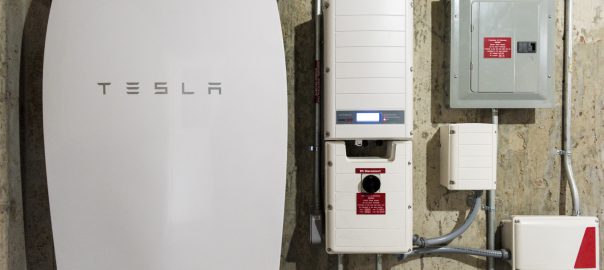
Tesla Energy’s home battery, Powerwall, is seen newly installed in the home of Steven YatesÊ in Monkton, Vermont on Monday, May 2, 2016.

Here’s how Tesla Battery Day went and what was announced:

Stockholders push back on proposed reforms
The livestream of the three-hour event began with more than half an hour of slick footage of Tesla EVs set to smooth electro, techno and house music, with some shots of Tesla solar and battery storage projects, products and of course happy workers and team members thrown in for good measure.

Then, the first part of the day’s event, the company’s annual shareholder meeting, began. Al Prescott, Tesla VP of its legal department hosted that from an outdoor stage in the California parking lot from where the livestream was broadcast.

Before the separate Battery Day event, venture capitalist Steve Jurvetson’s departure from the company’s board was officially confirmed, with Jurvetson to be replaced by Hiro Mizuno, a former head of a $1 trillion Japanese pension fund. Then, the company’s shareholders were invited to vote on seven proposals, including four from other stockholders.

Shareholders rejected all four proposals: the first for Tesla to consider running paid advertising, which it has never done, the second for introducing simple majority voting, the third on the use of mandatory arbitrations for employee disputes – including allegations of racial and gender discrimination at the company’s Gigafactory 2 in upstate New York and the Fremont assembly plant in California – and finally that the company should introduce annual human rights reporting covering its entire value chain.

Allegations on the prevalence of harassment and discrimination and a lack of recourse included “serious allegations of racism and sexism” meant Tesla should introduce a report on the impact of mandatory arbitration, Dr Kristen Hull of shareholder Nia Impact Capital, said.

Terry Collingsworth at International Rights Advocates spoke on behalf of the Sisters of Good Shepherd, New York, who asked that Tesla issue a report to describe board oversight on human rights and human rights due diligence process, including systems to provide meaningful remedies when human rights impacts occur.

Collingsworth alleged that dependence on cobalt mined from the Democratic Republic of Congo (DRC) made Tesla guilty of “not only tolerating child labour,” but also “tolerating the maiming and death of young boys” who work in some of DRC’s artisanal mines. Consumers would have “zero tolerance” of a company exposed as being indifferent to this suffering, the stockholders said. More on that later.

Read more: Energy Storage News

It’s Time to Go Green!

If you would like to know more about Solar Panels and the PowerBanx range of home battery systems, and get a free instant quote, please complete our online form:

Leeds Zero Emission Bus (Image: Yorkshire Evening Post)

First zero emission bus fleet for Leeds

The first ever, zero emission bus fleet for Leeds is being prepared to enter service in a multi-million pound investment by First Bus in partnership with the West Yorkshire Combined Authority and Leeds City Council.

The nine Yutong E10 electric vehicles (EV) will be supplied by Pelican Coach & Bus, a family-owned engineering company based in Castleford, which has a 100-year history in transport and is the exclusive distributor in the UK for the Chinese-made buses.

Electricity charging infrastructure for the fleet is nearing completion at First’s Hunslet Park depot in the city.

The equipment and installation are being managed by Zenobe Energy, a tech start-up that entered the market four years ago and is already one of the largest independent owners and operators of battery storage, with some 160MW of contracted storage assets and around a 20 per cent market share of the EV bus sector.

A battery energy storage system (BESS), including two giant Tesla batteries – 390kW and 498kWh, will support the power requirements including fleet charging and grid services. The BESS is powered by the grid but returns electricity to support the grid when charging the buses.

Leeds Zero Emission Bus (Image: Yorkshire Evening Post)

The total investment in the fleet and infrastructure is £7.3m and includes £1.7m funding from the Department of Transport’s Ultra-Low Emission Bus Scheme (ULEB) which First West Yorkshire secured in 2019 with the support of the combined authority.

Simon Carlisle, engineering director of First West Yorkshire, said: “This is the first phase of our plan to bring zero emission buses into our fleet operations to further benefit the cleaner air ambitions of Leeds.

“We have worked closely with our local authority partners and leaders in their fields in Pelican and Zenobe Energy to combine vehicle, battery and charging technology that heralds a new era in public transport from our Hunslet depot.”

He added: “The engineering team have embraced the challenges required for running electric vehicles compared to traditional combustion engine technology and I am immensely proud of what they have achieved so far.”

The Yutong E10 boasts innovative battery technology on-board which stores energy generated when applying the brakes. It also has fully electric air conditioning, seat-sited USB charging points and LED-powered headlights, indicators and interior lighting.

The bus can travel 200 miles on a single charge and is estimated to save 45 tonnes of carbon a year compared to a Euro 6 diesel engine.

Ian Downie, Pelican’s head of Yutong Bus UK, said: “It is with great pleasure that we can deliver these state-of-the-art zero emission vehicles to First Bus.

“The passenger experience will be second to none, with smooth driving and quiet interiors. It is a real demonstration of First’s commitment to the environment that these vehicles will soon be in operation in Leeds.”

Read more: Yorkshire Evening Post

It’s Time to Go Green!

If you would like to know more about Solar Panels and the PowerBanx range of home battery systems, and get a free instant quote, please complete our online form:

UK plans to bring forward ban on fossil fuel vehicles to 2030

Announcement expected in autumn to help trigger green economic recovery from Covid-19

The UK is poised to bring forward its ban on new fossil fuel vehicles from 2040 to 2030 to help speed up the rollout of electric vehicles across British roads.

Boris Johnson is expected to accelerate the shift to electric vehicles this autumn with the announcement, one of a string of new clean energy policies to help trigger a green economic recovery from the coronavirus pandemic.

The government had hoped to set out the plans as early as this week, according to sources in the energy and transport industries, but the announcement will be delayed until later this year as it focuses on tackling the rising number of coronavirus cases.

The government has previously consulted on plans to bring forward the deadline on sales of new polluting vehicles from 2040 to 2035. It is now expected to take a more ambitious stance following assurances that the UK’s infrastructure will be ready to cope with the shift to electric cars.

The decision to end the sales of new petrol and diesel vehicles by 2030 would put the UK ahead of France, which has a 2040 ban in the pipeline, and in line with Germany, Ireland and the Netherlands. Norway will bring in a ban in 2025.

The plan, which is backed by the government’s official advisers at the Committee on Climate Change, is likely to emerge alongside the national plans to become a carbon-neutral economy by the middle of the century.

Kwasi Kwarteng MP, the minister for clean energy, confirmed last week that the long-awaited energy white paper, which will underpin the government’s legally binding target to create a net-zero carbon economy by 2050, would be published this autumn after several delays.

It is tentatively scheduled for November and is expected to follow the advice set out by the Committee on Climate Change, including support for the UK’s nascent clean hydrogen industry to help cut carbon emissions from homes and heavy industry.

It may also include support for small, modular nuclear reactors, which have found favour with the prime minister’s chief aide, Dominic Cummings, according to industry sources.

Matthew Pennycook, the shadow climate change minister, repeated Labour’s pre-election call for a 2030 ban on petrol car sales last week, saying it was “an ambitious but achievable date” which would “give a new lease of life to the UK car industry, whilst combating climate breakdown and cleaning up the air that dangerously pollutes so many of our towns and cities”.

Read more: The Guardian

It’s Time to Go Green!

If you would like to know more about Solar Panels and the PowerBanx range of home battery systems, and get a free instant quote, please complete our online form:

Vauxhall Grandland X Hybrid4 (Image: Vauxhall.co.uk)

Switching to an EV is the environmentally positive change you can make today

The Sustainable Now: Making the switch to an electric vehicle (EV) is the environmentally positive change you can make today, writes Poppy Welch, head of Go Ultra Low.

As the UK emerges from lockdown, we have all had time to reflect on our lifestyle choices.

From shopping locally to being increasingly mindful of household waste or limiting household energy consumption, there is no question that many of us across the country have introduced behaviours into our routines that have had an environmental upside.

As the Government, businesses and people across the nation look to build on this foundation and put sustainability at the heart of the UK’s recovery from the pandemic, there’s no question that transport has been a prominent theme of this discussion.

It’s not surprising – given the striking scenes of empty airports and motorways over these past months. According to Cabinet Office data, the first weeks of lockdown saw road travel fall by some 73% to levels last seen in 1955. Cities and urban environments have particularly felt a benefit, recording noticeable improvements in air quality.

So, as the Government consults on bringing forward the end to the sale of new petrol and diesel cars to 2035 or earlier, the lockdown has only served to encourage acceleration to a more sustainable future.

But this isn’t a change that you need to wait fifteen years to consider. Whether you’re a one-car family or a business with a thousand-strong fleet, electric vehicles (EVs) offer an opportunity to deliver environmental benefits for our communities today, as well as a whole host of other advantages.

Vauxhall Grandland X Hybrid4 (Image: Vauxhall.co.uk)

Greener transport
As fully electric vehicles and plug-in hybrids when driven in electric mode all have zero tailpipe emissions, this makes them greener, cleaner and better for the environment than petrol or diesel cars – helping to deliver a significant air quality benefit across towns and cities.

In addition, with more and more of the UK’s electricity coming from renewable sources – lockdown saw the UK running coal-free for the longest period recorded, of 67 days – which makes EVs even more environmentally friendly.

To support the renewables transition, drivers smart charge their EVs at home using a time of use tariff. Smart charging can help reduce the impact of EVs on the electricity system, whilst simultaneously creating benefits for consumers and maximising the use of clean, renewable electricity.

On the money
But being environmentally minded isn’t the only factor when it comes to vehicle choice, with financials, of course, being a key consideration. Thankfully, from initial purchase to maintenance, there are numerous savings that you can make over the lifetime of EV ownership.

Fully electric vehicles can cost from as little as 1p per mile to run, compared to 8-17p per mile for petrol and diesel cars. This means you can travel 200 miles for just £2 in a fully electric vehicle.

EVs have lower maintenance and service costs which offer great day-to-day savings too. With fewer moving parts in the vehicle, there is less wear and tear, less stress on the motor and fewer parts susceptible to damage – resulting in fewer trips to the garage.

And you don’t have to wait until you’re on the road to start saving. The Government’s Plug-in Car Grant offers up to £3,000 off the price of an eligible zero-emission electric car, and there is up to £8,000 available off the price of a new electric van using the Plug-in Van Grant. If you’re not looking to buy brand new, EVs also are a growing second-hand market which makes electric cars an even more affordable option.

Read more: airqualitynews

It’s Time to Go Green!

If you would like to know more about Solar Panels and the PowerBanx range of home battery systems, and get a free instant quote, please complete our online form:

Highways England invests £9m in ‘try before you buy’ EV scheme

Highways England is handing £9.3 million to local authorities to encourage businesses with diesel vans to switch to electric with a free two-month trial.

The investment, announced on World EV (electric vehicle) Day (September 9), follows a successful pilot with the Energy Saving Trust and a launch with Leeds City Council earlier in the year.

More than £3 million of funding has been agreed with Bristol City Council and councils in Coventry, Kent, Nottingham, and Sheffield are also working to set up their own schemes.

The ‘try before you buy’ scheme is among a host of measures Highways England is taking to improve air quality and tackle carbon emissions from road transport as the UK takes steps to become a zero-carbon economy by 2050.

The scheme has been made possible by Highways England’s Designated Funds programme designed to benefit people, the economy and the planet with an overall investment of £936m between 2020 and 2025.

Jim O’Sullivan, Highways England chief executive, said: “We are working with councils across the country to encourage businesses to make the switch to electric vehicles and we expect many more to start using electric vehicles when they experience the savings possible.

“This is a key example of how we are using designated funds to benefit the environment and communities around our roads as well as the people travelling and working on them.”

The company’s Designated Funds programme has already delivered more than 2,000 schemes between 2015 and 2020.

Transport Secretary Grant Shapps said: “Whether you’re taking a trip with the family or commuting to work, with the wide range of models at competitive prices, it is now more cost-effective and convenient than ever to drive and charge an electric vehicle.

“This together with our continued support for R&D, will see talented UK-based SMEs flourish, as well as more than 6,000 skilled jobs created up and down the country.

“This is why, on the world’s first ever day dedicated to celebrating electric vehicles, I’m delighted to announce our unwavering support for a cleaner, greener transport future.”

The electric vehicles will contribute to improving air quality in cities and towns, and help reduce carbon emissions. They have also been put to good use during the Covid-19 pandemic.

Over the past five months, electric vans used for the trial scheme in Leeds have been driven more than 10,000 miles as part of the city’s emergency coronavirus response. The vehicles have been used in a number of ways including delivering local food parcels to those self-isolating or shielding, transporting key council key workers and supporting the work of vital third sector organisations.

Councillor James Lewis, deputy leader of Leeds City Council said: “Since launching the EV Trials scheme with Highways England in January, we’ve had a great response. Hundreds of local businesses and charities have already signed up to the scheme and its fantastic to see so many organisations leading by example.

It’s still early days, but it’s really promising to see participants starting to invest in electric vehicles of their own. Every organisation choosing to switch to EVs is making a real difference—helping to clean the air we breathe and tackle the climate emergency.”

Read more: Smart Transport

It’s Time to Go Green!

If you would like to know more about Solar Panels and the PowerBanx range of home battery systems, and get a free instant quote, please complete our online form: