Category Archives: Oil

The Disruption In Oil Markets Is Just Beginning

The near-term outlook for oil markets is a mess.

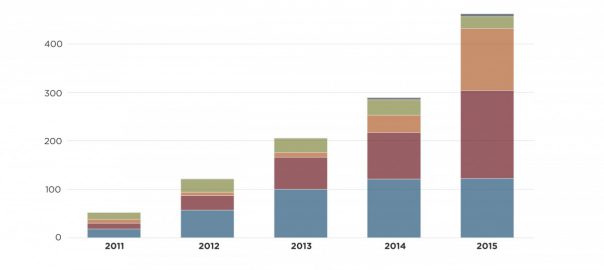
Forbes-blog_EV-chart_1200x698_Forbes

Price volatility recently reached its highest level since the global financial crisis as traders, investors and the industry as a whole try to sort through the significance of two big changes: the rapid rise of the upstart U.S. shale industry, which grew from essentially nothing in 2010 to being the world’s sixth largest source of oil supplies in 2015; and Saudi Arabia’s decision to abandon its role as market manager.

These are important issues for the near term, but they pale in comparison to a much bigger set of long-term issues. Two mega-trends are gaining steam that together have the potential to truly upend the energy industry.

First, signs of serious competition to oil in its most important market—transportation—are beginning to emerge. In the United States, more than 70% of the oil we consume is burned in our cars, trucks, ships and aircraft. The figure globally is only slightly less, at 64%. And for at least the past 100 years, oil has been the only game in town when it comes to mobility fuel.

But based on a slew of data emerging over the past few weeks, that might be about to change. According to a new report from the Frankfurt School, global electric vehicle (EV) sales surged by nearly 60% last year, bringing the total number sold since 2011 to just over 1.1 million. That’s right—despite their higher purchase price, limited range and longer refueling times, electric vehicles took a massive step forward in 2015 even as oil prices collapsed. Incredibly, most of the growth came from China, where sales almost quadrupled compared to 2014.

Read more: Forbes
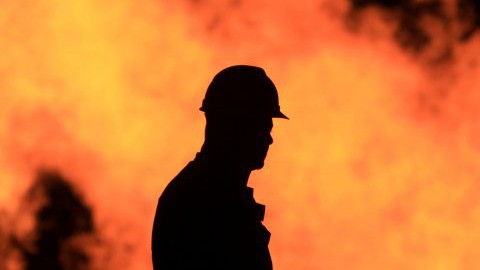
An unidentified oil worker walks in front of a natural gas flame burning off in the Persian Gulf desert oil field of Sakhir, Bahrain (Image: AP/H. Jamali)

Big bankruptcies are coming to the oil and gas sector

Warning: This “Safe Energy Industry Is In Danger”

An unidentified oil worker walks in front of a natural gas flame burning off in the Persian Gulf desert oil field of Sakhir, Bahrain (Image: AP/H. Jamali)

The canary at the drill rig just croaked.

Last week, one of the largest energy companies in the U.S. – and a major darling of the shale or “fracking” industry — started showing major signs of distress.

“Chesapeake Plunges 40% on Report It Hired Restructuring Adviser” shouts the headline from Bloomberg.

Chesapeake is closing in on bankruptcy? This is big news. And whether you’re an energy investor or not, there’s much to be gleaned from this huge story. Today, most of the major financial indexes are following the price of crude oil and the energy sector. As the drill bit goes, so does the market. And right now things are getting scary – which, as I’ll share in a moment, could be bad news for one “once safe” sector.

With oil trading hands for less than $30 a barrel, there’s major strain on the American fracking industry. For most American oil companies, $50-60 dollars a barrel is needed just to break even. The same goes for gas companies like Chesapeake, natural gas prices are far below most frackers’ break even.

Read more: Business Insider

Superior electric cars wreck oil markets

Another Oil Crash Is Coming, and There May Be No Recovery. Superior electric cars are on their way, and they could begin to wreck oil markets within a decade.

It’s time for oil investors to start taking electric cars seriously.

In the next two years, Tesla and Chevy plan to start selling electric cars with a range of more than 200 miles priced in the $30,000 range. Ford is investing billions, Volkswagen is investing billions, and Nissan and BMW are investing billions. Nearly every major carmaker—as well as Apple and Google—is working on the next generation of plug-in cars.

This is a problem for oil markets. OPEC still contends that electric vehicles will make up just 1 percent of global car sales in 2040. Exxon’s forecast is similarly dismissive.

The oil price crash that started in 2014 was caused by a glut of unwanted oil, as producers started cranking out about 2 million barrels a day more than the market supported. Nobody saw it coming, despite the massively expanding oil fields across North America. The question is: How soon could electric vehicles trigger a similar oil glut by reducing demand by the same 2 million barrels?

That’s the subject of the first installment of Bloomberg’s new animated web series Sooner Than You Think, which examines some of the biggest transformations in human history that haven’t happened quite yet. Tomorrow, analysts at Bloomberg New Energy Finance will weigh in with a comprehensive analysis of where the electric car industry is headed.

Even amid low gasoline prices last year, electric car sales jumped 60 percent worldwide. If that level of growth continues, the crash-triggering benchmark of 2 million barrels of reduced demand could come as early as 2023. That’s a crisis. The timing of new technologies is difficult to predict, but it may not be long before it becomes impossible to ignore.

Source: Bloomberg

‘Oil companies have already been granted ‘ministerial buddies’ to ‘improve access to government’ – as if they didn’t have enough already.’ (Image: A. Krauze)

Taxpayers prop up toxic oil industry

As these new crisis bailouts for fossil fuels show, it’s those who are least deserving who get the most government protection

‘Oil companies have already been granted ‘ministerial buddies’ to ‘improve access to government’ – as if they didn’t have enough already.’ (Image: A. Krauze)

Those of us who predicted, during the first years of this century, an imminent peak in global oil supplies could not have been more wrong. People like the energy consultant Daniel Yergin, with whom I disputed the topic, appear to have been right: growth, he said, would continue for many years, unless governments intervened.

Oil appeared to peak in the United States in 1970, after which production fell for 40 years. That, we assumed, was the end of the story. But through fracking and horizontal drilling, production last year returned to the level it reached in 1969. Twelve years ago, the Texas oil tycoon T Boone Pickens announced that “never again will we pump more than 82 million barrels”. By the end of 2015, daily world production reached 97m .

Instead of a collapse in the supply of oil, we confront the opposite crisis: we’re drowning in the stuff. The reasons for the price crash – an astonishing slide from $115 a barrel to less than $30 over the past 20 months – are complex: among them are weaker demand in China and a strong dollar. But an analysis by the World Bank finds that changes in supply have been a much greater factor than changes in demand. Oil production has almost doubled in Iraq, as well as in the US. Saudi Arabia has opened its taps, to try to destroy the competition and sustain its market share – a strategy that some peak oil advocates once argued was impossible.

The outcomes are mixed. Cheaper oil means that more will be burned, accelerating climate breakdown. But it also means less investment in future production. Already, $380 billion that was to have been ploughed into oil and gas fields has been delayed. The first places to be spared are those in which extraction is most difficult or hazardous. Fragile ecosystems in the Arctic, in rainforests, in remote and stormy seas, have been granted a stay of execution.

Read more: The Guardian

Electric vehicle sales to boom in 2016

2015 proved to be an interesting year for energy and climate issues both globally and in the UK. Will 2016 hold more of the same?

Forecasting is a dangerous business, but here are six predictions you should keep an eye on.

1) The showdown on oil prices between Saudi Arabia and the US will intensify, and the Saudis will eventually break.

It looks like oil and gas prices are going to remain low for the foreseeable future, panicking both the oil industry in Saudi Arabia and the shale gas industry in the US.

The big question is whether Saudi Arabia can keep production high and prices low long enough to bankrupt enough of the American shale industry. The answer may come by the end of 2016 and several factors point to the Saudis breaking first.

For one, despite losses for the oil industry, low oil prices benefit many sectors in the US, especially as consumers now have more spending money in their pockets. However for Saudi Arabia, an oil-dependent economy, low prices are a clear loser.

4) Hybrid sales will fall; electric vehicle sales will boom and become the hot energy news item of 2016.

etron-statics-258_Etron_i3-Outlander_AutoExpress

More so than renewables, low-carbon vehicles are an area where you might expect low oil prices to present a difficulty as they will encourage more people to stick with their regular car.

Sales of hybrid vehicles, which many people do compare to standard combustion vehicles in purchasing decisions, will likely fall. Conversely, electric vehicle purchases tend to be made by consumers who are less sensitive to price changes, evidenced by increased EV sales in 2015 despite low oil prices. In addition, a significant portion of EV sales are in industrial, commercial and public sectors where EV mandates play a strong role.

This prediction, like most others included here, differs significantly from OPEC’s delusional World Oil Outlook. On EVs it forecasts only a moderate increase in sales all the way out to 2040. OPEC dismisses EVs as a threat because it says it will take until 2040 for battery costs to fall by 30-50%, enough to make them viable options. It’s a particularly bold prediction as battery costs have fallen by about 50% in last five years alone.

Expect to see media interest in head-to-head races between the silent rockets and a lot of interest in three big 2016 releases: the Chevy Volt, the Nissan LEAF and the Tesla Model X.

Read more: New Economics

(Image: Razzouk/Shutterstock)

2016 Will Be the Year the Fossil Fuel Era Enters Terminal Decline

This year is set to be even warmer than last, but there are reasons to believe the shift to clean energy will gain serious momentum in 2016.

(Image: Razzouk/Shutterstock)

2015 was a landmark year for climate action. Its many highlights were topped by a Paris agreement where 195 countries set themselves on a low-carbon path via economy-wide plans sure to be developed and strengthened every year.

In the meantime, climate chaos continues to build: 2015 was the warmest year of the warmest decade since we started recording temperatures. 2016 is forecast to be even warmer. The number of climate refugees are swelling and everywhere popular movements against more pollution and irresponsibility are strengthening.

Expect the following broad trends to accentuate in 2016.

Clean Energy can no Longer be Stopped

Notwithstanding the low price of coal and oil, solar power and other forms of clean energy will continue their onward march in 2016 and quasi-monopolize additions to electricity supply worldwide.

Order books for new clean energy power plants are up sharply in the United States, China, India, as well as in the developing economies of Africa and Latin America. India, for example, with current electricity grid capacity of less than 300 gigawatts (GW), is on its way to building 100 GW of solar power by 2022 (from 5 GW currently), double the current solar capacity of China.

Meanwhile, cheaper battery technology will continue to drive clean energy costs down, while changing the way people think about energy: We will produce more electricity from solar power, but also store and manage it ourselves. This foretells nothing short of a revolution in the way our modern society fuels itself, upending previous assumptions about the need for large fossil fuel plants connected by an expensive, inefficient electricity grid.

Read more: Alternet

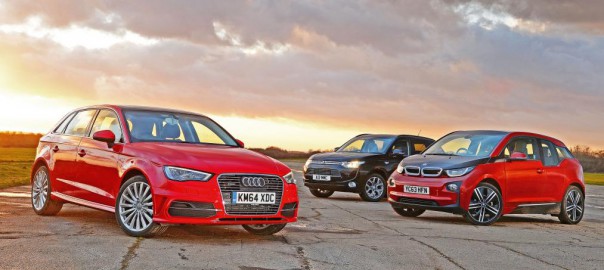
Audi A3 e-tron, Mitsubishi Outlander and BMW i3 plug-ins

OPEC’s mortal threat from electric cars

The oil cartel is living in a time-warp, seemingly unaware that global energy politics have changed forever

etron-statics-258_Etron_i3-Outlander_AutoExpress

OPEC remains defiant. Global reliance on oil and gas will continue unchanged for another quarter century. Fossil fuels will make up 78pc of the world’s energy in 2040, barely less than today.

There will be no meaningful advances in technology. Rivals will sputter and mostly waste money. The old energy order is preserved in aspic.

Emissions of CO2 will carry on rising as if nothing significant had been agreed in a solemn and binding accord by 190 countries at the Paris climate summit.

OPEC’s World Oil Outlook released today is a remarkable document, the apologia of a pre-modern vested interest that refuses to see the writing on the wall.

The underlying message is that the COP21 deal is of no relevance to the oil industry. Pledges by world leaders to drastically alter the trajectory of greenhouse gas emissions before 2040 – let alone to reach total “decarbonisation” by 2070 – are simply ignored.

Read more: Telegraph

Hedge Fund Manager Chanos: Pump Oil Now Because EVs Are Coming

Hedge fund manager and Kynikos Associates President, Jim Chanos was interviewed on CNBC on Thursday, and had a couple interesting (and uncharacteristic) observations worth noting.

CHR3696_1_nlm_Renault_c

The first being bullish on solar, but still maintaining a short position in Solar City (of whom Chanos says is not a tech company, but a finance company); despite the recent surge in PV stocks thanks to the pending 5 year renew of the 30% federal tax credit.

The second point of interest was a message to all the oil pumpers out there:

“I think if you were to look out five or 10 years, if I was a member of OPEC, I would be pumping as much as I could today while it’s worth something, because it might not be worth a whole lot by 2030.”

The reason? Electric vehicles.

Read more: Inside EVs

London Climate March - the Rally (Image: T. Larkum)

Our addiction to oil and conflict in the Middle East

Like the addict who will sacrifice his family to feed his addiction, western foreign policy has for decades supported tyrants who have oppressed the peoples of oil-producing states across the Middle East

It would be wrong to argue, as many did in the case of the Iraq War, that the motivation for bombing in Syria is to secure our access to oil. But what is clear is that the Syrian crisis and wider destabilisation of the Middle East has direct links to our addiction to oil. As a poignant reminder of the role oil plays in the conflicts of the Middle East, the first British bombing sorties targeted oil wells in eastern Syria.

London Climate March - the Rally (Image: T. Larkum)
London Climate March (Image: T. Larkum)

Like the addict who will sacrifice his family to feed his addiction, western foreign policy has for decades supported tyrants who have oppressed the peoples of oil-producing states across the Middle East. Our interventions in the region have been driven almost entirely by self-interest, taking little account of the wish for self-determination of the people who live there.

The scientific evidence that our addiction to petroleum is also disrupting the climate is now unequivocal. Equally compelling is the suggestion that climate change is leading to conflict. A working group of the Intergovernmental Panel on Climate Change wrote in 2014 that there was “justifiable common concern” that climate change increased the risk of armed conflict in certain circumstances.Perhaps they had in mind exactly the sort of circumstances witnessed in Syria.

Scientists believe that an extreme drought between 2006 and 2009 was most likely due to climate change. This drought led to crop failures, forcing the migration of up to 1.5 million people from rural to urban areas. This in turn added to social stresses that eventually gave rise to civil unrest and eventually to the civil war.

Read more: Independent

The sun sets on drilling (Image: Pexels)

We could be seeing the beginning of the end of cheap oil

Has oil become an unwanted commodity? Plunging prices suggest something is going on.

The sun sets on drilling (Image: Pexels)

While diplomats in Paris hash out a legally binding accord to significantly curb greenhouse gas emissions, oil is trading at a seven-year low, closing Tuesday below $40 per barrel.

The price drop follows OPEC’s failure to put a cap on oil production last week. Energy analysts predict prices could go lower in the next 12 months, but Dan Dicker, an oil analyst with The Street and OilPrice.com, says we could be in for a wild ride that will drive oil prices back up — way up.

“I think there could be a change of four to five million barrels [a day] over the course of the next 22 or 23 months in terms of what comes off line in terms of supply and what gets added in terms of demand,” says Dicker, the author of “Shale Boom, Shale Bust: The Myth of Saudi America.” “It would mean a huge difference in the price of oil. In fact, I’m looking at prices in three digits as early as 2017.”

Dicker concedes that his hypothesis deviates sharply from other analysts who believes prices will stay low. He argues that the Saudis have reached a new limit when it comes to oil production.

“I think that they’re literally, and again I’m on the other side of this, as close to full production capabilities as they’re going to get,” he says. “They’re at a little more than 11 million barrels a day. We’ve talked about spare capacity for years with the Saudis, with a sort of a question mark on how much spare capacity they had. In other words, how much can the ultimately pump if they just wanted to open up the spigots full bore? This — 11 million barrels a day — has absolutely shocked the analysts from their predictions two, three, or four years ago. I think that the limits have really been reached.”

Over the next six to eight months, Dicker predicts that oil and gas prices will remain low, under $50 a barrel. In the long-term, other members of OPEC can increase production if they secure funding, including Iran and Iraq, but Dicker doesn’t find such a scenario possible.

“The potential there is huge,” he says. “But with all that’s going on there geopolitically, obviously that’s not a great bet to increase production two or three fold over the next three or four years.”

Source: PRI