Category Archives: Energy Storage

DECC Minister Amber Rudd visits UK Power Networks ‘Big Battery’, in Leighton Buzzard (Image: DECC)

National Grid sees major boost for solar, electric vehicles and batteries

The UK could adopt solar, electric vehicles and batteries much faster than expected just a year ago, according to the National Grid.

DECC Minister Amber Rudd visits UK Power Networks ‘Big Battery’, in Leighton Buzzard (Image: DECC)

The new outlook is part of a rapidly changing landscape for the UK energy system, laid out in the 2016 Future Energy Scenarios. Marcus Stewart, National Grid’s head of energy insights, says in a foreword to the report: “We are in the midst of an energy revolution.”

Carbon Brief runs through the key changes in the outlook compared to last year.

Energy revolution

The idea that the UK energy world is in the midst of a period of rapid and fundamental change has been gaining traction since the start of the year. The usually conservative National Grid is the latest of several industry and government groups to use the language of “revolution”.

In February, a report for industry group Energy UK talked of a coming “revolution”, similar to those that have overtaken telecomms and banking. Then, in March, the National Infrastructure Commission said embracing a “smart power revolution” could save the UK £8bn a year by 2030.

The National Grid report and press release includes Stewart’s quote on energy revolution, as well as saying that “electricity supply is going through a period of unparalleled transformation”. However, the report fails to spell out exactly how much the National Grid’s scenarios have shifted since last year.

They now see up to 39 gigawatts (GW) of solar installed by 2035, up from around 12GW today and up 7GW from last year’s maximum expectation for 2035 of 32GW. Two years ago, National Grid expected as little as 8GW and no more than 17GW of solar in 2030. Now, its minimum is 15GW.

The raised expectations for the number of electric vehicles on the road in 2035 is equally dramatic, ranging from a 23% to a 120% increase on last year’s report, with the range depending on the wider economic and policy environment. In total, there could be as many as 8.3m electric vehicles in 2035, the report says, making up nearly a quarter of all cars on the road.

This year’s scenarios also include, for the first time, a significant future role for battery electric storage. Last year’s outlook merely noted that storage was important and said new capacity could be unlocked with technological improvements, regulatory change and subsidies.

As of this year, “the value proposition has improved for storage”, says a National Grid document discussing stakeholder feedback received during its scenario development process.

This improvement is set to continue. The Future Energy Scenarios report says the cost of lithium ion batteries could halve by around 2019, and halve again by the early 2020s. It says:

Commercial and regulatory changes which are expected in the next 12 months will be key to the successful large-scale deployment of new storage technologies.

Read more: Carbon Brief

Learn more: UK Power Networks
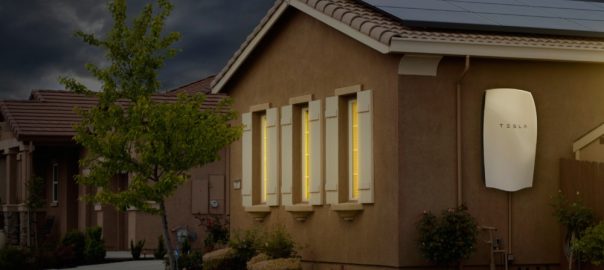
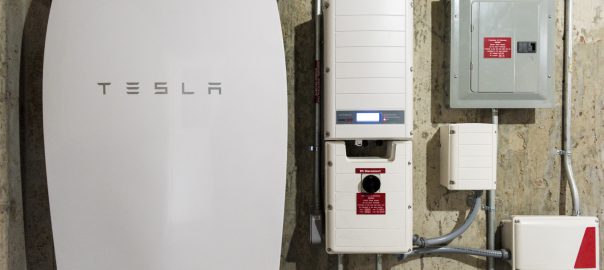
SolarCity System With Tesla Powerwall

Tesla & SolarCity Finalize $2.6 Billion Deal

[From 1 August] The Tesla Motors merger with SolarCity, announced first approximately on month ago, becomes reality today.

SolarCity System With Tesla Powerwall

Both companies will combine in all stock deal, in which SolarCity stockholders will receive 0.110 Tesla common shares per SolarCity share.

Total equity value of SolarCity stands at ~ $2.6 billion, while Tesla is valuated at approximately $34-$35 billion.

The transaction is to be closed in Q4.

SolarCity now has a 45-day period known as a “go-shop” to see whether there are better options for stockholders.

Elon Musk, who owns more than 20% of shares in both companies, argued that the merger is needed to achieve synergy between solar energy (SolarCity) and energy storage systems (Tesla Motors). After the combination, Tesla will be able to offer various products in the one-stop solar + storage experience.

Read more: Inside EVs

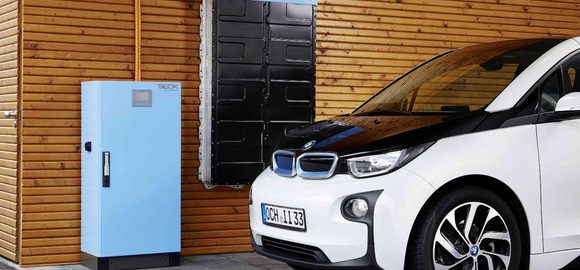
Carmaker announces plans to turn BMW i3 batteries into home energy storage kits (Image: BMW)

BMW follows Nissan into home energy storage market

Carmaker announces plans to turn BMW i3 batteries into home energy storage kits

Carmaker announces plans to turn BMW i3 batteries into home energy storage kits (Image: BMW)

The world of electric vehicles and energy storage are becoming increasingly intertwined, after German carmaker BMW last week became the second major carmaker in as many months to announce plans to enter the home energy storage market.

BMW told delegates at the Electric Vehicle Symposium & Exhibition 29 conference in Montreal last week it will use the high voltage batteries deployed in its i3 range of electric vehicles to create a new residential storage product in collaboration with German firm Beck Automation.

The BMW system will use new and second hand batteries from EVs, and will be available in a 22kWh or 33kWh sizes – powerful enough to keep the average home operating for 24 hours with no external generation.

In a statement BMW said the new storage system will allow BMW i customers to “more fully realise their commitment to sustainability” and take a step closer to energy independence. Customers will be able to store clean energy generated by rooftop solar panels, and protect their home against power outages from the grid, BMW said.

“The remarkable advantage for BMW customers in using BMW i3 batteries as a plug and play storage application is the ability to tap into an alternative resource for residential and commercial backup power, thus using renewable energy much more efficiently, and enabling additional revenues from the energy market,”

said Cliff Fietzek, manager for connected eMobility at BMW North America.

Read more: Business Green

Maslow Energy Storage System (Image: MoixaTechnology.com)

Moixa’s Brief-case Sized Smart Batteries in Big-6 Utility Pilots

Moixa Technology, the UK leader in residential energy storage, today announced with ScottishPower, a ground-breaking pilot of Moixa’s smart battery Maslow product in customer homes, helping them to save money and use more of the energy they generate

Maslow Energy Storage System (Image: MoixaTechnology.com)

London, 8 June 2016: Moixa Technology, the UK leader in residential energy storage, today announced with ScottishPower, a ground-breaking pilot of Moixa’s smart battery Maslow product in customer homes, helping them to save money and use more of the energy they generate. It also demonstrates how storage technology could address the challenges facing the UK’s overstretched grid.

In pilots with major energy industry partners such as ScottishPower, British Gas, SSE PD, Good Energy, the government (DECC) and direct customer sales, Moixa has deployed 1MWh of its British-manufactured Maslow smart battery system, deployed across 500 sites, combined with solar panels. These smart batteries can be aggregated to provide a range of services and income, using the patented GridShare battery software platform.

Smart batteries mean a revolution for utilities. They are home storage units that enable customers to save money through accessing smart tariffs, store excess solar energy for use during peak hours or share batteries with the grid for a range of network saving benefits.

Moixa has deployed 47 Maslow energy storage systems for ScottishPower in partnership with BillSaveUK. Its GridShare software dashboard enables ScottishPower householders to view energy, battery and solar use in real time on a smartphone or iPad and identify improvement opportunities. This can lead in some cases to over 20% reduction in energy costs.

Neil Clitheroe, CEO Retail and Generation at ScottishPower, said:

“Electricity is the only commodity that we can’t store at scale. We need to develop more large-scale storage projects, like pumped-storage hydro schemes, but also smaller in-home storage ideas, like Moixa’s smart battery concept. As one of the UK’s leading renewable energy companies, we plan to take a leadership role in the development of electricity storage. Our work with Moixa and BillSaveUK will allow us to understand how customers interact with electricity storage at home, and how systems like this can be tailored to offer real benefits for customers.”

Read more: Alt Energy Mag

Start-up Orison is an at-home battery system that comes in form of a plug-in unit that looks like a lamp (Image: Orison)

These 9 battery companies will help you save tons of money on your energy bill

Your monthly energy bills can get quite expensive, especially during the summer. You need lots of energy to stay cool and power your electronics, but buying your energy from an outside company isn’t always the most efficient or cost-effective.

Start-up Orison is an at-home battery system that comes in form of a plug-in unit that looks like a lamp (Image: Orison)

That’s where at-home batteries come in.

Combined with advancements in solar technology, these large batteries have the potential to provide a whole new way to store and control the energy used in your home.

It’s for that reason that an increasing number of companies are working on at-home batteries to change the modern home into a sustainable vision for the future.

Here’s 9 at-home battery makers on the market today.

We would be remiss to make a list of at-home battery makers and not include Tesla toward the top. The $3,000 Powerwall can store solar energy and provide backup power for your home.

Read more: Business Insider

Tesla Powerwalls for Home Energy Storage Hit U.S. Market

To Steve Yates, the best thing about his new Tesla Powerwall is that he doesn’t have to worry anymore about the lights going out during a storm. Or maybe it’s how cool an addition it is to the entryway of his house in Monkton, Vermont.

“I’ve always wanted to have a backup power source,” said Yates, who was without electricity for 36 hours during Hurricane Irene in 2011. He also admires the Powerwall’s sleek white contours. “It’s kind of art-deco looking.”

Solar panel linked to a Tesla Powerwall.
Photographer: Ian Thomas Jansen-Lonnquist/Bloomberg


A year after Elon Musk unveiled the Powerwall at Tesla Motors Inc.’s design studio near Los Angeles, the first wave of residential installations has started in the U.S. The 6.4-kilowatt-hour unit stores electricity from home solar systems and provides backup in the case of a conventional outage. Weighing 214 pounds and standing about 4-feet tall, it retails for around $3,000. But hookup by a trained electrician is required, as is something called a bi-directional inverter that converts direct-current electricity into the kind used by dishwashers and refrigerators. The costs add up quickly — which has fueled skepticism about Musk’s dream of changing the way the world uses energy.

Tesla Energy's home battery, Powerwall, is seen newly installed in the home of Steven YatesÊ in Monkton, Vermont on Monday, May 2, 2016.
Tesla Energy’s home battery, Powerwall, is seen newly installed in the home of Steven Yates in Monkton, Vermont
 Net-metering policies, which allow residential solar customers to sell their excess solar electricity back to utilities, have limited the appeal of home batteries in many states. But that’s shifting: Net metering is being phased out in some states, making storage more attractive.

“The picture is rapidly changing across several markets,” said Yayoi Sekine, an analyst for Bloomberg New Energy Finance. “Changes to net-metering policies and implementation of time-of-use rates will improve the case for residential energy storage systems going forward.”

Read more: Bloomberg

Elon Musk: ‘We need a revolt against the fossil fuel industry’

Tesla chief says educating the public on climate issues is essential in countering oil and gas lobby’s influence over big political decisions

Tesla’s chief executive Elon Musk has accused politicians of bowing to the “unrelenting and enormous” lobbying power of the fossil fuel industry, warning that a global “revolt” may be needed to accelerate the transition to more sustainable energy and transport systems.

Speaking at the World Energy Innovation Forum at the Tesla Factory in California on Wednesday, Musk claimed that traditional vehicles and energy sources will continue to hold a competitive edge against greener alternatives due to the vast amounts of subsidies they receive.

The solution to this energy dilemma, Musk says, is to introduce a price on carbon by defining a tax rate on greenhouse gas emissions or the carbon content of fossil fuels.

“The fundamental issue with fossil fuels is that every use comes with a subsidy,” Musk said. “Every gasoline car on the road has a subsidy, and the right way to address that is with a carbon tax.”

“Politicians take the easy path of providing subsidies to electric vehicles, which aren’t equal to the applied subsidies of gasoline vehicles. It weakens the economic forcing function to transition to sustainable transport and energy.”

Read more: The Guardian

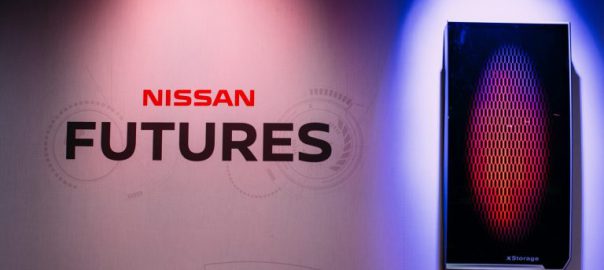
Nissan Debuts xStorage From Nissan Introduces Its Own Powerwall: “xStorage”

Nissan Introduces Its Own Powerwall: “xStorage”

Nissan has taken a page out of Tesla Energy’s playbook by introducing its own Home energy storage solution, called the “xStorage” in Europe.

Nissan Debuts xStorage From Nissan Introduces Its Own Powerwall: “xStorage”

Where this differs from several other ESS systems that are now coming to market is that the Nissan solution takes advantage of second hand batteries from Nissan electric vehicles (the LEAF and e-NV200).

For this endeavor Nissan is not going alone, it has signed up power management player Eaton to help with the project.

The company says it is designed to be the “most affordable” complete system on the market today.

The unit is available to pre-order in Europe from September of this year, and Nissan says the “xStorage” solution will give consumers the power to control the how and when they use energy at home.

“Connected to residential power supply or renewable energy sources such as solar panels, the unit can save customers money on their utility bills by charging up when renewable energy is available or energy is cheaper (e.g. during the night) and releasing that stored energy when demand and costs are high.

If a home is equipped with solar technology, this means that consumers can power their homes using clean energy stored in their xStorage system, and be rewarded financially for doing so by avoiding expensive daytime energy tariffs.”

Read more: Inside EVs

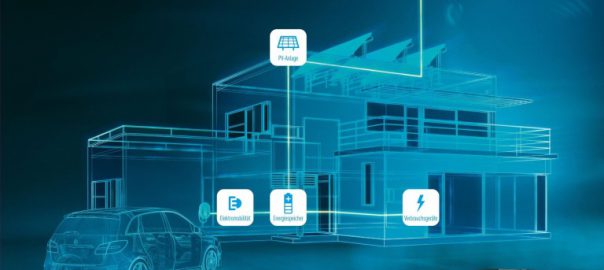
Mercedes-Benz energy storage units for private homes

Mercedes-Benz Starts Delivery Home Energy Storage To Private Individuals

Tesla Motors isn’t the only game in town when it comes to re-branding automotive fame into the energy storage business.

Mercedes-Benz energy storage units for private homes

Daimler has also announced the start of deliveries for its home energy storage systems produced under the Mercedes-Benz brand by subsidiary Deutsche ACCUMOTIVE.

Initially, Daimler entered into the ESS for business and utility companies; today, private homes is the next logical step in leveraging its advantage from developing battery packs for cars.

In case of Daimler, a ‘single block’ stores 2.5 kWh, and up to eight units and be connected for a total of 20 kWh.

Sales through a nationwide network of sales partners, and partner companies, has begun in Germany and will soon be expanded internationally.

Harald Kröger, Head of Development Electrics/ Electronics and E-Drive Mercedes-Benz Cars said that there is

“tremendous interest in our energy storage units and we have already received numerous orders”.

Most of the private homes customers intends to have ESS with photovoltaic system.

Read more: Inside EVs