Category Archives: Blog

Posts related to personal experiences, and the FuelIncluded.com website.

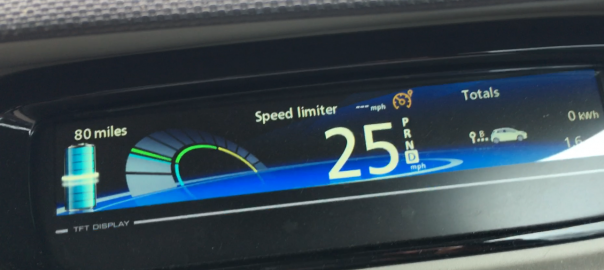
Zoe Battery Recovery (Image: Jo Pegram-Mills)

Driving style (example shown in Renault ZOE 22kWh)

One thing any existing or soon to be, Electric Vehicle driver should always bear in mind is ‘Driving Style’, this can sometimes, quite dramatically, impact your expected range.

Electric Vehicles are smart, they analyse your driving style and take this into account when estimating your expected range. If you are a rapid accelerator and tend to brake hard, you might find that your estimated range will drop quite low. I certainly have a tendency to forget this and simply enjoy the ride a bit too much when I’m doing short journeys, I find myself in this situation quite a lot.

But it can easily be rectified, you simply need to adjust your driving style, drive more economically and with a bit more consideration, soon you won’t realise you’re doing it and the car will give you better range expectations. The good news is that this is easy to do by just reacting to the feedback that the acceleration indicator on the dashboard gives you.

Your Visual Guide to Acceleration
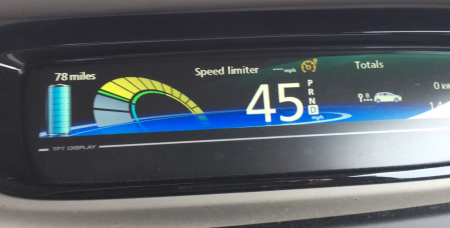
Zoe Accelerating (Image: Jo Pegram-Mills)

When you use rapid acceleration/peddle to the metal, it shows as many Yellow bars.

If you find you are constantly in yellow, be prepared to see your estimated range drop quite considerably.
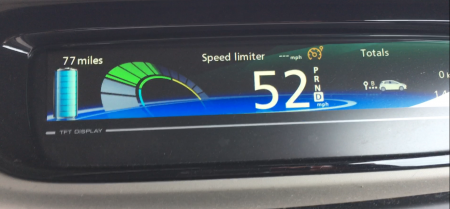
ZOE gradual acceleration (Image: Jo Pegram-Mills)

When you start driving more economically, with gradual acceleration, you can see this as fewer Green bars.

Get the most out of your range, try and stay within the green bars. If you switch to Eco mode the car will help you do this by restricting your maximum acceleration.

Success! Your range will become more predictable and consistent.

Your Visual Guide to Regenerative Braking

Regenerative Braking, also known as Battery Recovery is the clever trick where an Electric Vehicle reverses the behaviour of an electric motor. Instead of using electricity from the battery to create car motion, it uses the motion of the car to create electricity and recharge the battery. This results in the car slowing down.
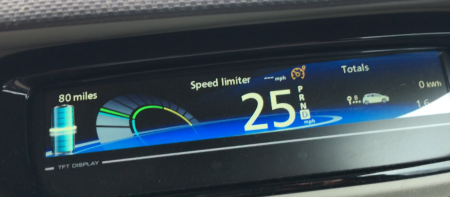
Zoe Battery Recovery (Image: Jo Pegram-Mills)

So, the battery recovery allows the car to slow itself when the road allows, and shows visually as Blue bars.

You will also notice the battery bar on the left gives a visual indication that a recharge is taking place. As a result, your range will sometimes increase the longer the car is moving without acceleration.
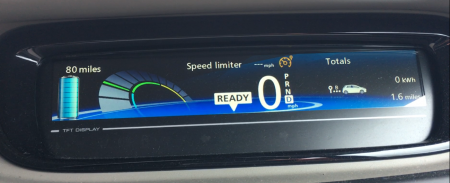
ZOE Display (Image: Jo Pegram-Mills)

An especially nice surprise is finishing your journey with more range than you started with. This can actually happen if you dramatically change your driving style during your journey, or if you do short trips. It’s a very satisfying moment and often results in excessive smugness.
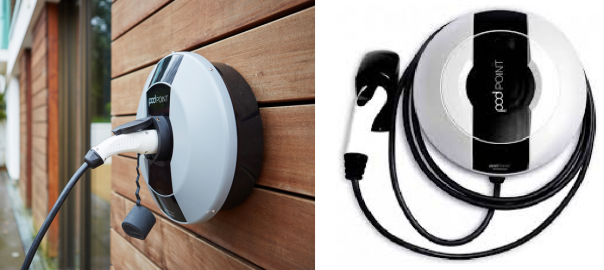
Untethered and Tethered Charge Points (Image: POD Point)

Choosing a Charge Point

When buying an electric car it is nearly always worthwhile to get a dedicated charge point installed at home.

It’s more convenient than an ‘occasional use’ or ‘granny’ (13 Amp) charge cable because you don’t need to reel it up and put it away each time.

Home Charging a Renault ZOE with a Dedicated Charge Point (Image: Charging Solutions)
Charging a Renault ZOE with a Home Charge Point (Image: Charging Solutions)

It will also be significantly faster because a dedicated charge point can provide more power without the risk of overheating. Also some electric cars, such as the Renault ZOE, don’t come with such a cable and buying one yourself can be very expensive (£500+).

The good news is that the installation of domestic charge points is subsidised by the UK government.

There are 3 decisions to be made when selecting the type of charge point for your car:

  • Tethered or Untethered
  • Connector Types
  • Power Level


Tethered or Untethered

There is usually the choice of a ‘tethered’ cable (it is fixed to the charge point) or an ‘untethered’ cable (it plugs into and can be removed from the charge point).

Untethered and tethered charge points (Image: Chargemaster)
Untethered and Tethered Charge Points (Image: Chargemaster)

Untethered has the advantage of allowing different cables to be connected (for example you can use the same charge point for a Nissan Leaf and a Renault ZOE). However, most people choose tethered because it avoids the inconvenience of connecting a cable whenever you need to charge (usually daily). It also reduces the risk of the cable being stolen.

A charge point with a tethered cable will usually cost more than an untethered one (typically about £50 more) because of the cost of its cable.

Untethered and Tethered Charge Points (Image: POD Point)
Untethered and Tethered Charge Points (Images: POD Point)

If you choose untethered you will need to use your own cable to connect to the car; it is the same cable that would be used to connect to a public charging point. It may come free with the car, for example the Renault ZOE or the Nissan Leaf with the 6.6kW charge option come with one. Otherwise you will need to buy one (we can advise you on suppliers).


Connector Types

All untethered domestic charge points supplied in the UK come with a Type 2 socket on the charge point, just as all public charge points now have (or at least officially should have) Type 2 sockets. Similarly all charge cables have a Type 2 plug at the charge point end.

Type 1 (5 pin) and Type 2 (7 pin) connectors

If the cable is tethered then you need to tell the installer the type of plug you want at the car end. This will depend on the car:

  • Type 1 socket: Nissan Leaf, Mitsubishi Outlander PHEV, Kia Soul EV
  • Type 2 socket: Renault ZOE, BMW i3, Tesla, VW e-Golf and Hyundai IONIQ

The Type 2 or ‘Mennekes’ connector is the official standard in Europe and should eventually replace the Type 1.


Power Level

A dedicated charge point can provide higher powers than a typical occasional use charging cable which will run at 10 Amps, equivalent at 230 Volts to 2.3 kilowatts. The charge will take place at the highest power that both the charge point can provide and the car can use.

There are two common power levels:

  • 16A = 3.5kW: This is the maximum charge level of the Nissan Leaf 3.3kW, the Mitsubishi Outlander and the VW e-Golf.
  • 30A/32A = 7kW: This is the maximum charge level of the Nissan Leaf 6.6kW, BMW i3, Kia Soul EV and Hyundai IONIQ. The standard Renault ZOE can use this level, in fact anything up to 22kW.

The higher power reduces the charge time so a typical EV battery will charge in about 8 hours at 16A but in about 4 hours at 32A.

It may be best to install the highest power charge point you can afford; even if your current car can’t use all the power, the next one almost certainly will be able to.

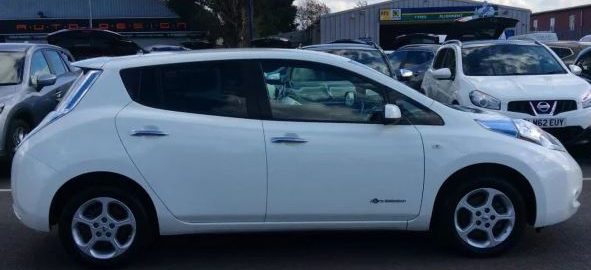
Electric Goes Second Hand


Warning: preg_match(): Compilation failed: invalid range in character class at offset 4 in C:\inetpub\vhosts\fuelincluded.com\httpdocs\wp-content\plugins\maxbuttons\assets\libraries\simplehtmldom\simple_html_dom.php on line 1389

Warning: preg_match_all(): Compilation failed: invalid range in character class at offset 4 in C:\inetpub\vhosts\fuelincluded.com\httpdocs\wp-content\plugins\maxbuttons\assets\libraries\simplehtmldom\simple_html_dom.php on line 694

Warning: foreach() argument must be of type array|object, null given in C:\inetpub\vhosts\fuelincluded.com\httpdocs\wp-content\plugins\maxbuttons\assets\libraries\simplehtmldom\simple_html_dom.php on line 701

Warning: preg_match_all(): Compilation failed: invalid range in character class at offset 4 in C:\inetpub\vhosts\fuelincluded.com\httpdocs\wp-content\plugins\maxbuttons\assets\libraries\simplehtmldom\simple_html_dom.php on line 694

Warning: foreach() argument must be of type array|object, null given in C:\inetpub\vhosts\fuelincluded.com\httpdocs\wp-content\plugins\maxbuttons\assets\libraries\simplehtmldom\simple_html_dom.php on line 701

Fatal error: Uncaught Error: Attempt to assign property "href" on array in C:\inetpub\vhosts\fuelincluded.com\httpdocs\wp-content\plugins\maxbuttons\blocks\basic.php:171 Stack trace: #0 C:\inetpub\vhosts\fuelincluded.com\httpdocs\wp-content\plugins\maxbuttons\classes\button.php(382): MaxButtons\basicBlock->parse_button() #1 C:\inetpub\vhosts\fuelincluded.com\httpdocs\wp-content\plugins\maxbuttons\classes\button.php(476): MaxButtons\maxButton->parse_button() #2 C:\inetpub\vhosts\fuelincluded.com\httpdocs\wp-content\plugins\maxbuttons\classes\button.php(903): MaxButtons\maxButton->display() #3 C:\inetpub\vhosts\fuelincluded.com\httpdocs\wp-content\plugins\maxbuttons\classes\maxbuttons-class.php(525): MaxButtons\maxButton->shortcode() #4 C:\inetpub\vhosts\fuelincluded.com\httpdocs\wp-includes\shortcodes.php(434): MaxButtons\maxButtonsPlugin->shortcode() #5 [internal function]: do_shortcode_tag() #6 C:\inetpub\vhosts\fuelincluded.com\httpdocs\wp-includes\shortcodes.php(273): preg_replace_callback() #7 C:\inetpub\vhosts\fuelincluded.com\httpdocs\wp-includes\class-wp-hook.php(324): do_shortcode() #8 C:\inetpub\vhosts\fuelincluded.com\httpdocs\wp-includes\plugin.php(205): WP_Hook->apply_filters() #9 C:\inetpub\vhosts\fuelincluded.com\httpdocs\wp-includes\post-template.php(256): apply_filters() #10 C:\inetpub\vhosts\fuelincluded.com\httpdocs\wp-content\themes\twentythirteen\content.php(43): the_content() #11 C:\inetpub\vhosts\fuelincluded.com\httpdocs\wp-includes\template.php(812): require('...') #12 C:\inetpub\vhosts\fuelincluded.com\httpdocs\wp-includes\template.php(745): load_template() #13 C:\inetpub\vhosts\fuelincluded.com\httpdocs\wp-includes\general-template.php(206): locate_template() #14 C:\inetpub\vhosts\fuelincluded.com\httpdocs\wp-content\themes\twentythirteen\category.php(28): get_template_part() #15 C:\inetpub\vhosts\fuelincluded.com\httpdocs\wp-includes\template-loader.php(106): include('...') #16 C:\inetpub\vhosts\fuelincluded.com\httpdocs\wp-blog-header.php(19): require_once('...') #17 C:\inetpub\vhosts\fuelincluded.com\httpdocs\index.php(17): require('...') #18 {main} thrown in C:\inetpub\vhosts\fuelincluded.com\httpdocs\wp-content\plugins\maxbuttons\blocks\basic.php on line 171