All posts by Trevor Larkum

Highways England on track to meet electric vehicle charging goal by summer 2019

Highways England is on track to reach its targets for deployment of electric vehicle chargers next summer after revealing that 83% of its network is within 20 miles of a charger.

The government body set a target of ensuring 95% of its strategic road network was served by an electric vehicle charger within this distance by 2020. This work is being carried out as part of a £15 billion investment promised in a road investment strategy up to 2021.

Through a programme of grant initiatives, collaboration with local authorities and use of a specialist framework of suppliers, the former Highways Agency has made significant progress towards this target.

In addition, plans are already in place to deliver the remaining chargers as a Highways England spokesman explained to Current±.

“We continue to work collaboratively with local authorities to provide grants to install charge points on local authority land, which will help us achieve a further 4% of coverage towards our commitment. We anticipate this could be achieved by summer 2019.

“We will be awarding a specialist framework for the installation of a further 65 rapid chargers, again by summer 2019, to provide a further 8% coverage.”

Read more: Current News

Fuel Included BMW i3 on static display (Image: T. Larkum)

Renault Zoe Climbs To #1 In Germany

The German plug-in electric car (PEV) market grew 23% in June, to 5,709 registrations, with plug-in hybrids (+25%) and fully electric cars (+21%) growing at a similar pace. In 2018, all-electrics are reaching 1% share, while plug-in hybrids have also grown their share to 1%, resulting in a total PEV share of 2%.

But the most interesting story on the fuels mix is the Titanic-like drop of diesel vehicles sales. In June, their sales sank 16%, to the benefit of all other kinds of fuels. Diesel now represents only 31% of the market. At this pace, diesel sales could be tot in this market by 2021. Inconceivable? Well, in 12 months, diesel lost 9% share, going from 40% to 31%.

Fuel Included BMW i3 on static display (Image: T. Larkum)

Looking at June best sellers, BMW had a 1–2 win, with the i3 scoring 509 units, a new year best, while the 225xe Active Tourer registered 500 units, a new record for the German MPV.

The Renault Zoe was 3rd, while the surprise of the month was the #5 Mini Countryman PHEV. With 300 deliveries, it had its best result ever in Germany.

Just outside the top 5, the VW e-Golf registered only 290 deliveries, its worst performance in 11 months. Is the German brand already starting the sunset mode of its BEV hatchback?

Read more: Clean Technica

Solar EV Charging Hub on Princes Street, Dundee (Image: eVolt)

eVolt installs rapid charging units for first solar power hub in Dundee

eVolt UK, the nationwide supplier of electrical vehicle (EV) charging units, has installed the latest versions of its rapid charging units for the first and largest purpose-built charging hub in the UK that includes solar power and energy storage.

The hub is located on Princes Street in Dundee city centre and features rapid charging units, 18 bays of solar canopies and an integrated energy storage system utilising second-life EV batteries. eVolt has also installed six of its Raption 50kW Rapid Chargers, capable of charging two vehicles simultaneously in approximately 30 minutes, and three 22kW eVolve chargers.

Solar EV Charging Hub on Princes Street, Dundee (Image: eVolt)

Fraser Crichton, Transport Officer at Dundee City Council, says the hub is a landmark development for the city

“We are so excited to have completed our latest EV infrastructure project as we continue to drive our e-mobility vision. With over 100 pure electric taxis in the city this hub will be vital to support our taxi fleet as well as benefitting the wider EV community ”

This is the second of three hubs to be introduced this year in Dundee through the Office for Low Emission Vehicles (OLEV) Go Ultra Low programme. The first hub was introduced at Aimer Square in April and has been used frequently since its launch. Six rapid chargers and two eVolve chargers will also be installed at Queen Street car park later this year.

Justin Meyer, General Manager of eVolt UK, says:

“This is the first hub of its kind, combining EV charging, solar canopies and energy storage, we are proud to be supporting Dundee Council’s project to lower emissions and to encourage more people to make the switch to sustainable e-Mobility.”

Source: eVolt / Gravity London

Smart charging mandated by law as Automated and Electric Vehicle Bill passes

The UK has taken ‘a major step’ towards the electric vehicle revolution according to the government after the Automated and Electric Vehicles Act completed its passage through parliament.

First published in its draft form in October 2017, the AEV Bill constitutes the government’s main route to greater provision of charging infrastructure, which it sees as the main barrier to uptake of EVs in the future.

Upon receiving royal assent, a series of measures around deployment and access to charge points are set to become enforceable by law once transport secretary Chris Grayling selects a date for implementation.

Speaking on Thursday when the bill passed, roads minister Jesse Norman said:

“The UK is becoming a world leader in the roll-out of low-emission transport. Today we have passed a significant milestone in that journey.

“This act will ensure that the UK’s infrastructure and insurance system is ready for the biggest transport revolution in a century.”

Read more: Current News

eVolt Rapid Chargers installed in Aimer Square, Dundee (Image: eVolt)

Take a look around the ‘globally impressive’ new electric car hub in Dundee

The transformation of a once-vacant Dundee yard into a site dedicated to electric vehicles is “globally impressive” and could inspire cities across the globe, it has been claimed.

A new Princes Street facility complete with with solar canopies, charging points and electrical infrastructure, designed to meet all the needs of those taking to the roads in eco-friendly cars, was officially opened on Friday morning.

The city site was once a petrol station but had lain vacant until a £1.86 million investment from the Office of Low Emission Vehicles made the development possible.

eVolt Rapid Chargers installed in Aimer Square, Dundee (Image: eVolt)

Dundee has been hailed for leading the way in the use of electric vehicles – with 100 taxis in the city now running on electricity.

Visitors from as far afield as France, Germany, the US and New Zealand – in the city for a low emissions conference – were among those in attendance at Friday’s opening ceremony.

Read more: Courier

The most impressive car at the Goodwood Festival of Speed is electric

Sometimes you see a car do something so incredible that you can’t quite believe what your eyes are telling you.

These are moments you never forget; the first time it happened to me was when I saw a Top Fuel dragster launch itself from zero to 300mph at Santa Pod. Almost 20 years later, I still find my jaw dropping a few millimetres at the recollection.

Such moments are rare, but today at the Goodwood Festival of Speed I experienced another, thanks to a lucky break that put me in the right place at the right time – and it could be telling for the future of the car industry.


Heading to an interview for a future Autocar story, I was stood by the Gurney Pavilion, located at the second turn of the course, which leads onto a long straight past Goodwood House, as the Nio EP9 arrived at the corner.

At first, and against the context of exotica from Ferrari, Lamborghini, Aston Martin et al that had run around it, it was more curious than striking. It arrived at the corner, it turned and then…

I’ve spent a fair bit of my working life reporting on racing and rally cars, but I don’t think I’ve seen much, perhaps anything, that compares with what happened next. The back of the car sat down, there was a whoosh from the electric motors and a small squeal from the tyres and then the full brunt of the car’s claimed 1360bhp was unleashed.

The spec sheet says this is a 2.7sec car for the 0-62mph sprint, but as it rolled through the corner and sprinted off, the Nio looked even more impressive than that suggests as it accelerated off into the distance. It was a sensational sight. My jaw was in the same place as when I watched that dragster all those years ago.

Read more: Autocar

Electric cars can be a very effective way to save you money on motoring (Image: Go Ultra Low)

Electric car registrations grow 25% in first half of 2018

Sales of pure electric and plug-in hybrid vehicles have risen every month so far this year, with one being registered every nine minutes in the UK.

The first half of 2018 saw 28,054 registered to drivers, a 25% increase on the same period in 2017 – which was the most successful year-to-date for the plug-in car market.

Plug-in hybrids delivered the highest volume of registrations, with more than 21,000 having arrived on UK roads in 2018 so far.

Electric cars can be a very effective way to save you money on motoring (Image: Go Ultra Low)

The figures, released by Go Ultra Low, show Nissan’s Leaf continues to be the most popular pure electric car. A further 1,501 took to the roads in Q2, taking the total number of new Leaf registrations in 2018 to 3,511.

The latest figures reveal an increasing appetite for pure electric and plug-in hybrid vehicles among private and business motorists. Following a strong performance in the first three months of the year, the second quarter of 2018 saw a further 14,655 cars find homes, a 10% increase on Q1. This takes the total number of pure electric and plug-in hybrid cars registered to date to 161,409.

Read more: Fleet News

Figure 4: Charging on Christmas Day (Image: T. Larkum)

Smart charging to enable 11 million EVs by 2030 with limited impact on grid

The increased peak demand from as many as 11 million electric vehicles on UK roads by 2030 could be just 8GW thanks to the use of smart charging technologies, according to National Grid’s latest forecasts.

The much-anticipated Future Energy Scenarios 2018 was launched today, outlining a range of four potential scenarios for the future of the UK energy system.

Figure 4: Charging on Christmas Day (Image: T. Larkum)
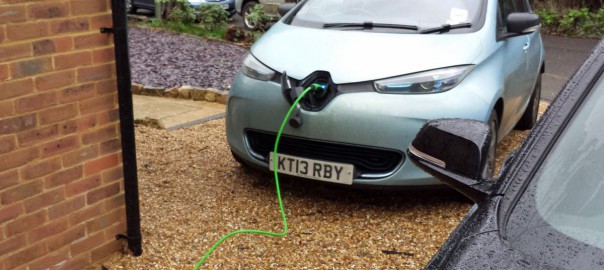
Home Charging a Renault ZOE (Image: T. Larkum)

Across all of them, electricity demand is expected to grow significantly by 2050, particularly from 2030s onwards, driven by increased electrification of transport, with heat contributing to this in some cases.

However, National Grid revealed that the emergence of smart charging will mitigate the impact on the grid of these millions of vehicles by shifting demand out of peak periods.

Read more: Current News

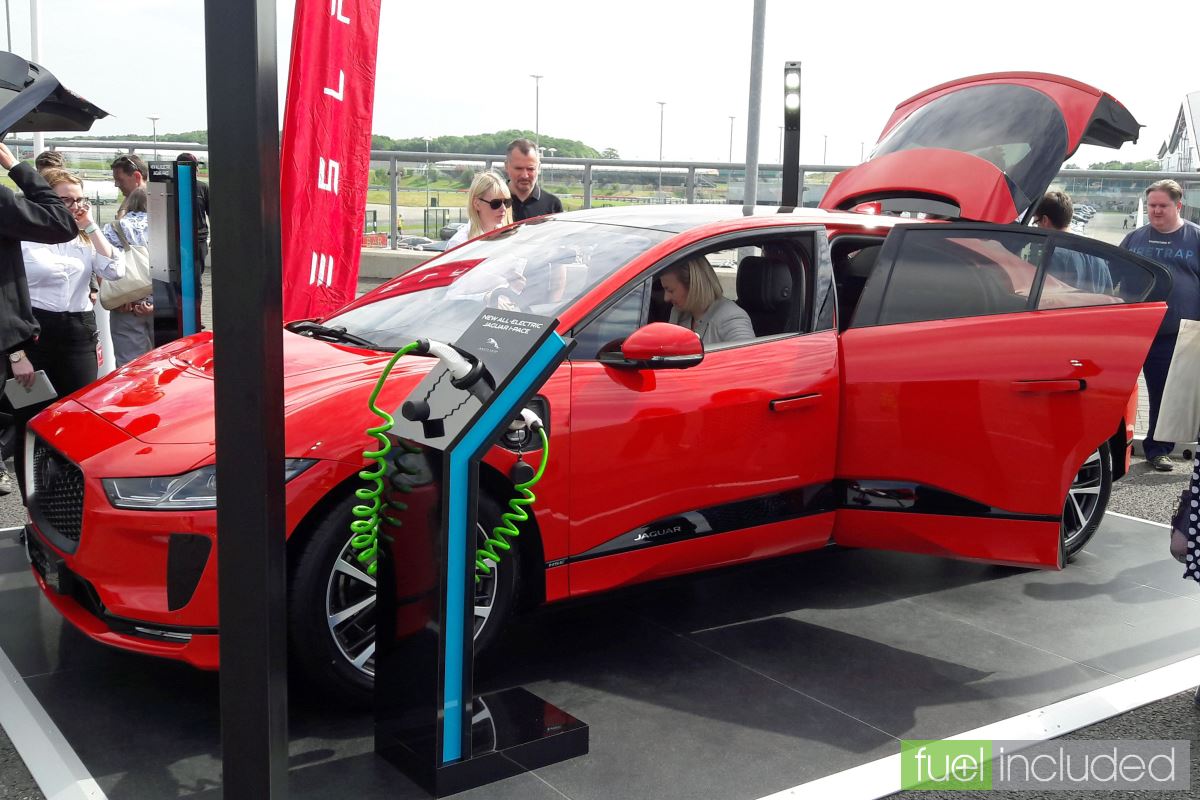
Jaguar I-PACE at Fully Charged Live show (Image: T. Larkum)

Survey: Half of young people want electric cars

Half of young people in the UK would like to own an electric car – compared with just a quarter of their parents, a survey suggests.

The research comes from motoring group the AA, which says myths about electric vehicles are putting off many drivers.

This matters because cleaning up air pollution and tackling climate change both depend on mass acceptance of electric vehicles (EVs).

Young people seem to be more accepting of the technology than older people.

Jaguar I-PACE at Fully Charged Live show (Image: T. Larkum)

But too many still hold needless fears, the AA says.

It comes as the government has announced a target for 50% of all new vehicle sales to be in the ultra-low emissions category by 2030.

The opinions were revealed in an AA/Populus poll of 10,293 drivers.

Read more: BBC

Cheapest Electric Cars UK (Image: Fuel Included)

Buyers are snapping up electric runarounds – and some are worth 30% more than a year ago

  • New data shows that 11 second-hand cars have increased in value in the last year
  • That’s despite each one having another 12,000 miles put on the clock
  • Of the appreciating models, the biggest increases came for old electric cars
  • The list also includes petrol and petrol-hybrid older vehicles

If you want to buy a car that will rise in value, you usually need to go for something classic or exotic – not a £6,000 runaround.

But new figures reveal a handful of family cars bucking the usual price trend and they all share one attribute, they are electric.

Cheapest Electric Cars UK (Image: Fuel Included)
Cheapest Electric Cars in the UK (Image: Fuel Included)

The Renault Zoe is top of a list compiled by price specialist HPI of second hand cars that are rising in value – and someone who bought one this time last year could potentially now sell it for 30 per cent more.

This means that if you had bought an average Renault Zoe in July 2017 for £6,300 and spent the past year putting 12,000 miles on the clock it should now be worth £1,900 more, says HPI.

Read more: This Is Money