All posts by Repost

Charging with an Ohme smart charging cable

How Coronavirus will supercharge the electric vehicle market

There have been plenty of good news stories coming from the automotive sector since the covid-19 outbreak, including car manufacturers switching their production lines to make ventilators.

But, of course, there are concerns about the industry’s economic stability, at the beginning of April 2020 car sales were down 44 per cent.

However, there are three powerful reasons why the electric vehicle market will be supercharged by this dreadful virus and lockdown when it’s over.

Clean refuelling

Firstly, drivers will want electric vehicles because diesel and petrol forecourts will be perceived as unclean. You have to hold the pump the previous person has used, touch the screen or enter the shop to pay. With electricity you can fuel up at your own home for consumers, or at a centralised depot for fleet owners.

Charging with an Ohme smart charging cable
Charging at home

We may all want to get back to normal but some things you can’t unknow, and one of those things is how infection is transmitted.

Preserving environmental gains

Secondly, people will want to do things differently and better. Those who can afford to buy cars will want to play a part in making the world a better, greener place. Already we are seeing how nature is recovery as a result of the lockdown: “This is the first time I have seen such a dramatic drop-off over such a wide area for a specific event,” said Fei Liu, an air quality researcher at NASA’s Goddard Space Flight Centre describing levels of nitrogen dioxide over China.

The nationwide shutdown has led to a big drop in air pollution across the UK’s major cities. For nitrogen dioxide pollution, new data shows that this has almost halved in London, Birmingham, Bristol and Cardiff. Transport contributes 23 per cent of global carbon emissions and driving is by far the largest element of that, contributing 72 per cent of transport carbon emissions.

Read more: Fleet News

It’s Time to Go Green!

If you would like to know more about Solar Panels and the PowerBanx range of home battery systems, and get a free instant quote, please complete our online form:

Ubitricity Electric Avenue project lamppost charging (Image: Siemens)

Ubitricity, Pod Point pause non-essential EV charge point installations

Installations of electric vehicle (EV) chargers are beginning to halt amidst new government guidelines regarding COVID-19.

Ubitricity Electric Avenue project lamppost charging (Image: Siemens)

Speaking to Current± yesterday, ubitricity’s managing director Daniel Bentham said they had received communication from Transport for London and the London boroughs that afternoon, and were told that the installation of EV chargers is not considered to be essential work.

“We’ll be pausing the installation of new charge points under the second phase of the Go Ultra Low City Scheme, but we will still be maintaining and conducting repairs and finishing any works which are currently underway,” Bentham said.

Ubitricity provides “all the hardware and services” for Siemens, which then does the installation works for a number of London boroughs under the Go Ultra Low City Scheme. The pair announced the completion of the UK’s first fully electrified residential avenue of lamppost chargers last week, which Bentham said now feels like “a different world almost”.

“We were on the street last Monday doing the photoshoots and the world changed the next day.”

Read more: Current News

It’s Time to Go Green!

If you would like to know more about Solar Panels and the PowerBanx range of home battery systems, and get a free instant quote, please complete our online form:

Coronavirus lockdown sees air pollution plummet across UK

Air pollution levels in the UK have dropped significantly in the two weeks since the country went into lockdown to stop the spread of coronavirus.

Some cities have seen nitrogen dioxide (NO2) levels fall by up to 60% on the same period last year, analysis shows.

NO2, released from car exhausts, is a serious air pollutant and also indirectly contributes to the warming of the planet.

Campaigners said they hoped it would lead to a permanent change.

Jenny Bates, a Friends of the Earth clean air campaigner, said:

“Seeing this drop in air pollution shows that less traffic can quickly lead to cleaner air.

“Once this dreadful situation is over, we don’t want to rush to go back to where we were or worse, and we can’t have an accelerated return to business as usual.

“We can have a better, cleaner future for ourselves and the planet.”

Read more: BBC

It’s Time to Go Green!

If you would like to know more about Solar Panels and the PowerBanx range of home battery systems, and get a free instant quote, please complete our online form:
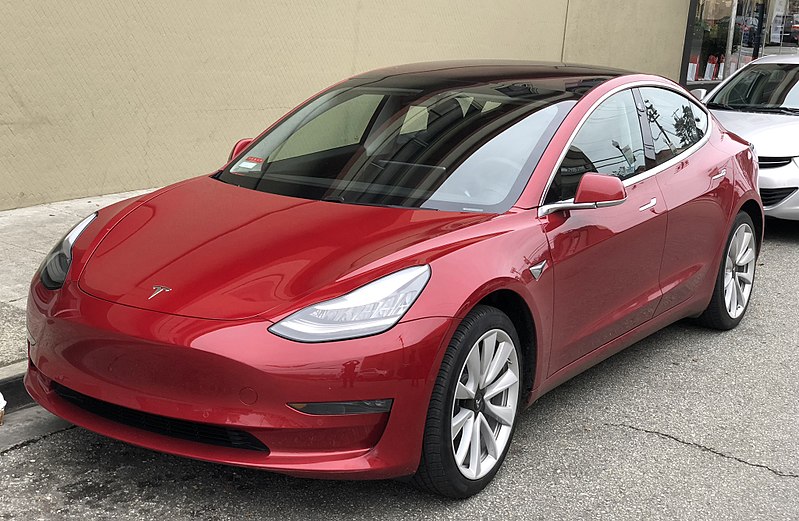
Tesla Model3 (Image: Wikimedia/Carlquinn)

Waiting times for EVs expected to match petrol and diesel as market recovers

The average waiting times for the most popular electric vehicles on sale is expected to match that of conventional petrol and diesel models as the market recovers from the coronavirus crisis, new research has shown.

Though recent figures from the Society of Motor Manufacturers and Traders (SMMT) revealed that new car registrations fell by 44.4 per cent in March due to the effects of the worldwide pandemic, electric car registrations rose by 197.4 per cent year-on-year.

Tesla Model3 (Image: Wikimedia/Carlquinn)

Despite this increase in demand, the average waiting time for electric models has fallen significantly over the last 12 months, with the majority of EVs now available within 12 weeks, according to analysis by WhatCar?.

It contrasts with waiting times in 2019, which often exceeded 12 months.

The research also found that eight manufacturers have stock of their electric models in the UK now, which will allow for even shorter waiting times between ordering and taking delivery. These include the Tesla Model 3 and the Renault Zoe.

Read more: AOL

It’s Time to Go Green!

If you would like to know more about Solar Panels and the PowerBanx range of home battery systems, and get a free instant quote, please complete our online form:

Motorists reconsider electric cars amid lockdown

Government-enforced lockdowns around the world, due to Covid-19, are without doubt making life difficult for many, but they are also having a dramatic positive impact on people’s awareness of the benefits to the environment, reports Venson Automotive Solutions.

45% of people surveyed by Venson confirmed that the radical improvement on air pollution across the globe as a result of the demobilisation of transport, has made them reconsider their electric vehicle (EV) ownership plans. A further 17% said it reaffirmed the decision they had already made to make the switch to an EV.

Of the 45% of motorists who are now reassessing their EV options, 19% said their next company car or private purchase would be an EV, with the remaining 26% confirming they intend to become an EV driver in the next 5 years. In an EV attitudes survey conducted by Venson in July 2019, 41% of people said they were considering moving to an EV, but 31% said that wouldn’t for another 10-15 years, confirming the intention by many to play their part in protecting the environment has since accelerated.

“Reducing emissions has been a hot topic and a clear government, business and personal target for several years now,” Alison Bell, Marketing Director at Venson Automotive Solutions commented, “but still the growth of electric vehicle (EV) ownership has been slow. This is despite evidence that transport is responsible for 23% of global emissions, and driving petrol and diesel fuelled vehicles contributes 72% of the transport sector’s greenhouse gas emissions*.”

Read more: KCW Today

It’s Time to Go Green!

If you would like to know more about Solar Panels and the PowerBanx range of home battery systems, and get a free instant quote, please complete our online form:

March sees tripling of battery EV sales despite slumping new car market

Sales of battery electric vehicles (BEVs) soared in March 2020 to 11,694 despite a significant drop in sales of new cars overall.

In March, registrations of BEVs almost tripled, accounting for 4.6% of the market, according to new figures released by the SMMT. Plug-in hybrid electric vehicle (PHEV) sales also saw a boost, growing 38% in the month, however they fell short of the numbers BEVs achieved, with 6,818 registrations compared to 11,694.

However, the new car market saw an overall drop in sales of -44.4%, a harsher fall than during the last financial crisis and the worst March since the late nineties, the SMMT said.

203,370 fewer cars were registered than in March 2019, a fall larger attributed to the closure of showrooms in line with government advice to contain the spread of COVID-19.

The reason why BEVs saw a huge spike despite the overall decline is likely to be attributed to several reasons, according to Cornwall Insight’s EV specialist Katie Hickford, one of which is the changes to Benefit in Kind tax which came into effect on 1 April, providing a strong financial incentive for fleet EV purchases.

Another large contributing factor is also likely to be the Tesla Model 3, Hickford said, which is “likely the 9th best-selling car model during March 2020”.

Read more: Current News

It’s Time to Go Green!

If you would like to know more about Solar Panels and the PowerBanx range of home battery systems, and get a free instant quote, please complete our online form:

Volkswagen Passat GTE (Image: T. Larkum)

Top 10 best plug-in hybrid cars 2020

PHEVs are fast becoming some of the most important cars on our roads as more of us switch from pure combustion to electrified power. These are our favourites

The UK company car market is in the midst of a seismic shift right now.

The adoption of the latest WLTP emissions testing standard, combined with another tightening down of CO2-based UK company car tax rules, has really marginalised the suitability of conventional petrol- and diesel-powered cars for fleet use and shifted the spotlight squarely and unflinchingly onto the modern plug-in hybrid.

Volkswagen Passat GTE (Image: T. Larkum)

As many company car drivers will have already discovered to their cost, if you want to continue paying anything like the same benefit-in-kind (BIK) tax on a company car in 2020 as you did in 2019, the only way to do it – if you haven’t already – is to move out of a petrol or diesel car and into a PHEV.

These are the cars you should be considering for that big move. All are electrified hybrid options that’ll get you into the sub-50g/km CO2 money-saving BIK club, although, depending on their officially certified electric-only range, some currently qualify for a tax liability at 8% of their P11D price, some at 12% and others at 14%. Here’s how to choose wisely.

1. BMW 330e

BMW’s competitors have followed its lead so many times when seeking success in the UK fleet market over the past few decades. It makes perfect sense, then, that BMW was the first premium brand to offer the market a really convincing plug-in hybrid executive option in the shape of the previous 330e, and that it should continue to lead the field with the current one.

The latest 330e combines a 2.0-litre turbocharged petrol engine with an electric drive motor mounted upstream of the gearbox, making it handle and behave much like any other G20-generation 3-Series. It imposes a relative penalty on boot space compared with its conventionally powered siblings, but it’s unlikely that typical business users will notice the shortage, and cabin space is unharmed.

Read more: Autocar

It’s Time to Go Green!

If you would like to know more about Solar Panels and the PowerBanx range of home battery systems, and get a free instant quote, please complete our online form:

2020 Renault Zoe (Image: Renault)

Renault Zoe review: first UK test of new electric supermini

Ah, testing a small electric car. Let me guess. Honda e… Mini… 208… Corsa… Cinquecento?

Keep guessing. This is indeed a part of Planet Car that has become pretty congested in the last couple of months. But let’s not forget the one that has owned the territory for more than eight years, the Renault Zoe. And it’s just had a major going over.

2020 Renault Zoe (Image: Renault)

So what is it? A dodderer that’s about ready to be put out to grass, or a wily old stager that can still teach the whippersnappers a thing or two?

Well, it does well in the headline one electric-car issue: range. Here are the numbers: Honda 137 miles, Mini 144, Fiat 199, Vauxhall 209, Peugeot 212, all in their small-wheel versions.

The Zoe hits 245 miles by the same slightly artificial measure. Dah winnah!

Read more: Top Gear

It’s Time to Go Green!

If you would like to know more about Solar Panels and the PowerBanx range of home battery systems, and get a free instant quote, please complete our online form:

Petrol stations may close due to low demand, warns trade body

Petrol Retailers Association warns dramatic dive in sales during pandemic will make businesses “unviable”

Petrol stations could be the next victim of the coronavirus pandemic, after warnings that a dearth of business will force many to close in the coming weeks.

The Petrol Retailers Association (PRA), which represents the independent fuel retailers that make up the majority of UK forecourts, cites a government survey claiming sales of petrol have fallen by an average of 75% across the UK, with diesel down 71%.

“Many petrol stations will have to close in the coming weeks, as sales of fuel dry up and their businesses become unviable,”

the PRA said in a statement.

Stations in hardest-hit rural areas will be most at risk, it claims. Motorists are advised to check that their local station is actually open before leaving the house.

Read more: Autocar

It’s Time to Go Green!

If you would like to know more about Solar Panels and the PowerBanx range of home battery systems, and get a free instant quote, please complete our online form:

Dennis Eagle eConnect electric refuse vehicle (Image: Dennis/Twitter)

Cambridge councils roll out electric refuse vehicle

The Greater Cambridge Shared Waste Service – a partnership between South Cambridgeshire district and Cambridge city councils – has rolled out its first electric refuse collection vehicle (RCV).

The fully electric Dennis Eagle ‘eCollect’ costs around £400,000, which the partnership says is more than the approximate £185,000 cost of a diesel bin lorry.

Dennis Eagle eConnect electric refuse vehicle (Image: Dennis/Twitter)

However the partnership said this highlights its the two council’s commitment to the“growing climate emergency”, and the Shared Waste Service says it will eventually replace all current 55 diesel vehicles across its fleet with electric or hydrogen lorries.

Carbon emissions

Cambridge city council’s executive councillor for climate change, Rosy Moore, said:

“Our shared waste service eventually aims to replace all bin lorries with zero emission options – by 2028 at the latest. As well as reducing our carbon emissions, electric vehicles also contribute to cleaner air and given our focus on air quality, this is another reason we’ve made this purchase.”

The current diesel vehicles that collect waste and recycling in Cambridge are among the largest CO2 emitters in both councils, according to the Shared Waste Service.

The service reportedly uses around 50,000 litres of diesel a month with a cost of £55,000.


Ms Moore added:

“It’s an exciting new technology but inside the lorry itself it is quite like what we already have. So, we know our crews will quickly become familiar with it. As well as electric vehicles, we’re also investigating the possibility of testing vehicles that are powered by hydrogen in future too. We’re committed to doing what we can to cut our own carbon emissions and decarbonising our waste fleet will be a big step towards this.”

Read more: Lets Recycle

It’s Time to Go Green!

If you would like to know more about Solar Panels and the PowerBanx range of home battery systems, and get a free instant quote, please complete our online form: