All posts by Repost

Demand for used electric vehicles continues to rise

Strong demand for electric vehicles (EVs) saw values rise 0.9% in September, while average used values remained static, says Cap HPI.

Particular strength has been seen for pure battery electric cars with values increasing for as diverse models like the Renault Zoe, BMW i3 and Tesla Models S and X.

At three years and 60,000 miles, average used values didn’t move in September, while newer cars have increased by a negligible 0.1% at the six month and one-year points. Older cars have dropped slightly, but the 0.3% decrease at five-years-old is again negligible.

Read more: Fleet News

Porsche stops making diesel cars after VW emissions scandal

The German carmaker Porsche says it will stop making diesel cars, and concentrate on petrol, electric and hybrid engines instead.

It follows a 2015 scandal in which its parent company, Volkswagen, admitted it had cheated emissions tests for diesel engines.

Diesel cars over a certain age have been banned in parts of some German cities in a bid to cut pollution.

The Porsche chief executive said the company was “not demonising diesel”.

“It is and will remain an important propulsion technology,” Oliver Blume said.

“We as a sports car manufacturer, however, for whom diesel has always played a secondary role, have come to the conclusion that we would like our future to be diesel-free.

“Petrol engines are well suited for sporty driving.”

Existing diesel car customers would continue to be served, he said.

Porsche did not build its own diesel engines, preferring to use Audi ones.

“Nevertheless, Porsche’s image has suffered, Mr Blume said.

“The diesel crisis caused us a lot of trouble.”

Read more: BBC

Groupe Renault unveils France's first Smart Island on Belle-Île-En-Mer (Image: Renault)

Groupe Renault unveils France’s first Smart Island on Belle-Île-En-Mer

  • Groupe Renault, Morbihan Energie, Les Cars Bleus and Enedis have joined forces to create FlexMob’île, an innovative programme aimed at accompanying the energy transition on the French island of Belle-Île-en-Mer.
  • This smart electric ecosystem is founded on three core activities, namely the sharing of electric vehicles, the stationary storage of solar energy and smart charging.
  • FlexMob’île sees Groupe Renault continue to develop the principle of smart islands, the first of which was Portugal’s Porto Santo.

Belle-Île-en-Mer (France), September 21, 2018 – In association with its partners the Belle-Île-en-Mer Community of Communes, Morbihan Energies, Les Cars Bleus and Enedis, Groupe Renault – a major player in the world of electric ecosystems – is delighted to unveil a brand new joint project known as FlexMob’île. The aim of this smart electric ecosystem is to facilitate the energy transition on the French island of Belle-Île-en-Mer which lies off the coast of southern Brittany. This initiative follows in the footsteps of the innovative Smart Fossil Free Island programme which has been operational since last February on the Portuguese island of Porto Santo in the Madeira archipelago.

Groupe Renault unveils France's first Smart Island on Belle-Île-En-Mer (Image: Renault)
Groupe Renault unveils France’s first Smart Island on Belle-Île-En-Mer (Image: Renault)

For the next 24 months, Groupe Renault and its public and private partners will be developing a smart electric ecosystem that has been conceived to reduce the island’s carbon footprint and increase its energy independence.

“We are thrilled to be collaborating with the Belle-Île-en-Mer Community of Communes, Morbihan Energie, Les Cars Bleus and Enedis on this project which is unprecedented in France. Our goal is the same as with Porto Santo. That is to say the implementation of global solutions that meet local needs using both tried-and-tested and more recent technologies. It will be possible to carry over the Belle-Île-en-Mer system not just to other islands but also to cities and suburban areas,” says Gilles Normand, SVP, Group Electric Vehicle Division.

Read more: Renault Media

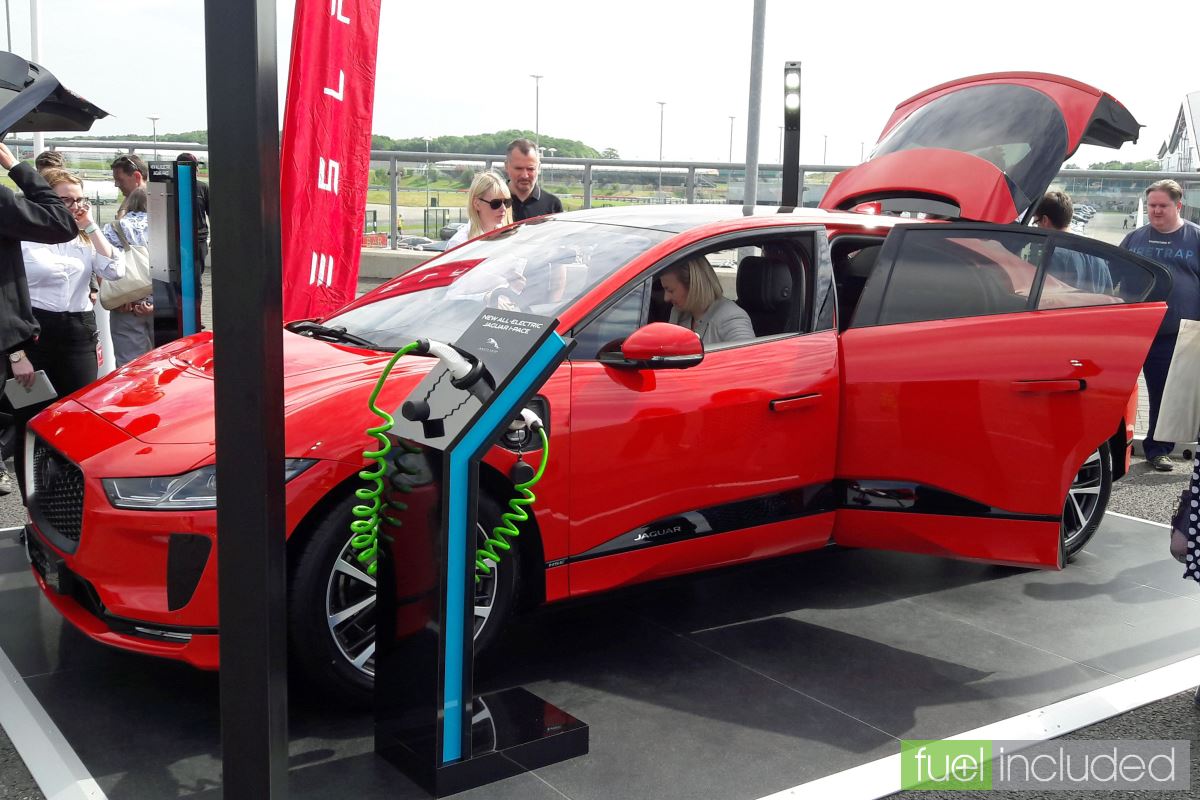
Jaguar I-PACE at Fully Charged Live show (Image: T. Larkum)

Jaguar I-Pace review

Could this week’s road test subject be the most significant new car to leave the halls of a British manufacturer since the McLaren F1?

Don’t bet against it. For one thing, it is remarkable that the Jaguar I-Pace – not just a new Jaguar but a new breed of Jaguar, remember – was conceived in a mere four years.

Regardless of our verdict, this is a courageous project from a marque whose total annual sales amount to a fraction of what big-hitting Audi, BMW and Mercedes-Benz can muster. Despite the greater R&D budgets of its rivals, Jaguar has become the first established luxury car brand to bring its expertise to bear on a zero-emissions product.

Jaguar I-PACE at Fully Charged Live show (Image: T. Larkum)

The curious paradox is that the I-Pace is simultaneously the most limited and unrestricted Jaguar yet built. On one hand, to fulfil its potential it relies on the scope of a charging infrastructure outside of Jaguar’s direct control, and owners will need to plan activities in a way they simply wouldn’t need to if they owned a petrol-powered car. On the other, this opulently sleek, long-range electric car is claimed to accelerate to 60mph in less than five seconds but is uncommonly spacious within owing to its cleverly packaged powertrain.

It can also perform software updates ‘over the air’; can wade to a depth that’s typically the preserve of purpose-built off-roaders; is clever enough to save battery charge by only activating air vents for the seats in which passengers are actually sitting; and should, claims Jaguar, set new benchmarks on crossover SUV handling with perfect weight distribution, a low centre of gravity and a focus on feel. Early drives have suggested its four-wheel-drive powertrain also has huge potential off the beaten track, though that is to be followed up on another occasion.

On this one, our aim is to discover whether the I-Pace is good enough for you to put that Tesla Model S order on hold; or maybe even if its versatility and dynamism can convince us to give up hydrocarbons altogether.

Read more: Autocar

Kia e-Niro EV (Image: Kia)

Kia Niro EV offers over 300 miles of real world range for half the price of its rivals

KIA has confirmed that the new Niro EV’s real-world range which rivals the likes of Tesla and beats car such as the new Jaguar I Pace, Audi e-Tron and Mercedes EQC but will cost half the price.

Kia has confirmed the impressive real world range for the new Niro EV.

It will be able to achieve range of up to 301 miles on a single charge when it goes on sale towards the end of 2018.

Powering the car is a high-capacity 64 kWh lithium-polymer battery.

Its range was confirmed on the WLTP combined cycle. On the WLTP ‘urban’ test cycle, the e-Niro is capable of travelling for up to 382 miles (615 km) – further than many petrol cars.

Kia has also optimised the battery to be able to use a ‘fast charger.’

When plugged into a 100kW fast charger the Niro’s battery pack can be recharged from zero to 80 per cent in just 54 minutes.

There is also a smaller 39.2 kWh battery pack variant which produces 193 miles of real-world range on a single charge.

Models equipped with the 64kWh battery pack are paired with a 150 kW (204 ps) motor, producing 395 Nm torque.

This allows the vehicle to sprint from zero-62mph in just 7.8 seconds.

Standard 39.2kWh battery pack variants are paired with a 100 kW (136 ps) motor, also producing 395 Nm torque.

It enables the car to travel from zero-62 mph in 9.8 seconds.

The car is expected to costs around £30,000 when it goes on sale which makes it over half the price of a lot of its rivals including the Tesla Model X, Jaguar I-Pace, Audi e-Tron, and Mercedes EQA.

Read more: Express

Renault EZ-PRO: Urban delivery goes robo (Image: J. Oppenheim/Renault)

Renault EZ-PRO: Urban delivery goes robo

In a world where fast paced urbanization means that more than 60% or 70% of the population, depending of the region, will live in towns and cities by 2030, moving people is not the only task that needs to be rethought. A new era is also beginning for transporting goods: rapidity, flexibility and reliability are the watchwords of the new requirements for consumers at a time that is also seeing a rapid rise in online purchasing. This is accompanied by ever faster and more accurate delivery times with increasingly strict regulatory constraints in towns and city centers.

Providing sustainable mobility for all, today and tomorrow is Groupe Renault’s credo. To accomplish this, we are committed to offering mobility solutions that meet the needs of the many and staying true to our DNA. Tomorrow’s mobility will be electric, connected, autonomous and shared. This naturally includes the delivery of goods, and in particular what is known as “the last mile”.

Renault EZ-PRO: Urban delivery goes robo (Image: J. Oppenheim/Renault)

Our vision for the future of last-mile delivery builds on our experience of nearly 120 years in the utility vehicle domain and our passion for innovating in order to make our customers’ lives easier. It is nourished by our DNA which places people at the heart of the design of our vehicles. It is also based on our openness to partners, who we work with in an open innovation approach that makes it possible to go further as we explore new horizons.

This is what makes this vision unique. It is articulated around four strong axes:

  • We believe that urban last mile delivery sector is one of the most important areas to disrupt in order to create a future that is clean, free of un-needed congestion, and efficient.
  • We believe that commercial delivery is flexible, and that a same platform can be used either in B2B and B2C scenarios.
  • We believe that delivery of parcels has to be seamless. End users can choose precisely where, when and how to have goods delivered.
  • Finally, and perhaps most importantly, we believe the future of last-mile delivery still has a human touch – someone who remains an essential link in the delivery chain.

Renault’s vision is today illustrated by EZ-PRO, a robo-vehicle concept for last mile urban delivery that includes a concierge, in a robo-vehicle scenario with human touch.

Source: Renault Media

Seven Reasons Why The Internal Combustion Engine Is A Dead Man Walking

The age of the Internal Combustion Engine (ICE) is over. Electric cars are the future. The transition has just begun, but the move from ICE vehicles to Electric will happen sooner and more quickly than most people suspect.

What are the factors that lead me to say this with such confidence?

1 China says so!

China is now the world’s largest car market (of the 86m cars sold in 2017, 30% (25.8m) were sold in China, compared to 20% (17.2m) in the US, and 18% (15.6m) in the EU).

Unsurprisingly, car manufacturers want to have access to this market. However, China has passed a law which requires any vehicle maker to obtain a new energy vehicle score of at least 10% by 2019, which rises to 12% by 2020, and on up to 20% of sales by 2025.

As a result of this announcement, all the major OEM’s have suddenly found EV religion. A slew of announcements has followed about the 10’s of billions of dollars or Euros they are investing in their EV development programs and the partnerships or huge investments they are creating to secure their battery supply chain. The CEO of Porsche has even gone on record as saying that after 2030 all Porsche cars will be 100% electric.

So, China has spoken, and the car manufacturers have listened. In the next 18 months, expect the number of electric vehicle models available to purchase, to increase significantly.

2 Battery Costs are falling

The main cost of an electric vehicle is the cost of the battery. These price of these batteries is falling significantly.

Lithium-Ion batteries cost $1,000 per kWh in 2010. By 2017 that cost had fallen to $200 per kWh, and it won’t stop there. At the Tesla shareholder meeting on June 5th of this year, Elon Musk stated that Tesla would be at $100 per kWh within 2 years. $100 per kWh is widely agreed to be the figure where EVs and ICE vehicles will have a comparable upfront purchase price.

So, by 2020 the cost of batteries will have fallen 90% in 10 years, and the price will continue to drop.

3 Battery capacity is increasing

Lithium-Ion batteries are increasing in energy density at a rate of 5-8% per annum. Mercedes has said that their fully electric Mercedes EQC, which will come to market in 2019, will have an expected range of 500km. While the Tesla Roadster, which launches in 2020, has a stated range of 1,000km. When Electric Vehicles have a range of 1,000km, it is the ICE vehicles which start to have a range problem.

Moreover, other battery technologies like solid-state batteries will come on stream giving us batteries that are cheaper, faster charging, and with even greater range still.

4 Electric car batteries have a very long life

Contrary to what many believe, the batteries in electric vehicles don’t degrade over time (or over miles/kilometers driven either).

Read more: Forbes

Kia e-Niro 2019 review

Niro comes of age as an electric car with an excellent drivetrain and impressive real-world range

What is it?

Electric cars may seem to dominate the mainstream media motoring coverage, but there really are not that many pure EVs you can buy yet in the UK, and even fewer with a ‘big’ range.

So the Kia e-Niro arrives at quite the opportune time, with electric cars – and the charging network to support them – gaining momentum with acceptance and awareness among the wider buying public beyond early adopters.
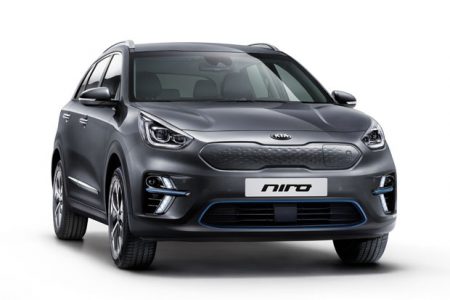
The Niro is a couple of years old now and launched as Kia’s dedicated eco-friendly model, promising hybrid, plug-in hybrid and, in time, all-electric drivetrains within the same range, and now the time has come for that electric version.

You’ll spot more than one or two similarities between the e-Niro and the Kona Electric from sister brand Hyundai. The drivetrain is common between the pair, consisting of an electric motor powered by a 64kWh lithium ion polymer battery.

While the Kona Electric offers a smaller battery, as does the e-Niro in Korea and in other markets, in the UK the e-Niro is set to be offered with just the larger battery, and a price that aims to come in below £30,000 when it launches early next year.

What’s it like?

Our test e-Niro is a Korean-spec model driven on Korean roads, but while the odd bit of trim and optional extra may differ, this is the drivetrain and chassis we’ll be getting.

Some drivetrain it is too. My, the e-Niro is brisk. It feels far quicker than its 0-62mph time of 7.8sec suggests, and even more impressive is the way it responds at higher speeds. Look for a bit of extra poke to make a pass on the motorway, and it’s all there before your right foot has barely touched the pedal. We even managed to spin the wheels accelerating out of a 30mph zone into a main A-road.

As such, the e-Niro is likely to have appeal to any enthusiast, but anyone swapping into one from their Ceed diesel is likely to be unprepared for such real-world pace and drivability. A test drive is essential, as such power – or rather torque in the case of the e-Niro – could catch many unaware.

The e-Niro isn’t uncomfortable in the way it rides, yet neither does it isolate its occupants from bumps in the road; the chassis does not display any great sophistication in how it handles the road, or indeed that level of torque, a bit like a black cab. That’s most likely down to the weight; much of the chassis tuning feels geared towards masking that weight as much as possible. A bit like a black cab…

Our test route wasn’t one for the e-Niro to reveal itself as a driver’s car. Yet it did demonstrate competent if not inspiring handling. There’s a pleasing heft to the steering, even more so in Sport mode, where the urgency of the drivetrain is increased further.

Something else that can be tweaked is the level of regenerative braking through four different levels via some paddle-shifters on the gearlever, as with the Kona Electric. The system seems to default to an auto mode for the most time even if you try to set it to the level you’d like, meaning it’s not quite as pleasing a feature as it should be.

The range figure seemed a true one too. Our test route wasn’t the longest, but the battery life and range indicator dropped in line with the distance covered, and the starting range of 272 miles on an almost full charge was indicative of the claimed figure of just over 300 miles. At least 250 miles per charge should be expected, based on this test.

Read more: Autocar

Electric vehicles already able to cut greenhouse gas emissions by half

Exclusive: Critics have played down ability of current electric cars to reduce CO2 levels, but new analysis shows significant impact

Replacing a fossil fuel-powered car with an electric model can halve greenhouse gas emissions over the course of the vehicle’s lifetime, according to a new report.

The finding challenges reports by the UK press, other transport research groups and the fossil fuel industry that have underestimated the rise of electric vehicles (EVs) and their capacity for cutting emissions.

Released ahead of the world’s first zero emission vehicle summit in Birmingham, experts hope these results will drive a rapid switch to electric vehicles.

It is well established that a transition to electric vehicles will immediately reduce toxic air pollution, but the impact on carbon emissions has been less clear.

Critics have pointed to the carbon-intensive process of battery manufacture and the relatively small share of Britain’s electricity supply coming from renewables as factors that stop EVs reaching their full CO2-cutting potential.

“The take up of EVs in the UK, as elsewhere, continues to grow fast and sales have just passed 4 million globally,” said Andy Eastlake, managing director of the Low Carbon Vehicle Partnership.

“While no one doubts the air quality benefits of zero tailpipe emissions, critics often question the overall life cycle greenhouse gas impacts.”

However, the new European Climate Foundation-commissioned report used 2017 data to demonstrate that owners of EVs – particularly smaller models – are already playing a big role in helping the climate.

Transport is now the sector that contributes most to the UK’s greenhouse gas emissions, and the Committee on Climate Change has urged the government to improve on their current plan to ensure all new diesel and petrol vehicles are banned from 2040.

In their role as the government’s climate advisers, the committee has called for “more stretching targets” to ensure most new cars and vans are electric by 2030.

Transport secretary Chris Grayling revealed his “Road to Zero” strategy in July to make the UK “the best country in the world in which to develop and manufacture zero-emission vehicles”.

Aurelien Schuller from French consulting firm Carbone 4, one of the report’s co-authors, said their new study revealed “there is no time to waste in the UK’s transition to EVs”.

“Thanks to an already-significant decarbonisation of its electricity generation through coal phase-out the UK is already in a position to make significant cuts in the greenhouse gases from its transport sector,” he said.

The research concluded that a smaller EV produces around 15 tonnes of CO2 from construction through to scrapping, compared to an average of 32 tonnes for the equivalent petrol or diesel car.

Read more: Independent