All posts by Repost

Putting Electric Vehicles on the Fast Track

Three years ago, the world’s largest car manufacturer made global headlines for deliberately evading emissions standards.

The Volkswagen Group spiraled into an unmitigated public relations crisis—now known as Dieselgate—once it became apparent that the company installed “defeat devices” in 11 million vehicles between 2009 and 2015. Those devices enabled VWs to pass emissions tests while emitting far more pollutants than allowed by law.

For years, transportation experts in the environmental community had shown that this practice was far more commonplace than official testing data might suggest. But it was thanks to the investigative prowess of the nonprofit International Council on Clean Transportation (ICCT), Volkswagen’s deceit was exposed—and from the depths of a $20+ billion corporate scandal rose a clarion call for action against unacceptably high emissions from vehicles. The dust has yet to fully settle from Dieselgate, but the fallout has already generated an urgent demand from corporations, cities and nations to embrace a new path that can provide significantly cleaner, more accessible and more affordable mobility for all.

A race has now emerged to determine the future of transportation and it is increasingly clear that those who invest in electric mobility will come out ahead. It is also clear that philanthropic funding proved instrumental in exposing Dieselgate and has helped amplify the call for increased ambition and action. In this new environment, philanthropy can continue to invest in accelerating innovation and ushering the world toward a zero-emission mobility future. Fast-tracking adoption of electric vehicles (EVs), however, requires tackling four challenges that could stand in the way of success.

The first is initial cost. While battery prices are falling rapidly and EVs are less expensive to operate and maintain than their combustion-engine competitors, the initial cost of EVs is still higher. Overcoming this challenge will require targeted fiscal and non-fiscal incentives that recognize the public benefits of EVs. The good news is that by taking innovation to scale, EVs will eventually become less expensive than combustion vehicles, providing significant economic savings in addition to environmental benefits.

The second challenge is convenience. Transitioning away from internal combustion engines toward EVs requires infrastructure building at scale. While early EV adopters were able to get by mostly charging at home, expanding the market further requires the installation of convenient public, apartment building and workplace charging stations. Once deployed, strategic management of vehicle charging can facilitate greater renewable energy integration and can make more efficient use of the grid, providing a double-win for clean power and transport.

Read more: Forbes

Electric Car Line-up (Image: Go Ultra Low)

EV100: 31 companies join drive to switch to electric vehicles

Global EV100 initiative reports progress among major corporates shifting towards 100 per cent electric fleets as it targets two million EVs by 2030

More than 30 global corporates have now pledged to switch their road fleets to electric vehicles through the EV100 initiative, which has set a target of electrifying two million vehicles by 2030 through its membership.

Published today, The Climate Group’s first annual report on its EV100 initiative reveals 31 companies with a combined revenue of over $500bn have now made EV commitments as part of the campaign, including high profile names such as BT, IKEA, Unilever, EDF, and Heathrow Airport.

Electric Car Line-up (Image: Go Ultra Low)

The report provides a detailed update on the commitments made by 23 member companies, which have together pledged to switch 145,000 vehicles to electric in 66 markets around the world by 2030.

Collectively, the EV commitments from these 23 firms could help to save an estimated 6.6 million metric tonnes of CO2, the equivalent carbon footprint of 1.9 million UK households, according to the report.

Of these members, 95 per cent cited greenhouse gas reduction as a ‘very significant’ or ‘significant’ driver for switching to EVs, and 80 per cent highlighted tackling air pollution as a key reason. A third also identified financial savings as an incentive for investing in EVs.

However, over 70 per cent of EV100 members also identified a lack of EV charging infrastructure as one of the biggest barriers to increased electric vehicle adoption.

Nevertheless, the report states that collectively EV100 member companies have made commitments that will give access to EV charging to over 630,000 of their employees by 2030.

Helen Clarkson, CEO of The Climate Group, said the report showed how leading corporates are helping to accelerate the wider market shift to electric transport by 2030.

With countries pledging to end sales of the combustion engine and cities bringing in low or zero emission zones, forward-thinking companies are getting ahead of the curve now by switching to electric vehicles, she said. “The private sector has an instrumental part to play in bringing down emissions and cleaning up our air – and there are big opportunities for companies taking action now here in the UK.”

Read more: Business Green

2019 Kia Niro EV First Review

  • New electric Kia Niro has a 239-mile range
  • 64-kWh lithium-ion battery, 201-horsepower electric motor
  • Full recharge in under 10 hours with 220-volt AC charger
  • DC Fast Charger gives 80 percent in 75 minutes
  • On sale by late February
  • Sold in 12 states
  • Pricing expected around $37,500

The Kia Niro, when it arrived in 2016, was designed to accommodate a variety of electrified powertrains. The Niro hybrid came first, followed by a plug-in hybrid (PHEV) version in 2017 and now the fully electric model. KBB recently drove this 2019 Kia Niro EV, which goes on sale soon in 12 U.S. states and has an EPA-estimated range of 239 miles. Competitors include the Chevrolet Bolt, Nissan Leaf, Tesla Model 3 and the Hyundai Kona EV.

While some people may think of the new Niro EV as Kia’s version of the Hyundai Kona EV, it’s not. Rather, the Niro EV shares its chassis with the Hyundai Ioniq. As such, it has a much roomier back seat than the Kona EV, but as a slightly heavier vehicle it can’t quite match the impressive 258-mile range of the Hyundai, even though it does have the same 201-horsepower electric motor and 64-kWh lithium-ion polymer battery pack.

That Niro EV’s liquid-cooled battery pack — mounted low and flat in the chassis, between the front and rear axles — is huge, so large that one Kia engineer likened it to a queen-size mattress. By itself, it tips the scales at 1,008 pounds, which means it represents more than 26 percent of the Niro EV’s 3,854-pound curb weight. The battery in the Niro PHEV, for the record, weighs only 85 pounds. Ponder that for a few.

How does the new Kia Niro EV drive?

With that big chunk of weight so low to the ground and between the axles (where chassis engineers like it), the Niro EV drives remarkably well. This new electric Kia feels substantial, not the least bit tinny, and it takes corners with minimal body roll and excellent composure thanks to its low center gravity. It’s a quiet car, and there’s plenty of space for a 6-foot-tall passenger to ride behind a driver of the same size.

A rotary-dial controller on the center console is used to engage Drive, and while the front seating position is about an inch higher than that of the standard Niro hybrid, it’s because the whole vehicle is raised, not because the seat has been raised within the 5-seat cabin. The same, though, can’t be said in back, where the battery has pushed up the Niro EV’s floorboard and rear seat a small but noticeable amount.

Power from the permanent-magnet electric motor is good, with enough juice on tap to screech the front tires away from a stoplight and propel the Niro EV to a top speed of 103 mph. Moreover, there are noticeable differences among the four driving modes (Eco, Normal, Sport, Eco+), which tailor the motor response, regen braking, air conditioning, heating and the other systems to satisfy driver tastes.

Read more: Kelley Blue Book

New flagship Renault ZOE S Edition added to range

Renault has introduced a new flagship S Edition model to its all-electric ZOE line-up, with more equipment and added technology

Renault has updated its all-electric ZOE line-up, adding a new flagship model called the S Edition. Priced from £19,270 (including the government’s £3,500 plug-in car grant), the new trim level replaces the ZOE Signature Nav as the range-topper, adding more standard equipment for a lower price.

The new Renault ZOE S Edition gets a BOSE stereo with DAB radio, a choice of either 16-inch or 17-inch alloy wheels, a reversing camera and leather upholstery with lumbar adjustment on the driver’s seat.

Renault ZOE

Other features include parking sensors, automatic lights, rain-sensing wipers, climate control, a leather steering wheel, electric windows, electrically folding door mirrors and a seven-inch infotainment system with voice-controlled sat-nav.

A choice of two motors are available for the ZOE S Edition; a quick-charge Q90 unit with 86bhp or a more potent R110 model with 106bhp and 225Nm of torque. Both motors have a range of 186 miles under WLTP regulations, and the Q90 model can be charged to 80 percent capacity in 65 minutes using a 43kWh fast charger.

Read more: Auto Express

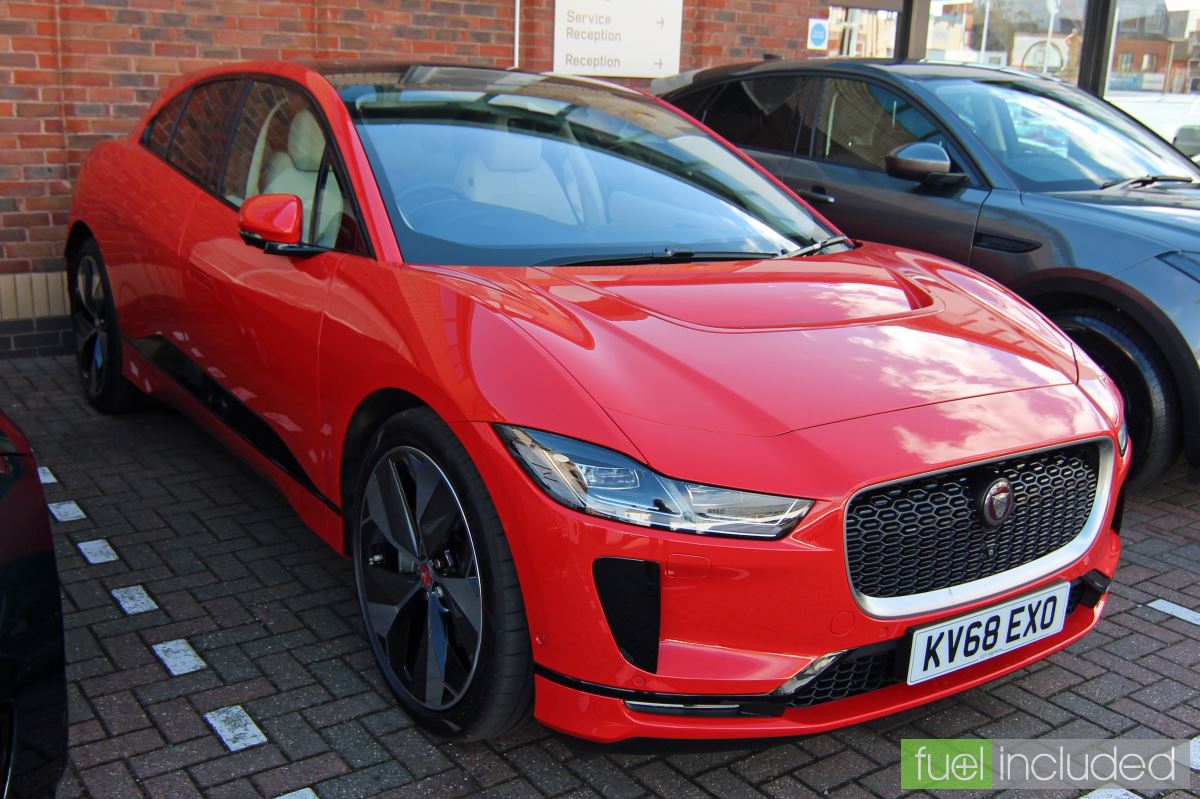
Jaguar I-PACE Electric Car (Image: T. Larkum)

The Electric 2019 Jaguar I-Pace Feels Just the Right Amount of Futuristic

The 2019 Jaguar I-Pace is advertised as an SUV, but it’s really more like a hatchback.

And a luxury sedan. Actually, the design that makes it hard to classify also creates one of the most versatile vehicles ever. The fact that it’s electric makes it slightly annoying to own, but quite satisfying to drive.

About 230 miles of range electric means this Jag can’t exactly do everything. But what it does do, it seems to do well.

(Full Disclosure: Jaguar arranged for an I-Pace to be left with me for a weekend. I returned it with enough charge for the nice delivery folks to get home.)

Jaguar I-PACE Electric Car (Image: T. Larkum)

Before undertaking a big transformation in the past decade, Jaguar was one of the more anachronistic car companies you could point to. This company built its whole brand on big displacement sedans, swaths of soft leather and hood ornaments. The chrome cats got moved to the trunks, but Jaguar’s still trading in signature exhaust notes and the average American’s assumption that all things English are fancy.

Suffice it to say, that makes the I-Pace is the most abnormal Jaguar we’ve ever seen. And for the same reason, it’s also perhaps the most interesting.

Jaguar can’t exactly abandon the look it’s worn for over 80 years in one fell swoop, but it had to do something dramatic to stay relevant in the luxury market while electric cars are hot and so are global temperature averages. And as a result of hustling to market, Jaguar’s only major rival in the practical luxury EV segment at this very moment is Tesla.

That will change as Audi, Mercedes, BMW, Volkswagen and even Cadillac plan a big onslaught of EVs, starting soon. But Jag is one of the first at the table, so let’s see what its version of the future looks like.

Read more: Jalopnik

Milton Keynes 'Mushrooms' Charging Hub (Image: T. Larkum)

How Cars Like Tesla Model S and Nissan Leaf Disrupt Gas Stations

The disruption of the gas station is looming.

What will the future gas station look like? Cars like Tesla Model S, Model 3, Nissan Leaf and Chevy Bolt will turn the future gas station into a Wall Connector charging your car inside your garage. Most likely it will be two cars load sharing on a charger powered by 14 solar panels.

While we will still have gas stations in 5 years the number of them closing the fuel pumps and turning into convenience stores, such as Walgreens is going to increase dramatically.

Current opportunity

Fueling stations in the past could raise and lower prices seemingly at will, and unless consumers were making their own biodiesel (not recommended) at home they had no choice but to pay high gas prices.

Milton Keynes 'Mushrooms' Charging Hub (Image: T. Larkum)
Milton Keynes ‘Mushrooms’ Charging Hub (Image: T. Larkum)

Recently Tesla increased supercharging prices while Shell has partnered with Greenlots to offer EV charging at Shell Stations. These are moves to profit on the upcoming revolution in powering vehicles. There is profit in DC fast charging because the country needs additional Superchargers and DC fast chargers as the fleet of electric vehicles grows. Although after the initial growth phase of fast chargers this fast charging profit will be limited by common motorist not oil elitist. (Also see why Toyota suddenly partnered with Panasonic on EV batteries).

The Disruptive weapon

Why will the new “energy” pump become such a disruption? The disruptive weapon will become small home and business charging. Common motorist will limit the profit of DC fast charging by simply choosing to charge more at home, and or share charging with friends, families, and small businesses who want your business by allowing free charging. Apps such as PlugShare increase the ability to easily peer-to-peer charge.

Everyone loves free, hence why more commuters at Tesla superchargers are older Tesla models with free supercharging. As free disappear at the superchargers and DC fast chargers increase prices motorist will counter with free home charging. For the most part no one places a gas or diesel fuel pump in their garage. No most motorist can have unlimited and free energy (after the initial investment) for the life of their home.

Read more: Torque News

Europcar adds 85 ZOEs to its car-sharing service (Image: Renault)

Europcar Mobility Group Adds 85 100% Electric Renault ZOEs to its UK Service

  • Europcar Mobility Group orders 85 all-electric Renault ZOEs for its UK car sharing and Deliver & Collect operations
  • A number of units to be used by E-Car Club to extend its cost-effective, low-emissions car share schemes
  • Majority of E-Car Club’s new Renault ZOEs to be made available at brand new Solihull locations
  • Order will also work to significantly lower the carbon footprint of Europcar’s city-based Deliver & Collect service
  • Ease-of-use, environmental compatibility and real-world range of 186 miles influence repeat order
  • Renault was the number one electric vehicle manufacturer in 2018, whilst the Renault ZOE is one of Europe’s best-selling electric cars
  • ZOE available from £18,420 on-the-road (after PiCG)
  • Over 5,000 Renault ZOEs are included in European car-sharing schemes

The UK’s leading low-emission car sharing club has reaffirmed the suitability of the all-electric Renault ZOE for its growing operation as its parent company, Europcar Mobility Group, orders a further 85 of the award-winning supermini.

E-Car Club – ecarclub.co.uk – has taken a number of units, supporting its expansion across the UK, from East London to St Andrews, Scotland. Through the innovative scheme, E-Car Club provides the public with a low-cost, hassle-free and environmentally friendly alternative to private car ownership and customers can hire a Renault ZOE from only £4.50 per hour, including power and insurance.

Europcar adds 85 ZOEs to its car-sharing service (Image: Renault)

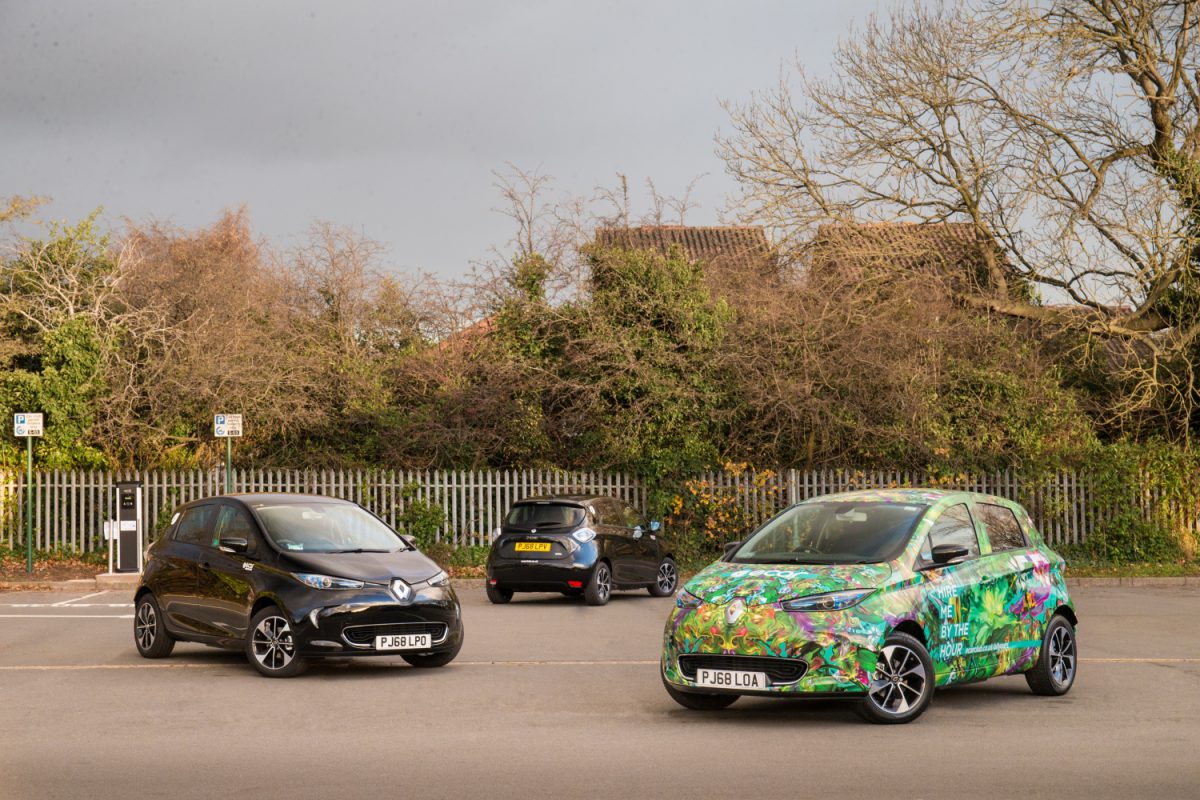
The majority of E-Car Club’s newly acquired, 40 kWh Renault ZOEs, will be used for a brand new scheme in North Solihull, which sees the popular EV available to members at nine locations throughout the region’s residential areas.

Local drivers can hire any of the new ZOEs, one of which has been wrapped in a distinctive ‘ECO Jungle’ livery, by simply signing up online. Completely self-service, bookings can be made via the E-Car Club website 24 hours a day, 365 days a year with customers gaining access to a ZOE simply by scanning their membership card against the windscreen. Drivers then unplug the ZOE from the onsite charger to experience all the benefits of all-electric motoring.

The rest of the Renault ZOEs will be used by Europcar to support its Deliver & Collect service in major UK cities. The use of the Renault ZOE works to significantly lower Europcar’s carbon footprint in these highly populated areas as well as reduce its operating costs.

The new order follows Europcar’s successful introduction of 55 Renault ZOEs for its Deliver & Collect logistics fleet in 2016, which at the time was the biggest ever UK order for the best-selling EV.

Europcar opted to extend its fleet of the 100 per cent electric, five-door supermini following feedback from both E-Car Club members and its own drivers. The ZOE has proved to be perfect for both its busy Deliver & Collect role and E-Car Club’s car sharing model, being immensely easy to drive and charge, spacious and boasting a very practical real-world range of up to 186 miles on a single charge. Notably, the reliability of the Renault ZOEs already on fleet also influenced Europcar’s purchasing decision.

Read more: Renault Press

Kia e-Niro EV (Image: Kia)

Kia e-Niro picks up coveted Car of the Year award

An electric car made by South Korean automaker Kia has taken home the prestigious What Car? “Car of the Year” award, beating out contenders like BMW’s 3 series, the Jaguar i-Pace and the Renault Zoe.

It’s the first time the South Korean automaker has won the coveted award, also marking a milestone in automotive history as the first time an electric car has taken home the award.

According to What Car?, the e-Niro won “by knockout” (as opposed to points), saying on its website that “it’s the first sensibly priced electric car that can fit into most people’s lives.”

The battery electric e-Niro, a compact SUV with 455km range (WLTP), which also picked up “Electric Car of the Year” award, is due for release in the UK this April. Pricing was announced last December at £32,995 ($A57,000) after the UK’s plug-in car grant is applied).

Affordability of electric cars remains a barrier to ownership for many – and this was a major factor of consideration for the What Car? judging panel.

“Uncompromised electric car ownership has, so far, been the privilege of those able to afford a Tesla, which is why the e-Niro is such a game-changer.”

Other models in the running included the Jaguar i-Pace and Renault Zoe.

“While the Renault Zoe deserves credit for offering a decent range for less than £20k, and the I-Pace for giving Tesla buyers a better option, we think Kia’s success in making a long-range electric car that’s within the reach of many deserves the most credit,” the judges said.

Read more: The Driven

EVs to be as cheap as conventional vehicles in the UK by 2021

More than 21 million electric vehicles could be sold each year by the end of the next decade, with EVs achieving cost parity with conventional vehicles in the UK as early as 2021.

Those are the headline findings in new research compiled by advisory firm Deloitte, which has also forecast that electric vehicle supply could outstrip demand, heaping pressure on manufacturers.

The research, published this week, details how Deloitte expects the global adoption of EVs to accelerate in the coming years. Deloitte expects the number of new EVs on the road to double from two million in 2018 to four million in 2020, before soaring to 12 million by 2025.

This is then expected to rise further to 21 million vehicles by 2030, by which time battery electric vehicles are expected to account for 70% of total EV sales the world over.

That surge in demand is to be driven by both growing consumer demand for greener vehicles and government policies driving their adoption. While the UK government has tinkered with the financial incentives on offer, the plug-in car grant continues to support purchases of certain types of low-emission vehicle in the UK.

And the UK looks set to lead the pack in cost-parity, with Deloitte’s automotive partner Michael Woodward expecting electric vehicles to be as cheap to own as petrol and diesel vehicles in the UK as early as 2021.

“In the UK, the cost of petrol and diesel vehicle ownership will converge with electric over the next five years. Supported by existing government subsidies and technology advances, this tipping point could be reached as early as 2021. From this point, cost will no longer be a barrier to purchase, and owning an EV will become a realistic, viable option for new buyers,” he said.

Read more: Current News

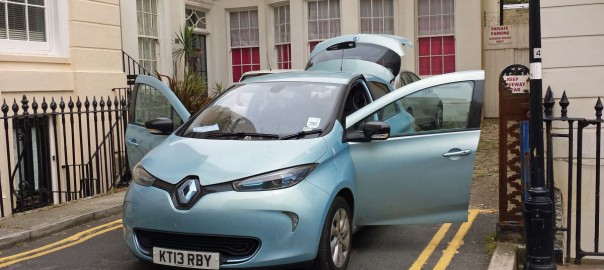
Packing up the ZOE in Brighton ready to go home (Image: T. Larkum)

All-Electric Renault Zoe Named ‘Best Used Electric Car’

  • Renault ZOE named ‘Best Used Electric Car’ in DieselCar and EcoCar’s Used Car Top 50 2019
  • All-electric ZOE takes the title for the second consecutive year
  • Five-door supermini also voted 21st overall out of over 750 cars that were evaluated
  • Renault is the number one EV manufacturer in Europe

LONDON – January 25, 2019: The 100 per cent electric Renault ZOE has successfully defended its title of ‘Best Used Electric Car’ in DieselCar and EcoCar’s Used Car Top 50 2019.

The ZOE clinched the title for the second consecutive year after impressing the magazine’s judging panel of second-hand car experts with its ease-of-ownership, clean looks and nippy yet relaxed driving experience. The award joins an ever-growing list of industry accolades bestowed on the stylish supermini. Additionally, the magazine placed the ZOE 21st overall out of over 750 cars evaluated.

Packing up the ZOE in Brighton ready to go home (Image: T. Larkum)
Renault ZOE 22kWh (Image: T. Larkum)

Diesel Car and Eco Car reached its decision after assessing the Renault ZOE on a multitude of factors, including purchase price, residual value, general competency and fitness for purpose. Every car evaluated was given a score out of 10 that determined its final placing.

On awarding the Renault ZOE for the second year running, Ian Robertson, Editor and Publisher, DieselCar and EcoCar, said

“A supermini rather than a family car, the attractive ZOE is a stylish all-electric model that makes adopting electric motoring remarkably easy. Drive one around town in near-silence with zippy acceleration and zero tailpipe emissions and you’ll be convinced electric power is the future. That’s especially the case in cities like London, where it’s Congestion Charge exempt, saving owners a fortune. Be sure to check if the battery pack is included, as customers were given the choice of buying it outright or leasing the batteries separately.”

Read more: The Auto Channel