All posts by Repost

Nearly three million British children face pollution risk with 6,000 UK schools in areas ruled to have high toxicity

  • Every school in capital is over WHO limit of 10mg of PM2.5 per cubic metre
  • Air pollution is thought to contribute to around 40,000 early deaths a year
  • Comes as Rosamund Kissi-Debrah won right for new inquest into Ella’s death
  • Asthma-suffering daughter lived near busy road in Hither Green, south London

Millions of schoolchildren are being poisoned by pollution every day, analysis has shown.

About 6,500 nursery, primary and secondary schools with a total of 2.6million children are in areas where levels of toxic particles exceed the World Health Organisation’s recommended limit.

The fine particles tested, known as PM2.5, are the most dangerous form of air pollution and can get into the lungs and into the blood stream.

Research by The Times using data from the London Atmospheric Emissions Inventory found that every school in the capital is over the WHO limit of 10mg per cubic metre, along with 234 in Birmingham. Leicester and Nottingham each have dangerous levels affecting more than 100 schools.

The revelations come days after Rosamund Kissi-Debrah from south London won her fight for a new inquest into the death of her daughter, Ella.

She says the nine-year-old asthma sufferer’s death in 2013 was caused by toxic fumes from a busy road near their home in Hither Green.

Air pollution is thought to contribute to 40,000 early deaths a year, and is particularly dangerous for the young, the elderly and those with lung conditions.

Read more: Daily Mail

Hyundai Kona Electric (Image: Hyundai)

EV sales stalling as customers left waiting more than a year for a car

Britain’s electric vehicle revolution is being hampered by a “bottleneck” in global battery production, as demand far outstrips supply of zero-emission vehicles.

An investigation by the Press Association found that some dealers were telling customers they could be waiting more than a year if they placed an order for an EV today, with some manufacturers confirming they couldn’t guarantee the number of vehicles coming to the UK in the future.

Kia and Hyundai appear to be the worst affected, with the former’s e-Niro and latter’s Kona and Ioniq Electric experiencing 12-month-plus wait times.

Hyundai Kona Electric (Image: Hyundai)

Jaguar, Tesla, Nissan, Smart, Audi and Volkswagen are all also experiencing delays with their electric vehicle offerings of between two and five months.

A Kia spokesperson blamed global demand and battery supply, calling the e-Niro “a victim of its own success” and adding that the South Korean firm’s 2019 UK allocation of about 800 cars sold out within two weeks of going on sale in January.

He said: “The simple fact is our battery suppliers cannot make battery packs quickly enough for the demand, and if we haven’t got battery packs, we cannot sell the cars.”

Both Kia and its sister company Hyundai said they were taking reservations for 2020 deliveries and would contact interested customers once pricing and delivery time frames were clearer.

Read more: Evening Express

Should I rapid or home charge? And what if I live in a flat?

Most people who are contemplating an EV labour under the petrol station mindset.

It’s entirely understandable, because that’s how we’ve always driven. When the tank’s empty, we stop at a station, or even drive specially to one, and fill up. So when thinking about EVs, we worry about how long it takes to charge en-route, and how many chargers there are, and whether they’ll be occupied when we get there.

But once they’ve had an EV for a while, owners flip right out of that mindset. Only about three per cent of UK charging is done on roadside rapid chargers. That’s tiny. Here’s why. You’ve plugged in overnight at home. If your petrol tank was magically nearly full every morning, you wouldn’t often stop at a station.

We’re programmed to think about recharge times because with a petrol car, getting energy into the thing occurs only while we’re standing on a wet, greasy forecourt holding a hose. In an EV, energy can go into it while we’re sleeping or working or shopping. Even if we don’t shop for eight hours, it’ll still give enough juice for a useful distance. After all, you often see people putting in a tenner’s worth of petrol.

Slow charging is the EV world’s Cinderella. Forgotten but vital. The headline recharge times are the rapid DC roadside stops. But say you buy an EV with 250 miles’ range. Now look at a map and see how often you drive – in one hit – to places more than 250 miles from home. For most of us, a few times a year. That’s when you’d want a rapid charge of under 45 minutes or so. The rest of the time, slow charging is just fine.

It turns out most electric-car drivers don’t even bother to plug in every night, or necessarily to fully charge. People have regular driving habits, and if that means 40 or 50 miles a day, a couple of plug-ins a week is fine. Plus ever more shops and town centres are installing free chargers to tempt EV owners to visit.

Read more: Top Gear

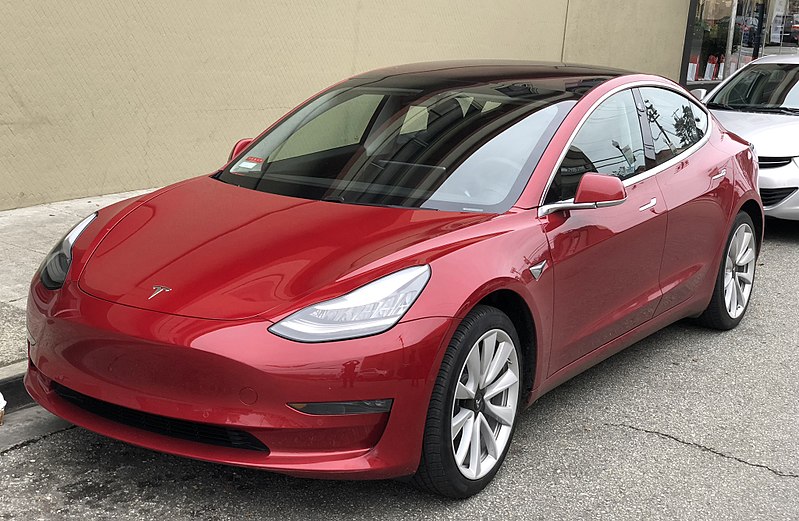
Tesla Model3 (Image: Wikimedia/Carlquinn)

Finally! The Tesla Model 3 has British prices and specs

Tesla’s entry-level saloon starts at a whisker under £40,000

UK order books are open for the Tesla Model 3, and we finally have a price: £38,900 for the rear-wheel drive Standard Range Plus (SRP) model, inclusive of the government’s £3,500 plug-in car grant. Deliveries start in June.

Maybe not as cheap as we were initially led to believe (Tesla promised prices would start at $35,000, which in today’s money is £26,600), but not bad. For a bit of context, £38,900 is around £3,000 more than a top-spec Nissan Leaf, and about the same as a 2.0-litre petrol BMW 330i.

Tesla Model3 (Image: Wikimedia/Carlquinn)

The SRP Model 3 manages 0-60mph in 5.3 seconds, will hit 140mph and claims 258 miles of range. Next up is the Long Range model, which gets dual motors for all-wheel drive. It takes 4.5 seconds to hit 60mph, has a top speed of 145mph and costs £47,900. Finally there’s the Performance. Also dual-motor, it does 0-60mph in 3.2 seconds and tops out at 162mph. It will cost from £56,900, and has a claimed range of 329 miles.

Read more: Top Gear

Tesla Model 3 (Image: Tesla.com)

Tesla Model 3 saloon

The Tesla Model 3 is the first affordable, mass-produced model in the American manufacturer’s all-electric range, offering customers something very different from conventional rivals such as the BMW 3 Series, Audi A4, Jaguar XE and Alfa Romeo Giulia.

The Model 3 has no direct electric rivals for now; it’s more expensive than EVs like the Nissan Leaf and Hyundai Kona Electric but smaller and cheaper than the Jaguar I-Pace. It’s closer to the Jaguar in nature, however, thanks to its minimalist but luxurious high-tech interior, massive desirability and incredible performance.

The newest Tesla is a clear evolution from the design of the Model S but with extra emphasis on the amount of interior space that can be gained owing to the absence of a conventional combustion engine. This has resulted in a bonnet that is much shorter and a rear window that stretches almost to the tail, maximising room for passengers and their luggage. There are myriad clever features, from the key that’s actually your smartphone to a single-slot air-vent that can somehow adjust airflow and direction as if by magic.

Tesla Model 3 (Image: Tesla.com)

Three versions are available initially, starting with the rear-wheel drive Standard Range Plus that’s capable of 258 miles from a full charge and 0-60mph in 5.3 seconds. Long Range AWD and Performance versions gain an extra motor and four-wheel drive, giving the Performance almost supernatural acceleration – 0-60mph takes 3.2 seconds. These more expensive versions have 348 and 329 miles of range respectively.

The Model 3 Long Range AWD feels addictively fast and relaxing, thanks to near-silence from its electric motors. The car’s handling belies its weight, with excellent grip and good resistance to body roll, and the suspension is comfortable enough to allay our fears the Model 3 would feel too stiff on British roads.

Read more: Car Buyer

Los Angeles Targets 100% Electric Vehicles In The City By 2050

Los Angeles Mayor Eric Garcetti isn’t waiting for Congress to act on the threat of climate change.

Today he introduced the city’s own version of the Green New Deal, which establishes goals of a zero carbon grid, zero carbon transportation, zero carbon buildings, zero waste, and zero wasted water by 2050.

Citing the environmental disasters the city has faced in recent years, the mayor explains in the 150-page plan that “the scale of our ambitions must meet the magnitude of this crisis.”

“Politicians in Washington don’t have to look across the aisle in Congress to know what a Green New Deal is — they can look across the country, to Los Angeles,” said Mayor Eric Garcetti in a news release. “With flames on our hillsides and floods in our streets, cities cannot wait another moment to confront the climate crisis with everything we’ve got. L.A. is leading the charge, with a clear vision for protecting the environment and making our economy work for everyone.”

Building upon the Sustainable City Plan introduced in 2015, this new version raises the bar with goals of recycling 100 percent of the city’s wastewater and zeroing out carbon emissions generated by buildings, transportation, electricity, and trash, with a heavy focus on mobility, public transit, zero emissions vehicles.

Read more: Forbes

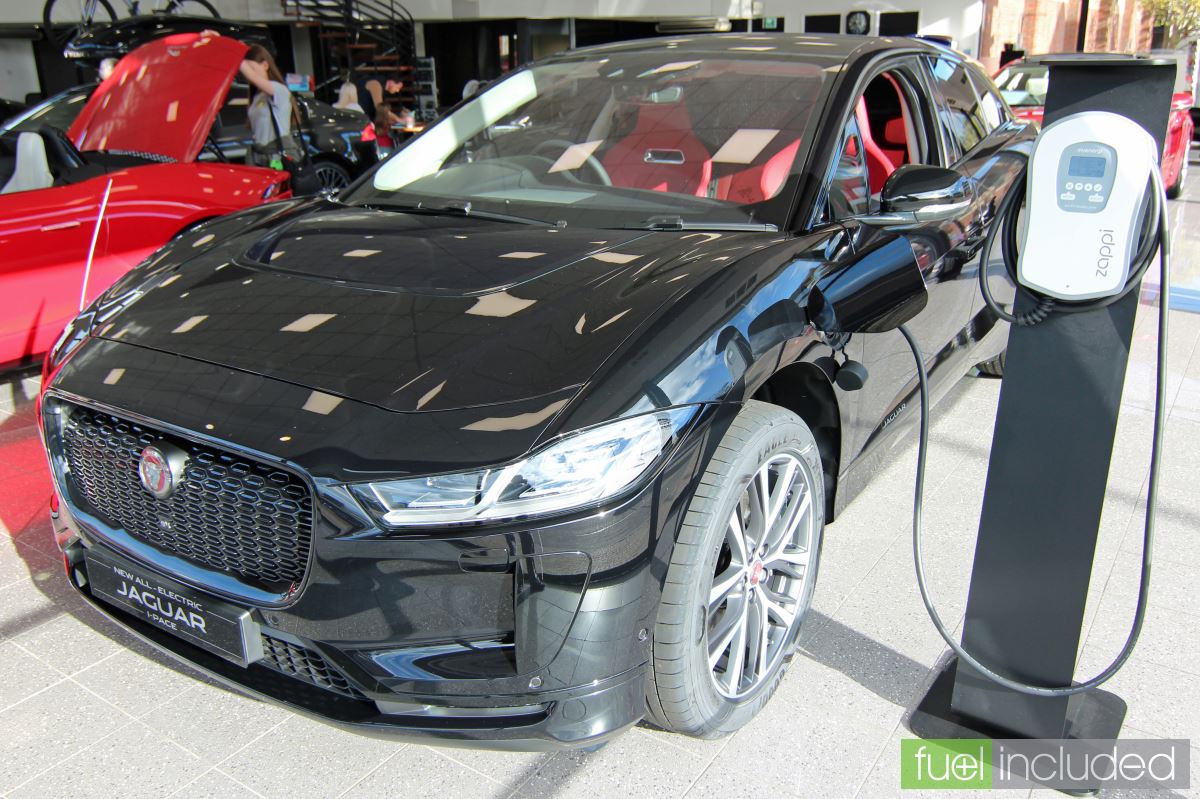
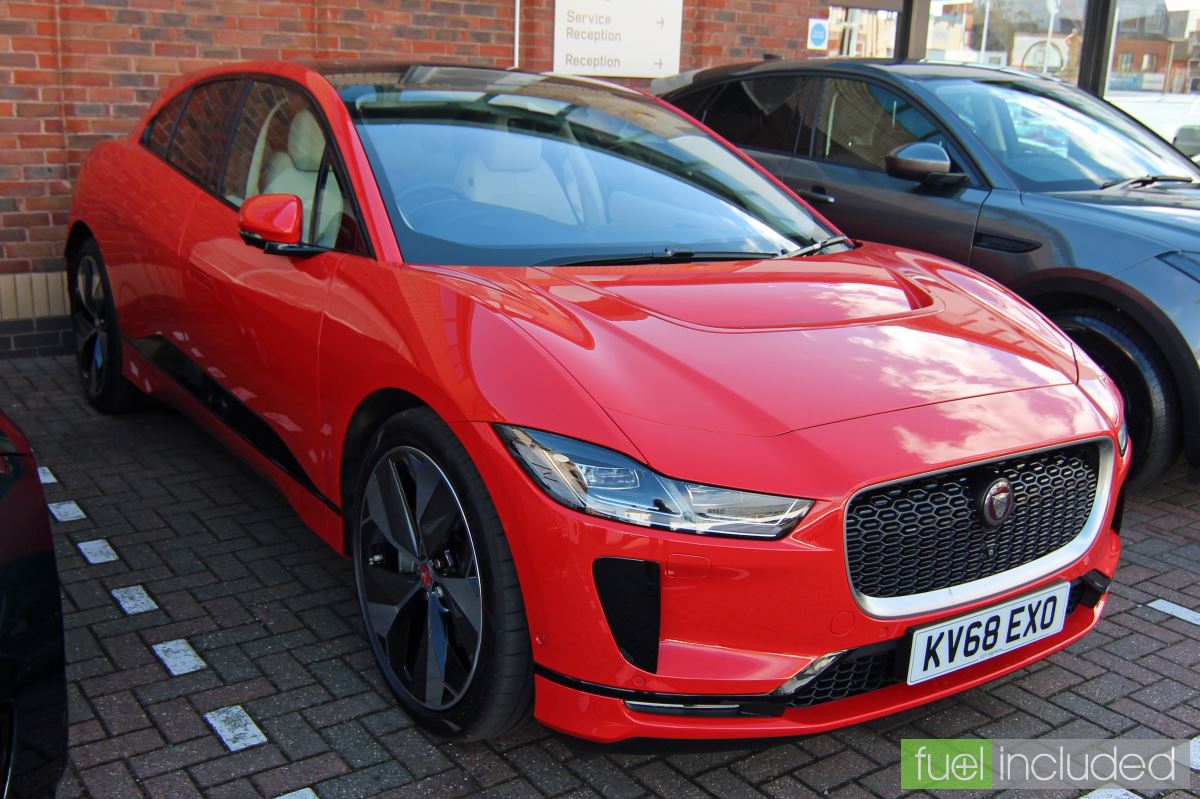
Jaguar I-PACE Electric Car (Image: T. Larkum)

European car sales: EVs and hybrids up as diesel hits historic low

Registration figures across Europe in March show electrified cars pass 100k mark, while diesel hits its lowest point since 2000

Europe’s new car market declined by another 3.6% last month – the seventh consecutive monthly fall, with factors such as the diesel city ban, falling consumer confidence and Brexit uncertainty blamed.

Figures released by analysis firm Jato Dynamics show that 4.13 million new cars were registered across the continent in the first quarter of this year, down 3.2% year-on-year. 19 of the 27 countries listed posted declines, with the UK market dropping by a modest 3.4%.

Jaguar I-PACE Electric Car (Image: T. Larkum)

Diesel demand is down significantly again, with a 31.2% market share in March. That’s down from the same month last year (36.2%) and much lower than March 2017 (44.8%).

There is good news, however, as last month saw registrations of electrified vehicles (BEVs, PHEV and traditional hybrids) passing the 100,000 mark for the first time, with 125,400 registered. Demand grew by 31%, driven by demand from Holland, Spain, Norway and Germany in particular.

Read more: Autocar

Tesla Model3 (Image: Wikimedia/Carlquinn)

Tesla Model 3 Accelerates Past European Electric Cars

Tesla’s Model 3 stormed to the top of the Western Europe battery electric car sales charts in the first quarter of 2019, outselling the second best Renault Zoe with almost twice as many sales.

This is all the more remarkable because the Model 3 was only available for sale from February, and the price of the Tesla is probably more than twice and maybe occasionally even 3 times that of the little Zoe city car.

According to data compiled by Berlin-base automotive industry analyst Matthias Schmidt www.schmidtmatthias.de, Tesla sold 19,482 Model 3s in the first quarter compared with the second placed Zoe’s 11,049 and the Nissan Leaf with 10,315.

Tesla Model3 (Image: Wikimedia/Carlquinn)

Direct competitors to the Model 3 were way off the pace, with the Jaguar I-Pace in 7th place at 3,012 and the Audi E-Tron 11th with 2,526, according to Schmidt’s data.

Schmidt said the European competition may in fact be holding back its sales because next year, European Union (EU) carbon dioxide (CO2) regulations tighten sharply. Manufacturers may want to have the biggest number of electric cars in their fleets in 2021, to bring down the average emissions, and mitigate or avoid big fines. Meanwhile, the Tesla Model 3 has the chance to rack up big sales because its all electric fleet won’t suffer fines.

Read more: Forbes

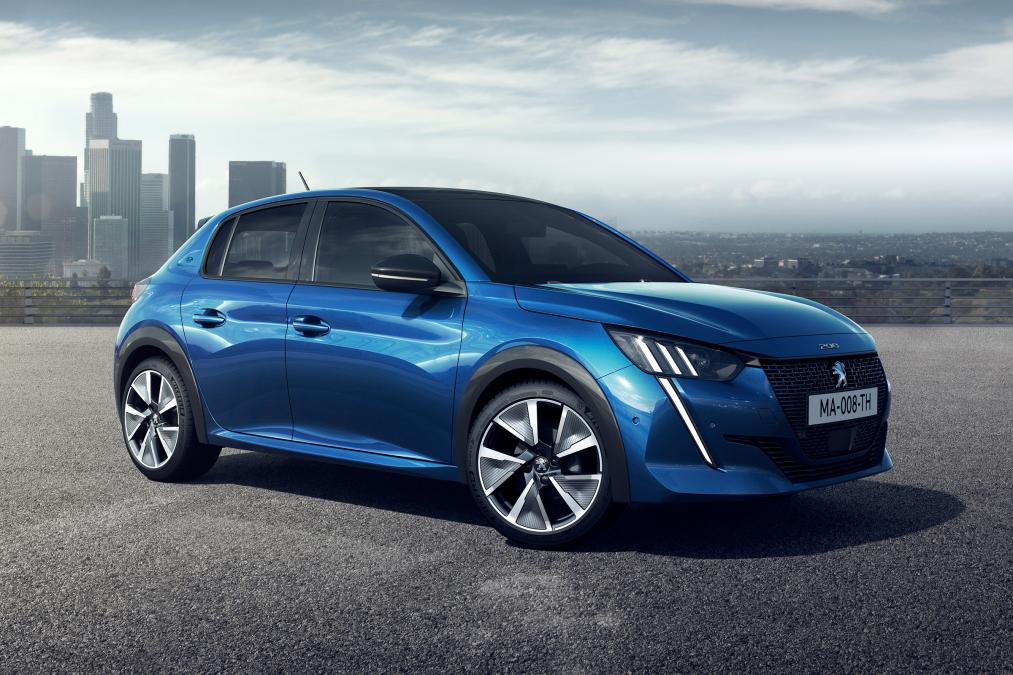
Peugeot e-208 (Image: Peugeot)

Peugeot Opens Reservations For e-208 In UK

Peugeot e-208 to be another great EV after the Tesla Model 3 available in the UK

Peugeot has opened reservations for the all-new 208 and its electric version e-208 in the UK. The French subcompact EV can be reserved online with a £500 deposit.

Orders will be taken from late summer, while deliveries in the UK are expected in early 2020.

Peugeot e-208 (Image: Peugeot)

General sales in Europe should start later this year, starting from France of course, where e-208 needs to stand up against the Renault ZOE.

“Following unprecedented levels of interest from customers and prospects alike captivated by the freedom to choose a powertrain without having to compromise on technology, looks, or driving pleasure, reservations for the all-new PEUGEOT 208 have now opened, with customers able to reserve online with a £500 deposit, all from the comfort of their own home.

Eager buyers can place a deposit on the GT Line PureTech 100 S&S 8-speed automatic (EAT8), BlueHDi 100 6-speed manual or the 100% electric e-208 model. Actual orders for the all-new PEUGEOT 208 range can be placed from late summer 2019, with the car going on UK sale in early 2020.”

Read more: Inside EVs

The Future of Transportation Is Electric

It’s clearer every day: the future of transportation is electric.

We should be cheering this transition—and encouraging it, because along with the benefits for drivers, electrifying transportation is going to be a critical piece of fighting climate change.

Unfortunately, for many observers, skepticism about electric vehicles (EVs) has become something like an article of faith. Mired in an obsolete set of facts, electric-vehicle naysayers are making the same arguments they’ve made for years even as technology speeds forward.

Take columnist George Will, who launched a broadside against electric vehicles last week. In casting doubt on the viability of EVs, Will is revealing that he hasn’t updated his understanding of the technology or the market in a decade. His argument relies upon outdated, misleading and just-plain-wrong evidence, undermining his thesis completely.

Here’s the truth. Electric vehicles are considerably cleaner than gasoline-powered cars, and this advantage is only increasing with time. Increasingly, coal-fired power generation is declining, and the share of our electricity produced by renewables is increasing. Indeed, Will inadvertently makes this point in his article. He points out that 27 percent of our electricity comes from coal power plants but leaves out entirely the fact that a decade earlier, coal was the largest source of electricity at almost half (48 percent) of all generation. We’re on the right path.

Read more: UCS