All posts by Repost

Are Electric Vehicles Actually Worse for the Environment than Combustion Engines?

With so many people claiming that electric vehicles are in fact bad for the environment, we take a look at the data.

We’ve all seen it in the comments sections of social media posts. There are always a few people adamant that electric vehicles pollute more than internal combustion engine vehicles.

At best, they claim the electric vehicle (EV) industry is scoring an own goal by creating a technology that, throughout a vehicle’s lifetime, pollutes more than internal combustion engine (ICE) vehicles. At worst, they say it’s all part of a conspiracy aimed at filling the pockets of clean energy providers.

So, are electric vehicles really worse for the environment than internal combustion engine vehicles? The short answer is no. Here’s why.

The battery production conundrum

Whether you are a proponent of electric vehicles or not, one issue is widely accepted: EVs release a lot of CO2 during the manufacturing process. This is due largely to the production of lithium-ion batteries.

A new IVL report, released this month, says, “according to new calculations, the production of lithium-ion batteries on average emits somewhere between 61-106 kilos of carbon dioxide equivalents per kilowatt-hour battery capacity produced.”

However, this figure keeps improving. The figure above, for example, is an improvement on the same organization’s study in 2017 that said, “an electric car with a 100kWh battery [emits] 15-20 tons of carbon dioxide even before the vehicle ignition is turned on,” with emissions of 150 to 200 kilograms of carbon dioxide for each kilowatt-hour storage capacity in a car battery.

Read more: Interesting Engineering

It’s Time to Go Green!

If you would like to know more about Solar Panels and the PowerBanx range of home battery systems, and get a free instant quote, please complete our online form:

2020 Renault Zoe (Image: Renault)

New Renault Zoe picks up double win at Driving Electric Awards

The new Renault Zoe has won Car of the Year and Best Small Electric Car at the annual Driving Electric Awards, with the judges citing its long range, improved quality and its performance.

Renault has completely restyled the Zoe’s exterior, featuring standard LED headlamps. Wireless smartphone charging is also available, and a free home wallbox charger allows owners to recharge their Zoe overnight with minimal effort. The vehicle is capable of running up to 245 miles (WLTP) on a single charge and features a new 52kWh battery. It is also available with optional 50kW DC fast charging, enabling 90 miles of range to be restored in just 30 minutes.

2020 Renault Zoe (Image: Renault)

There is a choice of R135 100 kW or R110 80 kW motors, which both feature a smooth, single-speed automatic transmission with new B-mode function that intensifies the regenerative braking effect to deliver true one pedal driving characteristics.

“The Zoe has always been affordable, but the real joy of the New Zoe is that it has all the comforts – particularly the range and equipment – of a big electric car, in an affordable and compact package. Even with the influx of new rivals, it deserves to remain one of the most popular electric cars in the UK” said Vicky Parrott, Associate Editor at Driving Electric.

Read more: Renewable Energy Magazine

It’s Time to Go Green!

If you would like to know more about Solar Panels and the PowerBanx range of home battery systems, and get a free instant quote, please complete our online form:

White Tesla Model S (Image: T. Larkum)

The best electric cars you can buy – and the one to avoid

Electric cars are growing in popularity, and no wonder: the best are quiet, cheap to run and smooth to drive. But which are the bright sparks to consider – and which are the loose connections?…..

Electric cars are now entering the mainstream, and their rise is only going to accelerate as rules are introduced to limit the kind of vehicles allowed into major cities.

White Tesla Model S (Image: T. Larkum)

The main thing that has traditionally held them back is range anxiety – the fear that you won’t have enough juice to get to where you’re going. However, with plenty of models now capable of covering more than 200 miles between charges, this is becoming less of an issue.

So, which electric cars should you consider? Here, we count down our favourites and tell you the one to avoid. And, remember, if any of them take your fancy, check out our What Car? New Car Buying to see how much we could save you.

Read more: What Car

It’s Time to Go Green!

If you would like to know more about Solar Panels and the PowerBanx range of home battery systems, and get a free instant quote, please complete our online form:

NISSAN LEAF TO NISSAN TREE: EV TRANSFORMS INTO CHRISTMAS SPECTACLE

Nissan has turned its all-electric Leaf hatchback into a Christmas tree, powering an extensive array of lights from the car’s regenerative braking energy systems.

The one-off vehicle utilises the manufacturer’s e-Pedal and B mode to power the model’s ‘spectacular light display’, including thousands of LEDs.

Helen Perry, head of electric vehicles for Nissan Europe, said: “Santa shouldn’t be the only one with a festive mode of transport. We wanted to make the Nissan Leaf more fun at this time of year whilst driving home a very important message.

“We hope this custom-made vehicle inspires people about the benefits of regenerative energy.”

The difference between the two regenerative braking systems mentioned is that while the e-Pedal harvests energy from the movement of the car during braking or deceleration, feeding it back to the batteries, B mode is a driving function that regenerates energy when using the traditional brake pedal as normal.

The Nissan Tree was created as a means to showcase the benefits of regenerative energy, emphasising that the average Leaf driver regenerates 744kWh of clean energy if they drive 11,000 miles – equivalent to 20 per cent of the overall domestic electricity consumption of an average household.

Read more: Motors

It’s Time to Go Green!

If you would like to know more about Solar Panels and the PowerBanx range of home battery systems, and get a free instant quote, please complete our online form:

Tesla Model 3 (Image: Tesla.com)

2019 was the year electric cars grew up

Electric cars had their biggest year ever in 2019, even as storm clouds gathered over their future.

The numbers were huge. Automakers committed $225 billion to electrification in the coming years. Electric vehicles (EVs) grabbed 2.2% of the global vehicle market over the first 10 months of 2019 as a slew of new models hit the road. Ford, which has yet to sell an all-electric vehicle, showed off the upcoming electric Mustang Mach-E (a crossover SUV) and an electric F-150 pick-up. Tesla, of course, shocked everyone by turning a profit and previewing a strange future with its “cybertruck,” potentially the Hummer for Millenials.

Tesla Model 3 (Image: Tesla.com)

But it wasn’t all rainbows. Outside of China and Norway, where car buyers enjoy generous incentives, the market is still driven by early adopters rather than the mainstream. EV sales for the year have been sluggish. While some states such as California have seen EVs capture 8% of new sales (all-electric and plug-in hybrid), the rest of the country has not yet caught on. After doubling between 2017 and 2018, EV market share in the US had crept up from 1.6% last March to 1.8% a year later (pdf).

That hasn’t slowed automakers’ ambitions. They’re betting it’s better to get ahead of the now-inevitable shift to EVs than play catch up to established rivals and Tesla. But if demand fails to pick up the big bet may mean consolidation and bankruptcy for some.

Here are the highlights from 2019.

EVs sold even as the car market dipped. The Model 3 can claim most of the credit.

The year started off strong for electric cars. After selling a record 361,000 EVs in 2018, automakers foresaw a robust 2019. Yet for carmakers not named Tesla, sales sputtered out mid-year. Sales for the three dozen or so other EV models on the market declined by an about 20% in 2019 compared to a year earlier, while Tesla’s Model 3 sales tripled between January and September. Tesla represented an astonishing 78% of US EV sales as of October, estimated CleanTechnica, delivering about 123,000 Model 3s, and 30,000 Model S and Model X vehicles. But EVs proved to be a rare bright spot amid what appears to be a long-term decline in global auto sales now entering its third year, what industry analysts call “peak car.”

Read more: Quartz

It’s Time to Go Green!

If you would like to know more about Solar Panels and the PowerBanx range of home battery systems, and get a free instant quote, please complete our online form:
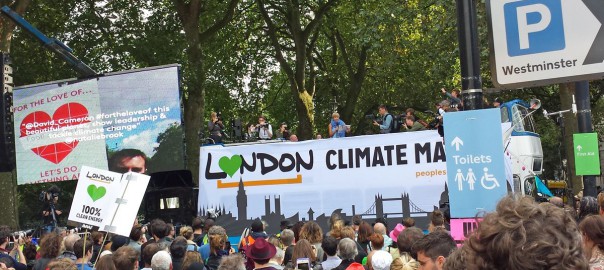
London Climate March - the Rally (Image: T. Larkum)

This Guy Studies the ‘Global Systems Death Spiral’ That Might End Humanity

Could climate change get so bad that it leads to our extinction? A few researchers are trying to answer that question.

Simon Beard has a career that most people would consider depressing and terrifying. He is part of a team of researchers trying to figure out if, how, and when climate change could cause the human species to go extinct. The stakes of his research—a potential annihilation of 7.7 billion humans and all the unborn people who come after them—couldn’t be any higher.

The idea that a heating planet will doom humanity is the subject of a lot of public speculation and anxiety, yet there are very few experts studying the existential impacts of climate change with any sort of academic rigor. Beard, who does this work at the Cambridge Center for the Study of Existential Risk, described it as “a field with next to no data” and a lot of unsupported hypotheses. “Under what circumstances could climate change cause a collapse of global civilization?” he said. “When you start asking that question, then your already quite-limited literature gets even more scarce.”

London Climate March - the Rally (Image: T. Larkum)
London Climate March – the Rally (Image: T. Larkum)

By bringing scientific precision to the doomsday scenario that wipes us off the planet, Beard hopes to convince world leaders to actually do something about it. “That’s really what we’re aiming for at the moment,” he said. “I think this could be genuinely transformative—firstly for the science but also by implication for the policy and the way that these things are discussed in society.”

The starting point for Beard’s research is that humans are incredibly resilient: We have found a way to survive in tropical rainforests, blistering deserts, icy tundra, and even for a brief time on the moon. But that says more about our collective strength than our skills as individuals. Shut down the grocery stores, turn off the taps, disband the government and very few of us, perhaps apart from a small number of rugged survivalists, would be able to stay alive for long.

“And so every one of us as an individual, I think, is very vulnerable, and relies upon these massive global systems that we’ve set up, these massive global institutions, to provide this support and to make us this wonderfully adaptable generalist species,” Beard recalled earlier this year on the Future of Life Institute podcast,

Those systems—the ones that put broccoli and frozen pizzas in our fridges and keep our streets from becoming Mad Max war zones—are themselves way more vulnerable and interconnected than we appreciate. The greenhouse gas emissions that humans are pumping into the atmosphere at record levels are changing the climate in ways that make it harder for us to grow and distribute food. This also increases pressure on our political system—as we saw with drought and crop failures in the lead-up to the Syrian civil war.

Read more: Vice

It’s Time to Go Green!

If you would like to know more about Solar Panels and the PowerBanx range of home battery systems, and get a free instant quote, please complete our online form:

Peugeot e-208 (Image: Peugeot)

2020 set to be year of the electric car as sales soar

Experts are predicting that 2020 will be the year of the electric car as sales continue to rise.

Figures released today by the Society of Motor Manufacturers and Traders (SMMT) show that the number of battery-electric vehicles registered in November increased by 228.8 per cent compared to the same month in 2018 – with over 4500 new EVs hitting the roads.

So far this year, nearly 14,000 electric cars have been registered in the UK, compared to 38,500 plug-in hybrids and nearly 80,000 hybrids. Mild hybrids have also seen a dramatic increase in popularity, with registrations of mild-hybrid diesels increasing by more than 450 per cent last month.

Peugeot e-208 (Image: Peugeot)

Car manufacturers are rushing to launch new electric cars in a bid to meet new emission targets set by European Union legislators. By 2021, they face strict fines if their average CO2 emissions for each car exceed 95g/km. By selling more electric vehicles (with zero tailpipe emissions) and hybrids (with reduced tailpipe emissions), average CO2 emissions will drop.

Kia recently admitted that it has 3000 customers on a waiting list for the e-Niro – something it says it intends to clear in the first half of 2020, despite previously having to halt orders as it couldn’t keep up with demand.

Volkswagen is set to launch its new electric ID range with the ID.3 hatchback, while the Volkswagen Up, SEAT Mii and Skoda Citigo city cars are also going electric-only for 2020. Vauxhall’s new Corsa is available as a pure-electric model, as is the closely-related Peugeot 208.

Read more: Honest John

It’s Time to Go Green!

If you would like to know more about Solar Panels and the PowerBanx range of home battery systems, and get a free instant quote, please complete our online form:
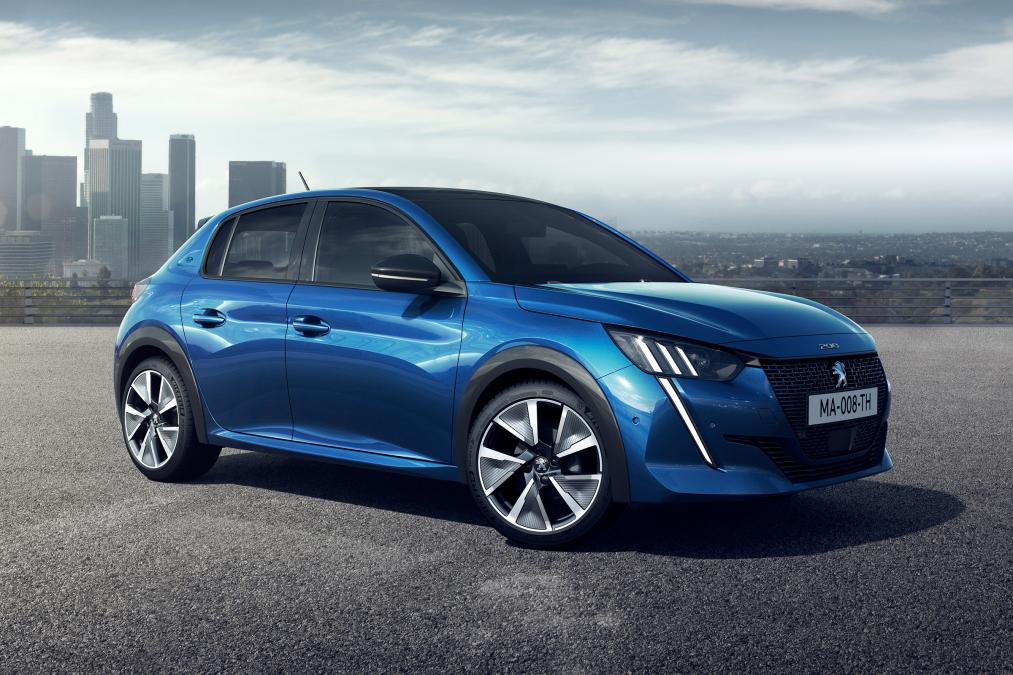
Volkswagen ID.3 electric car (Image: Volkswagen.com)

Drivers can now charge their electric cars for free while doing their weekly shop

Volkswagen, Tesco and Pod Point are determined to provide shoppers with free charging points as motorists increasingly turn to electric vehicles as they become more and more convenient to run

Electric car drivers can now charge their vehicles for free while doing their weekly shop at over 100 supermarkets across the UK.

Volkswagen has partnered with Tesco and Pod Point to provide shoppers with free charging points – with a further 2,000 units in the pipeline.

Volkswagen ID.3 electric car (Image: Volkswagen.com)

It is estimated a typical EV driver who spends 50 minutes shopping each week could get more than 1,000 miles of free electricity for their car over a 12 month period.

The free charging points are a response to the growth of electric cars in the UK, with sales up by 125 per cent this year according to the Society of Motor Manufacturers and Traders.

And demand is set to rise, with Volkswagen’s survey of 2,000 UK motorists revealing 41 per cent are considering leasing or owning an EV as their next vehicle. This figure increases to 61 per cent among the 25-34 age group.

Read more: Mirror

It’s Time to Go Green!

If you would like to know more about Solar Panels and the PowerBanx range of home battery systems, and get a free instant quote, please complete our online form:

Tesla Cybertruck (Image: Tesla)

In Tesla’s shadow, Audi and Mercedes electric SUVs get no love

A couple of weeks ago, Mercedes-Benz quietly announced the price for its all-electric EQC sports-utility vehicle.

A $67,900 starting price for a luxurious, 200-mile, 402-horsepower luxury crossover is a good start for the EQC brand. But the announcement got completely lost in the shuffle in a week filled with buzz about Tesla’s bulletproof, stainless-steel Cybertruck. Even the deserved attention given to Ford’s Mustang-inspired electric SUV was cut short. So where does that leave the play-it-safe luxury electric SUVs from Mercedes-Benz, Audi, and BMW?

Mercedes-Benz EQC (Image: Mercedes-Benz)

As we reported a week ago, the $75,000 Audi e-tron has not been a big hit. Don’t get me wrong. Audi loyalists and traditional luxury car buyers appreciate the e-tron’s smooth, comfortable, and safe ride. But relatively low sales numbers suggest that the e-tron is not energy-efficient enough. And it doesn’t have enough range at 204 miles. Or it’s being produced in low numbers. Or there aren’t other stand-out attributes besides being a well-made automobile. Who knows?

Audi e-tron (Image: Audi)

But whatever the reason, the first of four all-electric e-tron variants did not stir a big response. Not when it’s facing competition for mindshare from the Cybertruck or an electric Mustang.

Tesla Cybertruck (Image: Tesla)

Read more: Electrek

It’s Time to Go Green!

If you would like to know more about Solar Panels and the PowerBanx range of home battery systems, and get a free instant quote, please complete our online form:

Electric cars might not yet be green, but we should buy them anyway

Transforming the way we travel is an essential part of tackling the climate crisis.

The transport sector contributes about 20% of global carbon emissions. In the UK the figure is 33%, and the country has made virtually no progress in reducing emissions from transport. In many countries, they’re actually increasing.

Electric vehicles are often hailed as the solution to this quandary, but some question their environmental credentials. With much of the world’s electricity still produced from fossil fuels, the criticism goes that EVs may actually be responsible for more carbon emissions over their lifetime than combustion engine vehicles.

As German economics professor Hans-Werner Sinn put it in a recent controversial article, all we are doing is transferring carbon emissions “from the exhaust pipe to the power plant”.

The assumptions underlying these claims are questionable. But even if true, this line of argument misses a key point. The car we choose to buy today directly influences the future of our energy system. Choose a combustion-powered vehicle and we lock in ongoing fossil fuel use. Choose an electric vehicle and we support the switch to a zero carbon society.

Due in large part to the high carbon-cost of EV batteries, the manufacturing process for an electric vehicle causes more carbon emissions than for a combustion engine vehicle. This means that the source of electricity used during the life of an EV is critical in determining how eco-friendly they are.

While two thirds of the world’s electricity is generated from fossil fuels, this proportion is decreasing rapidly. At least four countries are already at or close to being powered entirely by renewable electricity: Iceland, Paraguay, Costa Rica and Norway. Brazil is one of the ten largest economies in the world and they are at 75% renewable electricity. In the UK, the proportion of electricity provided by fossil fuels has halved over the last decade and is currently about 40%.

As the transition towards renewable electricity progresses, so too will the carbon footprint of EVs keep decreasing in step. This means that the superiority in carbon cost that electric vehicles already have over combustion vehicles, even if narrow now, will widen in the years to come.

Read more: The Conversation

It’s Time to Go Green!

If you would like to know more about Solar Panels and the PowerBanx range of home battery systems, and get a free instant quote, please complete our online form: