All posts by Repost

Average CO2 emissions of cars sold in UK up for third year in row

Popularity of SUVs and falling diesel sales hit Britain’s hopes of reaching climate targets

The average carbon dioxide emissions of cars sold in the UK rose for the third year in a row during 2019 as falling diesel sales and the rising popularity of SUVs dealt a blow to Britain’s hopes of reaching climate targets.

Average CO2 emissions rose for the third year in a row, up 2.7% year on year to 127.9g of CO2 per kilometre, according to data from the car industry body. This is far above the newly introduced EU target of 95g per kilometre carmakers need to achieve over this year and next for all new cars. Cars account for just over 18% of UK emissions, according to government figures. Transport emissions as a whole account for a third of the UK total, with the sector viewed as vital contributor if the country is to achieve goals of cutting emissions to 51% of 1990 levels by 2025 and to reach net zero by 2050.

All manufacturers selling in the EU are rushing to meet emissions regulations that came into force on 1 January. The regulations were introduced in response to the climate crisis, with road transport a major contributor to global CO2 emissions.

Overall UK car sales fell by 2.4% year on year to about 2.3m, according to the Society of Motor Manufacturers and Traders, with the industry body blaming Brexit uncertainty and the slump in diesel sales as the main factors.

This indicates the worst year for the UK market since 2013, when sales were 2.26m. They reached a peak of 2.7m in 2016 but have declined steadily since.

A quarter of the CO2 increase was caused by the 21.8% drop in diesel sales over the year. Newer diesels on average have lower CO2 emissions than petrol cars, despite a backlash prompted by air quality concerns. Another quarter was caused by increased sales of SUVs, which are often heavier and have much worse aerodynamic profiles than smaller cars. Increased fuel use by SUVs was the second largest contributor to the increase in global CO2 emissions from 2010 to 2018, according to the International Energy Agency.

Read more: The Guardian

It’s Time to Go Green!

If you would like to know more about Solar Panels and the PowerBanx range of home battery systems, and get a free instant quote, please complete our online form:

Charging Hub with eVolt Rapid Chargers (Image: SWARCO eVolt)

‘First of its kind’ rapid EV charging point launches in London

Transport for London (TfL) and electric vehicle (EV) charging network Engenie have opened London’s first rapid charging hub in Stratford, London.

The hub will have six 50kW charging points, which are capable of providing up to 100 miles of charge in 35 minutes.

This EV hub is the first of five which will open in London over the next few years as part of the Mayor of London’s EV infrastructure delivery plan.

Charging Hub with eVolt Rapid Chargers (Image: SWARCO eVolt)
Charging Hub in Dundee (Image: SWARCO eVolt)

TfL has contributed funding towards the project, but Engenie will continue subsidising the site to ensure that there will be no parking fees for those using the chargers.

Sadiq Khan, Mayor of London, said:

‘London’s air quality is a serious public health crisis and we face a climate emergency which threatens our future.

‘We need to help people to move away from petrol and diesel cars so that we can clean up our air and tackle climate change.

‘I want to help people to switch to public transport, walking and cycling and I want all new cars and vans in London to be zero emissions by 2030, not 2040 as the government is proposing.

‘This announcement will help us to continue to work together with London boroughs and the private sector to deliver a major expansion in charging infrastructure and an electric vehicle revolution in the capital.’

Read more: Air Quality News

It’s Time to Go Green!

If you would like to know more about Solar Panels and the PowerBanx range of home battery systems, and get a free instant quote, please complete our online form:

Climate change: If you worry about global warming, the next car you buy should be electric

If you’re concerned about climate change, the next car you buy really should be electric.

Why? Because the average car, SUV or light truck in the United States is on the road for 11.8 years. So vehicles bought this coming year will be part of the shift away from fossil fuels that climate scientists say needs to be well underway within 10 years.

“By 2030 we need to be really well into this transition. Which means people need to be buying these cars now,” said Lewis Fulton, director of the Sustainable Transportation Energy Pathways program at the University of California, Davis.

The message is getting out there. In May, 16% of Americans said they were likely to buy an electric vehicle the next time they were in the market for a new or used car. Their leading reasons were concern for the environment and lower long-term costs of EVs, according to a AAA survey.

The good news, say owners, is that today’s electric cars are cost-effective, reliable, fun to drive and get upward of 200 miles to the charge so it’s not a hardship.

Read more: USA Today

It’s Time to Go Green!

If you would like to know more about Solar Panels and the PowerBanx range of home battery systems, and get a free instant quote, please complete our online form:
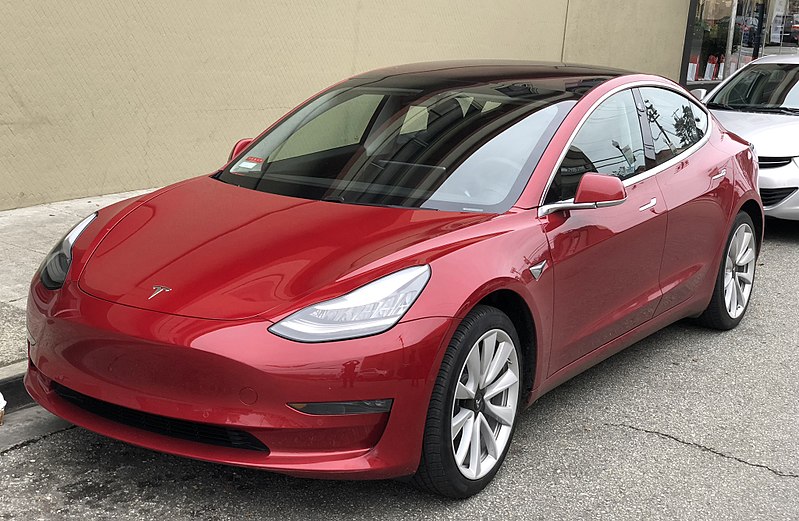
Tesla Model3 (Image: Wikimedia/Carlquinn)

Tesla Model 3 set to overtake Nissan LEAF as the best-selling electric car of all time

The Tesla Model 3 is set to overtake the Nissan LEAF as the best selling electric car of all time this quarter and likely to hit 500,000 sales too.

The best-selling electric car of all time is the Nissan LEAF. That’s been the case almost since the LEAF first went on sale in 2010. But not for much longer.

Tesla Model3 (Image: Wikimedia/Carlquinn)

To date, the Nissan LEAF has amassed sales of around 450,000, but the Tesla Model 3 – which only went on sale in the UK last year – looks set to overtake the LEAF this quarter as Tesla defies all the odds to produce and deliver big Model 3 numbers to the market.

As far as we can tell, the Tesla Model 3’s sales are just a notch below the LEAF’s cumulative sales at the end of 2019 – around 445,000 – and with the current rate of deliveries and production the Model 3 will take the title, probably by the end of January.

Read more: Cars UK

It’s Time to Go Green!

If you would like to know more about Solar Panels and the PowerBanx range of home battery systems, and get a free instant quote, please complete our online form:

Skoda CITIGOe-iV (Image: Skoda.co.uk)

New Skoda Citigo-e iV 2020 review

We try out the top-of-the-range all-electric Skoda Citigo-e iV city car on British roads

Verdict 4 stars
If you’re in the market for an urban tool with minuscule running costs, and you don’t regularly need to carry more than a couple of small passengers, then the Citigo-e iV might just be the perfect choice. We’d urge you, though, to check your own usage profile first to see not only if an EV is right for you at all but also if you’re going to need much charging beyond what you can do on your own driveway. If you’re not then the cheaper version of the Skoda, without rapid charging, looks an even more appealing proposition.

There’s no shortage of electric offerings on the way – including three plug-in city cars from across the VW Group. We’ve already tried the VW e-up!, SEAT Mii Electric and Skoda Citigo-e iV abroad, but now we’ve had a chance to drive the Czech model on British roads – in the murky chill of a UK winter – to see how it stacks up.

Skoda CITIGOe-iV (Image: Skoda.co.uk)

To recap, the three models are as similar in electric form as they have been for the past eight years fitted with a petrol engine. There’s a single mechanical set-up: an 82bhp electric motor with a 36.8kWh battery that can deliver around 161 miles of range on a single charge. Even the pricing isn’t too different, with spec-for-spec models all costing between £19,315 and around £20,000 after the government plug-in car grant.

However, Skoda has gone its own way by offering a second, cheaper edition of the Citigo-e iV with a few fewer toys and, significantly for some, only conventional charging instead of the rapid DC CCS configuration that’s standard on all the other models. It’ll save you almost £2,500 over the regular model that we’re testing here, and for some people, who intend to drive their car around town with only domestic plug-ins most of the time, that will make it an astonishingly effective urban option.

Read more: AutoExpress

It’s Time to Go Green!

If you would like to know more about Solar Panels and the PowerBanx range of home battery systems, and get a free instant quote, please complete our online form:

Nissan Leaf (Image: Qurren/Wikipedia)

Joining the electric-car ranks, with a boost from ‘Greta’

This fall for only the second time in my life, I bought a new car.

It’s an emission-free Nissan Leaf. I named it “Greta.” Last night, I ran into a friend who has a Tesla all-electric vehicle (AEV) also named “Greta.” I’m now wondering how many AEVs there are in the world bearing the name of Swedish teenager Greta Thunberg.

I’m comfortable saying it was the extraordinary courage of this young woman who could be my granddaughter that drove my decision to go all-electric. “OK boomer,” I said to myself, “it’s your turn to help leave a habitable world for the next generation.

Nissan Leaf (Image: Qurren/Wikipedia)

When Green Mountain Power held a get-acquainted session on AEVs for its customers, my wife and I drove up. They had most current models available there for customers to test drive and dealers to answer questions. I chose the Leaf and, thrilled that I fit in it, took it for a spin. It was a distinctly different experience … silence, no auto-shifting clunks. I learned that by using the eco-pedal, I didn’t need the brake pedal and could extend Greta’s range. I was hooked!

I’ve traveled 1,200 miles with Greta and my early experience with the car sent me searching for the encyclopedic instruction manual in the glove compartment. Like most consumers, I had read the FAQs and thought I knew it all. At the time of purchase, my key question was driving range between charges, a deciding factor for most potential buyers. The range is nominally 150 miles. My benchmark was the 88-mile round trip between my home in Hinesburg and Montpelier.

I set out on my first excursion with a full 152 miles on the meter. When I got to Montpelier, I expected to find it down 44 miles, but it was, in fact, down twice that — about 66 miles left to go before I needed a charge. This didn’t register, so before heading home, I pulled out the manual and read what I’d neglected to read before committing to the AEV.

Like all living things, her capacity is temperature-dependent. It was 10 above zero when I left the house and I had turned on the heat to make it worse as both heat and lights reduce Greta’s range. I risked the straight shot home and made it with 12 miles to go by turning off the heat and arrived home in a near cadaverous chill, scraping my frozen breath from the inside of the windshield with a credit card. Did this mean driving at night with no lights and no heat? Should I buy a flashlight and a wool blanket?

I also learned Greta’s batteries can be severely damaged by exposure to temperatures below minus 13. I’ve lived in Vermont for 70 years and have yet to experience a winter where it didn’t get colder than that. I remember a sunny, dry winter day in Lincoln at 38 below. Could the car even survive here, much less provide frigid transportation beyond a few miles from home? I began to worry.

But I’ve learned that by monitoring the temperature and my energy usage as I drive, using the eco-pedal to recharge as I drive, charging every night at home during off-peak hours, I can manage quite well and I haven’t eaten in a gas station in two months. I’m finding more and more charging stations, all searchable on my cellphone. Besides if it’s freezing cold and I have a round trip to Montpelier, a stop at Red Hen Bakery in Middlesex for a quick charge, a latte and a croissant isn’t much of a price to pay for doing my part. Sometimes, slowing life down enhances it.

Read more: VT Digger

It’s Time to Go Green!

If you would like to know more about Solar Panels and the PowerBanx range of home battery systems, and get a free instant quote, please complete our online form:

2020 is likely to be the year EVs start to go mainstream

With the exception of Brexit, hanging over the market like a malevolent storm-cloud, the biggest issue facing the UK car industry in 2019 has been electrification.

The issue of climate change has shot up the political agenda, and the question of electric vehicles has shifted from “if?” to “when?”.

Looking at the market data, it would seem that the flood of EVs is still some way off, but we are now seeing the first cracks in the dam. Market share of battery electric vehicles (BEVs) increased by 125% YTD (see table, right), although a cynic might say that 125% of nothing is still not very much. Hybrid sales are also increasing steadily, but plug-in hybrid sales have temporarily faltered since the Government decided too many of them were being bought as a tax-dodge, and were not actually being plugged in.

The first issue to address with hybrids is to establish what sort of hybrids we are talking about. There are broadly five types: micro, mild, full, plug-in and range-extender. Over the next 10 years, all petrol and diesel engines will move to some form of electrification – micro at the very least, but most will have mild hybridisation at a minimum. From 2021, virtually all new petrol and diesel premium models will be mild hybrids, and the technology will steadily move down to the rest of the market.

Most independent forecasters (e.g. Ricardo Consulting) expect that, by 2025, of the three main types of electric drive, battery electric vehicles (e.g. Nissan Leaf) will account for about 60% of the total, plug-in hybrids about 30% and full hybrids only about 10%. That would seem logical – as the cost of batteries falls, one would expect cars to use larger batteries. It seems unlikely manufacturers will go to all the cost of engineering a hybrid drive system in 2025 and then use a small, non-plug-in battery to power it, when larger batteries cost very little more.

Read more: AM Online

It’s Time to Go Green!

If you would like to know more about Solar Panels and the PowerBanx range of home battery systems, and get a free instant quote, please complete our online form:

Driving towards a greener future

With almost 30,000 electric vehicles (EVs) registered in the UK so far this year, it’s clear that the number of EVs is climbing and many businesses are already taking steps to introduce them into their fleet.

Furthermore, as environmental targets become more stringent, many will be exploring how more carbon-friendly transport technology can make a difference to their firm and help reduce carbon emissions.

As the cost of going electric continues to fall, more firms are planning to, or already have, started transitioning their fleets. Indeed, our own research suggests that businesses are making inroads towards a greener future, with three quarters of firms telling us they plan to adopt EVs in the next five years.

Many of us will know about the well-publicised benefits of EVs over and above their environmental credentials – they are cheaper to maintain, run and tax and give unrestricted access to low emissions areas, such as the ultra-low emission zone (ULEZ) in central London.

But there is a surprising benefit that firms may not have considered. Electric fleets can do more for a business than lowering costs and reducing carbon emissions, they can actually become a source of revenue. The key to unlocking this? Coupling EV charging points with modern energy technology.

Read more: Fleet News

It’s Time to Go Green!

If you would like to know more about Solar Panels and the PowerBanx range of home battery systems, and get a free instant quote, please complete our online form:
The POD Point charge points at Devon Cliffs (Image: T. Larkum)

Mayor of London announces £4 million investment into EV infrastructure

Mayor of London, Sadiq Khan, together with London Councils and TfL, has announced a £4 million investment into electric vehicle (EV) charging points as part of the Office for Low Emission Vehicles’ (OLEV) Go Ultra Low City Scheme.

The investment will see 1,000 new charge points installed across the 29 boroughs, in residential areas. This will build on the 1,500 charge points already installed across the capital.

The scheme is a nationwide program to tackle climate change and improve air quality using EVs. London has received £13 million from the scheme, which will aid the city in reaching Khan’s goal of 80% of journeys using public transport, cycling or walking as opposed to petrol and diesel vehicles.

The POD Point charge points at Devon Cliffs (Image: T. Larkum)
Charge point (Image: T. Larkum)

Christina Calderato, TfL’s head of transport strategy and planning, said:

“We know that a comprehensive network of charging points is essential if we are to persuade drivers to ditch polluting diesel vehicles and swap them for electric alternatives. Installing a 1,000 more residential charging points across the capital means more Londoners can plug their vehicle in while at home, even if they don’t have a driveway.

“For those that need to charge up in 20-30 minutes, London is one of the leading world cities for rapid charge points. The addition of the east hub in Stratford is the first super charging facility, allowing drivers easy access and convenient methods of payment.”

As part of the wider announcement, Engenie has unveiled a rapid EV charging hub at Stratford International Station car park, which it claims is the first in London.

Read more: Current News

It’s Time to Go Green!

If you would like to know more about Solar Panels and the PowerBanx range of home battery systems, and get a free instant quote, please complete our online form:

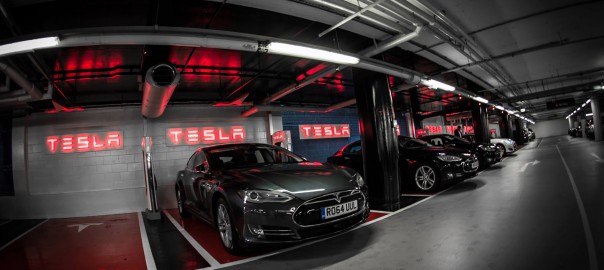
Tesla Supercharging Station at Westfield, London (Image: Tesla)

New Tesla Supercharger Goes Live in UK, Can Add 75 Miles in Just Five Minutes

New Park Royal Supercharger station marks 500th in Europe

TESLA has launched its first ‘V3’ Superchargers in the UK, offering British owners of its electric cars the ability to recharge their vehicles at up to 250kW — equal to 75 miles of range added every five minutes, or a rate of 1,000 miles per hour.

The batch of eight V3 points are located at Tesla’s new Park Royal charging station in London, and sit next to a further eight V2 Superchargers, which, with a peak output of 150kW, are still pretty quick as public charging points go.

Tesla Supercharging Station at Westfield, London (Image: Tesla)

However, the V3 posts have all-new architecture that is not only capable of delivering more kilowatts to the battery packs per second, but also won’t split the power supply between vehicles charging nearby, allowing owners to charge at the maximum power their battery can take.

New software in the cars will also pre-warm the batteries while en route to a Supercharger, which is claimed to reduce average charge times by 25% by ensure they are already at the optimal temperature to receive an ultra-fast charge on arrival.

Read more: Driving

It’s Time to Go Green!

If you would like to know more about Solar Panels and the PowerBanx range of home battery systems, and get a free instant quote, please complete our online form: