All posts by Jo

Severe Flooding, Against a Background of Wind Turbines: November 2012, Tyringham, Bucks. (Image: T. Larkum)

Climate change to cause humid heatwaves that will kill even healthy people

If warming is not tackled, levels of humid heat that can kill within hours will affect millions across south Asia within decades, analysis finds

Climate Change Impact in Africa (Image: iPhoto)

Extreme heatwaves that kill even healthy people within hours will strike parts of the Indian subcontinent unless global carbon emissions are cut sharply and soon, according to new research.
Even outside of these hotspots, three-quarters of the 1.7bn population – particularly those farming in the Ganges and Indus valleys – will be exposed to a level of humid heat classed as posing “extreme danger” towards the end of the century.

The new analysis assesses the impact of climate change on the deadly combination of heat and humidity, measured as the “wet bulb” temperature (WBT). Once this reaches 35C, the human body cannot cool itself by sweating and even fit people sitting in the shade will die within six hours.

The revelations show the most severe impacts of global warming may strike those nations, such as India, whose carbon emissions are still rising as they lift millions of people out of poverty.

“It presents a dilemma for India between the need to grow economically at a fast pace, consuming fossil fuels, and the need to avoid such potentially lethal impacts,”

said Prof Elfatih Eltahir, at Massachusetts Institute of Technology in the US who led the new study.

“To India, global climate change is no longer abstract – it is about how to save potentially vulnerable populations.”

Heatwaves are already a major risk in South Asia, with a severe episode in 2015 leading to 3,500 deaths, and India recorded its hottest ever day in 2016 when the temperature in the city of Phalodi, Rajasthan, hit 51C. Another new study this week linked the impact of climate change to the suicides of nearly 60,000 Indian farmers.

Read more: The Guardian

Tesla Powerwall display (Image: T. Larkum)

Aussies Are More Interested In Solar Batteries Than Ever

With electricity prices on the rise and an uncertain future ahead for Australian electricity, it’s not surprising that more and more Aussies are looking at the option of home batteries. What is surprising is just how fast the market is progressing — batteries are rapidly coming down in price and the numbers suggest they aren’t just for early adopters anymore.

Tesla Powerwall display (Image: T. Larkum)

Before the Tesla Powerwall burst onto the scene less than two years ago, batteries were seldom considered an option for houses with solar panels, unless they were remote or off-grid. Powerwall installer Natural Solar says that only 2-3 per cent of customers even asked about batteries prior to 2015. “Since adding Tesla Powerwall to our energy storage range, the volume of consumer enquiries for battery power and Tesla Powerwall specifically has grown to more than 95% of customers,” explained Natural Solar CEO Chris Williams.

Even the difference between the first, somewhat experimental Powerwall and Tesla’s newer, bigger, better Powerwall 2 is clear. Williams sums it up quite succinctly when he says that the original Powerwall buyers were the early adopters, while their experiences have helped the Powerwall 2 hit the mainstream.

“This is exciting,” Williams said, “as it represents the typical Australian household and consumer, who are making educated decisions based on financials and are trying to offset the skyrocketing electricity bills expected to increase by 20 per cent in the coming weeks.”

While the Tesla brand has something to do with it, there are other reasons Australians have become so interested in powering their homes via batteries. Australian energy retailers recently announced an impending increase on the price consumers pay for electricity — in some places astronomically. On July 1, South Australia will overtake Denmark in having the world’s most expensive electricity. With some new Powerwall 2 customers expecting their power bills to come down to almost nothing, it’s not surprising to see more and more people looking to make that leap.

South Australians in particular have even more motivation to install batteries, in the wake of the state-wide power failures that happened last year. Demand in South Australia has increased by 300 per cent compared to the rest of Australia with 98.5 per cent of those wanting a power back-up in case of further instability. It’s not just households either — commercial enquiries for Natural Solar have seen an 800 per cent increase, with businesses wanting the option to keep their doors open and their lights on even when the grid is down.

Read more: Gizmod

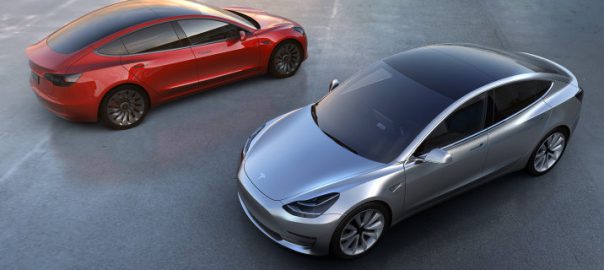
Tesla Model 3 Unveil (Image: Tesla)

Tesla Model 3 doesn’t have a key – and seven other things we learned

Elon Musk’s new mass market-aimed electric car has no directly visible speedometer, comes in two battery versions and isn’t a bad option for a sleep.

Tesla Model 3 Unveil (Image: Tesla)

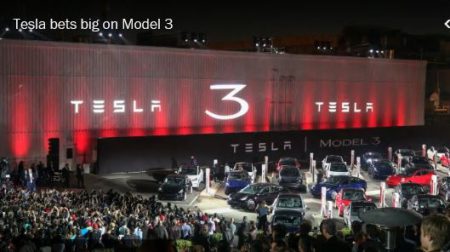
lon Musk revealed Tesla’s Model 3 is unlocked by a smartphone and doesn’t have a traditional key or fob among a host of other details at the delivery event for the first 30 mass-market electric cars over the weekend.

As the Model 3 enters what Musk called “six months of manufacturing hell” as Tesla ramps up production to meet the more than 500,000 pre-orders, one of the most surprising titbits is that there is no traditional key to open and start Tesla’s mass-market electric car hope.

Instead, would-be buyers of the $35,000-plus five-seat electric car will have to unlock the car with their smartphones over Bluetooth. The car will detect the owner’s smartphone – almost all modern smartphones made in the last three years supports Bluetooth – and automatically unlock, ready to start and go.

Should the battery on your phone run flat, which is a very real possibility in the days of increased use for everything from music, cameras and now keys, Tesla has a backup in the form of an NFC key card that is apparently thin enough to store in a wallet.

Press the card against the car’s B-pillar to unlock it and place it between the seats on a special spot to be able to start the car. It’s designed for valet use, but should be good to get into the car and at least charge your phone so you can properly unlock the Model 3 and go.

But the key-less design wasn’t the only thing we learned over the weekend …

1. Two battery versions

The minimalist interior of the Model 3. Photograph: Reuters

The Model 3 will come in two versions. The $35,000 base model has a battery with a 220-mile range, does 0-60mph in 5.6 seconds and has a top speed of 130mph. It can be “supercharged” to 130 miles of range in 30 minutes and charges at a rate of 30 miles per hour via a 240V, 32A home charger.

The range-extended version, which costs $44,000, will travel up to 310 miles per charge, reaches 60mph in 5.1 seconds and a top speed of 140mph. It will reach a charge of 170 miles in 30 minutes attached to a supercharger, and charges at a rate of 37 miles per hour with a 240V, 40A home charger.

The more expensive Model 3 with the longer range is currently being produced, with the cheaper version to be produced at a later date. A high-performance version of the Model 3 will also be available sometime in the middle of next year, according to Musk.

2. There are no instruments, just a 15in touchscreen in the middle

The 15in touchscreen is the only display in the cabin. Photograph: Reuters

There’s no speedometer, battery gauge or anything else directly in front of the driver. Instead there’s a large, 15in touchscreen in the middle of the dash, which displays a virtual instrument cluster along with mapping, entertainment and cabin controls.

The Model S has a 17in touchscreen in the middle of the dash, but it is in mounted in a portrait orientation compared to the Model 3’s landscape orientation.

Read more: The Guardian

Live Or Work On A Busy Road? The Truth About Noise Pollution

Studies conclude there are very real health risks from noise pollution – but EVs are bringing the quiet.

While we’re all aware of the term noise pollution, most of us regard it as just an irritant we have to put up with. The construction site near the office, the busy road near the children’s school, the flight path roaring overhead – such noise, we tell ourselves, is the price we pay for living in densely populated environments like cities.

Yet we might not be quite so complacent if we were more aware how bad noise pollution is for our health. For example, did you know that people living with an average of 55-80 decibels a day are more likely to suffer from high-blood pressure and cardiovascular ailments due to stress? Or that noise over 45 decibels at night can interfere with our sleep patterns, meaning we function less effectively during the day?

Such effects were confirmed in a recent study by Imperial College London, which analysed data from 144,000 adults, reinforcing evidence from the World Health Organisation, which rates noise pollution as the second largest environmental cause of health problems after air quality.

Road Traffic is the main culprit

The vast majority of noise pollution in Europe is caused by vehicular traffic on our roads – about 70 percent of it, according to European Environment Agency (EEA) statistics. Around 100 million people on the continent are subject to road traffic noise in excessive of 55 decibels, with more than 32 million exposed to over 65 decibels, while a good night’s sleep is not possible for around 50 million Europeans because of noise levels.

Concerning though these statistics are, a major solution is already with us – electric vehicles (EVs). As well as being hugely beneficial when it comes to air pollution, EVs produce nowhere near the same level of noise as gas-guzzling vehicles.

Read more: Huffington Post

Energy supplier Ovo launches tariff for electric vehicle drivers

LONDON, Aug 1 (Reuters) – British electricity and gas supplier Ovo Energy has launched a new tariff aimed at drivers of electric vehicles, hoping to tap a growing market days after Britain announced a ban on the sale of new diesel and petrol cars from 2040.

Ovo Energy’s EV Everywhere tariff offers customers a two-year fixed energy rate that also includes free membership of the POLAR network of charging stations over that period.

Electricity consumption by electric cars is expected to rise as consumers opt for more environmentally friendly transport and the cost for batteries used in the cars falls.

Britain said last week it would ban the sale of new diesel and petrol cars from 2040 in an attempt to reduce air pollution.

Ovo estimates Britain will have at least one million electric vehicles on its roads by 2022, up from about 110,000 now.

“Mass adoption of electric vehicles will completely revolutionise the energy sector,”

said Ovo Energy CEO Stephen Fitzpatrick, who set up the energy company in 2009.

Users of Ovo Energy’s new tariff will receive electricity from renewable energy sources, guaranteed by certificates proving its origin. The company said it was only Britain’s third energy tariff targeted at electric vehicles.

Green energy company Ecotricity and renewable energy supplier Good Energy also have tariffs for electric car users.

Alongside the tariff launch Ovo also announced two acquisitions: electric vehicle charging point installer ChargedEV and electric vehicle technology research company Indra Renewable Technologies.

Ovo declined to disclose financial details of the deals.

The independent supplier made its first acquisition earlier this year when it bought U.S. smart grid startup VCharge. (Reporting by Karolin Schaps; editing by Jane Merriman)

Source: REUTERS

Renault-Nissan Alliance Cumulative Electric Vehicle Sales Approach 500,000

Renault-Nissan Alliance, after the acquisition of Mitsubishi, is now approaching 500,000 cumulative all-electric car sales – more than any other automotive group.

The Renault-Nissan Alliance includes also Mitsubishi Motors Corporation

At the end of June 2017, the Alliance counter stands at 481,151 units (some 130,000 more than year ago).

The biggest impact on the number comes from the Nissan LEAF and Renault ZOE.

The number doesn’t include plug-in hybrids – of which, new Alliance partner Mitsubishi has sold over 130,000 copies of the Outlander PHEV.

Renault-Nissan Alliance CEO Carlos Ghosn with Renault ZOE and Nissan LEAF For COP21

“Cumulative sales of electric vehicles by the companies also rose significantly to 481,151 units, reaffirming the Alliance’s role as the leading electric car manufacturer for the mass-market segment.

The increase was driven primarily by demand for the Nissan LEAF and the Renault ZOE, which remains the #1 EV sold in Europe, and Mitsubishi’s i-Miev.”

Renault-Nissan Alliance is now aiming to become industry’s number-one automotive sales group for full year 2017.

Total Renault-Nissan Alliance increased in the first six months of 2017 by 7% to 5,268,079 million.

The newly updated Renault ZOE is the best selling EV for Europe so far in 2017

Here is list of Renault-Nissan Alliance brands (excluding joint ventures in China):

  • Renault (includes also Dacia, Alpine and Renault Samsung Motors)
  • Nissan (includes also Infiniti and Datsun)
  • Mitsubishi

And list of plug-in models:

  • Renault ZOE
  • Renault Kangoo Z.E.
  • SM3 Z.E.
  • Nissan LEAF
  • Nissan e-NV200
  • Mitsubishi i-MiEV and other MiEV family in Japan
  • Mitsubishi Outlander PHEV

There is also Renault Twizy – a heavy quadricycle.

Source: InsideEvs

I spent three minutes inside Tesla’s Model 3 — and I’m still thinking about it a day later

The raucous crowd had dwindled to a few dozen hangers-on. The international reporters had returned to their hotels, and Tesla’s billionaire chief executive, Elon Musk, had disappeared into his sprawling Fremont, Calif., factory about an hour earlier.

Tesla’s Model 3 rollout was essentially over, but in a nearby parking lot where the first test rides of the electric car were being offered, the night’s enthusiasm had yet to wane.

In almost any other circumstances, a silent, three-minute ride around a poorly lit factory parking lot that barely cracked school-zone speed limits would’ve been a laughably underwhelming experience. But for many riders, myself included, this time was different.

One spin in the Model 3 just wasn’t enough. Journalists, factory workers and their family members, and random revelers on hand to celebrate returned to the back of the line over and over again as if the understated electric sedan were a futuristic carnival ride.

“That was fantastic,” one man said as he got out of the car. “Can we take pictures?”

“Can we do it again?”a woman asked.

It’s quite likely that the effusive reactions were at least partly influenced by Tesla’s sustained PR campaign. Company handlers had been force-feeding attendees a diet of Model 3 exuberance for several hours in the form of mesmerizing videos, splashy lights, upbeat dance tracks and free drinks – giving people the feel of having an exclusive backstage pass to the automotive future.

“This is the world’s first mass-market electric vehicle,” we were told. “You, my friend, are experiencing history!”

Read more: The Washington Post

BP in talks with electric carmakers on service station chargers

LONDON (Reuters) – BP (BP.L) is in talks with electric vehicle makers on partnering to offer battery re-charging docks at its global network of fuel service stations as it seeks to benefit from the move away from diesel and petrol cars, Chief Executive Bob Dudley told Reuters on Tuesday.

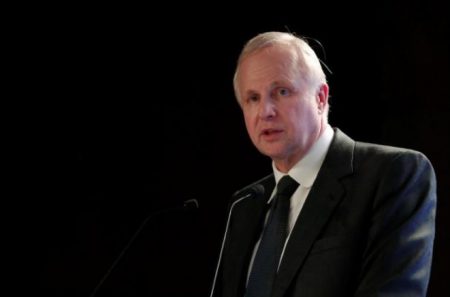
BP Chief Executive Bob Dudley addresses the gathering during a media interaction in New Delhi, India, June 15, 2017.

The expected rapid growth in the use of electric vehicles in the coming decades is threatening oil companies’ business model as demand for some road fuels could plateau as early as the late 2020s, according to some oil company estimates.

Looking to take a slice of the growing market, London-based BP is however examining different ways to get involved in the sector.

“We have discussions going on with a lot of the EV manufacturers to have a tie-up with our retail network for charging,”

Dudley said in an interview.

Rival Royal Dutch Shell (RDSa.L) has already launched a pilot scheme to install battery charging docks at a few of its service stations in Britain and the Netherlands.

The number of electric vehicles on roads is forecast to grow significantly in the coming decades, particularly in cities, with BP estimating that there will be 100 million by 2035, up from 1.2 million in 2015.

Dudley has been a vocal advocate of the oil and gas industry’s need to take part in the move away from fossil fuels toward using cleaner sources of energy in order to combat global warming.

But BP, along with rivals including Shell have yet to come up with a clear plan for increasing their interests in renewable energy production such as solar and wind.

“We’ll be ready for this world but we’re not going to dive in too deeply,”

he said, referring to BP’s previously unsuccessful ventures into renewable energy, including solar power.

BP will make investments in future technologies but these will be small percentage stakes in companies or partnering with them, he said.

FILE PHOTO: A general view of a new BP petrol station on the outskirts of Mexico City, Mexico, March 9, 2017.

Dudley said BP was also studying autonomous vehicles and the potential for combining natural gas with solar power generation.

Read more: REUTERS

Van and taxi drivers offered pathway to electric vehicle transition

Drivers of old and polluting vans and taxis have been offered fast-track options and incentives to purchase electric vehicles (EVs), with revamps to licensing and a new £42m taxi fund set to increase compliance with the diesel vehicle phase-out.

From January 2018, no more new diesel taxis will be licensed in London

Following on from Environment Secretary Michael Gove’s launch of the Air Quality Plan last week, which included a ban on all new petrol and diesel cars and vans from 2040, both Transport for London (TfL) and the Department of Transport (DfT) have launched new EV initiatives.

Mayor of London Sadiq Khan announced on Friday (28 July) that TfL would host a £42m fund to encourage owners of older and polluting diesel black cabs to retire them from the Capital’s fleet.
Owners of black cabs between 10 and 15 years old can check whether they are eligible of a “delicensing” scheme and to apply for a grant worth up to £5,000 to retire a taxi. The three-year scheme will attempt to speed up the process of tackling the illegal pollution levels in London’s air as part of a long-term goal of making the Capital a zero-carbon city by 2050.

“London’s filthy air is a health crisis that needs urgent action,”

Khan said.

“The plans announced by the Government this week go nowhere near the action needed. Cleaning up London’s taxi fleet will play a significant part in our toxic air battle and there will be no new diesel taxis licensed in London by the end of this year.

“However, it is important we financially support drivers to help them retire their oldest vehicles and upgrade to greener models. I hope this fund helps deliver a new generation of zero-emission taxis on our roads and paves the way for the Government to offer a diesel scrappage scheme so all London motorists can ditch their dirty diesels.”

From January 2018, no more new diesel taxis will be licensed in London, and the London Taxi Company officially rebranded after unveiling its new electric model. Taxis are thought to be responsible for 16% of NOx and 26% of particulate matter (PM) road transport emissions in central London.

The Government already offers a Plug-in Taxi Grant, part-funded by the Mayor, which offers up to £7,500 for new EV taxi purchases. When combined with the new delicensing payment, drivers can save up to £12,500 on new purchases.

Read more: edie.net

The electric jolt that roused Big Oil

Identifying a tipping point is not always easy. But when one of the world’s most powerful oil bosses says he is in the market for an electric car, there can be little doubt.

The UK’s electric vehicle drive has put the energy sector on the road to change

Ben van Beurden, the Royal Dutch Shell boss, last week delivered the clearest indication yet that the burgeoning electric vehicle industry is already hastening the decline of global oil demand.

“When that will be is not certain. But that it will happen, we are certain,”

he told investors.

It was not so much a foil to the group trebling second quarter profits as a statement of intent: for “Big Oil” it is time to adapt or die, and Shell intends to adapt.

The Anglo-Dutch giant is already shifting its focus from drilling for oil to natural gas, but within the next year Shell will unveil early plans for a deeper presence in renewable energy and the electrical chain to tap the boom in electric vehicles.

“Everyone is repeatedly surprised at how fast electric cars are coming forward,”

Professor Dieter Helm told The Telegraph in April. The number of new registrations of plug-in cars has grown from 3,500 in 2013 to more than 100,000 at the end of May.

“But the political pressure to adopt this technology is increasing all the time. It’s not due to concerns over climate change – it’s city air pollution,”

he said.

Shell boss Ben van Beurden CREDIT: EPA/BART MAAT

And so it was in the UK last week when the Government’s bid to tackle the country’s worsening air pollution followed the example set by France two weeks earlier in pledging to halt the sale of combustion vehicles by 2040. At the same time, government put the battery boom front and centre in its industrial strategy with £246m of funding for research and development.

Read more: The Telegraph