All posts by Jo

Living with the Tesla Powerwall for a year: the first Australian case study

Savings in excess of 90% have been reported by the first Australian to install a Tesla Powerwall after a year of living with the solar system. And with rapid advancements making home batteries more affordable, the number of installations are expected to triple in 2017.

Nick Pfitzner and his family live in a four bedroom home in Kellyville Ridge, NSW. It’s a large place with a study, an internal laundry, a pool and an outdoor entertainment area.

Powering the home with electricity in 2015 cost him $2289. But just over a year ago, he invested in a solar power system that has since significantly cut costs.

Nick, a self-confessed Tesla fanboy, was the first person in Australia to buy the company’s Powerwall. He bought a 7kW battery, a 5kWp solar array, a SolarEdge inverter and a Reposit monitoring system for $16,790 in January 2016.

A year on and Nick’s annual electricity bill has dropped to $178.71 – that’s a 92% saving of $2110.
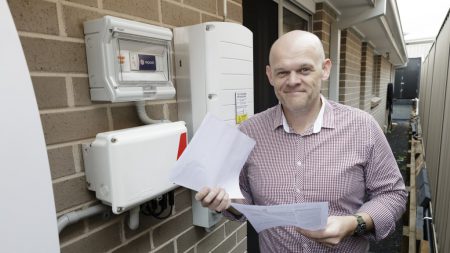
Nick Pftitzner standing alongside his home solar system

The savings exceeded projections, as well as Nick’s own expectations.

“Before I crunched the numbers I was looking at what would be my return on investment. If it saved me 80% of my power bill, [I thought] it would be pretty good,”

he says.

“I really learned a lot about myself and how my house uses energy and how we can improve with solar now.”

Home batteries are an emerging technology. They gained a lot of attention when electric carmaker Tesla entered the market. Original projections estimated a payback time of more than a decade, anywhere from 14 to 18 years.

At this rate, Nick’s solar system will pay itself off within eight years.

His average quarterly bill dropped from $572 in 2015 to $45 in 2016.

One of his quarterly bills was in credit of $50. This is because his system can sell unused electricity back to the grid.

“The system will power whatever the house needs first as a priority, then it will fill the battery as a second priority and then anything over it’ll export,”

he tells CHOICE.

“The aim is to try and export about three times of what I import because my electricity cost is about three times [as much].”

Read more: Choice

Why The Renault ZOE Is Europe’s Killer EV Right Now — And Could Stay That Way Too

Forget about the Tesla Model S, Tesla Model X, or Tesla Model 3. Renault’s unassuming ZOE electric hatchback is currently undergoing a massive rise in sales across Europe, making it the most popular plug-in car across the continent for the first quarter of this year.

Despite being nearly as old as the Nissan LEAF in terms of its design, the Renault ZOE recently gained a massive battery pack upgrade, going from 24 kilowatt-hours of capacity to a whopping 40 kilowatt-hours.

And that, as we explain in the video above, has changed things forever for the four-seat plug-in.

Source: Transport Evolved


Plugging into a better future | 2018 BMW 530e iPerformance First Drive

The Germans often stumbled during their first forays with plug-in hybrids. They were so fixated with not being the Toyota Prius, they overcompensated and stuffed big engines under the hood that weren’t all that efficient, even with electrified assistance. BMW in particular tried to convince the world hybrids were still enjoyable to drive.

To some extent they were, but BMW missed the point. Many consumers actually did want range and fuel economy, and Bimmer watched as its competitors rolled out efficient small displacement plug-in hybrids. With the 2018 530e iPerformance sedan, it looks like the company is finally getting it.

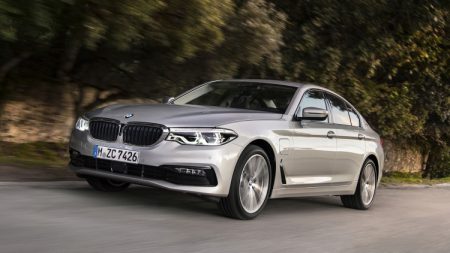
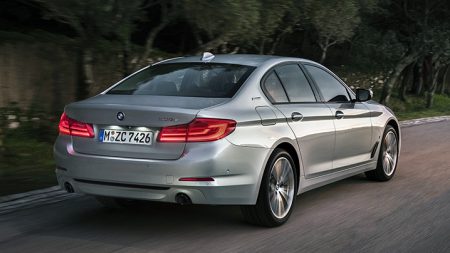
BMW 530e iPerformance

The sedan achieves up to 31 miles on electricity and the total range is claimed at 404 miles. Power comes from a 2.0-liter twin-scroll turbocharged four-cylinder with variable valve lift, which teams with an eDrive AC synchronous electric motor for a total output of 248 horsepower and 310 pound-feet of torque.

Perhaps the car’s coolest trick is its new wireless charging system, which BMW developed with Daimler-Benz. It will charge the battery at a rate of 3.2 kilowatt hours (one-third of total capacity) within 3.5 hours. With BMW Connected on the center screen, the car ‘sees’ the 2-foot square charging pad via a wireless network. The driver is guided with a set of blue lines on the screen over the pad with an accuracy of 2.8 inches from side to side and four inches from front to back.

Inside you’ll find a familiar 5 Series setup: austere, profoundly practical, and classy. Start her up and nothing happens except some wildly swinging needles in the instrument panel and enough blue light to think you’ve been transported to a Berlin nightclub. There’s an eDrive (displaying battery charge, range, etc.) on the right side and a simple speedo on the left.

There are several main modes of operation: auto eDrive, where the car chooses which power unit to use for maximum efficiency, with EV mode available up to 56 mph; max eDrive, where the car favors electric power with EV mode up to 87 mph; and battery control, where the gasoline engine will charge the battery pack and power the car.

BMW 530e iPerformance

It’s worth recalling that just over five years ago, BMW launched its first hybrid, the Active Hybrid 5, in which the engine was a 3.0-liter straight-six, the electric motor was a sort of volt-fueled supercharger and the realistic gas mileage didn’t approach the claimed sticker. Fast-forward half a decade, and the company is far more evolved and in-step with consumer tastes, as the 530e demonstrates. It isn’t brilliant to drive, but it does save gas. Munich engineers have finally gotten the point.

Read more: Auto Blog

Shell starts equipping petrol stations with electric chargers

Shell will start to equip its 870 service stations in the Netherlands and in Belgium with fast electric chargers /Belga

The Dutch oil company Shell is starting to equip its petrol service stations with fast electric chargers too, starting with 20 stations in the Randstad in the Netherlands.

“Only 15 to 20 minutes to charge up to 75%”,

says Machteld de Haan who is responsible for the Shell staions in the Benelux and France.

“Just enough time for a freshly made sandwich with coffee and a sanitary stop on the way”.

Electrical cars are still a niche. In the Netherlands around 15.000 fully electric cars are cruising the roads, in Belgium about 4.300 according to the latest figures.

“But the market can grow fast in the future and we feel the moment is right to step in”,

de Haan says. Last year Shell opened Europe’s largest service station in Luxembourg with 51 fuel pumps and not one electric charger, but now Shell is determined to make the switch.

In the Netherlands Shell is market leader with 600 service stations, in Belgium Shell accounts for 270 stations. Machteld de Haan won’t give any forecast on when all these service stations will be equipped with chargers.

“People will still need fossil fuels for decades. In rolling out the chargers we won’t look at what others do, but take into account our own infrastructure only. The charging stations will have a prominent position, next to the fuel pumps.”

Source: Go Press Mobility

Could Electric Vehicles Become The New Norm?

No one can deny that something big is happening to the automotive industry.

Take a look at Tesla, which has a permanent spotlight on its all-electric cars. From its flagship Model S luxury car, to locking in ~400,000 pre-orders within weeks of unveiling its much more affordable Model 3 for the masses, Tesla is taking on automotive giants that have been around for decades. According to Bloomberg Finance, Tesla’s market cap just surpassed General Motors by $2 billion.

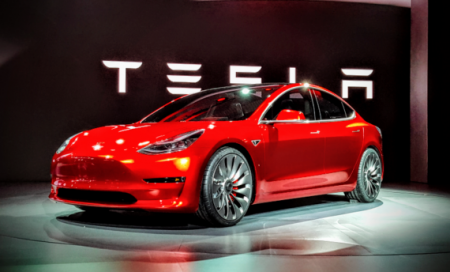
Tesla Model 3

The underlying message surrounding this race is crucial: the transition toward sustainable transportation is happening, and it is happening now.

Most recent estimates show that, by 2019, the global market for EVs will grow to over $227 billion dollars. By 2022, it is estimated that they will cost the same as their internal-combustion counterparts up front (and be cheaper operationally). That’s the point of liftoff for sales and only the beginning. It is estimated that electric vehicles will account for 35% of all new vehicle sales by 2040, expressed in the chart below.

To better understand where the sudden acceleration in all-electric vehicles came from, let’s take a look at the surge in car demand. For every 1,000 people in the United States, there are 1,000 cars. Even with this 1:1 ratio, the USA’s 239.8 million units continue to be the largest vehicle population in the world.

With this, the EPA says that,

“transportation remains the largest single source of air pollution in the United States.”

Moving abroad, the automotive market started seeing rapid car demand in 2010. China’s vehicle registrations jumped by 27.5% and India’s by 8.9%. Looking at the growth potential in these developing countries and comparing them to the US, it has reached a point where it just isn’t feasible to work outside of global emission standards to meet this demand.

The rest of the world seems to be in agreement. Ten of the largest countries are establishing policies that promote better fuel economy and greenhouse gas emission standards for passenger vehicles, including Japan, the European Union, the United States, Canada, China, South Korea, Mexico, Brazil, India, and Germany.

So, great, the move toward all-electric vehicles is the way to a cleaner future.

Read more: Clean Technica

Hyundai Ioniqs: pitting hybrid vs electric on video

Road trips have been a staple of automobile culture for decades, but with the rise of electric vehicles, charging infrastructure has thrown them a curve ball.

Unlike gasoline-powered vehicles, which can refuel almost anywhere in a populated area, electric vehicles require a little more planning to ensure things go smoothly.

So, how easy is it? The Straight Pipes aimed to find out in a new video installment.

The duo took a 2017 Hyundai Ioniq Electric and an Ioniq Plug-In Hybrid to see how easy it is to take on a spur of the moment road trip with only some basic planning along the way.

Read more: Green Car Reports

Donald Trump confirms US will quit Paris climate agreement

World’s second largest greenhouse gas emitter will remove itself from global treaty as Trump claims accord ‘will harm’ American jobs.

Donald Trump has confirmed that he will withdraw the US from the Paris climate agreement, in effect ensuring the world’s second largest emitter of greenhouse gases will quit the international effort to address dangerous global warming.

The US will remove itself from the deal, joining Syria and Nicaragua as the only countries not party to the Paris agreement. There will be no penalty for leaving, with the Paris deal based upon the premise of voluntary emissions reductions by participating countries.

“In order to fulfil my solemn duty to the United States and its citizens, the US will withdraw from the Paris climate accord, but begin negotiations to re-enter either the Paris accords or a really entirely new transaction, on terms that are fair to the United States,”

the US president told press in the White House rose garden on Thursday.

“We will start to negotiate, and we will see if we can make a deal that’s fair,” Trump said. “If we can, that’s great. If we can’t, that’s fine.”

But Italy, France and Germany issued a joint statement shortly after Trump’s speech saying they believed the treaty could not be renegotiated.
Trump told the crowd outside the White House:
“The fact that the Paris deal hamstrings the United States while empowering some of the world’s top polluting countries should expel any doubt as to why foreign lobbyists should wish to keep our beautiful country tied up and bound down … That’s not going to happen while I’m president, I’m sorry.”
Trump’s predecessor, Barack Obama, issued a rare statement saying the new administration had joined
“a small handful of nations that reject the future”.
But he said that US states, cities and businesses
“will step up and do even more to lead the way, and help protect for future generations the one planet we’ve got”.
Read more: The Guardian
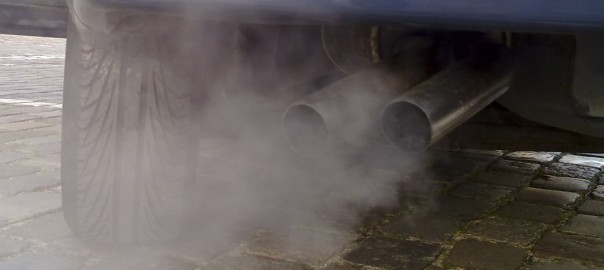
Car exhaust pollution (Image: Wikipedia)

High pollution is reducing house prices by 15pc as buyers reject ‘unhealthy’ homes

Property listings will include traffic light-style pollution warnings in the near future, experts have predicted as they said poor air quality can knock up to 15 per cent off house prices.

Pollution has become a top concern among potential buyers, who are snubbing “unhealthy homes” and have started using sophisticated pollution websites to track air quality.

The trend has prompted calls for new rules which force estate agents to publish traffic light style pollution warnings alongside energy efficiency ratings in property adverts.

Car exhaust pollution (Image: Wikipedia)

A toxic air alert was issued for the first time in London over “very high” pollution levels, sparking major public concern over the health impacts of living in congested areas.

Nearly 9,500 people died early in a single year as a result of long-term exposure to air pollution in London, a Kings College London report claimed.

Concerned buyers have started actively researching granular data through websites which let them track air quality at individual postcodes, they said.

Henry Pryor, a professional home buyer and property agent, said:

“Home buyers used to have a blaze attitude to air pollution but now this has completely changed. People are very concerned and they are suddenly discovering that they can look at two homes at different ends of a street, and one will be more polluted than another.

“I get asked about pollution levels so regularly that I now check it as standard before suggesting a property to clients. If a house is in a highly polluted area, such as near a train line, it might go for a 15 per cent less than a similar property in a less polluted zone.”

Read more: The Telegraph

Milton Keynes Electric Car Company Expands to Meet Soaring Demand

Milton Keynes entrepreneurial start-up, Fuel Included Ltd, provides Electric Cars with free miles included on a single monthly payment. Fuel Included has recently expanded to meet the growing demand for electric cars.

Company founder and CTO Trevor Larkum said,

“The electric car market is seeing exponential growth. This is a fantastic time to be offering the consumer a simpler way to go electric. We can saving them money while having a really positive impact on pollution and the climate”.

Trevor has brought two new members on to his team since January 2017. Having worked with both previously, the new team was able to hit the ground running.

Jason Tisdall has taken on the role of CEO.

“For many consumers, the electric car is still an unknown. We are focusing on making it simple for them to assess the basics. Will they save money, what is the impact on climate change and what happens if they run out of charge? By demystifying these areas, many customers feel much more secure in making the switch to electric. Our experience is that, once they do, they never look back”.

Jo Pegram-Mills has joined as Sales and Business Administrator.

“I am focused on improving the back-end office systems so that customers can enjoy a smooth and straightforward journey of learning about, buying and running an electric car. All of us in the office own electric cars ourselves. We have a wealth of experience, and a real passion about our business and giving our customers a fantastic experience”.

f