All posts by Jo

Lyft and nuTonomy are deploying a fleet of self-driving electric cars in the US

The ride-sharing platform Lyft has been quite active through partnerships in the self-driving space. It took an important $500 million from GM to work with them on the deployment of autonomous cars in their fleet. They also announced a similar deal with Alphabet’s Waymo last month.


Now they announce another partnership with a self-driving car startup, nuTonomy, in order to use their vehicles for a fleet in the US – starting in Boston.

nuTonomy already operates similar test programs in Boston and Singapore, but through this partnership with Lyft, customers will be able to experience the vehicles through the ride-sharing app:

“The collaborative R&D effort will take place in Boston, MA, where nuTonomy has been testing its self-driving electric cars since the beginning of the year. The tests are being conducted in Boston’s Raymond L. Flynn Marine Park and the adjacent Seaport and Fort Point neighborhoods. An engineer from nuTonomy rides in each of its vehicles during testing to observe system performance and assume control if needed.”

What is also interesting here is that nuTonomy has been using electric vehicles as a platform for its self-driving technology, namely the Mitsubishi i-MiEV and the Renault Zoe.

“Thousands” of the vehicles should end up in the new program in Boston as the two companies develop the technology.

Karl lagnemma, CEO and Co-founder of nuTonomy, commented on the announcement:

“By combining forces with Lyft in the U.S., we’ll be positioned to build the best passenger experience for self-driving cars. Both companies care immensely about solving urban transportation issues and the future of our cities, and we look forward to working with Lyft as we continue to improve our autonomous vehicle software system.”

Here’s a demonstration of nuTonomy’s latest autonomous driving system:

https://youtu.be/iP_lAjIfZwU

Read more: electrek

100 new PHEVs to be introduced by 2021, research finds

Research from Frost & Sullivan finds that the global PHEV market is estimated to reach about 3.7 million units by 2025 with 4.8 million light vehicles in an optimistic scenario and 2.9 million light vehicles in a conservative scenario.

Mitsubishi Outlander PHEV Concept-s

The reasons behind such growth include the imminent launch of 100 new models, favourable incentives, emission target compliance, and long battery ranges.

However, factors that may impede PHEV adoption include the phasing out of electric vehicle incentives, long-range battery electric vehicles, emergence of 48V mild hybrids, and the complexity of having two powertrains in a single vehicle.

“The stringent emission norms of 95 g CO2/km can only be met by PHEV technology, while EV battery technology evolves to overcome limitations. PHEVs have a better market than BEVs due to uncertainty in charging infrastructure,”

said Frost & Sullivan Intelligent Mobility Research Analyst Pooja Bethi.

“Owing to their ability to provide internal combustion engines and EV advantages, the PHEV market is set for high demand and growth.”

Dedicated EV platforms like the Volkswagen (VW) MQB, Mercedes-Benz EVA, and BMW FSAR are major drivers, pushing PHEV growth.

Other key developments include high-performance models such as Maserati Levante, Bentley Bentayga, and BMW M3, which will have PHEV versions by 2025.

Global OEMs, led by Europe, have a strong PHEV strategy to meet regulatory changes and compliance mandates. VW Group is forecast to produce about 470,000 units by 2025.

China and Europe will likely lead the market, accounting for 39.8 per cent and 30.6 per cent of the total PHEV market, respectively.

By 2025, the C-Compact PHEV segment will be the largest, with over 35 new launches, followed by sports utility vehicles (SUV).

Source: GreenFleet

Why Electric Cars Will Soon Be The Most Popular Vehicle

For what seems like a long time now, electric vehicles (EVs) have been on the cusp of going mainstream – in fact it was three decades ago that major automotive manufacturers first introduced working concepts of EVs.

Since then we’ve seen the hybrid vehicle make a significant impact on the car market, and now it looks like the fully-fledged EV is set to change motoring for good, making our cities less polluted and altering the very way we think of energy and how to use it.

The battery revolution

In the past, what’s held the EV back has been the high cost of batteries and their limited range. Consumers looking at the bottom line found they were paying more money for a car that travelled shorter distances. That has radically changed in recent years.

Battery costs have reduced enormously – 65% since 2010 – mainly for two reasons: firstly, as manufacturers figure out ways to make processes and materials more efficient, production becomes cheaper; secondly, economy of scale means that as EVs become more popular, the increasing demand pushes the cost of each individual battery down.

The other decisive factor with batteries is to do with improvements in their chemistry, which means they can now power a car over much longer distances.

Going station to station

Another criticism of EVs in the past has been the lack of charging points. This meant that – especially for long journeys – you had to plan meticulously and incorporate various diversions to ensure you didn’t wind up in the middle of nowhere with a dead battery.

But in the UK for example, the EV charging network is expanding rapidly. There are now 4,100 public charging locations, which is remarkable when you think there were only a few hundred as recently as 2011. Compare that to the 8,472 traditional fuel stations (a drop of 75% in the last 40 years) and it’s clear a major shift is underway. In fact, based on these trends, electrical charge points will outnumber traditional fuel stations by 2020.

Driving energy

One significant bonus for EV drivers relates to the energy convergence we’re beginning to see in urban areas, and how these vehicles interact with a ‘smart city’ dynamic.

Recharge stations could be used to feed energy back to the national grid, a process we already see in places like Japan, which has one of the largest EV populations in the world. It operates ‘Vehicle to Grid’ (V2G) systems, which essentially turn EVs into generators, enabling their users to sell energy from their parked cars to the national grid at times when it is most needed. Such technology combines easily with an app on your smartphone or alternative device that, in turn, ensures none of said energy is wasted.

For years we’ve been told the Electric Vehicle is the future, but as that future begins to unfold, and people begin to understand both the economic and environmental benefits, their popularity will begin to snowball. Within a generation, there is every chance EVs will be the only vehicles we’ll see on the road.

Read more: Huffington Post

Is Big Oil planning its own funeral?

The end of the Oil Age is within sight. Everyone who follows the news should be able to see this by now, although people have vastly different ideas about the timeline.

Above: Internal Combustion Engine vs. Battery Electric Vehicle (Instagram: cars217mph / gunthersahagun)

Consultancies, investment analysts and think tanks around the world produce a constant stream of predictions about the future impact of new technologies on the auto and oil industries. Despite the pundits’ painstaking perusal of primary sources, including economic data and interviews with industry insiders, their conclusions do not agree, to say the least.

The oil industry itself, along with mainstream investment banks, tends to foresee a gradual, decades-long transition. BP’s 2017 Energy Outlook predicts that electric vehicle (EV) sales will grow to a mere 6% of the global auto market by 2035 (from around 1% today). A recent report by Goldman Sachs is a bit more adventurous, predicting that pure EVs will capture 5% of the market by 2025. The US Department of Energy’s Energy Information Administration (EIA) has doubled its forecast from last year, but still predicts that EVs will account for only 8% of the US market in 2025.

Sign of the times: Emirates National Oil Company just opened the first solar-powered gas station in Dubai (Source: CleanTechnica)

Organizations of a more greenish hue are more sanguine: Greentech Media Research expects EVs to score 12% of the US market in 2025, and Bloomberg New Energy Finance predicts 35% globally by 2040. A study from the Carbon Tracker Initiative argues that EVs could capture 33% of the global market by 2035, and that reductions in battery costs

“could halt growth in global demand for oil from 2020.”

To those who follow the EV industry, none of this is really news. Lately, however, there have been signs that at least some in the oil industry are reassessing the threat to their empire, and preparing for a “peak oil” scenario that may come much sooner than they have been predicting.

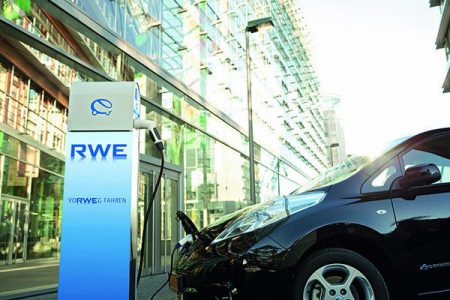
Another sign of the times: RWE, Germany’s biggest gas and energy provider, just launched hundreds of electric vehicle charging stations (Source: Trustnodes)

Read more: Evannex

What difference will electric cars make to our electricity demand

Simple calculation[s] as to the impact on electricity demand as we progressively switch over to electric cars.

National Grid estimates up to 7% increase in electricity demand by 2040 for EVs

There are around 30 million cars on the road today [1]. National Grid’s Future Energy Scenarios 2016 presents 4 scenarios – in the most ambitious ‘Gone Green’ scenario there are 9.7 million electric vehicles (EV) on the roads in 2040 using an extra 24 TWh/year. Relative to current electricity demand that is an increase of 7%[2].

But the impact on peak demand will be minor, if drivers respond to time of use pricing.

However, this demand is highly unlikely to be spread evenly through the day and year. Firstly, people tend to drive more in the summer, presumably because it is considerably more pleasant than driving in the winter [3]. Fortunately our peak electricity demand is in the winter so this helps to even out the load.

Secondly, assuming time of use pricing is widely adopted drivers will try quite hard to charge their vehicles at times of the day when the electricity is cheap. Most people will have quite a lot of flexibility and during the peak time a lot of drivers are on the road anyway.

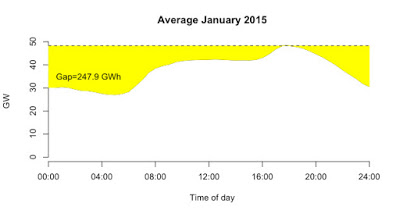
This means electric car charging will increase non-peak demand much more than peak. The chart below shows a typical January day. If electric car charging is spread over non-peak times it will start to fill in the yellow area but not impact on the peak demand. 24 TWh/year is 66 GWh/day so it could fill in just over a quarter of the yellow area.
A typical day’s UK electricity demand in January

If all cars were electric there would be more impact on peak demand

However, 66 TWh/day is from only 9.7 million electric vehicles. If we replaced all 30 million cars, it would be nearer 200 GWh/day. This does still fit into the yellow area – just – but it would be quite a challenge to ensure that there was no ‘leakage’ and it did not impact on the winter peak at all.

Read more: Blogspot

Severe Flooding, Against a Background of Wind Turbines: November 2012, Tyringham, Bucks. (Image: T. Larkum)

Scientists say the pace of sea level rise has nearly tripled since 1990

A new scientific analysis finds that the Earth’s oceans are rising nearly three times as rapidly as they were throughout most of the 20th century, one of the strongest indications yet that a much feared trend of not just sea level rise, but its acceleration, is now underway.

Severe Flooding, Against a Background of Wind Turbines: November 2012, Tyringham, Bucks. (Image: T. Larkum)
Severe Flooding, Against a Background of Wind Turbines (Image: T. Larkum)

“We have a much stronger acceleration in sea level rise than formerly thought,”

said Sönke Dangendorf, a researcher with the University of Siegen in Germany who led the study along with scientists at institutions in Spain, France, Norway and the Netherlands.

Their paper, just out in the Proceedings of the National Academy of Sciences, isn’t the first to find that the rate of rising seas is itself increasing — but it finds a bigger rate of increase than in past studies. The new paper concludes that before 1990, oceans were rising at about 1.1 millimeters per year, or just 0.43 inches per decade. From 1993 through 2012, though, it finds that they rose at 3.1 millimeters per year, or 1.22 inches per decade.

The cause, said Dangendorf, is that sea level rise throughout much of the 20th century was driven by the melting of land-based glaciers and the expansion of seawater as it warms, but sea level rise in the 21st century has now, on top of that, added in major contributions from the ice sheets of Greenland and Antarctica.

“The sea level rise is now three times as fast as before 1990,”

Dangendorf said.

Studying the changing rate of sea level rise is complicated by the fact that scientists only have a precise satellite record of its rate going back to the early 1990s. Before that, the records rely on tide gauges spread around the world in various locations.

But sea level rise varies widely in different places, due to the rising and sinking of land, large-scale gravitational effects on the waters of the globe and other local factors.

Read more: The Washington Post

Renault Zoe leads 49% sales jump in EV sales in Europe during first quarter 2017

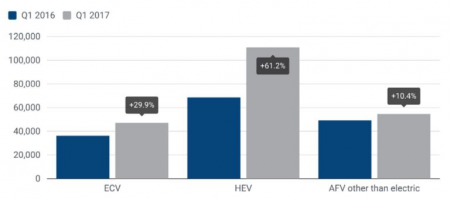
According to the European Automobile Manufacturers Association, alternative fuel vehicles (AFV’s) in the Europe Union are off to a very strong start in the first quarter of this year, increasing their numbers sold by 37.6% to 212,945 vehicles.

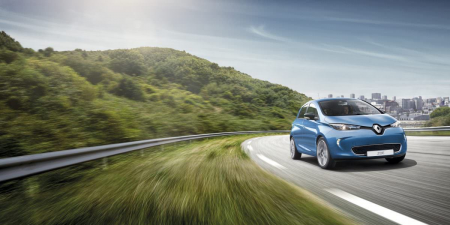
Renault ZOE ZE40

Hybrid vehicles (HEV) showed the biggest growth with 61.2% versus the same period last year, now counting 111,006 units. Electrically chargeable vehicles (ECV = BEV and plug-in hybrids) grew with 29.9% from 36,322 units sold in Q1, 2016 to 47,196 units in Q1, 2017. This includes 49% growth for “battery-only” (BEV’s) to 24,592 units sold and 13% growth for the plug-in hybrids (21,644 units). The U.S. market showed a similar growth of 49% for electric car sales to 40,700 units sold in the first quarter according to Bloomberg New Energy Finance. The American car market is about 16% larger.

All the major markets in the EU added many new AFV registrations over the first three months. Spain showed the largest increase (+87.4%) over the first quarter of 2017 followed by Germany (+67.5%), the UK (+29.9%), France (+24.8%) and Italy (17.2$). The growth in Italy is due in large part to the recovery in LPG-fuelled (natural gas) cars, but for the other markets, the growth is mostly the result of strong sales in electrically chargeable vehicles (ECV’s or BEV’s) and hybrid-electric (plug-in hybrids).

New passenger car registrations by alternative fuel type in the European Union during the first quarter of 2017.

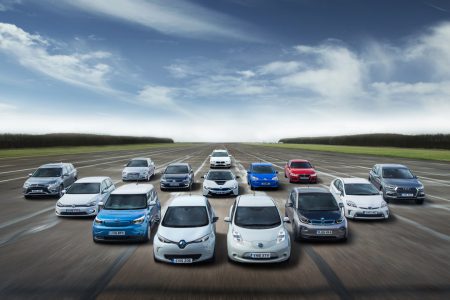
Looking at electric- or battery-only car sales in Europe reported by the European Alternative Fuels Observatory, we see that the improved Renault Zoe is the number one seller by far, followed by the Nissan Leaf, BMW i3, Tesla Model S and X and the others.

Read more: Electrek

Scotland Yard To Green Its Fleet With Purchase Of Up To 700 Electric Cars

In a “green” effort, the Metropolitan Police Department will start by transitioning 250 of them to hydrogen and electric cars. The new vehicles will be put in place over the course of the next 12 months.

“The response from police drivers to the BMW i3 has been very positive. It’s actually a very quick car.”

Included in the initial plan is hydrogen fuel cell cars, specifically for emergency response vehicles, 30 plug-in hybrids for responding to “999” calls, additional larger vehicles (vans) for crime scenes, and 1o vehicles for Royalty protection officers.

The hope is that at least half of the police force is driving electric cars by next year. This is all part of a multi-million program which includes replacing about 700 vehicles. Monies are also allocated for infrastructure, and the capital area will get five hydrogen chargers.

The organization has looked into the BMW i3 and the Toyota Mirai as viable options. Hydrogen scooters are a possibility for specific patrol routes. At this point, officials aren’t ruling out any automakers or vehicles, as long as they are “clean.” Talks have included vehicles from Ford, Nissan, Mercedes, Renault, and Volkswagen, among others. All vehicle types are also being considered, from mopeds, to cars, and vans. The chief of police, Bernard Hogan-Howe, reportedly spoke personally with Elon Musk about the concept of using Tesla vehicles for “front line” operations.

Trials are already underway and more are planned. The BMW i3 REX has been successful in testing, specifically due to its acceleration. Hydrogen scooters manufactured by Suzuki are also being tested. Jiggs Bharij, the head of the Metropolitan Police fleet services, said:

“The response from police drivers to the BMW i3 has been very positive. It’s actually a very quick car.”

This is all comforting to residents due to the poor air quality in London. Many people have threatened to leave the area if changes aren’t initiated. Sian Berry, a member of the London Assembly Green Party concluded:

“A lot of new and positive ideas are being trailed and considered by the Met here … But what we need from them is a firm deadline for getting all diesel police vehicles off the road. Every organisation with a fleet in London needs to be making plans for this to happen as soon as possible, and this needs to start with the Mayor’s own bodies, including TfL and the Met.”

Source: Inside EVs