All posts by Jo

Volvo Is Going Electric: Does that Mean Its Cars Will Cost More?

Volvo is committing itself to an ambitious plan to overhaul the way it powers its cars by introducing only fully electric or hybrid-powered vehicles, beginning in 2019. While Volvo hybrids now are significantly more expensive than their traditional counterparts, the automaker said it can change that, though not for some time.
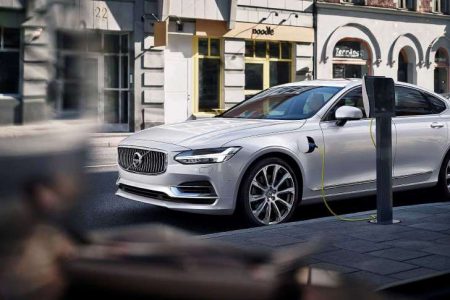
Volvo S90

“We believe that enhancing our cars with electrification will make them more desirable,”

Volvo spokesman Russell Datz said Wednesday.

“People will not want a pure [internal combustion engine] car when they can have one with better efficiency, lower emissions, and more performance, all at an equal or lower cost.

“Pricing for the technologies are coming down, helped by technological advances and considerable investments across the industry,” Datz added. Still, he noted, reaching “the break-even between internal combustion engines and plug-in hybrids will take some time and plug-ins will remain a premium option for the near future.”

In its release Wednesday, Volvo said it will introduce five new electric or hybrid models by 2021, three under the Volvo name and two under the company’s Polestar performance car brand.

“This announcement marks the end of the solely combustion engine-powered car,” Hakan Samuelson, Volvo’s president and chief executive, said in a statement. “Volvo Cars has stated that it plans to have sold a total of [1 million] electrified cars [worldwide] by 2025. When we said it, we meant it. This is how we are going to do it.”

Read more: MSN
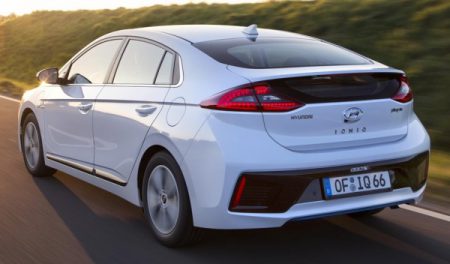
Hyundai IONIQ Plug-in Hybrid Goes on Sale in UK

The much publicized and hyped Hyundai IONIQ Plug-in Hybrid is gearing up to hit the British market later this month with a starting price of £24,995. It’ll be interesting how the IONIQ will do in terms of sales, especially as cars with all-caps names rarely become big hits. We have to say though, things are looking pretty good for this green Hyundai on paper.

The 2018 Hyundai IONIQ Plug-in Hybrid is the best version of the car you can ask for when you look at the number. 25 grand, 39 miles of pure electric driving with a total range of 680 miles. Granted, an output of 140 PS is not something one would write home about, but then you don’t buy a plug-in hybrid for performance, do you? So it’s all right. And the IONIQ doesn’t look horrible, as one would expect from a 25 grand hybrid made in Korea. Up close it’s actually kind of futuristic and nice. Of course, none of that is guarantee of success and we should wait and see how the market reacts to this thing.

Read more: Motorward

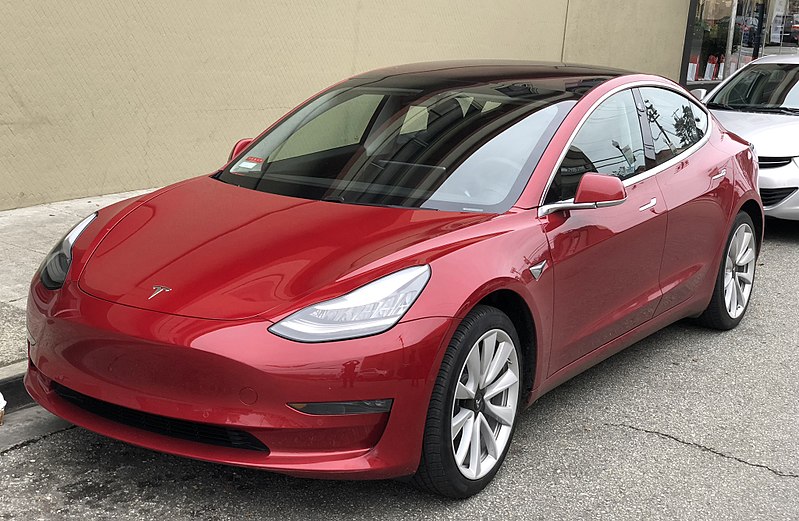
Tesla Model3 (Image: Wikimedia/Carlquinn)

Tesla’s First Mass-Market Car, the Model 3, Hits Production This Week

Tesla’s long-awaited mass-market electric car will begin rolling off the assembly line this week. But even as it moves ahead, the automaker is encountering challenges to its ambitious plans for growth.

Tesla Model3 (Image: Wikimedia/Carlquinn)

On Monday, it acknowledged that it had experienced a “severe shortfall” in production of 100-kilowatt battery packs that use new technologies and are made on new assembly lines.
As a result, Tesla’s output of 25,708 cars in the second quarter barely exceeded its first-quarter production, though it was a 40 percent increase from a year ago.

Until June, the supply of battery packs was about 40 percent below demand, Tesla said, though supplies improved last month.

The hiccup in production appeared to have unsettled investors. Tesla stock fell $8.99, or 2.5 percent, to $352.62.

Tesla said production of its first midpriced car, the Model 3, would begin on Friday, two weeks earlier than planned, with the first deliveries on July 28.

Elon Musk, Tesla’s chief executive, said late Sunday on Twitter that production would increase quickly, with 100 Model 3s produced in August and 1,500 or more in September. He said that he expected the company to be able to produce 20,000 a month starting in December.

The Model 3 is a critical test for Mr. Musk and his ambitious plan to turn Tesla into a producer of mass-market electric cars.

Until now, the company has manufactured luxury cars in relatively small numbers, typically selling them for $90,000 or more. In 2016, it made about 85,000 vehicles. General Motors, by contrast, produced more than nine million cars and light trucks.

The Model 3 will be priced around $35,000. Mr. Musk envisions it reaching a much wider range of customers and has said he expects it to push Tesla’s output to 500,000 cars a year in 2018.

Read more: The New York Times

Lyft’s autonomous electric vehicles will run on 100% renewable energy

One of the leading on-demand ridesharing companies has committed to charging its forthcoming autonomous electric vehicle fleet with electricity from renewable sources.

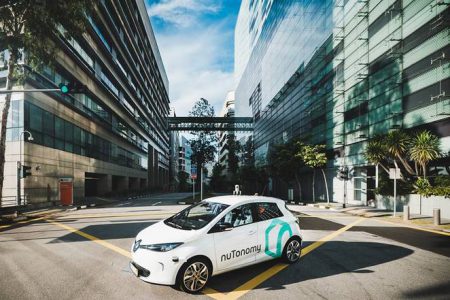
Renault ZOE / nuTonomy

One of the promises of services such as Lyft and Uber (which are called ridesharing platforms but are more like dispatchers for freelance taxis) is that they will reduce the need for car ownership, and that they will bring down the total number of cars driving in cities, thereby also decreasing vehicular emissions.

The logical next step in that clean transport play is to move to greener cars, such as hybrids, plug-in hybrids, and full electric vehicles, and the one beyond that is using autonomous cars, while the third move looks to be a combination of electric mobility and self-driving cars. But although those steps, in conjunction with things like walkable neighborhoods and clean last-mile vehicles, can help move us forward in terms of a more sustainable transportation model, one of the many environmental elephants in the room is the origin of the energy powering this EV evolution, which in many places is still predominantly fossil fuels.

According to a blog post from Lyft co-founders, the company is committed to using 100% renewable electricity to charge its forthcoming fleet of autonomous electric vehicles, right from the get-go, beginning with the nuTonomy self-driving vehicle pilot program launching in Boston this year.

Read more: Tree Hugger

Carbon in Atmosphere Is Rising, Even as Emissions Stabilize

CAPE GRIM, Tasmania — On the best days, the wind howling across this rugged promontory has not touched land for thousands of miles, and the arriving air seems as if it should be the cleanest in the world.

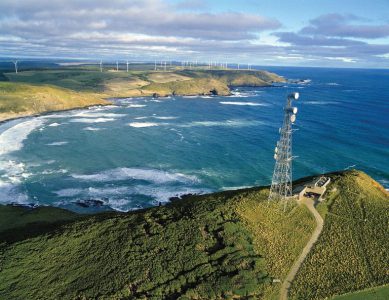
The Cape Grim Baseline Air Pollution Station in Tasmania.
Credit Commonwealth Scientific and Industrial Research Organization

But on a cliff above the sea, inside a low-slung government building, a bank of sophisticated machines sniffs that air day and night, revealing telltale indicators of the way human activity is altering the planet on a major scale.

For more than two years, the monitoring station here, along with its counterparts across the world, has been flashing a warning: The excess carbon dioxide scorching the planet rose at the highest rate on record in 2015 and 2016. A slightly slower but still unusual rate of increase has continued into 2017.

Scientists are concerned about the cause of the rapid rises because, in one of the most hopeful signs since the global climate crisis became widely understood in the 1980s, the amount of carbon dioxide that people are pumping into the air seems to have stabilized in recent years, at least judging from the data that countries compile on their own emissions.

That raises a conundrum: If the amount of the gas that people are putting out has stopped rising, how can the amount that stays in the air be going up faster than ever? Does it mean the natural sponges that have been absorbing carbon dioxide.

“To me, it’s a warning,”

said Josep G. Canadell, an Australian climate scientist who runs the Global Carbon Project, a collaboration among several countries to monitor emissions trends.

Scientists have spent decades measuring what was happening to all of the carbon dioxide that was produced when people burned coal, oil and natural gas. They established that less than half of the gas was remaining in the atmosphere and warming the planet. The rest was being absorbed by the ocean and the land surface, in roughly equal amounts.

In essence, these natural sponges were doing humanity a huge service by disposing of much of its gaseous waste. But as emissions have risen higher and higher, it has been unclear how much longer the natural sponges will be able to keep up.

Read more: The New York Times 

EVEN Electric and Microsoft plan new EV sales experience

A new way of buying cars will launch next year after Nordic firm EVEN Electric signed a deal with Microsoft Sweden to develop a digital sales platform.

The agreement will see a new digital sales platform designed for the EV market

This new smart trading platform will use systems from price comparison sites, artificial intelligence, and bot technology to match the needs of buyers to electric cars and services.

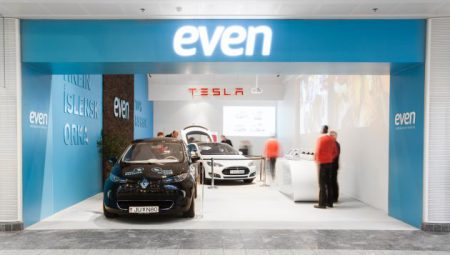
Pop-up stores will also be set up around the world to provide a physical presence and distribution channel, working on lines developed recently by the likes of Tesla, Hyundai, and VW.

Founded in 2008 in Iceland by Gisli Gislason, EVEN came about because Gislason believed that the existing sales structure is built to support internal combustion cars. Now, by partnering with Microsoft, EVEN can realise its business plan of providing a modern way of selling cars.

Gisli Gislason, said:

“Planet Earth is our home, and we must take care of it by switching to EVs. The problem is, if you go to a car dealer today, many merchants will try to sell you a fossil fuel-driven car because they generate more revenue. This is because there are so few moving parts in an electric car and virtually nothing gets broken.

“We want to challenge this, so we decided to look for new and better ways to help OEMs to sell electric cars, and to find a technology partner to help us build the solution.

“In order for this project to succeed, we need not only to make it easier and more appealing for consumers to find the right fit for their needs – we also need to make it attractive and easy for distributors and manufacturers to find buyers for their products and services.”

Niklas Johnsson, Head of Microsoft Services in Sweden, said:

“EVEN has a great idea with enormous potential to revolutionize the electric car market. With our expertise and global scalable cloud services, we will together create new opportunities and a unique customer experience that not only sets the right conditions for a more efficient electric car market but also contributes to a more sustainable society.

“We are proud of this co-operation with high ambitions to make buying electric cars more accessible, affordable and convenient globally.”

Source: Next Green Car

Plug-In Vehicle Sales In Europe Increased By 50% In May

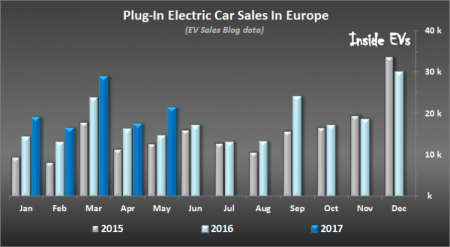
Europe has increased plug-in vehicle sales every month so far this year, exceeding 21,000 deliveries in May (21,371 – a “non December”/year end record), up a strong 48% over a year ago.

After five months, sales are now approaching 105,000 (which is up 21% year-over-year).

Six models exceeded the 1,000 sales mark in May:

  • Renault ZOE #1 – 2,095 (12,957 YTD)
  • Mitsubishi Outlander PHEV #2 – 1,842 (8,018 YTD)
  • BMW i3 #3 – 1,629 (8,660 YTD)
  • Nissan LEAF #4 – 1,378 (9,404 YTD)
  • Volkswagen Passat GTE #5 – 1,170 (5,374 YTD)
  • Mercedes GLC350e #6 – 1,105 (4,589 YTD)
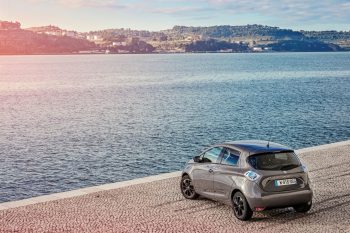
Renault ZOE Z.E. 40

Tesla sold some 1,640 cars during the month, including 899 Model S (5,191 YTD) and 741 Model X (4,036 YTD).

As you can see, there is no threat for the Renault ZOE at the top, which has pulled ahead by some 3,500 registrations over the second place LEAF in five months. Truly, this race is already over. We suspect that the new 2018 Nissan LEAF when it arrives in Europe in early 2018 will put up a much better fight, as will the Tesla Model 3.

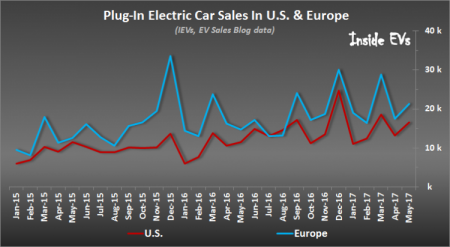
Here is comparison of U.S. and Europe results:

Source: InsideEVs

Tesla install to bring Europe’s largest community battery to Nottingham

What is expected to be Europe’s largest community battery is set to be installed at an innovative regeneration scheme in Nottingham, with a 2MWh Tesla battery to be deployed in September as part of a housing scheme alongside community solar.

The £100 million Trent Basin project is a new housing development built at the site of an inland dock previously derelict for around two decades. It is expected to deliver 500 homes over five phases with 375kW of rooftop and ground mounted solar and the Tesla battery to be installed by EvoEnergy.

Representatives of the energy consortium behind Trent Basin gather to mark the launch of the pilot scheme. Image: Blueprint

In an innovative use of the solar farm, planning permission has been granted on the basis that the site shall be cleared by 28 February 2020. By this time, the panels from the ground mounted installation will be removed and installed on new homes built as part of the development.

With the addition of the battery storage facility and ground source heat pumps which will also be used on site, Trent Basin is intended to provide a new way to use renewable energy sources by generating, storing and distributing all at a neighbourhood level. A local energy company, Trent Basin ESCO, has already been set up to facilitate the local energy services.

According to project lead Blueprint, the battery will store energy from the local renewable generation to be used on site while also performing grid arbitrage and smoothing out the peaks and troughs of supply and demand.

Read more: Solar Power Portal

Smart ForTwo: Second Generation is Smarter than the First

When Mercedes first started this sub-brand, even it can’t have fully envisaged just how relevant a Smart car with an electric drivetrain would be in 2017

Smart FourTwo

While the first-generation Fortwo Cabriolet Electric Drive was good, it had its limitations. Those limits have been pushed back by this new model.

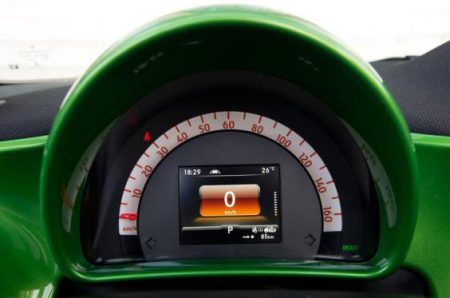
When you hop in, and it’s easy to do, you realise that the new car is larger, in fact a whole 110mm wider, which makes it feel far more grown-up. There’s more stowage, a smarter dashboard and a useful 7in touchscreen controlling the integrated TomTom. It feels like just the place to go from one side of the city in some style.

Smart FourTwo

The new electric motor is similar to the one in the Renault Zoe, and makes 81bhp and a relatively substantial 118lb ft of torque. That’s up on the first model, and it has a new battery pack that sits low under the seat for a great centre of gravity. That also allows another 10 miles of range, giving you a claimed range of 96 miles.

This is a city car, so you’ll need to be in a situation where you can recharge it easily, but Smart reckons a 2.5 hour charge using fast-charge software will give you a full battery ready to go again.

Smart FourTwo

So this isn’t a car you’re going to want to use for pounding down the motorways, but in city streets you’d rather be in this than say a BMW 5 Series. Horses for courses, depending on your lifestyle. If you do need to spend time in congested, narrow streets, then the Fortwo Cabriolet ED is just the mode of transport.

Read more: The Independent