Monthly Archives: September 2022

MINI Electric

Top 10 best small electric cars 2022

Small electric cars make a lot of sense for commuting, city life and slashing your running costs. Here, we pick out the best ones to buy in the UK right now

Electric cars have also come a long way since the infamous G-Wiz arrived on the scene, especially when it comes to the most compact EVs on the market today. Thanks largely to big improvements in the package of EVs and the amount of range available from their batteries, carmakers can build more convincing and usable small zero-emissions models.

Plus, since small EVs have smaller batteries on board, charging them up is quick, and you can expect your running costs to be far cheaper than even the most economical small petrol cars. However, electric cars, even ones this size, are still more expensive to buy than their petrol-powered counterparts, so it’s worth considering the purchase price as well as the running costs when you buy.
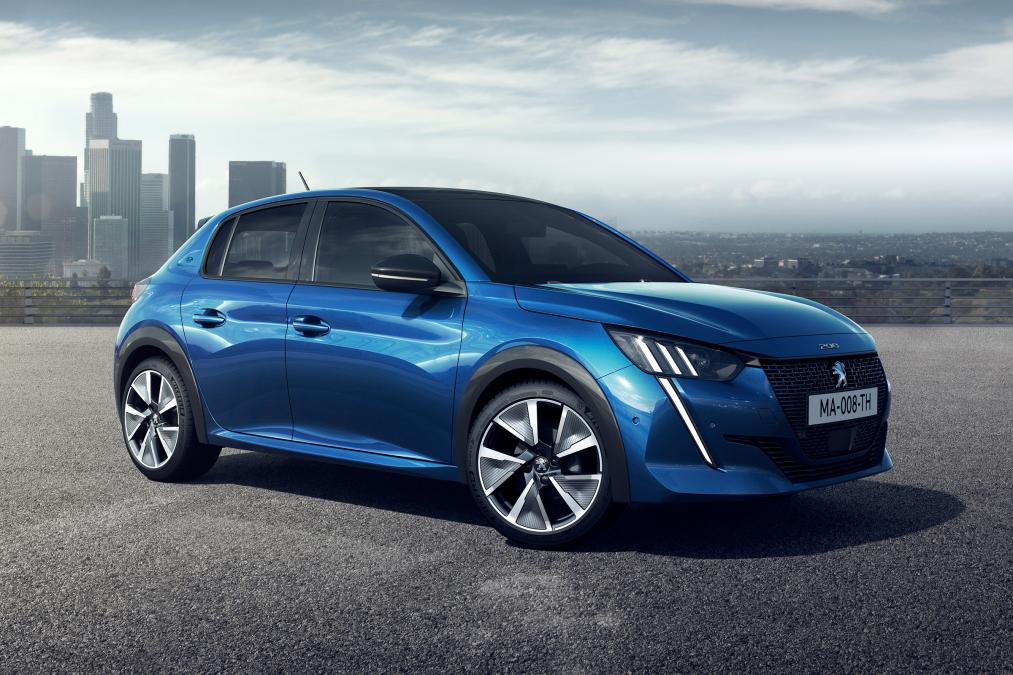
 

Peugeot e-208 (Image: Peugeot)

It’s only a matter of time before the gap closes though, with sub-£20,000 EVs on the way from VolkswagenCupra and Renault, to name but a few. If you are concerned about cost, you can check out our list of the cheapest electric cars you can buy right now – but you’re here for the best small electric cars, so read on to find out our top picks.

Read more: DrivingElectric

It’s Time to Go Green!

If you would like to know more about Solar Panels and the PowerBanx range of home battery systems, and get a free instant quote, please complete our online form:

Cost-of-living crisis: ‘Electric cars are still cheaper to run’

Despite the soaring electricity prices, research shows you’ll still save money running an EV ‒ plus top tips from the experts on how to save even more

There’s been a flurry of energy-price fluctuations over the past couple of months, but despite the dropping of fuel prices and energy price rises (and more to come), the latest research shows that it’s still cheaper to run an electric car.

The planned rise of electricity to around 34p per kWh (a jump from the current average unit of 28p) on October 1 will bump up the price of running an EV, but, according to the RAC, it’s still cheaper than driving a petrol car. Comparing similar cars under comparable conditions, the organisation found that an EV driver would pay 9p per mile while a petrol driver would pay 19p.

cheapest electric car UK

Still, with electricity at an all-time high, EV drivers will be looking to save all the charge, and pounds, they can. With the help of Stuart Masson, editor of car ownership advice site The Car Expert, and Simon Williams, EV lead at the RAC, here’s our list of money-saving tips to help keep costs as low as possible…

Charge at home overnight on the off-peak rate. Most chargers have smart-charge software that powers up when electricity is cheapest at around 2am ‒ so if you’re charging a home only do so overnight.

Read more: EveningStandard

It’s Time to Go Green!

If you would like to know more about Solar Panels and the PowerBanx range of home battery systems, and get a free instant quote, please complete our online form:

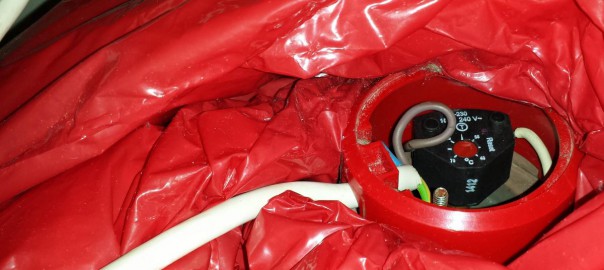
Figure 3: New thermostat installed, note temperature adjustment (Image: T. Larkum)

The energy price cap is a relic of another era

What’s the point in a consumer energy price cap that does very little to cap consumer energy prices?

When it was introduced, the UK energy price cap aimed to solve the problem of the “loyalty penalty” — higher prices for people who didn’t regularly shop around for a new supplier. The problem is, that’s now a non-issue. What it wasn’t designed for is the conundrum we face: unaffordable energy prices. As a result it is failing to serve any function well.

Figure 3: New thermostat installed, note temperature adjustment (Image: T. Larkum)

To recap, the default price cap in 2019 was introduced against a backdrop of concerns that suppliers were overcharging disengaged consumers.

That wasn’t a trivial problem. The competition watchdog found in 2016 that 70 per cent of the Big Six energy companies’ domestic customers were on “expensive ‘default’ standard variable tariffs”, now known as the only show in town. At the time, it was the case that if consumers switched, they could save perhaps £300 a year. Across the market the loyalty penalty added up to £1.4bn a year on the Competition and Markets Authority’s estimates.

The cap on the default tariff was designed as a fallback to stop companies from using loyal customers to subsidise switchers, beyond a price determined by the energy regulator Ofgem. It also aimed to solve a fairness problem: that no one should have to pay more than the watchdog-determined fair price for energy.

Read more: MSN

It’s Time to Go Green!

If you would like to know more about Solar Panels and the PowerBanx range of home battery systems, and get a free instant quote, please complete our online form:
Home solar panels will now pay for themselves in just four years as energy bills soar

As energy costs rise, households with rooftop solar save money each month by using their own power rather than expensive grid electricity

The time it takes to repay the cost of installing rooftop solar has dropped dramatically as energy costs have spiked, with new data suggesting it could soon take just four years to pay off a new system through savings on energy bills.

Homes fitted with rooftop solar panels can now cut their electricity bills by hundreds of pounds a month, by using home-generated electricity instead of expensive grid power.

That means solar systems pay for themselves within just a few years.


Analysis from climate website Carbon Brief suggests the payback period for a £4,300 rooftop solar system, with a power capacity of 3kW, has dropped from 16.7 years in October 2020 to 11.1 years under the current price cap.

By April, by which time analysts predict the average energy bill could hit £5,277, the payback time is set to drop to just 4.1 years.

“Stratospheric gas prices are driving our energy bills through the roof,” said Dr Simon Evans, senior policy editor at Carbon Brief, who conducted the analysis.

“That’s making low-carbon options even more cost effective. Whether it’s large-scale windfarms now costing four times less than gas power, or home solar systems that could pay back the initial outlay within less than five years, the economic case for net-zero has never been stronger.”

Read more: inews

It’s Time to Go Green!

If you would like to know more about Solar Panels and the PowerBanx range of home battery systems, and get a free instant quote, please complete our online form:

Solar-plus-storage: 3 reasons why they’re better together

Adding storage to your commercial on-site solar power asset is a numbers game. When you save on your overall electricity bill, you definitely come out ahead. Here are three reasons to add storage to your solar PV:

Reason #1: Use solar when you need it most (even if it’s cloudy)

Most utilities have time-based rates for commercial and industrial (C&I) customers, which means you pay more when the grid is delivering at its peak capacity. For summer-peaking utilities, that’s generally late afternoon.

With a storage system connected to your solar array, you can store some of your solar generation when rates are low and discharge the battery to lower your grid-supplied energy consumption when grid power costs rise. This is known as time shifting your energy usage, and it’s a great way to improve the ROI on your solar investments.

Read more: UtilityDive

It’s Time to Go Green!

If you would like to know more about Solar Panels and the PowerBanx range of home battery systems, and get a free instant quote, please complete our online form:

Jeep has revealed three all-new electric cars

And the Avenger, Recon and plush new Wagoneer will be joined by a fourth EV soon after…

Jeep is having a major pile-on in battery electric drive. It wants to be the ‘global zero-emission SUV leader’. In Europe that means all its new-vehicle sales will be full electric by 2030. Even in the US, land of freedom and gasoline, it’s expecting 50 per cent by then.

And instead of just boring us with airy but blind promises, they actually have some cars to show for it. Three of them.

First is the Avenger, the JCB-yellow car pictured above. This itty-bitty Jeep was designed in Italy and will be built in Poland. It fits under the Renegade in the lineup, and uses the smallest of the new Stellantis specialist electric platforms. It’ll be launched at the Paris Show on 17 October and available to order from that date.

Says global design chief Ralph Gilles: “It was designed in Italy for a reason. These cars exist in cities, they go up kerbs, they need body armour. But it also has Renegade elements like the tail lamps and grille.” City use means the planned 250-mile range should be OK.

Read more: TopGear

It’s Time to Go Green!

If you would like to know more about Solar Panels and the PowerBanx range of home battery systems, and get a free instant quote, please complete our online form:

One in seven cars bought in August were EVs

Electric car sales in August accounted for one in seven of new cars registered, according to new data from New Automotive.

While internal combustion engines (ICE) registrations have maintained steady in August, the electric vehicle (EVs) market continues to grow. It accounted for 14.48% of the market with 8,926 EVs registered in August, an increase of more than 2,000 on August 2021.


MINI Cooper Concept (Image: MINI)

More motorists are looking to reap benefits of owning an EV amid the rising cost of living, and while hybrid sales continue to fall, EVs have grown at the expense of that market as more customers opt for a fully electric car instead of an hybrid.

“As the cost of living crisis worsens, UK motorists continue to turn towards cheaper-to-run electric vehicles,” said Ben Nelmes, co-founder and head of policy at New Automotive.

“Even with the increase in the Ofgem price cap for electricity in October, EVs will continue to offer running cost savings compared to ICE models.”

In July, total sales of electric cars in 2022 had already passed totals for the entirety of 2020, despite July being the first full month since government scrapped its plug-in car grant on 14 June.

Read more: Current+

It’s Time to Go Green!

If you would like to know more about Solar Panels and the PowerBanx range of home battery systems, and get a free instant quote, please complete our online form:

MINI Electric

How much does an electric car cost? Why switching to an EV can save you money, from cheap charging to road tax

With fossil fuel cars on the way out, battery-powered alternatives are not only cleaner but can also be cheaper to run

With the cost of petrol soaring and the potential benefit to the environment becoming ever more apparent, electric vehicles (EVs) are becoming an increasingly attractive option for many drivers.

Registrations of new battery EVs grew at a record rate of 49.9 per cent in the past year, according to the Society of Motor Manufacturers and Traders (SMMT), even as the car market lagged due to supply issues. One in 10 new cars sold is now powered by electricity rather than fossil fuel, up from just one in 100 in 2015.


Nissan Leaf (Image: Qurren/Wikipedia)

That uptake is only likely to increase as the Government’s 2030 ban on sales of new petrol and diesel vehicles looms. A poll of drivers by Moneysupermarket found that of those considering a new vehicle this year, 28 per cent were thinking of buying an electric car and 27 per cent were considering a hybrid.

But EVs are generally more expensive than their equivalents: as of August 2022, the UK’s most popular car model (according to SMMT data), the Vauxhall Corsa, would set you back £17,330 for a petrol model, against £27,055 for the Corsa-e.

Read more: inews

It’s Time to Go Green!

If you would like to know more about Solar Panels and the PowerBanx range of home battery systems, and get a free instant quote, please complete our online form:

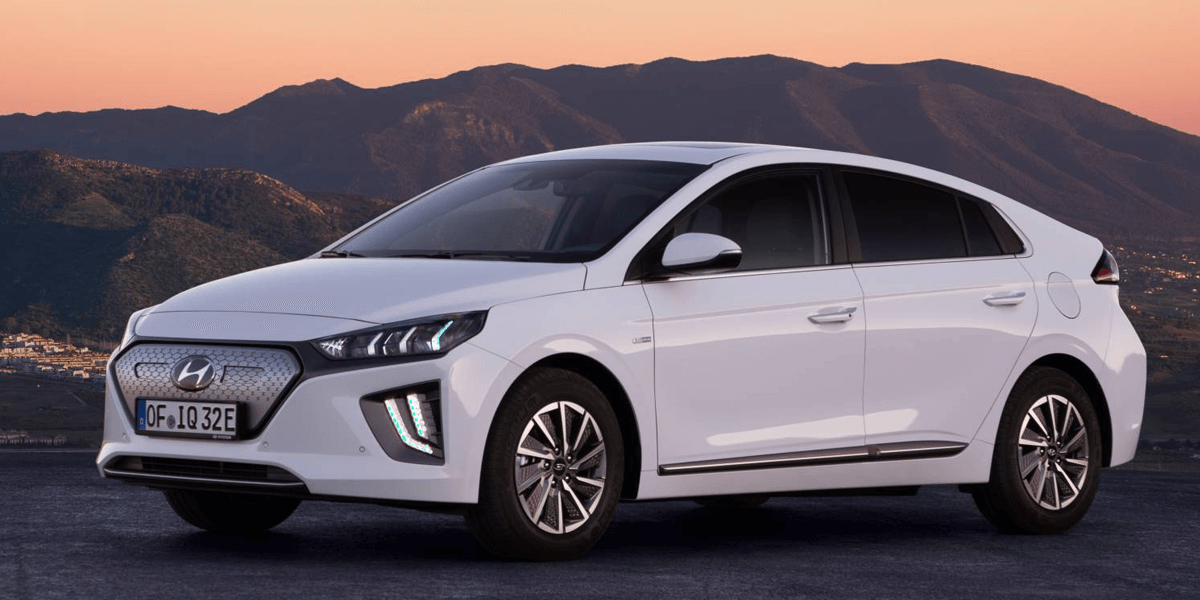
2020 Hyundai IONIQ (Image: Hyundai)

The best electric cars on sale today

If you’re thinking of making the switch to an electric car, our award winners are the ideal choices to help you make the move…

The winners of the What Car? Electric Car Awards for 2022 were announced on Wednesday.

Held in association with OVO Energy, these are held every year to celebrate the finest cars in this emerging class of car which will from 2030 be the only type of car you’ll be legally allowed to buy new.

They now come in all shapes and sizes. So, to help you choose, we’re not only naming the best new models, but also our favourite used options. Let’s dive in:


VW e-Golf (Image: Volkswagen.co.uk)

Read more: WhatCar

It’s Time to Go Green!

If you would like to know more about Solar Panels and the PowerBanx range of home battery systems, and get a free instant quote, please complete our online form:
The surprising history of how electric vehicles have played the long game and won

Electric vehicles, we are often told, are the future. A whole range of carmakers and nations have plans to go electric.

The largest US manufacturer, General Motors, says it will phase out fossil-fuel vehicles by 2035. Norway has set a goal to end sales of new petrol and diesel cars by 2025, the UK by 2030, and France by 2040.

In Australia, only about 2% of new cars sold today are electric. Federal government modelling in 2021 predicted a jump to 90% of the vehicle fleet by 2050.

The new federal government has put electric vehicles firmly on the agenda. Industry Minister Chris Bowen did so in a speech at the EV Summit on August 19. As global consultancy McKinsey and Co has declared, “the automotive future is electric”.

A very long and troubled history

What is often overlooked is that electric vehicles have a history as well as a future. If we look back we can see they are not a futuristic dream but a longstanding transport option.

This history also illuminates the barriers that electric vehicles face – and are steadily overcoming. It is a troubled history with particular relevance to Australians, so long attached to internal combustion.

Electric vehicles have been around since car manufacturing beganRobert Davidson built the first practical electric vehicle – a 16-foot (4.9 metre) truck driven by electro-magnetic motors – in Scotland in 1837. This was decades before the internal combustion engine was invented.

Read more: TheConversation

It’s Time to Go Green!

If you would like to know more about Solar Panels and the PowerBanx range of home battery systems, and get a free instant quote, please complete our online form: