Monthly Archives: November 2021

Sales of battery electric vehicles see best ever month

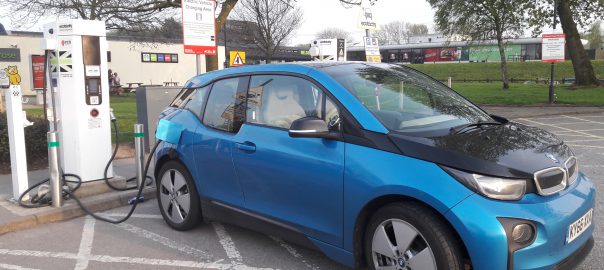
September was the best ever month for sales of battery electric vehicles (BEVs), according to the latest figures from the Society of Motor Manufacturers and Traders (SMMT).

Sales of BEVs reached 32,721 in September 2021, a 49.4% increase on the same month in 2020. These sales figures were, in fact, just over 5,000 off of the total number registered during the whole of 2019. It meant BEV sales represented 15.2% of the market share, surpassing diesel sales for the fourth month in a row.

New car registrations as a whole plummeted in September, falling by 34.4% to 215,312 compared to the year before. This is the weakest September since 1998, with the ongoing shortage of semiconductors impacting vehicle availability.

This year to date, 125,141 BEVs have been sold, an 87.9% increase on the year before. This is also higher than the total number of diesel vehicles sold so far this year (117,605).

Mike Hawes, SMMT chief executive, praised the “rocketing uptake” of BEVs, but said that in order for all drivers to make the switch, “massive investment” in public charging infrastructure is still required.

However, figures from Zap-Map show that two key areas of the UK’s public charging infrastructure have grown significantly since the end of 2020. The number of ultra-rapid charging devices in the UK has increased by over 50% since the beginning of year, with there now being over 1,000 ultra-rapid charging devices in the ground alongside 3,750 rapid chargers.

The number of slow chargers has also increased by 66%, from over 3,670 at the end of 2020 to more than 6,100 at the end of September, Zap-Map’s data shows.

Read more: CURRENT

It’s Time to Go Green!

If you would like to know more about Solar Panels and the PowerBanx range of home battery systems, and get a free instant quote, please complete our online form:

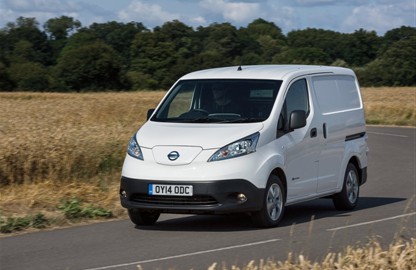
Nissan e-NV200 electric van (Image: Nissan)

Hermes commits to electric vehicles for the road ahead

Consumer parcel delivery specialist Hermes has underscored its commitment to an emissions-free future by placing a huge order for 168 fully electric Mercedes-Benz eSprinters.

The zero-emission vans should all be on the road before the end of the year. They will be assigned to Hermes’ popular ParcelShops service, which operates from more than 5,000 convenience stores and other locations nationwide.

Hermes has commissioned Pod Point UK to install charging points at its network of depots. This work is already underway, with the focus initially on those in London and other cities that have introduced low emission zones.

Hermes plans to undertake all ParcelShop collections with electric vehicles at the earliest opportunity. The company has only ordered the diesel vans to ‘tide it over’ pending completion of its infrastructure programme and the introduction of next-generation battery-powered variants.

Nissan e-NV200 electric van (Image: Nissan)

The company relies on a core fleet to service its ParcelShop business. This currently stands at some 450 units but is growing, and supplemented with rented vehicles during busy periods. The owned fleet includes 30 smaller electric vans that work from a depot in East London, while French-built diesels will be stood down to make way for the eSprinters.

“The transition to a zero-emission, electric fleet is integral to our ESG (environment, social and governance) agenda, and we’ve been keen to take the next, major step forward towards this goal,” said David Landy, Hermes Head of Fleet.

“However, we are under no illusions… this will not be an easy journey. From a purely operational standpoint, and given the current state of the technology, whichever way you look at it – whether in terms of range, payload or volume – a van with an internal combustion engine beats an electric one hands down.

“Only when it comes to tailpipe emissions does the battery-powered vehicle outshine the diesel. So we know there are constraints and compromises to make, and we recognise that this is going to put extra pressure and increased demands on those colleagues out in our depots who are doing a difficult job, day in, day out.”

“We’re at the very beginning of what is going to be a long and challenging process,” continued Landy. “This is new technology, so product support will be crucial. There are electric vans out there that offer a longer range than the eSprinter, but any electric vehicle is going to break down, and it’s going to do so in new ways too.

“When that happens we want to know there’s an army of people out there who are fully clued-up and able to get us back on the road as quickly as possible. Mercedes-Benz Vans gives me that confidence.

Read more: logistics manager

It’s Time to Go Green!

If you would like to know more about Solar Panels and the PowerBanx range of home battery systems, and get a free instant quote, please complete our online form:

Citroen Ami (Source: uk-mediacitroen.com)

“Citroen has shaken up the electric car market like no brand before”

At around £6k the Citroen Ami is the most significant EV breakthrough moment for Brit consumers, says Mike Rutherford

How’s this for a run of events? Last winter, the Citroen Ami wins its first major trophy: World Vehicle of the Year. By early summer it’s got the Auto Express Technology Award. Then, in August at the British Motor Show, car nuts queued to see the most talked about and photographed vehicle there.

Citroen Ami (Source: uk-mediacitroen.com)

A few weeks later came the happiest story of the year: Citroen will sell the Ami in the UK. It’s expected to have a cash price of about £6,000. Plus, the firm told me that although mobile phone-like, circa-£40-a-month contracts may be offered here as in France, such deals require deposits of a grand or three. Low or no-deposit contracts appeal more to Brits, even if this means payments of nearer £80 a month. Either way, this car at these prices is the most significant EV breakthrough moment ever for Brit consumers.

We never did have the cash, or hunger, for the worthy but ugly original Nissan Leaf launched at £30,000 a decade ago. A few years later the smaller, prettier VW e-up! at nearly £24,000 (almost twice as much as the basic version) also failed to hit the spot. And although today’s mid-sized pure-electric family cars from firms such as Hyundai, Kia and Skoda are credible, some of ’em carry £50,000 price tags. Ouch!

Though very different, the stripped-out Ami’s imminent arrival in the UK means long-overdue change (and then some) for pure-EV accessibility and affordability. Bucking the tradition of EVs being almost twice the price of their ICE equivalents, the new-tech Ami is poised to start a price revolution by wading in as THE least expensive new vehicle on the market, period.

Read more: Auto Express

It’s Time to Go Green!

If you would like to know more about Solar Panels and the PowerBanx range of home battery systems, and get a free instant quote, please complete our online form:

Why Toyota Has Got It Wrong On Electric Cars

Over the last few years, a war has been brewing between Toyota and battery electric vehicles, particularly those produced by Tesla.

Toyota president Akio Toyoda (grandson of the company’s founder) has been openly vocal in his criticism of Tesla and its upstart nature compared to the traditional incumbents. Most recently, though, the rhetoric has taken a more desperate tone, and a much more worrying one for the future of the Japanese giant.

Akio Toyoda has now widened his criticism from Tesla to the whole plan surrounding the transition to electric vehicles as a means to reduce carbon emissions. His argument isn’t about the environment, however. It’s about how many jobs will be lost in the Japanese car manufacturing industry from a switch to BEVs. He seems to be basing this on what Toyota in particular manufactures – fossil fuel vehicles made a little greener with hybrid drivetrains. Battery-electric vehicles require fewer laborers to make and have fewer parts, so the third-party supplier ecosystem is smaller too. Also, Toyota hardly makes any of them.

It is a valid concern that the switch to BEVs can have a major impact on employment. German car companies have been having the same concerns. This has been worrying German auto labor unions and this is one reason cited for BMW’s hiccup in its plan towards electrification, which had started so well with the i3. But the growth in BEV sales worldwide, particularly in Europe and China, has convinced vehicle manufacturers in Germany and France that this is a bandwagon they need to be on for existential reasons, whatever the short-term costs. Toyota, in contrast, has only released one BEV so far, the Lexus UX300e, and merely teased further BEVs such as the bZ4X, with no clear launch date.

Read more: Forbes

It’s Time to Go Green!

If you would like to know more about Solar Panels and the PowerBanx range of home battery systems, and get a free instant quote, please complete our online form:
BMW i4 EV (Image: BMW)

All-electric BMW i4 on sale now

  • Electric BMW will rival the Tesla Model 3
  • i4 will cover up to 370 miles on a single charge
  • Prices start at £52,000

The BMW i4 is available to order with a starting price of £52,000. The i4 will most likely reach showrooms in 2022 and be a rival for the Tesla Model 3, which is more than £10,000 cheaper.

BMW i4 EV (Image: BMW)

So it’s not a bargain, but the i4 is the German carmaker’s first attempt at moulding everything you like about a modern BMW – stylish design, luxurious interior and sharp driving dynamics – around an electric powertrain.

Stylish design? Well, we’ll let you decide.

Upfront, you get the love it or loath beaver-tooth grille that first appeared on the new 4 Series. It’s not as striking now and, on the i4, it gets a flush finish with a panel that can open to provide cooling to the motors when needed. Aerodynamics feature a lot in the design.

Thus, the BMW has a slippery profile with a coupe-like roofline reminiscent of the Tesla Model S and door handles that sit flush in their housings. You can also go for 17-inch wheels with plastic inserts that help them cut through the air more easily and add 6 miles to your total range. Standard 17, 18 and 20-inch wheels are also available.

Around the back, you’ll find a rear diffuser that’s stuck on the end of the BMW’s completely flat floor, which again helps lower drag. The diffuser, lower section between the wheels which houses the battery and the opening grille are finished in iBlue highlights to press home the i4’s perceived eco-friendliness.

Read more: Honest John

It’s Time to Go Green!

If you would like to know more about Solar Panels and the PowerBanx range of home battery systems, and get a free instant quote, please complete our online form: