Monthly Archives: May 2019

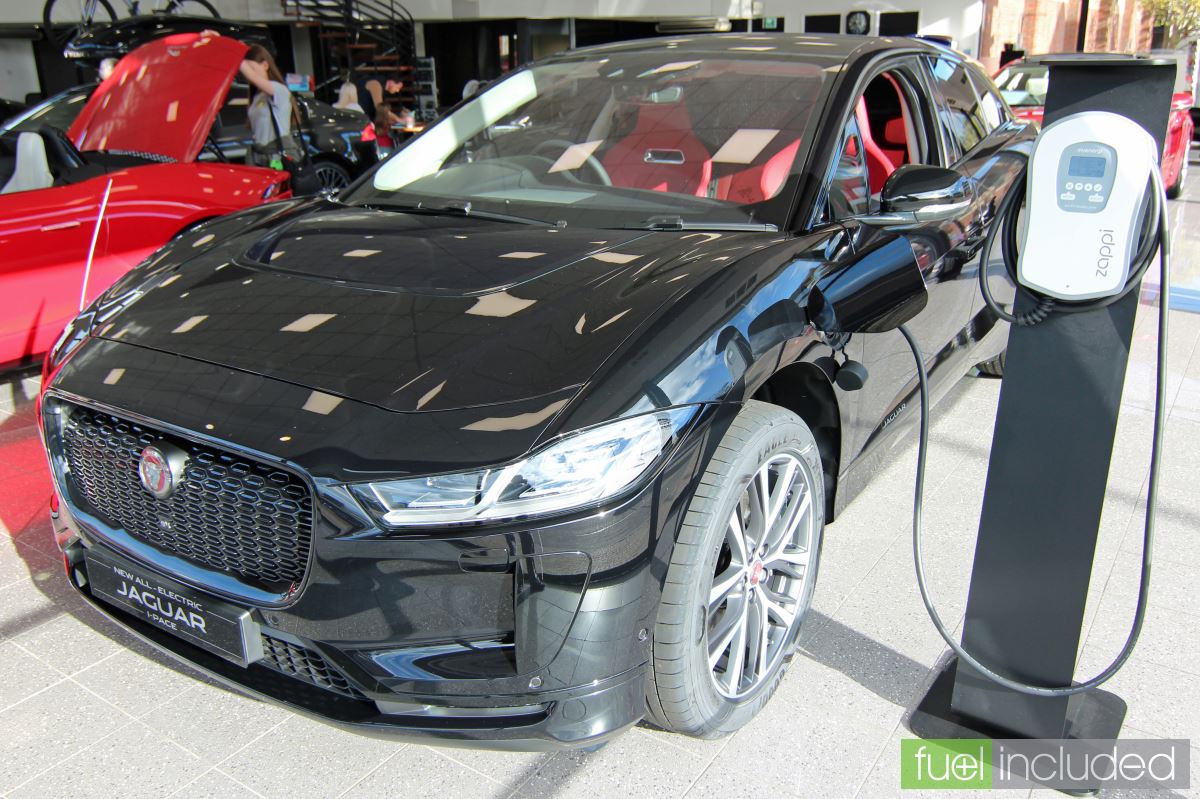
Jaguar I-PACE Electric Car (Image: T. Larkum)

European car sales: EVs and hybrids up as diesel hits historic low

Registration figures across Europe in March show electrified cars pass 100k mark, while diesel hits its lowest point since 2000

Europe’s new car market declined by another 3.6% last month – the seventh consecutive monthly fall, with factors such as the diesel city ban, falling consumer confidence and Brexit uncertainty blamed.

Figures released by analysis firm Jato Dynamics show that 4.13 million new cars were registered across the continent in the first quarter of this year, down 3.2% year-on-year. 19 of the 27 countries listed posted declines, with the UK market dropping by a modest 3.4%.
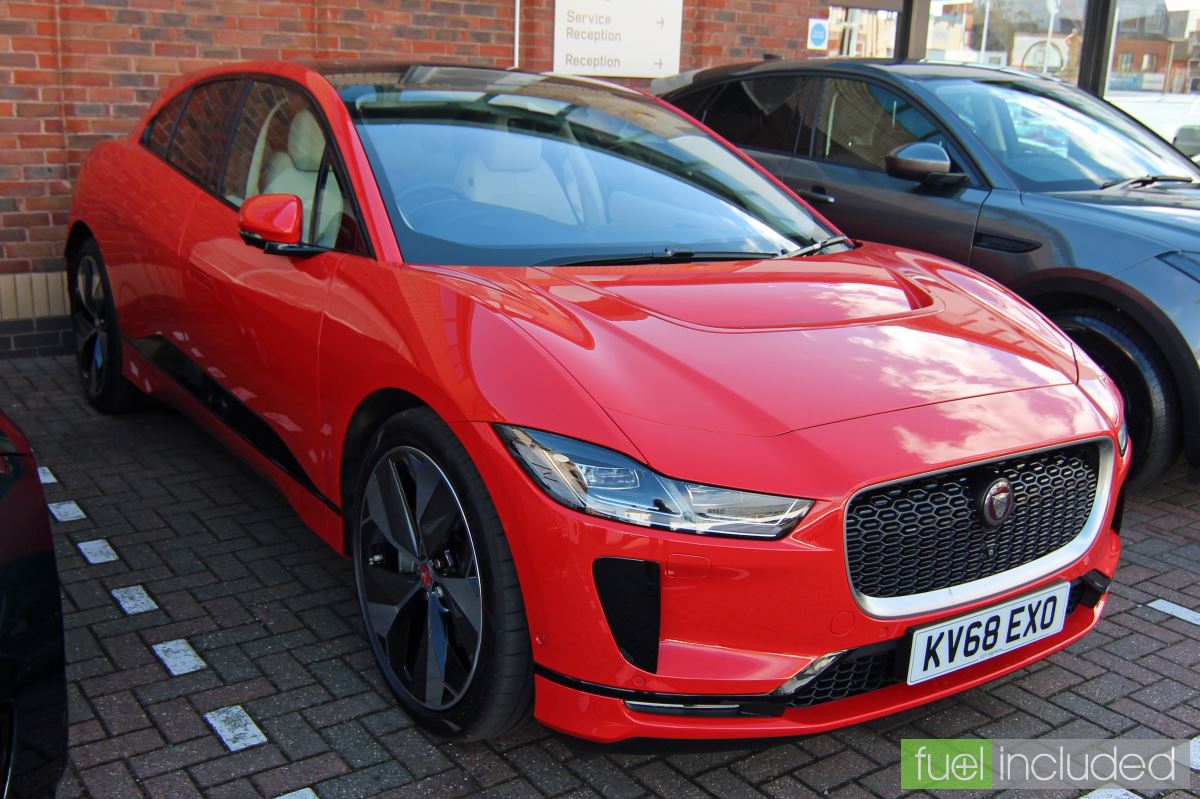
Jaguar I-PACE Electric Car (Image: T. Larkum)

Diesel demand is down significantly again, with a 31.2% market share in March. That’s down from the same month last year (36.2%) and much lower than March 2017 (44.8%).

There is good news, however, as last month saw registrations of electrified vehicles (BEVs, PHEV and traditional hybrids) passing the 100,000 mark for the first time, with 125,400 registered. Demand grew by 31%, driven by demand from Holland, Spain, Norway and Germany in particular.

Read more: Autocar
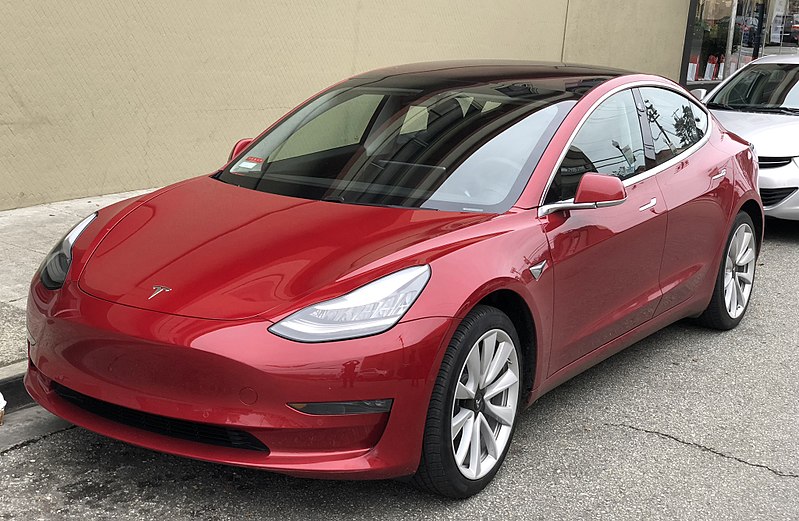
Tesla Model3 (Image: Wikimedia/Carlquinn)

Tesla Model 3 Accelerates Past European Electric Cars

Tesla’s Model 3 stormed to the top of the Western Europe battery electric car sales charts in the first quarter of 2019, outselling the second best Renault Zoe with almost twice as many sales.

This is all the more remarkable because the Model 3 was only available for sale from February, and the price of the Tesla is probably more than twice and maybe occasionally even 3 times that of the little Zoe city car.

According to data compiled by Berlin-base automotive industry analyst Matthias Schmidt www.schmidtmatthias.de, Tesla sold 19,482 Model 3s in the first quarter compared with the second placed Zoe’s 11,049 and the Nissan Leaf with 10,315.

Tesla Model3 (Image: Wikimedia/Carlquinn)

Direct competitors to the Model 3 were way off the pace, with the Jaguar I-Pace in 7th place at 3,012 and the Audi E-Tron 11th with 2,526, according to Schmidt’s data.

Schmidt said the European competition may in fact be holding back its sales because next year, European Union (EU) carbon dioxide (CO2) regulations tighten sharply. Manufacturers may want to have the biggest number of electric cars in their fleets in 2021, to bring down the average emissions, and mitigate or avoid big fines. Meanwhile, the Tesla Model 3 has the chance to rack up big sales because its all electric fleet won’t suffer fines.

Read more: Forbes

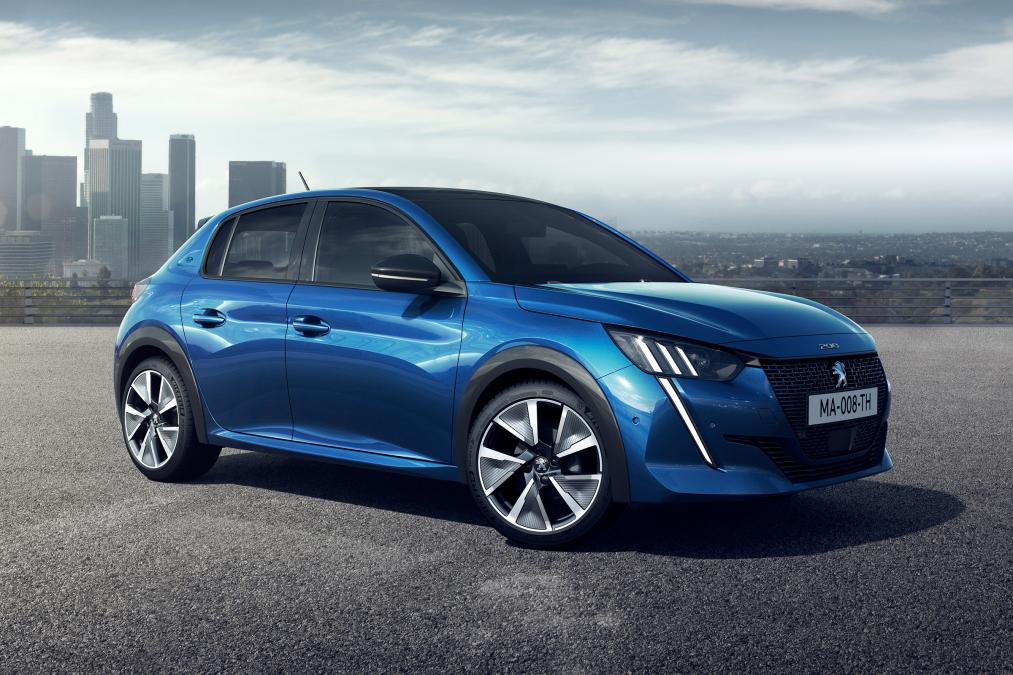
Peugeot e-208 (Image: Peugeot)

Peugeot Opens Reservations For e-208 In UK

Peugeot e-208 to be another great EV after the Tesla Model 3 available in the UK

Peugeot has opened reservations for the all-new 208 and its electric version e-208 in the UK. The French subcompact EV can be reserved online with a £500 deposit.

Orders will be taken from late summer, while deliveries in the UK are expected in early 2020.

Peugeot e-208 (Image: Peugeot)

General sales in Europe should start later this year, starting from France of course, where e-208 needs to stand up against the Renault ZOE.

“Following unprecedented levels of interest from customers and prospects alike captivated by the freedom to choose a powertrain without having to compromise on technology, looks, or driving pleasure, reservations for the all-new PEUGEOT 208 have now opened, with customers able to reserve online with a £500 deposit, all from the comfort of their own home.

Eager buyers can place a deposit on the GT Line PureTech 100 S&S 8-speed automatic (EAT8), BlueHDi 100 6-speed manual or the 100% electric e-208 model. Actual orders for the all-new PEUGEOT 208 range can be placed from late summer 2019, with the car going on UK sale in early 2020.”

Read more: Inside EVs

The Future of Transportation Is Electric

It’s clearer every day: the future of transportation is electric.

We should be cheering this transition—and encouraging it, because along with the benefits for drivers, electrifying transportation is going to be a critical piece of fighting climate change.

Unfortunately, for many observers, skepticism about electric vehicles (EVs) has become something like an article of faith. Mired in an obsolete set of facts, electric-vehicle naysayers are making the same arguments they’ve made for years even as technology speeds forward.

Take columnist George Will, who launched a broadside against electric vehicles last week. In casting doubt on the viability of EVs, Will is revealing that he hasn’t updated his understanding of the technology or the market in a decade. His argument relies upon outdated, misleading and just-plain-wrong evidence, undermining his thesis completely.

Here’s the truth. Electric vehicles are considerably cleaner than gasoline-powered cars, and this advantage is only increasing with time. Increasingly, coal-fired power generation is declining, and the share of our electricity produced by renewables is increasing. Indeed, Will inadvertently makes this point in his article. He points out that 27 percent of our electricity comes from coal power plants but leaves out entirely the fact that a decade earlier, coal was the largest source of electricity at almost half (48 percent) of all generation. We’re on the right path.

Read more: UCS

London’s ULEZ sparks demand for hybrid and electric vehicles

Leading car buying website says the zone has upped interest – particularly for plug-in hybrids.

The introduction of London’s new ultra-low emission zone (ULEZ) has triggered consumer interest in electric and hybrid cars, according to one of Britain’s leading new-car websites.

Designed to improve air quality in the capital, the ULEZ sees vehicles failing to meet the required emissions standards charged extra to enter the Congestion Charge zone. Petrol-powered cars must comply with at least the Euro 4 standard to avoid the £12.50 charge, while diesels need to meet the much more recent Euro 6 standard.

Figures from Carwow show how the ULEZ’s arrival earlier this month caused noticeable spikes in Londoners’ searches for electric, hybrid and plug-in hybrid vehicles. Inside the M25, Carwow says quote requests for plug-in hybrid vehicles risen 25 percent since the beginning of April, while interest in electric cars has risen 14 percent. Demand for standard hybrid vehicles, such as the Toyota Prius, also increased, but only by around six percent.

Read more: Motor1

Tesla Model3 (Image: Wikimedia/Carlquinn)

Tesla Model 3 Performance Crushes Fossil BMW M3 Around Race Track

Top Gear magazine has track tested the Tesla Model 3 Performance head to head against fossil fans’ favorite sports saloon, the BMW M3.

The track times were conducted on the 2 mile Thunderhill Raceway Park West circuit, with the Tesla coming in a significant 2 seconds ahead of the (more expensive) BMW. Fossils must now accept all-round inferiority in the performance realm.

Top Gear Magazine’s head-to-head also found — unsurprisingly — that the Tesla beat the BMW on pure acceleration, as well as on their 0–100–0 mph acceleration-and-braking tests. It’s worth noting also that the price of the Tesla came in at more than a thousand dollars below that of the BMW M3.

Tesla Model3 (Image: Wikimedia/Carlquinn)

A lead of almost 2 seconds on a 2 mile track (with lap times around 85 seconds in total) is significant. Both vehicles were stock without modifications, and were lapped by the same driver.

On the feel of the two vehicles around the track, the testers found that for the BMW, compared to the Tesla:

“when you floor it, the throttle response is glacial by comparison, and the accompanying racket isn’t quite as glorious as you remember — more of a distraction from listening to what the tyres are doing and getting on with the business of going fast.”

They also noted the superiority of the Tesla’s ride for normal daily driving, away from the track:

“Where the BMW’s comfort and refinement is conceded quite a bit to unlock its track potential, the Tesla is utterly uncompromised…”

Read more: Clean Technica

Renault K-ZE electric supermini (Image: Autocar)

New Renault K-ZE 2019 review

The China-only Renault K-ZE has the potential to be the Dacia of the electric age, offering a 150-mile range for less than £13,000

Verdict: 4*
Decent electric range, reasonable performance and impressive quality standards – all at an affordable price. If Renault could add ESP and bring the K-ZE to the UK for less than £13,000, it could repeat the success it found with Dacia in the early 2000s. In fact, the K-ZE has the ability to surpass all other petrol-powered city cars, which due to upcoming emission standards, won’t be quite so affordable any more.

Solid build quality at “shockingly affordable” prices: that’s how Renault made Dacia such a huge success around the world. Now, Renault is getting ready to repeat this coup with an all-new electric vehicle. In China, the French car maker has just presented the K-ZE, which will be built and sold in the world’s largest EV market this summer – before being rolled out globally at a later date.

Groupe Renault CEO Thierry Bolloré told us: ”This is not a Chinese project. It is a global project”. And even if he won’t mention specific regions, there is no doubt Europe is near to the top of the firm’s list. Especially when conventional cars like the Clio will struggle to meet exacting emissions standards due in the coming years.

Renault K-ZE electric supermini (Image: Autocar)

While most of the industry takes its aim at Tesla, the cheap and cheerful K-ZE is a breath of fresh air. At 3.73m-long, with four proper seats (with a fifth as a spare) and a 300-litre boot, this is a small car with big aspirations. Renault claims a reasonable 150-mile real-world electric range and all for a price of around £13,000 before the usual government subsidies.

Read more: Autocar

Milton Keynes 'Mushrooms' Charging Hub (Image: T. Larkum)

Finding a place to charge your EV is easy with Google Maps

If you’ve ever driven to an electric vehicle (EV) charging station only to find that all ports are occupied, you know that you could end up waiting in line for anywhere between minutes to hours—which can really put a damper on your day when you have places to go and things to do.

Starting today, you can see the real time availability of charging ports in the U.S. and U.K, right from Google Maps–so you can know if chargers are available before you head to a station. Simply search for “ev charging stations” to see up to date information from networks like Chargemaster, EVgo, SemaConnect and soon, Chargepoint.

Milton Keynes 'Mushrooms' Charging Hub (Image: T. Larkum)
Milton Keynes ‘Mushrooms’ Charging Hub (Image: T. Larkum)

You’ll then see how many ports are currently available, along with other helpful details, like the business where the station is located, port types and charging speeds. You’ll also see information about the station from other drivers, including photos, ratings, reviews and questions.

Read more: Google Blog