Monthly Archives: July 2018

Women will drive transition to electric cars, study finds

Men generally want speed, acceleration, style. Women want there to be a planet when their children grow up. That’s pretty much the findings of a University of Sussex study into who will buy electric vehicles and why, writes BRENDAN MONTAGUE

A rapid and comprehensive transition to electric mobility will require a combination of technological, regulatory, institutional, economic, cultural and behavioural changes that together transform the sociotechnical systems that provide energy or mobility services.

More focused marketing of electric cars to women could be more effective in creating the required revolution away from more polluting vehicles than universal government intervention, a new study has said.

Highly educated women are an untapped but potentially lucrative market for electric vehicle sales because they have greater environmental and fuel efficiency awareness than men, says a new study by researchers at the University of Sussex and Aarhus University in Denmark.

The research also recommends the newly retired be targeted for electric vehicle promotion, even though they as a group have less interest in more environmentally friendly vehicles. Pensioners have high car ownership, drive short distances, have high budgets for car purchases and are less interested in design – all characteristics that could make them ideal electric vehicle owners.

Read more: The Ecologist

Illegal levels of air pollution linked to child’s death

A nine-year-old girl’s fatal asthma attack has been linked to illegally high levels of air pollution.

Ella Kissi-Debrah lived 25m (80ft) from London’s South Circular Road – a notorious pollution “hotspot”.

She experienced three years of seizures and hospital stays before her death in February 2013. During that time, local air pollution levels breached EU legal limits.

No individual death has previously been directly linked to air pollution.

According to a report by one of the UK’s leading experts on asthma and air pollution, Prof Stephen Holgate, there was a “striking association” between Ella’s emergency hospital admissions and recorded spikes in nitrogen dioxide (NO2) and PM10s, the most noxious pollutants.

His report said there was a “real prospect that without unlawful levels of air pollution, Ella would not have died”.

The evidence will be submitted in an appeal to the attorney general to re-open an inquest in to Ella’s death.

Ella often walked to school along the South Circular Road and Lewisham High Street, a journey that would take 30-40 minutes. Or she would be driven and have to sit for lengthy periods in traffic jams.

Read more: BBC

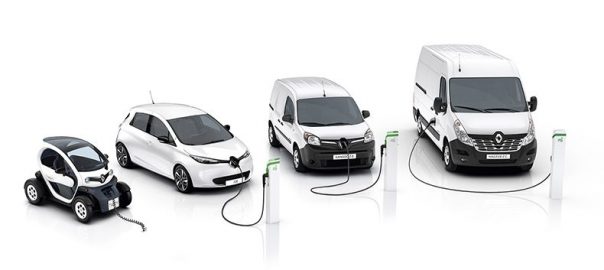
The Renault Electric Z.E. Range (Image: Renault)

Renault Launches Electric Car-Sharing Service in Paris

The automaker and city officials will also collaborate on future mobility services

Many European countries are considering ending sales of new gasoline and diesel cars, but the city of Paris isn’t waiting around. The French capital has already tested a “day without cars,” and has discussed banning internal-combustion cars by 2030. That makes Paris the perfect place to launch an electric car-sharing service.

The Renault Electric Z.E. Range (Image: Renault)

Renault has teamed up with the city government to give Parisians access to electric cars. The automaker hopes the to continue working with Paris officials on future mobility services. For now, Renault is deploying a fleet of electric cars in Paris that residents will be able to access 24/7.

Cars set aside for longer journeys will be kept in designated parking lots and accessed via special stations. Other cars, designated for shorter journeys, will be accessible without the stations. Available cars will include the Renault Zoe hatchback, the Twizy neighborhood electric vehicle, and the Kangoo ZE and Master ZE vans. Renault hopes to have a fleet of 2,000 vehicles in operation by the end of 2019.

As a next step, Renault and city officials will initiate a “working group,” open to other cities and companies, “whose aim will be to think collectively about the integration of changes in mobility in the city,” a Renault press release said. The automaker hopes to involve the C40 network, a coalition of some 100 cities chaired by Paris Mayor Anne Hidalgo.

Read more: The Drive

Global Plug-In Electric Car Sales Booming – Market Expands 75%

Globally, plug-in electric car sales in May exceeded 159,000, which is second best result ever. A new all-time record is now expected in June.
The 159,346 deliveries reported for May translates into an outstanding growth rate of 75% year-over-year. 63% of sales came from BEVs, compared to 37% for PHEVs.

After the first five months of 2018. sales almost hit 600,000 (estimated 597,757, up 71%) at an average 1.5% market share.

The BAIC EC-Series, thanks to 12,624 sales in May, managed to move back into first place in the YTD rank with nearly 40,000 deliveries.

With such a strong contender in China, the second-generation Nissan LEAF (7,069) was left behind at #2.

Read more: Inside EVs

Big Oil, Utilities are Lining Up for an Electric Vehicle War

  • BP and Shell have bought electric-car charging companies
  • Power utilities are boosting sales to homes, chargers on roads

A red-hot electric vehicle market has triggered a face-off between Big Oil and utilities.

Oil majors, who’ve sold fossil fuels to cars for a century, are now moving into an electricity sector that’s preparing for exponential growth. The problem is that utilities, the primary power suppliers for a century, have the same idea.

BP Plc predicts electric vehicle sales will surge by an eye-watering 8,800 percent between 2017 and 2040, making it an attractive business for oil companies as demand for gasoline and diesel are forecast to slow. Big Oil will have to battle the traditional utilities for charging at people’s homes, on the road and even offices of green-car owners.

Read more: Bloomberg

eVolt Rapid Chargers installed in Aimer Square, Dundee (Image: eVolt)

eVolt installs rapid charging units for Dundee City Council

eVolt UK, the nationwide supplier of electrical vehicle (EV) charging units, has installed the latest versions of its rapid charging units for a new hub to help Dundee City Council promote electric taxi use.

eVolt has installed four Raption 50kW Rapid Chargers and three 22kW eVolve chargers at the new hub at Aimer Square. The Rapid Chargers are capable of charging two vehicles simultaneously at full power in approximately 30 minutes.

eVolt Rapid Chargers installed in Aimer Square, Dundee (Image: eVolt)

This is the first of three rapid charging hubs to be introduced in Dundee in 2018 through the Office for Low Emission Vehicles (OLEV) Go Ultra Low programme. Dundee City Council selected the locations based on commuter routes and also following a questionnaire sent to the city’s taxi drivers considering their opinions on where the hubs should be sited.

Fraser Crichton, Transport Officer at Dundee City Council, has been encouraged by the early usage of the units: “The Rapid Chargers have been in use at Aimer Square since the beginning of April and have already been used over 700 times in the 10 days since opening, including over 100 different users. There are currently 94 pure electric taxis in use in Dundee and we hope to see more drivers make the transition.

“We have worked together with eVolt for a number of years now and have found the products to be high-quality and extremely reliable. They have always provided us with excellent customer service and support.”

A further two Rapid Chargers will be installed at Aimer Square later this year. The other two hubs will also be completed this year, with four Rapid Chargers and two eVolve chargers being installed at Queen Street car park, and six Rapid Chargers and three eVolve chargers being installed on Prince’s Street in the city centre.

Justin Meyer, General Manager of eVolt UK, says the company is pleased to be involved in the project in Dundee:

“With over 100 charge points, including the busiest Rapid Chargers in Scotland, Dundee is leading the way for EV. We are proud to be supporting the council’s project to lower emissions and increase the number of EV taxis by providing highly reliable and efficient charging units for these hubs.”

Source: Gravity London PR

Electric Car Line-up (Image: Go Ultra Low)

What’s put the spark in Norway’s electric car revolution?

The Nordic country leads the world due to environmental concerns, but also big subsidies

There is a low hum that Norwegians have grown used to as they walk down their streets. The sound of Teslas, Nissan Leafs, BMW i3s, VW e-Golfs and Kia Souls gliding past each other.

While electric cars are increasingly noticeable in most capital cities, the sheer number in Oslo and throughout the rest of the country can surprise visitors. Norway has been described as a world leader and last year more than half of new car sales were electric or hybrid.

Electric Car Line-up (Image: Go Ultra Low)

The Norwegian parliament has set 2025 as the goal for all new cars to have zero emissions, compared with the UK’s 2040. However, such enthusiastic embracing of electric vehicles by ordinary Norwegians is not all down to ecological benefits but something more simple – money.

While motorists are typically subject to punitive levels of taxation, those who buy a purely electric vehicle are rewarded with a string of incentives worth thousands of pounds. Buyers escape heavy import or purchase taxes and are also exempt from 25% VAT. They also avoid road tax, road tolls, pay half price on ferries, get free municipal parking in cities and can usually use bus lanes.

Which is why the country is the third-largest market for electric vehicles in the world, after the US and China. And with a population of just 5.35 million. So what can the UK learn from the Norwegians?

Read more: The Guardian

Oil industry is ‘peddling misinformation’ about electric vehicles

  • Electric vehicles are cleaner and more efficient than conventional vehicles.
  • Reports against EVs are coming from oil-backed studies, leading to skewed public perceptions of battery-run autos.
  • Electricity powered transportation will cause less pollution and less asthma, cancer and other illnesses associated with pollution from the burning of fossil fuels.

When technological innovation threatens to upend the status quo, the status quo fights back. Every time. I try to keep that in mind when observing oil industry-backed efforts to discredit electric vehicles (EVs) and dismantle progress on transportation electrification by peddling misinformation through industry-funded studies.

To give you a sense of the absurdity of these efforts, imagine Bell Communication publishing a report suggesting cell phones are less convenient than landlines. Or Blockbusters paying for an analysis showing Netflix makes watching movies more difficult.

The vast majority of research institutions and environmental public interest groups support accelerated EV adoption because the science is clear that EVs are much cleaner than conventional vehicles.

Consider this: electric vehicles don’t have tailpipes. They run on electricity, and across the country, our electricity sources are getting cleaner. Even factoring in emissions from electricity used to power EVs today and pollution from battery manufacturing, electric vehicles are already significantly to vastly lower in emissions than conventional vehicles, depending on how the electricity is produced in different regions of the country.

Read more: CNBC

Classic cars experiencing royal rebirths as electric vehicles

Prince Harry and Meghan, Duchess of Sussex, are a trend-setting couple on many levels — but there is one movement they’ve championed that has gone relatively unnoticed.

With the world’s cameras set upon them last month, the royal couple rode in style from their wedding ceremony to the evening reception in a 1968 baby blue Jaguar E-type.

What global viewers may not have realized, however, is that the roadster had been refitted with a full battery-powered engine — an apt ride for the environment-conscious couple.

The prototype Jaguar E-type Concept Zero is so far a one-off, but E-type owners with a spare $400,000 can also get the electric conversion. Jaguar hopes it will “future-proof” classic car ownership and lead to a high-end electric fleet of what Enzo Ferrari called “the most beautiful car in the world.”

The E-type is one of several classics experiencing rebirths as zero-emission vehicles for a new generation of drivers.

Read more: WFMZ

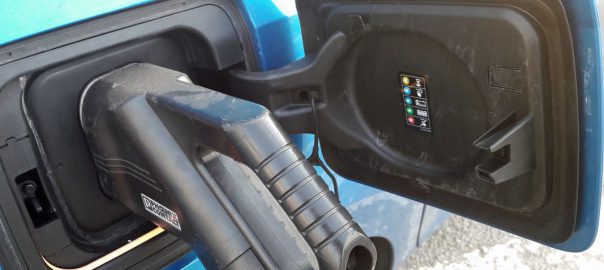
Rapid Charging Step 11: Car is Charging (Image: T. Larkum)

Smart charging could deliver EVs a decade earlier at lower cost to consumers

Smart charging of electric vehicles (EVs) could cut the cost of integration into the UK power system by over £1 billion compared to standard charging, according to a new report that also found running an EV could be ten times cheaper than a conventional car.

WWF commissioned Vivid Economics to deliver a two-part report on the effect of bringing the UK’s proposed 2040 ban on the sale of new petrol and diesel vehicles ahead by ten years.

Rapid Charging Step 11: Car is Charging (Image: T. Larkum)
Rapid Charging (Image: T. Larkum)

It found that the ‘2030 scenario’, which forecasts 20 million electric cars and vans on UK roads, could be delivered at lower cost than the 13 million under the ‘2040 scenario’. The report argues that this is due to the charging profile rather than the number of EVs, which it said is a more important factor.

“The smartness of the transition to electric vehicles will be the main factor determining how cost effective the transition is, not the speed of the transition,” it states.

Read more: Current News