Daily Archives: August 30, 2017

Electric cars charging in Milton Keynes (Image: T. Larkum)

Car makers offer cash incentives to trade in older vehicles

As buyers consider getting rid of their older diesel cars, BMW, Ford, Mercedes-Benz and Vauxhall are launching trade-in schemes designed to get more of us driving low-emissions cars

Electric cars charging in Milton Keynes (Image: T. Larkum)

Owners of older diesel vehicles will receive an incentive of up to £2000 when they trade in their old car for a new BMW, Mercedes-Benz, Mini or Vauxhall, and up to £7000 towards a new Ford.

The new plans are designed to reduce the pollution caused by diesel cars, as well as increasing the uptake of low-emissions cars in the UK. Despite the sales of such cars rising by more than 30% over the past year, they still account for just 4.3% of the total market.

BMW

To qualify for BMW’s incentive, owners must trade in diesel cars that comply with Euro 4 emissions standards or older – which covers cars registered before September 2009. Owners can check if their car qualifies here. Euro standards set the limits for emissions from new cars, with the first, Euro 1, being introduced in 1992.

Buyers will be offered up to £2000 to trade in their cars – on top of the vehicle’s residual value, as determined by used car experts CAP.

The value of the incentive must be put towards buying a new BMW or Mini. In particular, it must be either a BMW i3, a plug-in hybrid car (such as the BMW 3 Series 330e or the Mini Countryman S E All4) or a car that complies with the most modern Euro 6 emissions limits, with CO2 emissions of less than 130g/km.

That means owners will be able to choose from the majority of BMW’s range, including multiple versions of the 5 Series luxury saloon, which is our Car of the Year for 2017. Some of the brand’s larger SUVs do not qualify, though. BMW says that 80% of its range qualifies for the discount, alongside 70% of Mini models.

BMW also hasn’t specified what it will do with the cars that owners trade in. The oldest models will likely be scrapped – although BMW is keen not to call this offer a ‘scrappage scheme’ – with others sold on as used vehicles.

Read more: WhatCar

Vegans rejoice: Tesla quietly goes leather-free

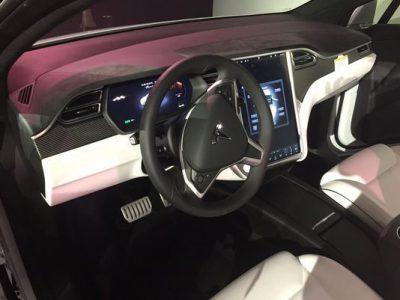
Tesla’s electric cars are known for being environmentally-friendly, and they just got a little more vegan-friendly. The automaker this week quietly upgraded all of its premium interior options to be completely leather-free.

While the company hasn’t made an official announcement, a Tesla spokesperson confirmed the change, saying that the company now only sells its premium seating option, which is a non-animal seating material designed specifically for Tesla.

Cars still come with leather steering wheels, but leather-free options are available upon request, according to a blog post from the People for the Ethical Treatment of Animals (PETA).

No official announcements have been made about the interior of the new Model 3, and the representative from Tesla could only confirm this transition for the Model S and Model X.

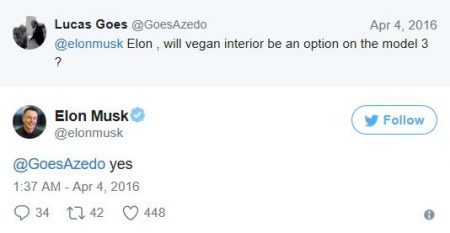
Tesla CEO Elon Musk, however, appeared to confirm that vegan seating would be an option for the Model 3 on Twitter.

PETA, one of Tesla’s shareholders, applauded the move in a blog post Monday.

Tesla has always offered standard cloth seating which is a vegan option, but PETA began pressuring the automaker at a 2015 stockholder’s meeting to drop leather seats entirely by 2019.

Although Tesla stockholders voted against that proposition, the following year Tesla rolled out its first synthetic leather premium seating option in “Ultra White” for the Model X crossover SUV.

Anne Brainard, PETA’s Director of Corporate Affairs, noted that other luxury car companies like BMW and Mercedes-Benz have also begun offering faux-leather seating options.

Despite this, Brainard said dozens of major automakers are still supplied by cattle ranches that subject animals to horrific abuse, citing a 2016 PETA investigation.

“PETA will continue to urge all companies to follow Tesla’s lead in choosing sustainability and kindness over cruelty,”

Brainard said.

Source: USA Today

EV triple test: Hyundai Ioniq Electric v Renault Zoe v Nissan Leaf

With the announcement of the 2040 ban on all new petrol and diesel cars, we get behind the wheel of three electric vehicles to see if the future really is green.

(L to R) Nissan LEAF, Hyundai IONIQ, Renault ZOE

WHAT’S NEW?

Since the announcement of the 2040 ban on new petrol and diesel cars, all you read in the news is about how we’re all going electric. So if that’s the case, which is the best electric car to buy? We chose three to test – a Renault Zoe, Hyundai Ioniq and Nissan Leaf.

The Hyundai Ioniq is by far the newest and in our opinion one of the best-equipped. The Nissan and the Renault have both been around for some years now, and the Leaf is actually due to be replaced by a new model next year.

The Ioniq is Hyndai’s first attempt at making an all-electric car, and it’s very good.

Inside, the cabin feels solidly built and very comfortable. It also has lots of kit including, on our car, heated and cooled electric seats.

Next is the Renault Zoe, a great-looking little car with bags of character on the exterior alone. Step inside and it’s also a funky place to be. It also features the best-claimed range of the three EVs, with 250 miles on the NEDC cycle thanks to its new ‘Z.E. 40’ battery.

Finally, we have the Nissan Leaf, the oldest of the three in terms of design and this shows in its rather ungainly styling and outdated technology. It also has the lowest theoretical range with just 155 miles.

LOOKS AND IMAGE

This is where the Nissan Leaf falls down – massively. It is not appealing at all on the outside with its bulbous rear-end and huge headlights. This continues inside where it can best be described as dull and old-fashioned.

The Hyundai is in a different league. It looks fresh, funky and modern. Add a touch of colour and you have a car that will be very enjoyable to own. This continues inside too where it feels light and airy with a very easy to use dashboard and centre console.

The Renault is the best looking of the bunch. Its chic Parisian styling blends well with modern life and makes it look more premium than it actually is. However, this doesn’t quite continue inside. Although the cabin looks chic, it feels cheap, with the plastics belonging in a cheap supermini.

SPACE AND PRACTICALITY

In terms of space, all three are roughly the same, offering ample leg, head and luggage space and a plethora of cubbyholes throughout the cabin.

The Hyundai feels a tad better than the other two, and has a fairly decent-sized boot at 350 litres – enough for some suitcases or a weekly shop. You can probably fit the family dog in there too.

The Zoe feels slightly smaller in comparison, but is more of a hatchback compared to the Ioniq’s saloon looks. It has a marginally smaller boot at 338 litres, but this would definitely be enough on a daily basis.

The Nissan Leaf boasts the largest boot at 370 litres. It also has a fairly large cabin, which can easily accommodate four adults.

Read more: Aol.