Daily Archives: June 30, 2017

Milton Keynes EV Experience Centre

New Milton Keynes EV centre to feature multiple brands

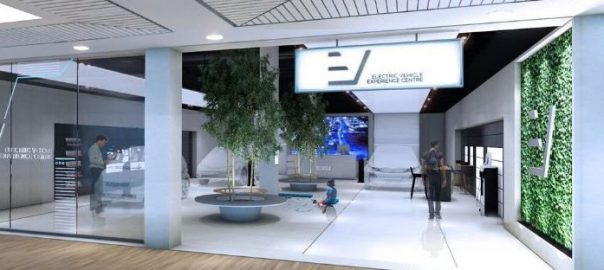
The Electric Vehicle Experience Centre (EVEC) will open in Milton Keynes on Saturday 22nd July, featuring the UK’s first multi-brand electric vehicle showroom. Part of the city’s Go Ultra Low Cities bid, the EVEC will be located in the centre:mk shopping centre.

Milton Keynes EV Experience Centre
The EVEC will open with cars from a number of EV manufacturers

BMW i, Kia, Mitsubishi, Nissan, Renault, and VW have all signed up to be founding manufacturers for the EVEC, and will display a range of EVs spread across a range of costs and electric range.

Set to be run by Chargemaster, the EVEC will both showcase existing electric models and be an information point for EV ownership in general. Visitors will be able to talk with staff about all elements of owning and running an EV, with test drives available too.

Milton Keynes has a target for 23% of all new cars registered in the area to be electric by 2021. The centre is intended to help promote EV sales and use, and also to educate prospective buyers as to the benefits of going electric.

The EVEC is part of a suite of initiatives from Milton Keynes’ Go Ultra Low City bid, including investment in expanding the number of EV charge points available including creating a number of charging hubs, free parking for EVs, and additional grants for home and workplace charging.

Brian Matthews, Head of Transport Innovation at Milton Keynes Council, said:

“The EVEC is a centrepiece of our thrust to encourage the uptake of electric vehicles and is a good example of the innovation that Milton Keynes is using to lead the way in transport innovation. We are delighted to be working with Chargemaster and six founding car manufacturers to bring this about.”

David Martell, Chief Executive of Chargemaster, said:

“Opening the Electric Vehicle Experience Centre on 22 July will be a landmark day, not only for the electric vehicle sector, but also for Milton Keynes residents.

“Becoming the UK’s first multi-brand EV showroom, it will provide a destination for visitors to make an informed decision about owning an EV, without the pressure of having to make an immediate purchase decision. We are delighted to receive the support from six key electric vehicle manufacturers as founding partners of the EVEC.

“We hope that this platform will change the way that electric vehicles are sold in cities and we’re proud to be working with Milton Keynes and Go Ultra Low to deliver this to the public.”

Source: Next Green Car

f

Why Americans Should Care About The Renault Zoe

If you’re looking for a true game-changing company in the automotive arena, it’s the Renault-Nissan Alliance, not Tesla, that has a firm grasp on the future.

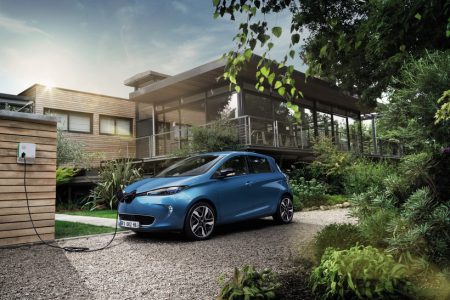
Renault ZOE

With all the talk of climate change and the Paris Agreement, ask yourself if you’ve ever heard of the Renault Zoe. Probably not. It’s an electric vehicle (EV) sold by French automaker Renault. It’s also the most popular EV in Europe and is mechanically similar to the Nissan Leaf we have here in the U.S. So why should you care about this French EV? One simple reason: Automakers are serving a global market whether they like it or not and Renault-Nissan will soon be setting the agenda for EVs around the world. Partly thanks to partnerships between Nissan, Renault and now Mitsubishi, the Zoe is the perfect barometer for global EV success or failure.

According to CleanTechnica, an EV website, of the top-selling EVs and plug-in hybrid electric vehicles (PHEV) in Europe, Renault, Nissan and Mitsubishi have the top three spots for in 2016 and that trend continues into 2017. In total, Renault, Nissan and Mitsubishi vehicles make up 6 of the top 30 spots, including some oddballs like the Outlander PHEV, Renault Kangoo ZE and Nissan e-NV200. Only VW Group has more total vehicles in the top 30.

EVs Replace Diesel?

Eventually, EVs will replace diesel as the budget and eco-friendly option. Last year, I spoke to a Renault-Nissan executive, and he said that affordable diesel-powered small cars are likely the first to gradually disappear given the stricter emissions regulations coming to the E.U. The main reason is that the cost of compliance is getting to be a serious obstacle. In short, as emissions requirements become increasingly stringent, the cost of building compliant cars will go up. The U.S. pulling out of the Paris Agreement won’t change automakers’ global strategy, but China deferring compliance until 2030 may remove some of the urgency of the agreement.

The first area to feel this will be small, typically inexpensive cars where the buyers are very price-conscious. Renault-Nissan Alliance Chairman and CEO Carlos Ghosn echoed those sentiments at a press conference at the Paris Auto Show in 2016. And judging by his comments and how he essentially spun every emissions question into a talking point about EVs and the Zoe/Leaf, the next version of that car will likely put the Renault-Nissan Alliance in the catbird seat when it comes to global EV sales.

Maybe they’re already there: If budget friendly, diesel-sipping small cars go away, the next best option for budget-strapped motorists is an EV like the Zoe. According to Forbes, Renault-Nissan is on track to sell nearly 10.5 million vehicles in 2017, second only to Toyota. Therefore, Alliance decisions and innovations are bound to have a ripple effect on the global automotive marketplace.

Read more: Huffington Post

Hyundai Motor Company Increases Production Capacity of IONIQ Electric by 50%

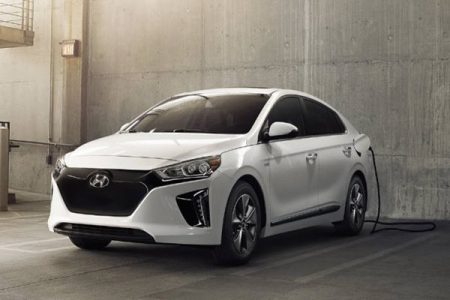
Hyundai Motor Company is planning to increase production capacity of ‘IONIQ Electric’, which is its main electric vehicle, by 50% as number of potential buyers has greatly increased compared to its original prediction on demands in South Korean market. It is expected that this will resolve inconvenience of customers who have to wait 4 to 5 months to purchase IONIQ Electric.

Hyundai Motor Company’s IONIQ Electric

According to electric vehicle industries on the 6th, Hyundai Motor Company is planning to increase an output of IONIQ Electric, which is produced from its production plant in Ulsan, from 1,200 (based on per month) to 1,800. Half of this output is supply for South Korean market and the other half is for foreign markets such as the U.S., and Europe. Quota for South Korean market will also increase from 600 per month initially to 900 per month. It is expected that delivery of IONIQ Electric will be pushed forward when people have to wait between 4 to 5 months to purchase one. Increased output will first be applied to IONIQ Electrics that need to be delivered between July and August.

Hyundai Motor Company has increased production facilities when contractors including Ministry of Environment (ME), which is in charge of supply of electric vehicles, started complaining due to recent rapid increase in number of buyers of IONIQ Electric and it has also set its yearly sales goal high. It has increased yearly sales goal in South Korean market from 6,000 initially to 8,000.

But even this won’t help Hyundai Motor Company to make another upward revision as 5,581 IONIQ Electrics were already sold by end of April and the number of IONIQ Electric owners will rise to about 7,000 by end of May if people who already paid deposits are included.

Read more: etnews