Daily Archives: June 29, 2017

Stylish Andersen A1 Home Charge Point Launched

Andersen has launched its first charge point – the A1 – offering EV drivers a premium option for home charging. The Andersen A1 is inspired by Scandinavian minimalist design, and hides away the cables within the unit.

Andersen A1 Charge Point

As part of a second wave of new charge points coming to the UK market, Andersen is aiming their product at those who want a sleeker, more stylish design. Although existing options perform well and offer a reliable home charge option, there are few on the market that look stylish.

Now though, charge point manufacturers are opening up the options available to buyers with a more expensive, but also more aesthetically pleasing product. There is a choice of five colours on offer too.

David Simpson, Technical Director at Andersen, said:

“The whole idea came from my own frustration with the home charge points that were available. I’d just bought an EV and I was looking for a charge point. I wanted one that didn’t have messy cables or flashing blue lights – just something that would sit happily on the side of my house.”

Jerome Faissat, Managing Director at Andersen, said: “A home charge point is something an electric car owner uses on daily basis and they’re often mounted in very visible places on the front of your house.

“The A1 is designed to complement the style of your home and work perfectly for you all the time. You can choose the colour you want and tidy the cables away if they bother you. It was important for us to create something that looked timeless and functional to last for many years.”
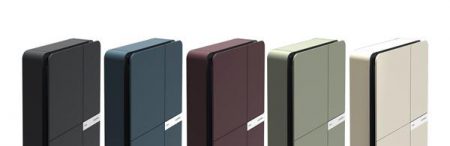
Andersen A1 Charge Point, Various Colours

Priced from £1,499 excluding OLEV grant and installation, Andersen has partnered with Just Energy Solutions as its OLEV accredited installer.

Source: ZapMap

Product: Andersen 

Honda looks to future with EV and autonomous strategy

Japanese manufacturer Honda has spelled out its plans for the future as it unveiled its mid-term Vision 2030 strategy plan. The company wants to develop level 4 autonomous cars for sale by 2025 and plans two new electric vehicles (EVs) by 2018.

Honda Garage

The company has been investing in its research and development of future mobility, spending 750 billion yen (€6.1 billion) for the year to March 2017.

Speaking at the launch of its new strategy, Honda CEO Takahiro Hachigo said:

‘We strive to electrify two-thirds of our global automobile unit sales in 2030. This development will put a central focus on hybrid-based models utilizing a high-efficiency plug-in hybrid system unique to Honda. As for zero-emission vehicles (ZEV), we will strengthen the development of electric vehicles as well as fuel cell vehicles (FCV), in addition to a China-exclusive model scheduled to go on sale in 2018, a dedicated EV model for other regions is also currently under development.’

Developing new driving technologies, robotics- and artificial intelligence-driven services and new energy solutions also would be key priorities for Honda in the years ahead, the company said.

In addition to the new low emission strategy, by 2025, Honda plans to come up with cars with level 4 standard automated driving functions, meaning they can drive themselves on highways and city roads under most situations. Achieving this will require artificial intelligence to detect traffic movements, along with a battery of cameras and sensors to help avoid accidents.

Hachigo adds:

‘By featuring smooth and natural driving characteristics, our automated driving vehicle will realise occupant comfort that gives the driver complete trust and provides a fun mobility that makes people naturally want to go driving. We are going to realise automated driving technologies for use on highways in 2020. Then, we will make them usable in a broader area including regular roads, by 2025.’

Read more: Autovista Group

Renault-Nissan to build energy storage plant from EV batteries to rival power stations

The Renault-Nissan Alliance is planning to build a 100MW energy storage plant big enough to power 120,000 homes, which can replace a gas or coal-fired power station, sources told Reuters. It is widely seen as a pilot project that could lead to a major new business opportunity for OEMs.

Following trialling using electric vehicle (EV) batteries for home energy storage, this is a further sign the Alliance is planning to establish an energy storage division. The energy storage plant intentions highlight the Alliance’s growing confidence in the powerful position OEMs will find themselves in following the upcoming electric vehicle revolution.

Energy storage plants – essentially gigantic batteries – help save costs and emissions by charging up in times of cheap excess electricity supply. This is when, for example, wind farms generate too much electricity than needed on a windy day. The storage plants then sell the electricity back to the grid at peak times, when the high demand means the electricity commands a higher price.

This helps solve two key problems holding back efficiency in the energy sector: the need to smooth out the variable energy generated from wind and solar, and the desire to remove the need for gas- or coal-fired power plants to be idling on standby for most of the day, and switched on ad hoc in order to meet times of peak electricity demand.

The Renault-Nissan project both aims to cultivate this demand for a second-hand battery market, as well as encouraging the development of energy infrastructure (which can have 10-year lead times) that will synergise with booming EV sales over the next decade. If successful, the expected high demand for these second hand EV batteries would help drive down the costs of electric vehicles (and raise residual values), and also provide an attractive mechanism for recycling the power cells which contain environment-harming heavy metals.

Read more: Autovista Group

Electric Car Sales Are Surging, IEA Reports

  • International Energy Agency says EV market grew 60% in 2016
  • Plug in automobiles may reach 30% market penetration by 2030

The number of electric vehicles on the road rocketed to 2 million in 2016 after being virtually non-existent just five years ago, according to the International Energy Agency.

Registered plug-in and battery-powered vehicles on roads worldwide rose 60 percent from the year before, according to the Global EV Outlook 2017 report from the Paris-based IEA. Despite the rapid growth, electric vehicles still represent just 0.2 percent of total light-duty vehicles.

“China was by far the largest electric car market, accounting for more than 40 percent of the electric cars sold in the world and more than double the amount sold in the United States,”

the IEA wrote in the report published Wednesday.

“It is undeniable that the current electric car market uptake is largely influenced by the policy environment.”

Read more: Bloomberg