Daily Archives: June 28, 2017

BMW i3 Diary: How Easy Is It To Own An Electric Car?

Range anxiety? What range anxiety…
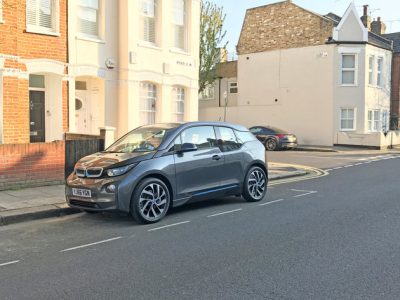
BMW i3

Is owning an electric car a statement or simply good financial sense?

In the beginning it was most definitely the former. Electric cars were expensive, limited in range and thanks to a complete lack of infrastructure impossible to make long journeys in.

To find out if these cars are now living up to our expectations we spent two weeks with BMW’s i3. We drove to work, did the weekly shop and generally found every possible excuse to use it over our own two legs.

To begin with we’ll run though the model we tested. This was a BMW i3 94ah with range extender. That meant that if we drove it in BMW’s COMFORT mode we could, just about, squeeze out a top range of 205 miles.
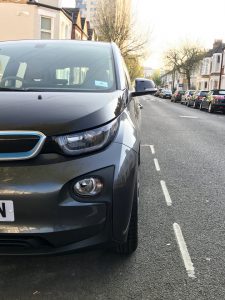
BMW i3

The first few days…

Getting into the car for the first time you’re struck at just how pleasant everything is. It’s BMW alright, but if BMW lived in California and went to yoga four times a week.

It’s all very minimalist and the cabin itself feels incredibly spacious, despite the small dimensions of the car.
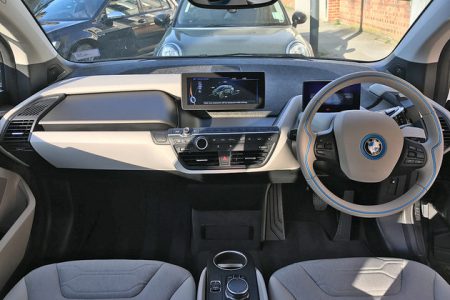
Interior of BMW i3

Halfway there…

Electric cars are absolutely perfect for city driving, especially small ones like the i3.

Thanks to the i3 having plenty of punch in the acceleration department we found weaving through the central London chaos to be almost, and we do mean almost, enjoyable.

The silence is also something that becomes really hard to give up. The i3’s cabin has just the right amount of sound isolation to make sure that the only thing you’re going to hear is either the gentle whine of the electric motor or the radio. It’s a blissful oasis in a sea of livid cyclists.

The last stretch…

We’re on to the last week week now and despite having driven over what feels like every road hump in London our love for this plucky little car is growing.

The styling continues to be a real winner for us, especially this two-tone fabric against what looks like a black recycled composite. It looks futuristic and yet acutely homely at the same time, like a Bang & Olufsen speaker.

Bang & Olufsen speaker, BMW i3

Another thing that’s really starting to dawn on us is that not once have we worried about range anxiety. The car’s range readout is accurate enough that you never feel like it’s suddenly going to steal 5 miles from you.

While an owner will have a charging point installed in their house we couldn’t and so had to rely on a plug socket. Naturally the plug socket was too far away and so for the last two weeks we’ve actually been solely charging the car using what’s available around the city.
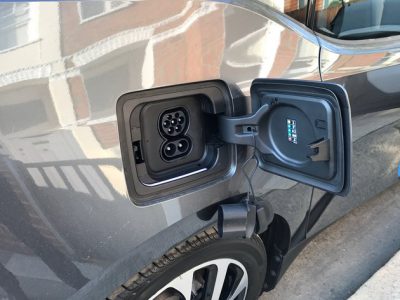
BMW i3, Charging Port

Verdict….

The i3 is a superbly built car. It feels and behaves in every sense like a product that is at the top end of what BMW is capable of. The interior build-quality is second to none while the enormous windscreen at the front gives it perfect visibility for city driving.

Its electric motor is powerful and responsive and while the ride itself is a little hard the seats are incredibly comfortable.

The i3 doesn’t feel like an experiment any more, it is simply a BMW that’s electric. Most of this is down to the car while the rest is absolutely down to the fact that we finally have a substantial charging network here in the UK.

Read more: The Huffington Post


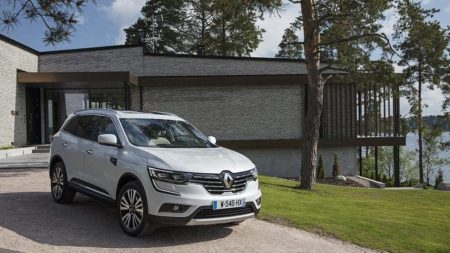
Renault: Plug-in Hybrid and electric versions of Koleos SUV could happen

The new five-seater SUV is currently offered with two diesel engines, but there is scope for this to change in future

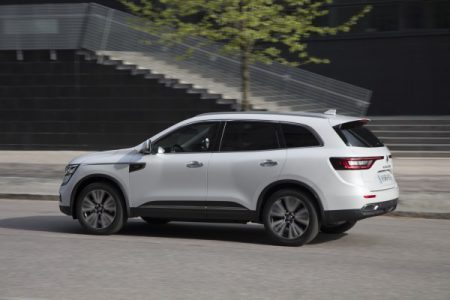
Renault Koleos SUV

A Renault director has not ruled out the possibility of a plug-in hybrid or pure electric version of its new Koleos SUV making its way into production.

The Koleos will go on sale in the UK in July, and will only be offered with a choice of two diesel engines – a 1.6-litre, 128bhp unit and a larger 2.0-litre 173bhp unit.

When quizzed on whether the recent bad press diesel has received in the UK could see an electric or PHEV version of the Koleos introduced to the market, Renault UK’s managing director Vincent Tourette said it was a possibility.

“It’s technically possible because we’re part of the alliance with Nissan and Mitsubishi now, so that’s something we have in the bank between us,”

he explained.

Renault Koleos SUV

“But at the moment, we are monitoring closely the way the market is going and if at some point we consider it’s a strong customer requirement, we will go for it. But today, it’s not in the plans.

“Today we have made the choice to offer our vehicles with petrol engines, with diesel engines and as pure EVs, which by the way, most manufacturers have decided to invest in too.

“So that’s our positioning and that’s the way our product plans have been formulated. But then we do have within the Renault-Nissan Alliance other possibilities, and if at some point we consider that [an electric/PHEV Koleos] something Renault also needs to bring to the market, we will have the possibility to do it.”

Source: Express and Star

Electric cars accelerate past 2m mark globally

China, US and Europe accounted for more than 90% of electric vehicle sales last year with decreasing costs driving demand

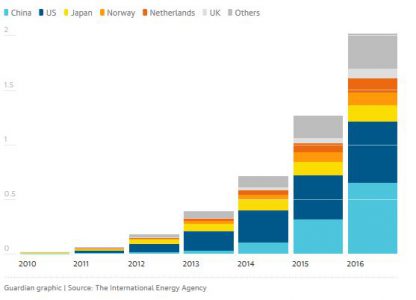
The number of electric cars in the world accelerated past the 2m barrier last year, as prices fell and manufacturers launched new models.

The number of battery-powered vehicles numbered just hundreds globally in 2005 and passed the 1m milestone in 2015, but sales jumped 60% in 2016.

China, the US and Europe accounted for more than 90% of electric vehicle sales last year, with China the single biggest market, according to research by the International Energy Agency.
In some European countries, growth has been so fast that electric cars are taking significant market share from petrol and diesel cars.

Nearly a third of new cars sold in Norway are electric, the highest proportion worldwide, followed by 6.4% in the Netherlands and 3.4% in Sweden.

While the UK lags behind on annual registrations, industry figures this week showed that a record 4.4% of new cars sold in May were hybrid or pure electric models. More than 100,000 electric cars have been sold in the UK under a grant scheme launched in 2011.

The growth globally indicated a “rapid market evolution” in electric cars, the IEA said, but it cautioned that they made up only 0.2% of all passenger cars.

Greg Archer, clean vehicles director at the Brussels-based Transport and Environment group, said:

“The rapid rise in electric vehicle sales is a consumer-driven phenomenon rather than being down to the efforts of suppliers.”

The number of electric cars on the road globally hit 2m in 2016

Decreasing costs, longer battery ranges and an increasing number of charging points were driving demand, he said.

Read more: The Guardian

Solar Charge Points charging electric cars (Image: T. Larkum)

‘Spectacular’ drop in renewable energy costs leads to record global boost

Falling solar and wind prices have led to new power deals across the world despite investment in renewables falling

The Solar Charge Points at Devon Cliffs - and only 2/3 of the cars shouldn't be parked there! (Image: T. Larkum)
Solar Charge Points for electric cars (Image: T. Larkum)

Renewable energy capacity around the world was boosted by a record amount in 2016 and delivered at a markedly lower cost, according to new global data – although the total financial investment in renewables actually fell.

The greater “bang-for-buck” resulted from plummeting prices for solar and wind power and led to new power deals in countries including Denmark, Egypt, India, Mexico and the United Arab Emirates all being priced well below fossil fuel or nuclear options.

Analysts warned that the US’s withdrawal from the Paris climate change agreement, announced last week by Donald Trump, risked the US being left behind in the fast-moving transition to a low-carbon economy. But they also warned that the green transition was still not happening fast enough to avoid the worst impacts of global warming, especially in the transport and heating sectors.

The new renewable energy capacity installed worldwide in 2016 was 161GW, a 10% rise on 2015 and a new record, according to REN21, a network of public and private sector groups covering 155 nations and 96% of the world’s population.

The new record capacity cost $242bn, a 23% reduction in investment compared to 2015, and renewables investment remained larger than for all fossil fuels. Subsidies for green energy, however, are still much lower than those for coal, oil and gas.

New solar power provided the biggest boost – half of all new capacity – followed by wind power at a third and hydropower at 15%. It is the first year that the new solar capacity added has been greater than any other electricity-producing technology.

“A global energy transition [is] well under way, with record new additions of installed renewable energy capacity, rapidly falling costs and the decoupling of economic growth and energy-related carbon dioxide emissions for the third year running,”

said Arthouros Zervos, chair of REN21.

Read more: The Guardian