Daily Archives: June 15, 2017

Lasting legacy of VW diesel scandal: EU gets serious about testing

The Volkswagen diesel scandal left lasting imprints on the entire automotive industry, and may have changed the way regulators look at vehicles using the fuel forever.
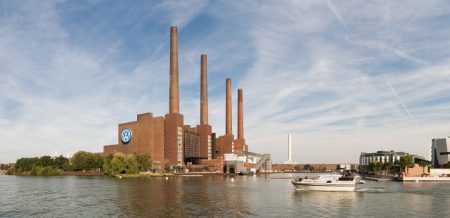
Volkswagen Plant, Wolfsburg Germany

That’s true not just in the United States, but elsewhere as well. The European Union is now increasing its efforts to make sure a scandal like Volkswagen’s can never happen again.

EU ministers have agreed to a new draft of rules and regulations for approving cars in the countries that make up the trade bloc; they give the European Commission more power in such circumstances.

Under the current system, national agencies such as Germany’s KBA have the authority to give new cars a pass for the entire European Union, according to Reuters.National bodies also have the power to revoke the rights to sell a vehicle should a controversy arise.

However, the newly drafted rules hand additional power to Brussels—a move Germany itself and its powerful car industry aren’t keen about.
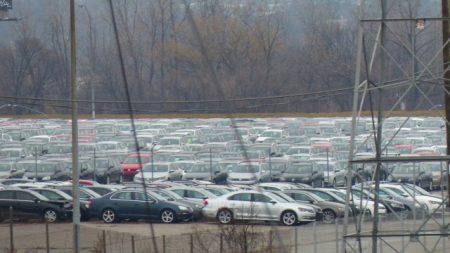
Volkswagen TDI Desiel Cars, Stored at Pontiac Silverdome

German junior economic minister Matthias Machnig told his national counterparts Germany is in favor of increased oversight. But, he said, the country remained wary over conflict of interest.

The changes to testing and approving new vehicles for sale in the EU come in response to Volkswagen’s deceit in the United States.

The German automaker used “defeat devices” in order to pass federal emission tests, and carried out a multi-year cover-up of that fact to continue selling its diesel-powered cars and SUVs.

The devices were programmed to comply with regulations for 23 minutes—exactly how long the EPA regulatory test takes. At minute 24, the NOx levels emitted by Volkswagen and Audi TDI vehicles rose considerably.

Read more: Green Car Reports

Daimler unveils its own new battery Gigafactory for electric vehicles

Daimler is among one of the few major automakers with aggressive all-electric vehicle plans.

The German automaker recently announced acceleration of electric car plans by 3 years and that they will spend $11 billion on 10 models by 2022.

They are backing this up with a new battery factory, which they officially unveiled today.

The German automaker produces its own battery packs through its ACCUmotive subsidiary and last year, they announced an important €500 million investment in a new battery factory in Kamenz, Germany.

The inauguration was a big deal attended by Federal Chancellor Dr. Angela Merkel and Stanislaw Tillich (Minister President of Saxony), who, together with Dieter Zetsche (Chairman of the Board of Daimler AG and Head of Mercedes-Benz Cars), Markus Schäfer (Member of the Divisional Board of Mercedes-Benz Cars, Production and Supply Chain), Frank Deiss (Head of Powertrain Production and Site Manager Mercedes-Benz Plant Untertürkheim) and Frank Blome (Managing Director Deutsche Accumotive GmbH & Co. KG), laid the casing of a vehicle battery as the foundation stone.

They didn’t confirm the capacity of the plant, but it is expected to be in the gigawatt-hour range and it will employ over 1,000 workers.

Daimler CEO Dieter Zetsche said about the new factory:

“The automotive industry is facing a fundamental transformation and we see ourselves as the driving force behind this change. The battery factory in Kamenz is an important component in the implementation of our electric offensive. By 2022, we will have more than ten purely electric passenger cars in series. We also continue to drive forward the hybridization of our fleet. Under the EQ brand, we are creating a holistic ecosystem for e-mobility.”

Read more: electrek

Financial Times declares a winner in the war for energy’s future, and Big Oil won’t be happy

‘Fossil fuels have lost. The rest of the world just doesn’t know it yet.’

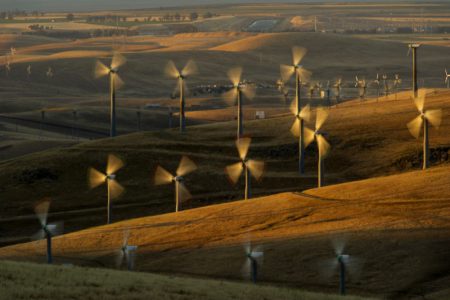
Wind turbines in California.

Traditional energy companies and mainstream financial publications are finally waking up to the new reality: The shift to renewable energy, electric cars, and a low-carbon economy is now unstoppable.
The details of this transition are spelled out in a new, must-read, 4000-word article in the Financial Times,

“The Big Green Bang: how renewable energy became unstoppable.”

What is most remarkable about the article is that it appears in the Financial Times. The free-market oriented paper is the “most important business read” for the world’s top financial decision makers and

“the most credible publication in reporting financial and economic issues”

for global professional investors, according to surveys.

We simply don’t see articles like this in Rupert Murdoch-run Wall Street Journal or even the New York Times, which continues to misreport the clean energy revolution and just hired a columnist who spreads misinformation on climate solutions.

The business community, though, is starting to see the writing on the wall, especially in Europe. The CEO of Royal Dutch Shell, Europe’s largest company, declared in a recent speech that the transition to a low-carbon economy is not just “unstoppable.” It is a necessity that “must be embraced” if an oil company like Shell is to survive and thrive. The low-carbon future, he explained, will be built around renewable electricity and electric cars.

The Financial Times article, in fact, begins with an anecdote of a company that developed a better turbocharger for gas-powered cars. After getting some interest from big car companies last year, in January,

“Suddenly, none wanted new products for cars running on fossil fuels.”

Instead, car companies were putting their limited R&D budgets into electric cars, a seismic shift at an unprecedented speed.

Read more: Think Progress