Monthly Archives: March 2017

San Francisco plans to require that all new buildings and parking be ‘100% electric vehicle ready’

The city of San Francisco has not been shy to use its building codes to try to accelerate the deployment of sustainable energy. Last year, it required new buildings to have solar panels installed on the roof and this year, it will try to accommodate electric vehicles by using a similar approach.

San Francisco already has one of the highest concentration of electric vehicles in the world and that comes with a more than decent public charging station coverage.

Now they want to make sure people can also have a charger at home more easily, which is why Mayor Edwin M. Lee and Supervisor Katy Tang introduced new legislation to require that all new buildings are ‘100% electric vehicle ready’.

Mayor Lee said about the announcement on Tuesday:

“San Francisco is working towards smart, long-term investments and policies that reduce pollution and make sense economically. We are committed to continuing our leadership on fighting climate change. By improving access to electric charging citywide, San Francisco is accelerating our transition to a clean-energy transportation future.”

They want to require all new parking construction to accommodate EVs with at least 10% of the space and the rest to be “ready” to have chargers installed:

“This 100 percent EV Ready ordinance requires all new residential and commercial buildings to configure 10 percent of parking spaces to be “turnkey ready” for EV charger installation, and an additional 10 percent to be “EV flexible” for potential charging and upgrades. The remaining 80 percent of parking spaces will be “EV capable,” by ensuring conduit is run in the hardest to reach areas of a parking garage to avoid future cost barriers.”

The city expects that this approach will reduce the cost of installing an electric vehicle charger by as much as 75% versus a building/parking that wasn’t designed to be “EV ready”.

It’s a more aggressive approach than the state’s. California building codes now require 3 percent of parking spaces to be designed to serve electric vehicles.

Source: Electrek
BMW i3 Wins Best Electric Car 2017

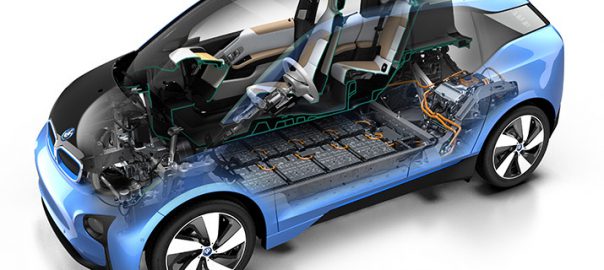
BMW continues to make headway with its flagship ‘i’ range, with the BMW i3 94Ah having recently won the Best Electric Car in the £20,000 – £40,000 category at the What Car? Car of the Year 2017 awards. The annual awards are the UK motoring industry’s highest accolades, demonstrating just how far the BMW i concept has come since its establishment in 2013.

The BMW i3 94Ah was praised for its 50% improvement on range between charges – now a maximum of 195 miles – as well as for its interior quality, sustainable production values and usability.

The ethos of the BMW ‘i’ range is sustainability to its very core. From renewable energy used in the making of its interior carbon fibre, to the recycled materials used throughout its construction, the BMW i3 spearheads the carbon-free car market.

On a practical level, the BMW i3 now comes with direct current (DC) rapid charging as standard, allowing it to be fully charged in less than 3 hours [edit – this is obviously wrong, BMW mean 40 minutes – the writer must have got confused! Trevor]. With a 0-62mph time of 7.3 seconds and a top speed of 93mph, the BMW i3 continues to make its mark on the electric car market.

Visit the What Car? Best Electric Car award feature here.

Source: BMW.co.uk

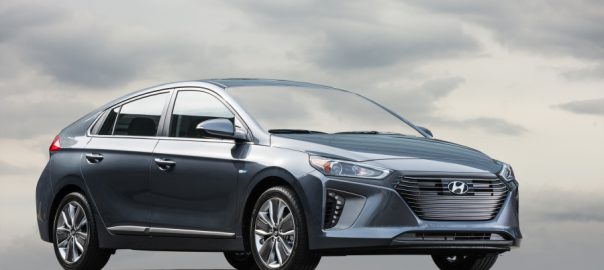
2017 Hyundai Ioniq Electric: First Drive Impression

The second version of the 2017 Hyundai Ioniq I got to drive was the fully electric model (the plug-in hybrid wasn’t available to all drivers), and although my first thought was that the Ioniq electric only has a 124-mile range (which probably has more to say about our societal conditioning about “range anxiety” than about actual driving habits), I ended up changing my mind about the so-called limitations of that as well by the end of the day.

For my time behind the wheel, I gunned it up hills and from full stops, put the regenerative braking at the lowest level, and generally tried to “drive it like I stole it” (at least as much as I could in traffic, anyway), but after checking the odometer against the estimated range still in the battery, that 124-mile range certainly seemed like a solid number, even for a driver who wasn’t trying to hypermile it.

Before getting behind the wheel, I thought that driving the 2017 Hyundai Ioniq Electric was going to be more exciting to me than the hybrid was, perhaps because it’s truly a contender for the fully electric market, both in price and in efficiency (where it is actually the leader — more on that later), but it turned out that I barely noticed the difference. Sure, there were slight differences in the handling and driving experience, perhaps only due to the different drivetrain and battery, but overall, it felt so much like the same car that I had to keep telling myself “It’s an electric.”

The main difference was the almost complete lack of noise, other than some slight road noise from the tires, and the gear shift was missing (replaced by buttons for selecting drive, reverse, Eco and Sport mode, etc.), and the lack of oomph off the line. The Electric accelerated just fine, and could hold its own in traffic, but it certainly didn’t seem to have the same “launch” feeling that the Hybrid did from a full stop.

One feature that I really liked about the Ioniq Electric was the ability to quickly switch between several levels of regenerative braking, via two paddles on the steering wheel. At the lowest setting, the car drove very similar to a conventional vehicle, with plenty of coasting possible when taking your foot off the accelerator, while at the highest level, the regenerative braking feature allowed for a “single pedal” driving style, which meant that as soon as your foot was off of the accelerator, the car started slowing down quite aggressively — not enough to come to a complete stop, but enough that touching the brake wasn’t necessary when accounting for curves and slowing traffic.

I could see the usefulness of the high level of regen braking when trying to get the most range out of the car, while the lowest level gave you the feel of driving a conventional car — something that might come in handy when transitioning from a conventional or hybrid to a fully electric car.

That said, the Electric had plenty of power for the route we were on (which had no incredibly steep or sustained grades), and wasn’t a stodgy “green car” that sacrificed all of the fun of driving in order to deliver a more sustainable transport option.

As with the Hybrid, for the first half of our time with the Electric, my co-pilot drove it mostly in Eco mode, so when I got in the driver’s seat, I put it in Sport mode and kept it there, with the same aim as before — to see if I could put some holes in the company’s range claim. This time, even with some pedal-to-the-metal takeoffs and punching up hills, we ended our drive of the day with the car giving us a range estimate very much in line with the company’s stated 124 miles after subtracting the miles we’d driven.

Read more: Clean Technica

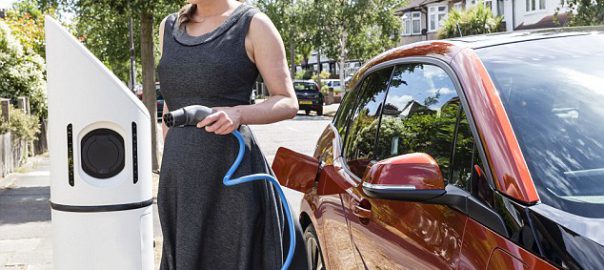
Coming to a street near you? You can make a case with your local authority to have an electric car charge point installed on your street

Want an electric car charge point on the street outside your house?

  • On-street Residential Chargepoint Scheme available since January 1
  • EV owners must ask their local authorities to apply for chargers on their behalf
  • Scheme will favour areas where no off-street parking is available
  • Councils can apply for multiple plug-ins to cover current and future EV demand
Coming to a street near you? You can make a case with your local authority to have an electric car charge point installed on your street

The biggest issue strangling the nation’s switch from petrol and diesel cars to electric vehicles is undoubtedly the lack of infrastructure in the UK. Too few chargers to replenish batteries – especially in inner-city areas where short journeys are best served by zero-emissions electric cars but most people must park their car on the street – have restricted the take-up of pure electric models in Britain.

However, a new £2.5 million ‘On-street Residential Chargepoint Scheme’ has been created to allow EV owners to apply to have a plug-in point installed on their street – and perhaps even right outside their house – the only problem is you have to apply through your council.

The scheme offered by the Office for Low Emission Vehicles from January has made £1 million available to fund installations during the current financial year and an additional £1.5 million to cover applications made during 2017/18. Residents who want one of the twin charge points added on their street will have to ask their local authority to take up their case, with funding then allocated on a first-come first-served basis.
Of course, if you (or your local authority) is fortunate enough to secure one of the charge posts, there’s no guarantee it’ll be available for you to take advantage of – any electric-car or plug-in hybrid driver will be able to use it and you’ll have to pay to have access to the supply. So don’t expect to plug your BMW i3 or Nissan Leaf into one overnight every day.

The scheme is aimed at EV owners who have no off-street parking, for example those with on-street resident parking bays – suggesting most accepted applications will be in highly-populated urban areas. However, local authorities can also apply to the scheme to meet future demands, meaning plug-in posts capable of charging two vehicles at once could be erected in your area even if there are currently no electric car owners living on your street.

Poppy Welch, head of Go Ultra Low – a joint government and industry campaign to encourage motorists into zero-emissions vehicles – said:

‘The growing demand for electric vehicles justifies greater on-street charging infrastructure and for EV owners that do not have access to off street charging, this public infrastructure is vital.

‘2016 marked a record year for plug-in registrations with more motorists than ever making the switch to electric. Annual uptake rose 29 per cent and we expect this strong growth to continue, so welcome all investments made in the national charging infrastructure.

‘While Go Ultra Low research shows more than 90 per cent of charging is done at home, there are already more than 11,000 publically accessible charge points around the country, so this growing national network provides a useful additional option to motorists.’

Read more: This is Money

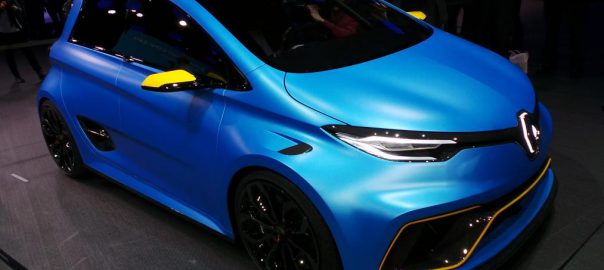
Renault ZOE e-Sport Concept (Image: AutoExpress)

Renault ZOE e-sport concept whizzes into Geneva 2017

Crazy electric Renault ZOE e-sport concept has 456bhp, four-wheel drive and extreme weight saving

Renault has a history of using its Renaultsport department to create crazy concept cars, and at this year’s Geneva Motor Show the company has followed up the mad Espace F1 and Twizy F1 with a new ZOE concept using the firm’s Formula E technology.

Renault ZOE e-Sport Concept (Image: Renault)

Called the ZOE e-sport, it’s a radical two-seat interpretation of Renault’s all-electric city car, boasting an aggressive, angular, wide bodykit, a colour scheme in homage to the Renualt e.dams Formula E team, and most importantly a four-wheel-drive powertrain borrowing Formula E technology.

Two electric motors are on hand to deliver 456bhp – almost 200bhp more than governed 270bhp limit of a Formula E single seater. There’s also up to 640Nm of torque available, and power is supplied by a 40kWh battery pack.

With this powertrain technology on-board, Renault claims the ZOE e-sport manages 0-62mph in 3.2 seconds, and it takes less than 10 seconds to reach its limited top speed of 130mph.

With that heavy electric powertrain and battery pack in place, Renault has gone to extreme measures to try and keep the ZOE e-sport’s weight down. The bodywork is made from carbon fibre, while the steel roll cage incorporates Kevlar panels. Despite the diet, the ZOE e-sport still comes in at 1,400kg.

A wider track is combined with a lower rider height and double-wishbone suspension front and rear, complete with four-way adjustable dampers.

Renault ZOE e-Sport Concept (Image: AutoExpress)

Plenty of aerodynamic trickery is woven into the all-carbon body. A large air dam and splitter set-up is found at the front of the car, while the ZOE e-sport also features a flat floor and large rear diffuser. Gaping tracts in the rear doors, a large rear spoiler and 20-inch centrally-locking diamond cut aluminium wheels complete the racecar inspired look.

In the cabin, two large Recaro bucket seats with race harnesses are found, alongside a rectangular steering wheel and a square dashboard display used to adjust powertrain settings. A new, de-cluttered concept interior design with lashings of Alcantara and angular switches and vents is employed.

According to Stéphane Janin, Renault’s Concept Car Director, the brief for the ZOE e-sport was to have fun, explaining: “we came up with something midway between a production model and a racing car”. Despite the production model influences, the ZOE e-sport will remain a one-off concept.

Source: AutoExpress

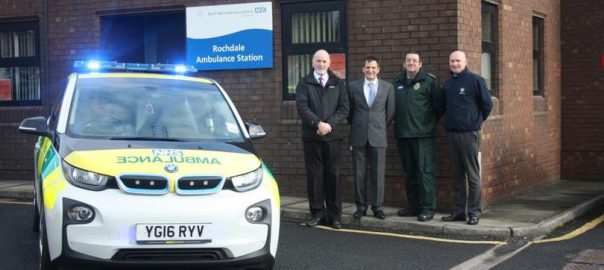
One of the new RRVs which is being trialled by North West Ambulance Trust

Electric paramedic cars could save millions for North West Ambulance Service

A MOVE to electric vehicles is set to save ambulance bosses millions of pounds.

North West Ambulance Service NHS Trust (NWAS) will be one of the first ambulance services in the country to introduce electric cars as part of its fleet and is expected to save £2.5 million in fuel costs over the four year lease period.

RRVs are cars that have been converted into emergency response vehicles.

One of the new RRVs which is being trialled by North West Ambulance Trust

They are designed to be able to attend emergencies quicker than regular ambulances because they are smaller and can get through traffic more easily.

Although they don’t generally carry patients to hospital, they are staffed by a paramedic who is able to administer life-saving treatment at the scene of an emergency.

Neil Maher, assistant director service delivery support said:

“The trust relies heavily on rapid response vehicles to be able to attend patients as quickly as possible.

“The introduction of these electrically powered cars will not only provide huge cost savings for the trust, it will also have a huge impact on our carbon footprint, reducing the carbon contribution from our RRVs from 1379.28 tonnes to 100.8 tonnes, a reduction of 73 per cent.”

The trust believes maintenance and lease costs will also be reduced with the introduction of the new RRV model, with an overall expected annual saving of over £4,300 per vehicle.

Read more: Lancashire Telegraph

The Pleasure of Public Charging 2

Although our last long trip went well, I was a little nervous yesterday driving from Northampton to London and back as it was to an area, Hammersmith, where I hadn’t charged before. We were headed to the Odeon for an Elbow concert.

I did some pre-planning on Google Maps and Zap-map and spotted parking with charging very nearby at the Novotel hotel, with a couple of alternative locations slightly further away. If all else failed I could always do a rapid charge at a motorway services on the way home; however I wasn’t keen to have to stop if I could avoid it.

Charging the i3 in the Novotel car park (Image: T. Larkum)

I drove the 85 miles down the M1 and along the M4 in EcoPro+ mode to maximise range, using the cruise control set to 60mph. This worked really well and we arrived in the Novotel with the car promising 140+ miles from the charge.

There were no signs for the charge points so we had to trawl the car park for them. We found two on a  wall, with adjacent parking spaces. However there was an Audience A3 e-tron charging in one, and a dino-juice Range Rover Evoque blocking the other.

Reaching the charge cable past the Range Rover to reach the i3 (Image: T. Larkum)

Fortunately the i3’s ‘python’ cable was long enough to reach from the next space. We plugged in and with the help of an old Polar RFID card we were soon charging.

Five minutes later we were at the Elbow gig. That was a great success and it felt like a privilege to be there. They put on a fantastic show – with ‘One Day Like This’ in the encore, naturally – and a good time was had by all!

Elbow giving a great performance (Image: T. Larkum)

After the show we returned to the car to find it almost completely charged (98%). It had cost the usual £3.50 per hour to park, but just £1.20 to fill up the car.

Going home was a blast – with just 85 miles to go and 140 miles range predicted it was nice to put it into sport mode and race home, showing a clean pair of heels to all the fossil-fuel vehicles on the road. Confirming to me, once again, I could never go back to a piston car.

Total fuel cost for the 175 mile journey? About £4, including the charge in Hammersmith.

Diesel car (Image: Y. Mok/PA)

Diesel drivers should think twice before buying – Transport Secretary

Drivers should think long and hard before buying a diesel car, the Transport Secretary has said.

Chris Grayling suggested motorists should consider buying a low-emission vehicle rather than spending their money on a diesel.

Diesel car (Image: Y. Mok/PA)

His intervention follows reports the Government is considering a scrappage scheme for diesel cars to improve air quality.

The reported scheme would see drivers offered a cash incentive for replacing an old diesel car with a low-emission vehicle.

Asked whether motorists should hesitate before buying a diesel, Mr Grayling told The Daily Mail:

“People should take a long, hard think about what they need, about where they’re going to be driving, and should make best endeavours to buy the least polluting vehicle they can.

“I don’t think diesel is going to disappear but someone who is buying a car to drive around a busy city may think about buying a low-emission vehicle rather than a diesel.”

Read more: MSN

New autonomous vehicle insurance and electric vehicle infrastructure

Self-driving car insurance and electric vehicle charge point measures introduced in Vehicle Technology and Aviation Bill.

New insurance rules for self-driving cars and measures to improve provision of electric vehicle charge points will be introduced today (22 February 2017), as part of the Vehicle Technology and Aviation Bill.

It is hoped these measures will help the UK to become a world leader in these technologies by breaking down some of the barriers that could limit companies from testing them here.

Measures around insurance for self-driving cars will ensure better protection – a single insurance product for automated vehicles will now be able to cover both the motorist when they are driving, as well as the car when it is in automated mode. This will mean innocent victims involved in a collision with an automated vehicle will have quick and easy access to compensation.

Self-driving vehicles will allow the driver to hand full control and responsibility to the vehicle when technologies are turned on.

The measures follow a consultation by the Department for Transport on the issue of insurance for self-driving cars that closed in September 2016. The Secretary of State will be given the power to classify which vehicles are ‘automated’ and subject to the new insurance requirement.

Chris Grayling, the Transport Secretary, said:

Automated vehicles have the potential to transform our roads in the future and make them even safer and easier to use, as well as promising new mobility for those who cannot drive.

But we must ensure the public is protected in the event of an incident and today we are introducing the framework to allow insurance for these new technologies.

David Williams, Head of Underwriting, at AXA UK, said:

This is a positive step forward that provides clarity to insurers to ensure we design our products appropriately. It keeps protection of the general public at its heart which we hope will encourage early adoption of some really impressive technology.

The vast majority of accidents are caused by human error and we see automated vehicles having a massive impact, reducing the number and severity of accidents. As well as making our roads safer, insurance premiums are based on the cost of claims and therefore we expect substantially reduced premiums to follow.

Other measures set out in the Bill will mean easier access to infrastructure for electric vehicles. They could also ensure the right infrastructure is in place for the growing market for electric vehicles.

Motorway services and large fuel retailers could be made to provide electric charge points and hydrogen refuelling stations under planned new laws.

The measures could also make sure data about the location and availability of charging stations is openly available, and make it easier to use the different networks which are available. They follow a public consultation on measures to improve charging infrastructure.

John Hayes, Minister of State for Transport said:

If we are to accelerate the use of electric vehicles we must take action now and be ready to take more action later. I recognise that to encourage more drivers to go electric, the infrastructure needs to become even more widespread than the 11,000 charging points already in place and more straightforward. We are determined to do all we can to make electric vehicles work for everyone and these new laws will help make this a reality.

Source: Gov.uk

First drive: Renault Zoe ZE40 Signature Nav electric car review

Review

Six years after the mainstream launch of the Nissan Leaf, range anxiety is still a barrier for many when it comes to adopting electric vehicles. It’s a barrier Renault hopes to demolish with the updated ZE40 edition of the Zoe compact electric hatchback, which almost doubles the vehicle’s range on the NEDC cycle, from 130 miles per charge, to 250 miles.

In real life, the manufacturer says that means an expected range of 186 miles, which it believes will be enough for many drivers to attempt the switch to electric.

The new battery system occupies the same space as the old one, and is only marginally heavier, but offers substantially more capacity. But, aside from the fancy new battery technology, the car itself is largely unchanged.

Renault has introduced a new top-spec trim level, called Signature Nav, which includes a Bose sound system, rear parking camera, leather heated seats, and some different interior colours.

The top spec trim level seems unnecessary on this car, and the darker interior loses some of the character of lower trim levels. Dynamique Nav, the mid-range spec, remains the pick. The light and airy blue and white interior of Dynamique Nav better fits the character of the car – friendly, accessible and classless.

There is one other area that has been improved that is worth a mention – connectivity. From midway through this year, the car will be compatible with a system called Z.E. Trip, a phone and car app combination that links into real-time charging systems, and shows live charging point availability. When the driver reaches the charging point, the Z.E. Pass will allow them to pay through the infotainment system for their charge.

Renault says the vast majority of Zoes sold in the UK are still bought under the battery lease programme, which will continue to operate.

Battery lease pricing starts from £59 on the new ZE40 vehicle, £10 a month more than the old 22kw model.

After plug-in grant, a battery lease ZE40 model starts from £17,845, nearly £4,000 more than the new price of the old model, which remains on sale. Those opting for full battery-included ownership will stump up £23,445.

Despite the cost premium, the new Zoe ZE40 is a serious contender in the electric vehicle sector. It may be smaller than the Leaf, but it has more range and a more modern interior, and is still significantly cheaper – upfront, at least – than a BMW i3.

Read more: FleetNews