Monthly Archives: January 2016

Evolt reports record year for its EV charging business

Evolt has recorded a record year for its Electric Vehicle (EV) Charging business – 12 months that has seen a significant increase in sales and market share in an increasingly competitive commercial charging landscape.

The company, which began installing some of its first single commercial chargers more than five years ago, has since grown to become one of the largest providers of single, dual and multiple commercial charging points across the UK.

It currently has more than 4,000 of its Evolt-branded charging points installed, from the south coast of England to the Shetland Islands of Scotland. It also has a further 160 Rapid Charging stations in place to meet the needs of an expanding customer base that includes 60 Local Authorities and a large number of private businesses

Justin Meyer, General Manager, says that its engagement with leading consortia and strategic alliances with two of the key industry players have served to consolidate its position as a true market leader:

“We have quickly established a reputation as the ‘go to’ supplier for commercial EV charging infrastructure solutions, respected for the range and reliability of our systems and a strong support network right across the country,” he says.

“Our growth and increased market share reflect the growing popularity of electric vehicles, as more local authorities and private businesses look to meet their ‘green’ responsibilities and realise the benefits that EVs can deliver.

“Fleets of electric buses, taxis and council vehicles are all increasing,” he continues. “We have exciting plans for 2016 and will continue to invest in new technologies over the next 12 months.”

2_justin_meyer_evolt_csAmong the new solutions planned for early 2016 is an 800-Volt Rapid Charger with an innovative design, a 20kW triple headed Rapid Charger, and an advanced home charging unit with a number of bespoke features that will ensure that an EV unit can be installed in every home.

Other new innovations include a series of battery storage systems consisting of a 50kW, 100kW and ultimately 250kW capacity. These will enable expansion of the EV charging network where the power supply is constrained, as well as the ability to work with Green renewable energy sources.

Source: Gravity London
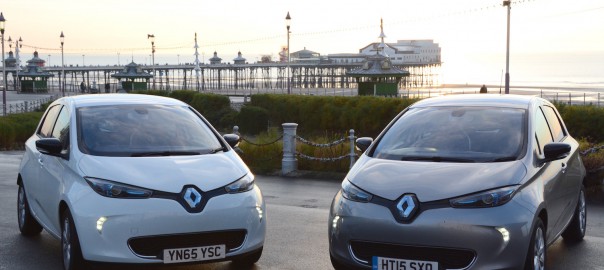
Renault ZOE (Image: Green Car Guide)

RENAULT ZOE REVIEW

The recent Volkswagen emissions scandal has highlighted the issue of local air quality. The emissions from diesel cars impact badly on local air quality; petrol cars aren’t as bad, but they still have emissions. However pure electric cars have zero tailpipe emissions, and so are ideal for use in our congested urban areas. The Renault ZOE is also a compact size for city driving – so surely it must be the perfect city car?

Renault ZOE (Image: Green Car Guide)

The ZOE is a stand-alone model that’s only available as a pure EV. Although it’s a compact five-door supermini, it still has five seats – and a decent boot. The rear seats even fold flat to provide an increased load space. We think it looks good, inside and out; it’s simple, stylish and modern. With many functions controlled by the touchscreen, the dashboard has the minimum of fuss.

In terms of the technical stuff, the ZOE has a 400V, 22 kWh capacity lithium ion battery (which weighs 290kg) and a 65kW (88hp) synchronous electric motor. It also has a ‘Chameleon’ charger, allowing the ZOE to be charged at different power levels using the same socket, enabling drivers to take advantage of a wide range of charging points. Charging time from a 3 kW (single-phase 16 A) wall box is around 9 hours. If three-phase charging is available, then a 32 A 22 kW charge point can provide an 80% battery charge in one hour, or a 43 kW 63 A charge point can give an 80% battery charge in just half an hour.

Read more: Green Car Guide

Car chargers fitted at Derbyshire hospitals

DRIVERS of electric cars will be able to charge their vehicles at hospitals in Derbyshire in an award-winning low-carbon travel initiative.
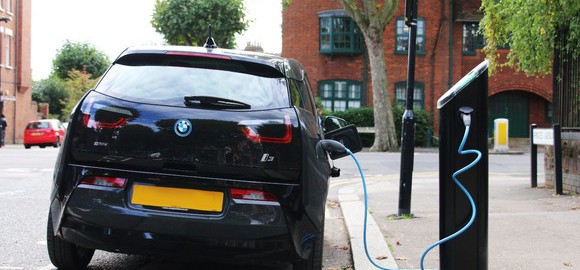
img-2098_i3_Charging_unk

Charging points have been switched on at community hospitals across the county this week. The move is part of a wider initiative by Derbyshire Community Health Services NHS Foundation Trust to reduce the environmental impact of travel by its staff and to support sustainability in the community.

The trust has switched on new charge points at eight hospital locations around the county, including Ilkeston, Ripley, and Walton.

Source: Derby Telegraph

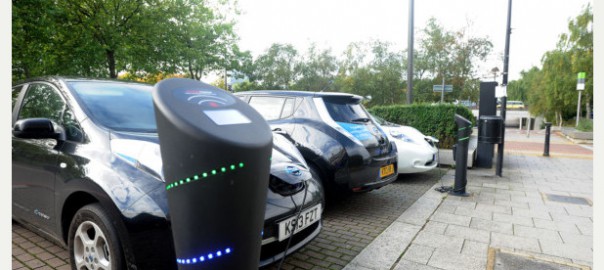
Electric cars charging in Central Milton Keynes

UK HOTELS TO INSTALL CHARGERS

Novotel and Ibis hotels in the UK will this year begin installing electric vehicle charging points which will be available to guests free of charge.

Electric cars charging in Central Milton Keynes

The announcement was made by AccorHotels, a French hotel operator of nearly 3,800 hotels worldwide.

Accor is collaborating with Chargemaster on the installation, and says the power points will incorporate the latest technology enabling drivers to replenish their vehicle batteries – either 7kw or 22kw – in one hour. They can charge both 7-kilowatt and 22-kilowatt batteries.

Accor managing director for the UK and Ireland, Thomas Dubaere, said that AccorHotels recognises that some of its customers are embracing low-emission vehicles and, consequently, charging points would be installed at its affiliated premises across the UK.

Source: Bodyshop Mag

London Heathrow to install 135 additional electric vehicle chargers

London Heathrow Airport in the UK is set to install an additional 135 charging points capable of serving at least 260 electric vehicles in and around the airport.

175811501746653_rsz_heathrow_unk

The £2m (US$2.95m) investment has been announced alongside the release of a series of reports detailing Heathrow’s progress toward its 2015 ‘blueprint’ commitments to reducing airport noise, emissions and traffic. The airport currently has 21 electric vehicle charging stations in its short-stay parking garages that are free of charge for visitors.

John Holland-Kaye, chief executive, London Heathrow Airport, said,

“2015 saw us commit to a series of action plans that will make us a better neighbor, by reducing noise, emissions and traffic. Today we are providing an update on the very significant progress already being made, thanks to the commitment of the airport community. But we know that we need to do more, and in the coming months will set out even more ambitious plans that will make an expanded Heathrow the most environmentally responsible hub airport in the world.”

The reports provided a traffic light rating against each of the commitments published in the blueprints along with supporting commentary. The reports show that 70% of the pledges have been put into action and that the remaining 30% are in progress

Source: Passenger Terminal Today

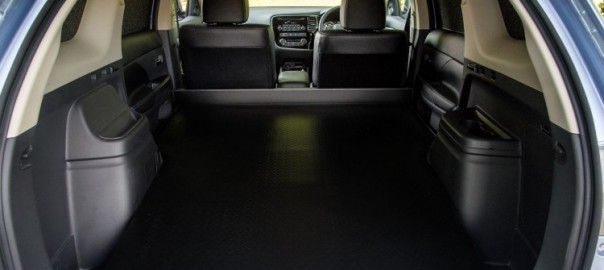
Outlander PHEV GX3h 4Work

Mitsubishi Outlander 4Work PHEV Captures What Van? Award

Mitsubishi happily announced another accolade for the Outlander PHEV, but this time the for 4Work van version captured the award.

Outlander PHEV GX3h 4Work

What Van? awarded the two-seat Outlander PHEV 4Work The Green Award.

What Van? Editor Paul Barker said:

“The Outlander 4Work PHEV is a trail-blazing model that was a natural choice for the What Van? Green Award, combining zero emission motoring and an absence of range anxiety. This technology is currently unique in the sector but gives businesses a flexible and cost-efficient way into more environmentally friendly operation.”

For Mitsubishi, it was an especially successful result as the conventional Mitsubishi L200 Series 5 picked up the accolade for The Light Commercial Vehicle of the Year and The Pick-up of the Year.

Source: Inside EVs

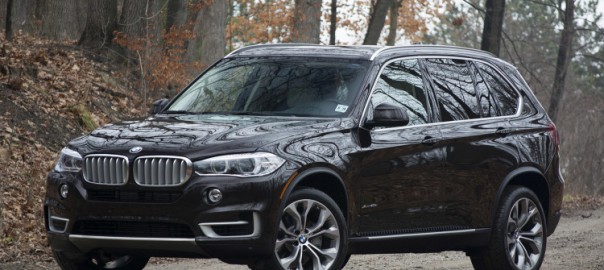
BMW X5 xDrive40e (Image: B. Turkus)

2016 BMW X5 xDrive40e Review

BMW is no stranger to electrification. The company put the world on notice with the launch of its innovative i sub-brand. But the lessons learned from the i3 and i8 aren’t limited to these small-volume cars. The more mainstream X5 xDrive40e impresses with lessons learned from i, all without compromising the SUV’s character.

BMW X5 xDrive40e (Image: B. Turkus)

The combination of a 2.0-liter, turbocharged four-cylinder engine with an electric motor is good for 308 overall horsepower and 302 pound-feet of torque. Sure, 240 hp and 260 lb-ft come from the four-cylinder engine alone, but the electric motor – integrated within the ZF eight-speed automatic transmission’s housing – chips in a maximum of 111 hp and 184 lb-ft of torque. The 9.2-kilowatt-hour lithium-ion battery can sock away enough electricity to drive up to 14 miles on a single charge and will recharge at your average 110-volt socket in about seven hours.

Of course, the battery pack and electric motor are a big weight penalty. At 5,220 pounds, the xDrive40e is 430 pounds heavier than the standard xDrive35i. Still, the gas-electric powertrain hustles this husky X5 40e to 60 miles per hour in just 6.5 seconds, less than half a second slower than the 35i. The stopwatch figures are complemented by the best fuel economy of any gas-powered X5, at 56 miles per gallon equivalent and 24 mpg combined. Only the diesel X5 xDrive35d is more efficient, at 27 mpg. But achieving top fuel economy in the 40e isn’t as simple as going easy on the throttle. Perhaps more than any vehicle we’ve tested recently, understanding how all the X5’s systems work together is crucial to eking out the most mpgs.

Read more: Autoblog

Nissan e-NV200 Combi adapted for wheelchair accessibility

Vehicle dealership Vic Young (South Shields) has adapted a fully-electric Nissan e-NV200 Combi to offer full wheelchair accessibility.

w268_env200_Wheelchair_vic-young

Electric Vehicle Evolution (EVE) is based on the Nissan e-NV200 Combi, which has been customised by Northern Truck Bodies (NTB), the company’s specialist on-site conversion arm.

The conversion includes a vehicle ramp system, to ensure that the wheelchair user can access the vehicle with ease. EVE’s five standard passenger seats are retained even while a wheelchair user is on board.

Vic Young, managing director at NTB and Vic Young, said:

“EVE is an innovative and forward-thinking concept which meets the demands of service providers as it is a multi-purpose vehicle suitable for all passengers including those with reduced mobility.

“I have witnessed on many occasions how awkward it is for, say a taxi driver, to assist a passenger with mobility requirements to enter and exit a vehicle.

“Our concept eliminates this problem and once the wheelchair user enters the vehicle they will then travel on a low, flat floor, ensuring a high level of comfort for the passenger.

“We are confident that the EVE Nissan e-NV200 Combi will make a major impact in the region.”

The vehicle is aimed in particular at service providers including taxi firms, care homes, local authorities and charities.

Source: Commercial Fleet

Kia Soul EV – best car of 2015

We had a Kia Soul EV on our long-term test fleet in 2015, but I gave it a swerve because I assumed it wouldn’t fit well with my travelling needs.

006-low-res_Kia_Soul-EV_GCG

My journey is a 43-mile drive from Teddington down the M3 to Basingstoke. So although Kia claims a potential range of 132 miles for the Soul EV, and we saw a ‘real world’ 110 miles or so during urban driving, I wasn’t so confident I’d experience that during constant 70mph motorway trips.

I admit it – I was anxious about range. This is because I have no way of charging at home. My parking space is inconveniently placed; although the Soul EV can be slowly recharged via a household plug, I would have had to park in a flower bed and crush my cyclamen to get close enough to the socket.

Just before the Soul EV left Autocar, however, I needed to satisfy my curiosity and find out whether it could handle a dreary motorway commute with the same zeal that made it our go-to car for short urban trips.

None of that is a slight on the Soul EV, which proved perfectly amenable during my trip. This EV gets my car of the year vote because it put to bed some of my concerns about the viability of electric vehicles on longer motorway journeys.

Read more: Autocar