Monthly Archives: October 2015

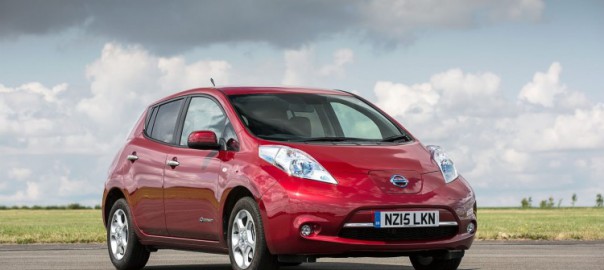
Nissan Leaf

Diesel scandal fuels electric vehicle interest

Interest in alternative fuels up by a quarter since Volkswagen ‘dieselgate’ scandal

Nissan Leaf
Nissan Leaf

Interest in hybrid and electric cars has rocketed since the Volkswagen diesel scandal, according to analysis by Carbuyer.

Traffic to electric and hybrid car reviews has increased by almost a quarter since news of the scandal broke. And those users are viewing far more pages in a visit than the average.

Carbuyer editor Stuart Milne said:

“It’s hard not be amazed at the scale of the diesel scandal affecting some of the most popular brands in Britain. It has understandably dented confidence in diesel models. But hybrids and all-electric vehicles (EVs) haven’t been touched by the scandal.”

“The events of the last few weeks could help to accelerate sales of hybrids and EVs. Indeed, our data suggests that ever more in-market car buyers are looking to hybrid and electric models rather than diesel engines.

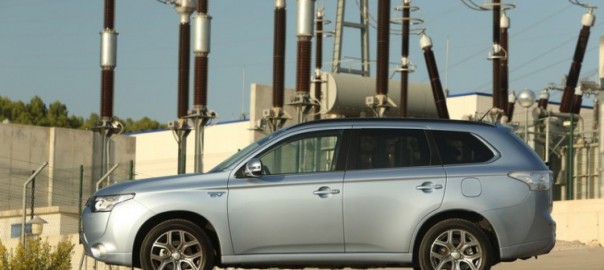
“The rate of development in these models is impressive. A revised version of the Nissan LEAF – the world’s most popular electric car – now offers a range of more than 150 miles and the Mitsubishi Outlander PHEV (Plug-in Hybrid Vehicle) is a genuine alternative to the diesel version of that SUV.

“The continued financial incentives for motorists to buy a zero-emissions vehicle – or choose one as a company car – are exceptionally enticing.”

Carbuyer analysed traffic to its reviews of hybrid-only models, such as the Toyota Prius and Mitsubishi Outlander PHEV, as well as Carbuyer’s Best Hybrids and Best Electric Car features.

It found traffic from UK readers increased by 24.5% between 20 and 29 September compared to the previous period.

Source: Car Buyer
More Convenient Public EV Charging From POD Point

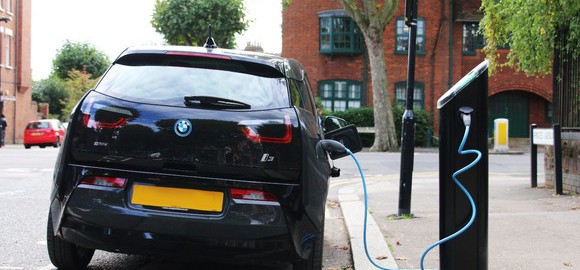
Recently, POD Point, a supplier of electric vehicle charging stations, launched a fresh network of public charging stations in the UK.

img-2098_i3_Charging_unk

The new public charging network will enable more convenient charging of electric vehicles. Business Green brings us the story, continuing,

“The new Open Charge network will allow EV owners to charge their cars via POD Point’s website or mobile app. It replaces the old POD Point system where users were required to scan an RFID card to initiate charging.”

Swiping a card isn’t all hat hard, but eliminating one more card from your wallet and allowing easy access via your smartphone is certainly a step forward, making charging even quicker and easier.

Erik Fairbairn, a founder of POD Point, points out how this move is about engaging more people to consider electric vehicles.

“We know that highly reliable, widely available and simple-to-use charging infrastructure will drive forward the take-up of electric vehicles,” he said. “We have listened really closely to the queries and pain points of our users, and we now have a system that is incredibly simple to use, even for new EV drivers.”

Read more: EV Obsession

Mitsubishi Outlander PHEV

UK’s Top 20 Plug-In Electric Cars – Mid-2015

Mitsubishi Outlander PHEV remains the best selling plug-in car in the UK according to latest RAC Foundation report on plug-in car grant claims.

Mitsubishi Outlander PHEV

The Japanese plug-in hybrid, through the end of June, noted 12,066 registrations out of 35,241 total. That’s more than one third of all plug-ins sold in the UK.

The ratio in Q2 was even higher – 41% (2,293 out of 5,568).

With the newly refreshed, 2016 Mitsubishi Outlander PHEV coming, things become even more exciting.

Here are some interesting comments from Steve Gooding, director of the RAC Foundation:

“The march of Mitsubishi continues with the latest data showing the Outlander plug-in hybrid extending its lead over the Nissan Leaf as the most popular ultra-green car in the UK.

“The success of the Outlander looks to be down to three things: a high-profile advertising campaign, good range, and probably most importantly competitive pricing which makes it as affordable to buy as the diesel equivalent.

“But that price is dependent on the government grant. Ultimately all ultra-green cars will have to stack up commercially when the grants are withdrawn. What ministers must ensure is that both consumers and manufacturers have a clear idea of when and how the scheme will come to an end.

“The interesting question is whether Mitsubishi are making money from this model or using it as a loss leader to gain market share and drive out competitors.

“It is worth noting that the growth in the number of ultra-low carbon vehicles on the road slowed significantly in the latest quarter compared with the previous. This is probably due to seasonal variations in car buying volumes but industry and ministers will be keeping a keen eye on the trends to make sure demand isn’t stalling.”

Read more: Inside EVs

Mark Carney said: ‘Once climate change becomes a defining issue for financial stability, it may already be too late.’ He proposes that firms ‘would disclose not only what they are emitting today, but how they plan their transition to the net-zero world of the future’. (Image: Jonathan Brady/PA)

Carney warns of risks from climate change ‘tragedy of the horizon’

Business leaders are finally waking up to what’s coming down the line.

Bank of England governor tells Lloyd’s insurers that ‘challenges currently posed by climate change pale in significance compared with what might come’

Mark Carney said: ‘Once climate change becomes a defining issue for financial stability, it may already be too late.’ He proposes that firms ‘would disclose not only what they are emitting today, but how they plan their transition to the net-zero world of the future’. (Image: Jonathan Brady/PA)

Mark Carney, the governor of the Bank of England, has warned that climate change will lead to financial crises and falling living standards unless the world’s leading countries do more to ensure that their companies come clean about their current and future carbon emissions.

In a speech to the insurance market Lloyd’s of London on Tuesday, Carney said insurers were heavily exposed to climate change risks and that time was running out to deal with global warming.

The governor said that proposals would probably be put to the G20 meeting in Turkey in November urging the world’s leading developed and developing countries to bring in tougher corporate disclosure standards so that investors could better judge climate change risks.

“The challenges currently posed by climate change pale in significance compared with what might come,” Carney said. “The far-sighted amongst you are anticipating broader global impacts on property, migration and political stability, as well as food and water security. So why isn’t more being done to address it?”

Read more: The Guardian

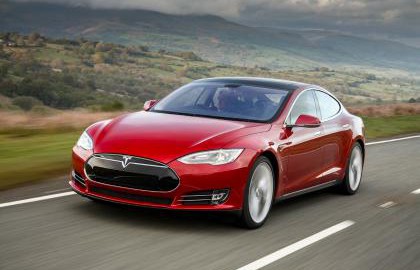
Tesla Model S (Image: AutoExpress)

Don’t buy an electric car

Don’t buy an electric car before you’ve read our 11 things you must know – The stuff they don’t always tell you

Like any radical new technology, electric vehicles (EVs) can be confusing. Are they cheap or expensive to buy and run? Do they actually do any good for the environment? Are range anxiety and charging real worries? And what are they really like to own, to drive and to look after?

The good news is there are undoubted up sides to owning an EV, but you need to know about the battery-powered pitfalls too. Good news for you, then, that this here is our guide to the 11 things every driver should know about electric cars.

1. Some electric cars are ludicrously fast

The latest Tesla Model S sports a ‘Ludicrous Mode’ that allows the four-door saloon to blast to 60mph in just 2.8 seconds. That’s precisely the same performance as Porsche’s 918 Spyder supercar and faster than just about anything else on the road. In other words, electric cars today are most definitely not the feeble carts of yesteryear. Just like combustion cars, they’re available in a wide range of specifications with performance to match. You simply cannot generalise about electric cars being slow any longer.

2. Some electric cars are cheap

front-tracking_renault_zoe_AutoExpress

Yes, the aforementioned Tesla might break the bank at upwards of £80,000, but cars like Renault’s Zoe are much more accessible. In many ways, the Zoe is a standard compact hatchback, similar in size to Renault’s own Clio or the Ford Fiesta. You can buy one from just £13,995. You can also put one on your drive for around £160 a month and a deposit of just £600 £155 a month and a deposit of just £250. So EVs are no longer the preserve of well-heeled early adopters. If you are in a position to buy almost any new car, you can probably afford to add electric to your shortlist.

Read more: T3

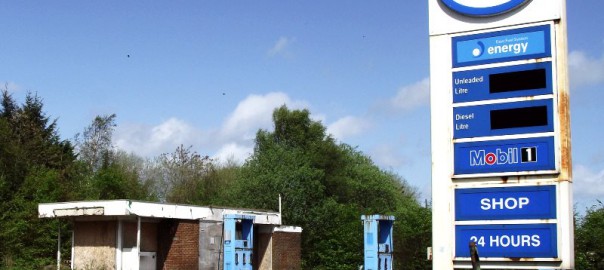
The derelict Crowood Petrol Station next to the dual carriageway on the Cumbernauld Road as you enter the wee town of Chryston on the edge of Glasgow (Image: byronv2 via Flickr)

VW wipeout means the end of fossil fuels looms near

Could VW really be responsible for tens of thousands of deaths from pollution?!

VW’s pollution cheating has caused thousands of premature deaths, write Mike Berners-Lee & Chris Goodall, creating costs that could destroy the company’s entire shareholder equity. But this is no ‘Black Swan’ event. It is an early example of the existential threat to the fossil fuel economy.

The derelict Crowood Petrol Station next to the dual carriageway on the Cumbernauld Road as you enter the wee town of Chryston on the edge of Glasgow (Image: byronv2 via Flickr)
The derelict Crowood Petrol Station next to the dual carriageway on the Cumbernauld Road as you enter the wee town of Chryston on the edge of Glasgow (Image: byronv2/Flickr)

No pension fund trustee can legitimately ignore the increasingly obvious likelihood of a rapid destruction of shareholder value as the world speeds up the switch away from coal, oil and even gas.

VWs diesel cars emit a much larger amount of nitrogen oxides (NOx) and fine particulates than regulators thought.

Greenpeace estimates that an extra 60,000 to 24,000 tonnes of NOx have been emitted each year from 11m vehicles sold around the world.

NOx and fine particulates have severe impacts on human health and are responsible for many early deaths each year.

We can put a crude financial figure on the impact of the loss of life. Roughly speaking, we think that VW’s actions resulted in costs of between £21 and £90bn for NOx pollution alone.

The larger figure is greater than the stock market value of the entire company. VW would therefore be worthless if called upon to pay the full price for its actions.

Our calculation is based on three separate numbers. All are approximate and can be argued over. But we thought it might be helpful to do the arithmetic nevertheless. These numbers only estimate the social cost of early deaths, not the full burden of ill health, from NOx pollution.

Read more: The Ecologist

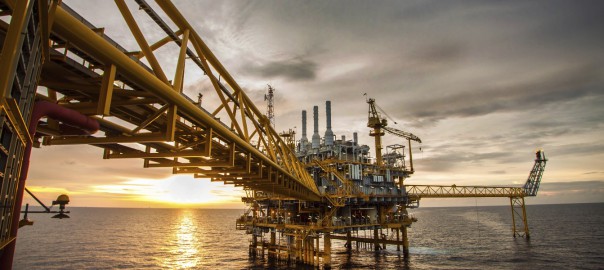
Oil’s place in the global energy mix is transforming, including in mobility, which uses three-fifths of world oil (Image: Thinkstock/curraheeshutter)

The end of the Oil Age is in sight

Shell’s departure from the Arctic is a very significant event in the global energy picture, writes Energy Post editor-in-chief Karel Beckman. It is another sign that the End of the Oil Age is in sight.

Oil’s place in the global energy mix is transforming, including in mobility, which uses three-fifths of world oil (Image: Thinkstock/curraheeshutter)

After Volkswagen, a second major European company had to face acute embarrassment this week. Shell did not commit fraud, but they sure made a billion-dollar blooper in the Arctic. Yes, taking risks is part of what business is about, and sometimes wells turn up dry, but there is a lot more to the story than that.

Clearly the disappointing results of a single exploratory well (“Burger J”) in a single basin can’t have been sufficient reason for Shell to suddenly give up on its Arctic venture altogether. “For the foreseeable future”, as the company put it, i.e. indefinitely. In fact, the company did give two additional reasons: “the high costs associated with the project, and the challenging and unpredictable federal regulatory environment in offshore Alaska”.

But neither of these can have come as a surprise. Critics have been warning for a long time that the costs of Alaskan drilling are prohibitive, and the “regulatory environment” in this part of the world will inevitably be unpredictable.

Read more: Energy Post

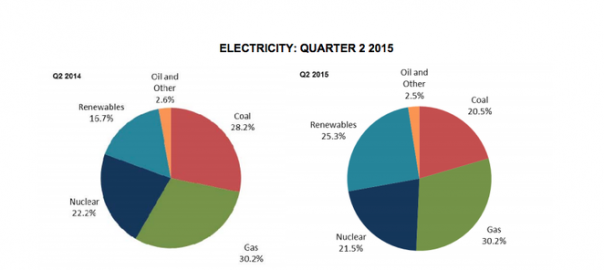
Electricity supply sources Q2 2015 (Image: UK gov)

Renewables beat coal in UK electricity mix

Some good news on renewables – despite government policy.

Often when we talk about countries breaking renewable energy records, we focus on momentary spikes caused by exceptionally sunny or windy days. While these records are, in and of themselves, important—they still leave a bigger question hanging: How does the electricity grid cope when the sun isn’t shining or the wind isn’t blowing?

Electricity supply sources Q2 2015 (Image: UK gov)

What’s becoming increasingly clear, however, as countries integrate more renewable energy into their grids, is that clean energy can indeed supply a significant portion of our energy over an extended period of time. Indeed, new data from the UK government on Q2 electricity supply suggests that renewables beat out coal in the country’s electricity mix for the first time ever over an entire quarter. Specifically, renewables accounted for 25.3% of electricity generated in Q2 2015 (up from 16.7% in Q2 2014). Meanwhile coal fell from 28.2% to 20.5% in the same period. Gas remained the same. And nuclear fell slightly to 21.5%.

Read more: Treehugger

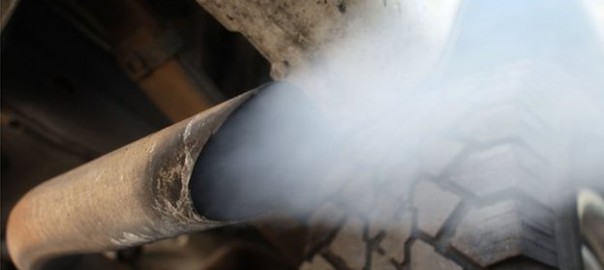
Car exhaust (Image: BBC)

After diesel scandal Volkswagen must go electric

Perhaps the VW emissions scandal will actually do some good.

Your new clean diesel turns to be less clean than you thought? Switch to an electric car.

Car exhaust pollution (Image: Wikipedia)

In recent days, the loudest thing in the automotive industry is Volkswagen’s scandal over diesel engine emissions.

We at InsideEVs don’t cover conventional cars, but there’s something we’d like to note. After over 100 years of developments, we simply don’t believe that internal combustion engines can be significantly improved upon in terms of fuel economy or emissions.

Proof of that is seen in such things as carmakers using more and more gears (like eight or even nine), while every next gear translates to less gain than the previous one, at some additional cost. Automakers are literally scratching at whatever they can.

In the world of tightening emission standards, evading them is worth billions of dollars and there could be plenty of people sitting tight-lipped about true emissions in various automotive groups.

Read more: Inside EVS