Monthly Archives: October 2015

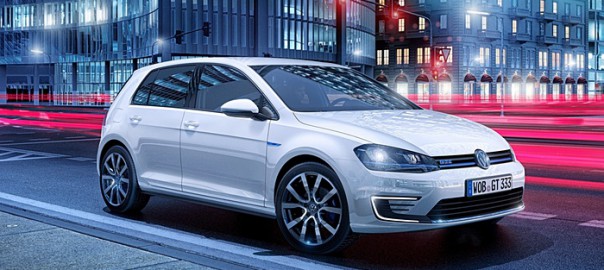
Turn it on: Golf’s GTE is part electric and part petrol, with a promise of 166 miles to the gallon

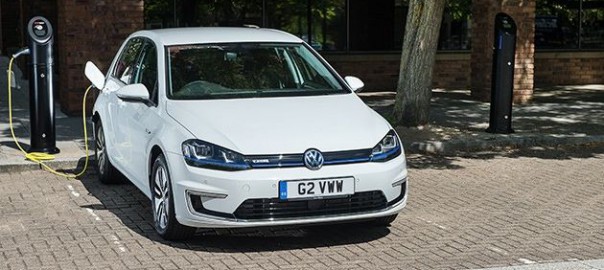
Car review: Volkswagen Golf GTE

Volkswagen’s new electric hybrid Golf is as green as they come, but can VW ever clean up its ruined reputation?

Turn it on: Golf’s GTE is part electric and part petrol, with a promise of 166 miles to the gallon

After the scandals in sport, food and banking (doping, horse meat, Libor and the rest), only a fool would have bet against the motor industry not cheating the system, too. But no one would have fingered Volkswagen as the culprit. A byword for trust and decency for more than 75 years and the jewel of the German automotive industry, all reduced to lousy tricksters in the space of a single afternoon. That old adage that a good name takes a lifetime to win and a moment to lose has never been more true.

It was ironic, for me at least, that the day Michael Horn, VW’s US boss, stood up and said: “We’ve screwed up!” was also the day I found myself at the wheel of the new Golf GTE. The E in the title stands for Electric, while the GT is for Gran Turismo and tells new customers (and God knows they’re going to need them) that this isn’t just some dull electric buggy affair (a golf buggy!) but a full-on driver’s car that shares the same sporting DNA as the brand’s most famous performance badge – the GTi. It’s certainly a tricky balancing act for this VW to pull off as the car has to be both parsimonious and powerful. A sort of vegan Tarzan.

The car is a plug-in hybrid with both a 1.4 TSI petrol (no diesel here) and a snappy electric engine. It has five operating modes: pure electric, electric plus, battery hold, battery charge and auto hybrid. VW has made the technology that controls each option incredibly straightforward, but like many others, I suspect, after fiddling about with the various settings, I clicked on auto hybrid and let the car sort itself out. It seemed to know what it was about far better than me, anyway. Whichever mode you select the car always pulls away in pure electric and it takes a while to get used to that sudden, silent lurch.

All the extra gubbins associated with two engines and a large battery mean that the car is 300kg heavier than the standard model. That’s like driving everywhere with the Fijian rugby team’s front row sitting in the back. Despite all that heft the car still feels quick and agile around the park (rather like the Fijians themselves) which is testament to the raw power of the GTE. It does 0-62mph in 7.6 seconds with a top speed of 138mph.

Inside and out the car is almost identical to every other Golf on the road. One of VW’s e-mobility taglines is “The future is familiar” – and the GTE is certainly that. Within minutes of taking the wheel you feel completely at home. It’s one of VW’s great strengths that its cars can be totally fresh and yet familiar all at the same time.

Being a hybrid, the car’s eco credentials are clearly what sets it apart. It has a range of 31 miles using its fully charged electric engine alone (and most daily journeys are a lot less than that), and it will do up 580 miles on a single tank if both systems are engaged. VW claims an average of 166mpg (depending on how you drive, of course) with emissions of just 39g of CO2 per km. But, and a BUT could not be BIGGER, what’s the point of it?

How could one arm of VW be producing such a clever, clean machine while its other has sold more than 11m motors that knock out anything up to 40 times the pollution they claim? I fear that VW’s so-called “defeat device” will defeat a lot more than it was intended to.

Source: The Guardian

The project aims to dramatically increase uptake of ULEVs

Bids for Go Ultra Low Cities scheme go in

As part of the Go Ultra Low Cities Scheme, twelve local authorities have launched bids to win a share of £35 million worth of government funding to improve the uptake of ultra low emission vehicles (ULEVs). Each of the twelve cities or regions have put together bids for the money, which will be shared between two to four schemes and is funded from the UK Government’s £500 million Go Ultra Low funding programme.

The project aims to dramatically increase uptake of ULEVs

The intention is to make ULEV ownership and use as easy and convenient as possible, boosting the uptake in the area and dramatically reducing emissions output from vehicles. The government is aiming to make the successful cities examples of good practice, using the initiatives put in place to lead policy in the future and be showcase regions internationally.

The twelve cities shortlisted for Go Ultra Low status are: City of York Council; Department for Regional Development of Northern Ireland; Dundee City Council; Greater London Authority; Leicester City Council; Milton Keynes Council; North East Combined Authority; Nottingham City Council; Oxford City Council Sheffield City Council; West of England; West Yorkshire Combined Authority.

Now that bids have been submitted, the organisers have revealed some of the proposals put forward by the cities which, if successful, could be rolled out in other parts of the country. These include:

  1. A car scrappage scheme to replace conventionally-fuelled vehicles with ULEVs
  2. Replacing existing council fleets with pure electric and ultra low emission models
  3. Increasing ULEV salary sacrifice schemes to make ultra low emission vehicles more accessible
  4. EV carpools for public and private sector workers
  5. Energy-efficient LED street lights that double-up as electric vehicle charge points
  6. On-street community charging facilities in locations where charging is presently impractical or limited
  7. “Smartphone style” charge points with interactive screens and WiFi access
  8. Long-term EV parking at major transport hubs
  9. Enhancing usability and benefits for low-emission car club members with greater charging and parking options

Transport Minister Andrew Jones said:

“We are determined to maintain international leadership on the uptake of ultra low emission vehicles. I look forward to seeing the winning ideas for greener, cheaper cars in action. This funding for eco-cities is part of our £500 million funding programme over the next five years to support British industry and achieve our ambition of almost every car, bus and van in the UK being ultra low emission by 2050.”

Poppy Welch, Head of Go Ultra Low said,

“We’re excited by the passion and innovation demonstrated by cities across the UK, and we look forward to congratulating the UK’s first Go Ultra Low Cities. We will work closely with the winning regions to help increase motorists’ awareness of the variety, economy and practicality of ultra low emission vehicles through innovative schemes that incentivise purchase, increase use and enhance infrastructure.”

Read more: Next Green Car

In September 2015 plug-in car sales reach second highest total

Monthly sales of new plug-in cars reached their second highest point ever, with 3,912 registrations in September 2015. This figure is only topped by the 6,100 registrations made during March earlier this year, and brings the total number of plug-in cars registered to almost 40,500.
electric_car_registrations_NGC

With just under 4,000 new plug-in cars sold, the traditionally strong September – with its new registration plate that comes in at the beginning of the month – saw plug-in cars take 0.8 per cent of the overall sales total. This is a slight dip from the previous month’s 1.1 per cent of total registrations, but September 2015 saw more than 462,500 new cars sold.

This successful month has seen the total number of new cars registered in 2015 pass the two million mark for the first time at this point in the year since 2004. The overall increase in sales has seen the 43rd consecutive month of growth for the automotive market in the UK according to figures from the Society of Motor Manufacturers and Traders – the UK’s industry body.

The slight downside is that the percentage of plug-in cars registered compared to petrol and diesel models is not increasing as it did so dramatically did during the course of last year. After hitting a height of 1.4 per cent market share in December 2014, the plug-in car market has swung either side of the 1.0 per cent mark throughout 2015 with no real kick-on from the previous twelve months.

Market analysis points to a potential lack of availability of plug-in models coming off the production line, especially in the case of plug-in hybrid cars. There are reports of waiting lists on a number of popular models, such as Volkswagen’s Golf GTE, and the registration figures showing those cars that have actually arrived and been put on the road, rather than orders placed.

The increase in plug-in hybrid models has been dramatic with more than 14,000 sold in 2015 to date – a 226 per cent increase on what was a particularly strong 2014. Part of this has seen the increase in models available, a trend that shows no signs of slowing with a number of new models confirmed for sale in the UK in the coming months.

Read more: Next Green Car

Renault electric vehicles propelled by wind power into the Outer Hebrides

  • 10 Renault electric vehicles available to hire in the Outer Hebrides
  • EVs powered by renewable energy generated by the islands’ wind turbines
  • 100% electric ZOE supermini and Kangoo Van Z.E. ideal for rural and urban areas
  • Vehicles available to hire on an hourly or daily basis
  • New six turbine wind farm to power Outer Hebrides domestic electricity requirements opened today

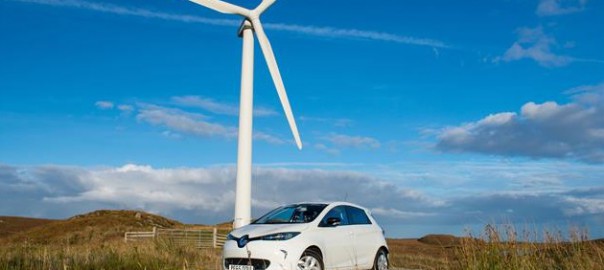
A 10-strong fleet of 100 per cent electric Renault vehicles powered almost entirely by renewable energy can now be hired by residents and visitors to the Outer Hebrides of Scotland.

Much of the electricity will be generated by the Pentland Road Wind Farm, the largest on any Scottish island that was officially opened today.  The nine ZOE hatchbacks and a Kangoo Van Z.E. have been introduced into the remote region through a unique partnership between E-Car Club and the wind farm operators.

CHR3696_1_nlm_Renault_c

The joint venture brings affordable, zero carbon transport to the area and underlines the suitability of electric vehicles in rural as well as urban environments, with the public being able to hire the innovative models on an hourly or daily basis from a number of locations across the town of Stornoway on the Isle of Lewis.

E-Car Club – the UK’s first entirely electric pay-per-use car club – chose the Renault ZOE and Kangoo Van Z.E. for the Outer Hebrides following the success it has experienced with the models at its other nationwide locations, including its St Andrews operation which opened earlier this year. The models’ specification, fun drive, reliability and excellent customer feedback were also key factors in the decision.

Representing an investment of £24 million and developed over a 12-year period, Pentland Road Windfarm will generate power for the new vehicles as part of providing renewable electricity to the islands. Such is the efficiency of the wind farm and the suitability of the local climate to support wind power, the six turbines will supply sufficient electricity to meet the entire domestic load of the Outer Hebrides.

Nearly 700 households in the Newvalley, Guershader and Laxdale Lane, Sheshader, Knock and Swordale, and Stornoway General communities will also receive 50 per cent of the biannual lease payments made by Pentland Road Windfarm to the Stornoway Trust as landlord, while there will also be agreed annual payments to the Western Isles Development Trust.

Great effort has also been made to minimise the impact of the wind farm on the local landscape. Great care was taken during the design and construction stages so as not to upset the free movement of water across the site and habitat reinstatement measures are also ensuring that plant communities typical of moorland are now returning to areas surrounding the turbine bases and access tracks. Local bird species have also been unaffected by the project.

Ben Fletcher, Renault UK’s Electric Vehicle Product Manager, said:

“This deal underlines that Renault is a leader in the fast-growing EV sector and the rapidly-increasing popularity that our vehicles have with car sharing clubs and the general public alike. As well as offering residents and tourists a great way to save money and help improve air quality, the car sharing scheme perfectly illustrates that our electric offering has the range and ease of use – not to mention driving pleasure – that makes it ideal for all kinds of drivers in all types of areas.”

Those living in or visiting the Outer Hebrides will be able hire one of the Renault ZOEs from E-Car Club for only £5.50 per hour or £45 per day (24 hours). Power and insurance are both included in the price. The Kangoo panel van is available for £7.50 per hour or £60 per day.

In its drive to help combat congestion, reduce parking and enhance local mobility in an environmentally-friendly and affordable way, E-Car Club has over 20 locations across the UK with several more in the pipeline.

Chris Morris, Managing Director of E-Car Club said:

“I’m delighted to be able to officially announce the launch of E-Car Club in the Outer Hebrides. This is an exceptionally exciting project combining shared e-mobility with renewable power generation in what is undoubtedly a landmark sustainable transport project both in Scotland and around the world.”

“The Islands are a perfect fit for electric car sharing with a community who are already committed to a sustainable lifestyle and current car use limited to relatively short journeys and a frequency which does not always justify private ownership.”

“The intention of E-Car is to provide everyone living in, working in or visiting the region with access to flexible, low cost transport whilst at the same time minimising their environmental impact in what is a truly stunning part of the world.”

Peter Crone, Director of Pentland Road Wind Farm and Zero Carbon Marine, said:

“Electric cars are without doubt the future and car sharing is certain to become increasingly more common too, so it’s wonderful that we have been able to introduce both to the community as part of Pentland Road Wind Farm.

“Local reaction to the wind farm has been excellent and the availability of shared electric cars adds another benefit for people in the region. After having driven one of the ZOEs from the most southern to the most northern point of the Outer Hebrides earlier this week, I am certain that the vehicles will prove very popular.”

Dr Alasdair Allan MSP, Scottish National Party (Western Isles) and Mr Angus Brendan MacNeil MP, Scottish National Party, both attended the launch of Pentland Road Windfarm.

Dr Allan said:

“I am happy to see the Pentland Road wind turbines becoming a reality and creating a benefit to the community. I appreciate the great amount of effort that has gone into this project over many years to make it a reality.

“The Isles are uniquely placed to be at the forefront of renewable energy development. Clearly linking the electric car scheme with locally produced wind energy shows the possibilities we have here for a low-carbon future.

“I am looking forward to electric cars becoming more common around the Isles and to seeing the wider community benefits these two schemes should bring in.”

The ZOE is an all-electric, five-door family hatchback available in three trim levels that comes with a very high level of standard specification, despite its competitive price-tag, which starts from £13,445 after the Government Plug-in Car Grant. Standard specification includes items such as climate control and sat-nav.

ZOE is available with a number of features that make for seamless electric vehicle ownership including remote monitoring of the battery and pre-heating the cabin via your smartphone. ZOE also benefits from the patented Chameleon™ Charger that allows it to make the most of the widest range of power supplies and also keep charging times to a minimum – ZOE can charge from zero to 80 per cent full in as little as 30 minutes.  The official NEDC range is 149 miles – Renault estimates that in real-world driving conditions that this equates to around 106 miles in summer and 71 miles in winter.  Retail ZOE customers also enjoy the free installation of a fast-charging 7kW wall box at home, giving a standard charge time at home from 0-100 per cent in just 3-4 hours.

Awarded the titles of What Car? 2015 ‘Best Electric Car for less than £20,000’ and ‘Best Electric Vehicle’ in the Auto Express Driver Power 2015 survey, the Renault ZOE is an affordable route to zero emissions-in-use motoring.

The Kangoo Van Z.E is perfectly suited to many commercial applications with its choice of four bodystyles and 106-mile range (NEDC) – Renault estimates that in real-world driving conditions that this equates to around 84 miles in summer and 53 miles in winter.

In addition to the ZOE supermini and Kangoo Van Z.E, the Renault Z.E range includes the Twizy urban runaround, an innovative open-sided two-seater vehicle.

In a UK electric car market up 54.5 per cent year-to-date, sales of Renault electric vehicles in the UK were up by 92.4 per cent, to 1,316 vehicles, compared to the same period last year.  Total Renault car sales in the UK stood at 59,221 – up 16.7 per cent on first nine months of 2014.
Traders on Wall Street during a summer of market turmoil triggered by China’s attempt to increase its flagging exports with a devaluation of its currency (Image: J. Lane/EPA)

IMF warns of global financial crash

Threat of instability and recession in emerging economies, and legacy of debt and disharmony in eurozone among ‘triad of risks’ outlined in stability report

The risk of a global financial crash has increased because a slowdown in China and decline in world trade are undermining the stability of highly indebted emerging economies, according to the International Monetary Fund (IMF).

Traders on Wall Street during a summer of market turmoil triggered by China’s attempt to increase its flagging exports with a devaluation of its currency (Image: J. Lane/EPA)

The Washington-based lender of last resort said the scale of borrowing by emerging market countries, whose debts are vulnerable to rising interest rates in the US, mean policymakers need to act quickly to shore up the financial system.
Next financial crash is coming – and before we’ve fixed flaws from last one
Read more

José Viñals, the IMF’s financial counsellor, said the threat of instability and recession hanging over economies including China, Brazil, Turkey and Malaysia was one of a “triad of risks” that could knock 3% off global GDP. The second, he said, was the legacy of debt and disharmony in Europe, while the third is centred on battered global markets that are more likely to transmit shocks rather than cushion the blow.

Read more: The Guardian

90% of EV users in survey regularly use public EV charging facilities

The Volkswagen scandal: say goodbye to the internal combustion engine!

By now, I guess that everyone in the world has heard of how Volkswagen cheated consumers by falsifying the results of the emission tests from their diesel engines. It is a true witch hunt unleashed against Volkswagen. Maybe there are good reasons for it, but I think it is also something that should be taken with caution. A lot of it.

Volkswagen e-Golf (Image: J. Ramsey/Autoblog)

I have been a consultant for the automotive industry for some 20 years and I think that I know the way they operate. And I can tell you that they are not equipped for “cheating”, intended as willingly ignoring or breaking the law. They just don’t do that, they understand very well that the result could be something like what’s happening to Volkswagen nowadays; something that could lead to their end as a car manufacturer. On the contrary, carmakers tend to be extremely legalistic and apply to the letter the current laws and regulations.

This said, it is also clear that car makers are there to make a profit and their managers are supposed to “get results”. So, if the laws and the regulations are not clear, or do not explicitly say that something is forbidden; then, if that something is supposed to provide some advantage to the company, it may be done.

Read more: Cassandra Legacy

BMW i3 review – the ultimate commuting machine?

evo Verdict

bmw_i3_138_unk

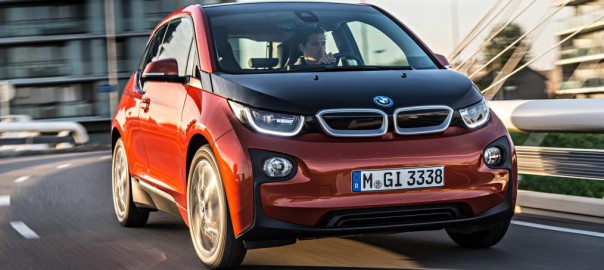
BMW’s i3 city car was one of two new vehicles to launch the Bavarian ‘i’ brand – alongside the seminal i8 sports car. While the latter is more of an evo kind of car, the i3 still holds a lot of appeal, especially for those that spend most of their time in a big city.

It looks like nothing else on the road, has a surprisingly spacious and yet genuinely interesting cabin plus the instantaneous maximum torque makes it a hoot to drive – albeit in an urban environment. The only thing holding it back is its ultimate range – as with nearly all electric cars.

evo Tip

We’d be flabbergasted to find a BMW i3 buyer that doesn’t have a smartphone, so assuming you do, it’s worth installing the bespoke BMW i Remote app, as it enhances the ownership experience no end. A particularly useful feature is remotely checking how a charge is getting on, while it’s also possible to pre-set the climate control temperature for when you return to the car. There’s also what BMW claims to be a world first intermodal route planning system – i.e. it’ll guide you whether you’re in the car, on foot or using public transport… perish the thought.

Read more: Evo

Renault Discusses EV Battery Second-Life

Renault promises to take care of batteries that lose 30% of initial capacity by using them in second life as energy storage systems.

70-80% is typically considered the point at which an electric car owner would be willing to swap an old battery for new one, although the battery itself still works just fine.

If old batteries, with 70% capacity, are not suitable for cars, they can still be used in energy storage systems to support the rollout of renewable energy, or for emergency power supply for another decade or so – thus enjoying a second life.

Only the deeply depleted batteries should go to the recycling process under Renault’s circular economy concept, to recapture things like cobalt, nickel, copper, manganese, aluminum, lithium and solvents.

“The batteries of electric vehicles may have several lives. They are reused, for example in response to energy storage requirements for the building. At end of life, all the elements contained in these batteries are recovered for recycling.”

Source: Inside EVs

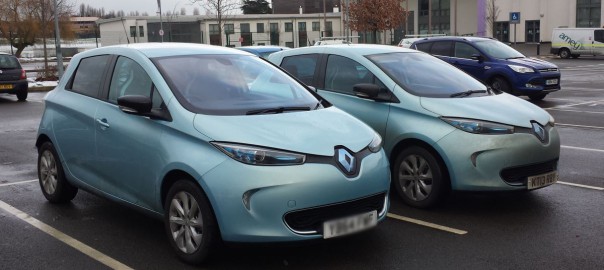
ZOE Twins (Image: T. Larkum)

Volkswagen Recall Casts Shadow Over France’s Auto Industry

How Will Emissions Scandal Affect The Future Of French Diesel?

ZOE Twins (Image: T. Larkum)
Renault’s electric car, the Zoe, accounted for half of all electric car sales in France in 2015. The car company, which traditionally produced diesel engines, has begun diversifying as the popularity of diesel wanes. (Image: T. Larkum)

Known for such cars as the classic Citroen Deux Chevaux and the luxury vehicles of powerhouse Renault, France has long been one of the largest and most recognizable car manufacturers in Europe — and indeed, in the world. But as its automotive market struggles to recover from lagging sales and more people grow skeptical of the environmental effects of diesel fuel (most French cars have diesel engines), a widening Volkswagen emissions scandal could mark a turning point for French auto manufacturing. A consumer shift to gasoline or alternative fuel would spell fiscal disaster for French car producers, unless they start diversifying engine fuels and looking to alternative energy, analysts said.

“I think it’s going to be negative; it’s very simple,” said macroeconomics analyst Jean Ergas, an adjunct assistant professor at the New York University School of Professional Studies. “This is going to be a big hit for them.”

Read more: IB Times

‘Think of what would change if we valued terrestrial water as much as we value the possibility of water on Mars.’ (Image: A. Krauze)

There may be flowing water on Mars. But is there intelligent life on Earth?

While we marvel at Nasa’s discoveries, we destroy our irreplaceable natural resources – so we can buy pre-peeled bananas and smartphones for dogs

‘Think of what would change if we valued terrestrial water as much as we value the possibility of water on Mars.’ (Image: A. Krauze)

Evidence for flowing water on Mars: this opens up the possibility of life, of wonders we cannot begin to imagine. Its discovery is an astonishing achievement. Meanwhile, Martian scientists continue their search for intelligent life on Earth.

We may be captivated by the thought of organisms on another planet, but we seem to have lost interest in our own. The Oxford Junior Dictionary has been excising the waymarks of the living world. Adders, blackberries, bluebells, conkers, holly, magpies, minnows, otters, primroses, thrushes, weasels and wrens are now surplus to requirements.

In the past four decades, the world has lost 50% of its vertebrate wildlife. But across the latter half of this period, there has been a steep decline in media coverage. In 2014, according to a study at Cardiff University, there were as many news stories broadcast by the BBC and ITV about Madeleine McCann (who went missing in 2007) as there were about the entire range of environmental issues.

Think of what would change if we valued terrestrial water as much as we value the possibility of water on Mars. Only 3% of the water on this planet is fresh; and of that, two-thirds is frozen. Yet we lay waste to the accessible portion. Sixty per cent of the water used in farming is needlessly piddled away by careless irrigation. Rivers, lakes and aquifers are sucked dry, while what remains is often so contaminated that it threatens the lives of those who drink it. In the UK, domestic demand is such that the upper reaches of many rivers disappear during the summer. Yet still we install clunky old toilets and showers that gush like waterfalls.

Read more: The Guardian