Daily Archives: October 16, 2015

90% of EV users in survey regularly use public EV charging facilities

The Volkswagen scandal: say goodbye to the internal combustion engine!

By now, I guess that everyone in the world has heard of how Volkswagen cheated consumers by falsifying the results of the emission tests from their diesel engines. It is a true witch hunt unleashed against Volkswagen. Maybe there are good reasons for it, but I think it is also something that should be taken with caution. A lot of it.

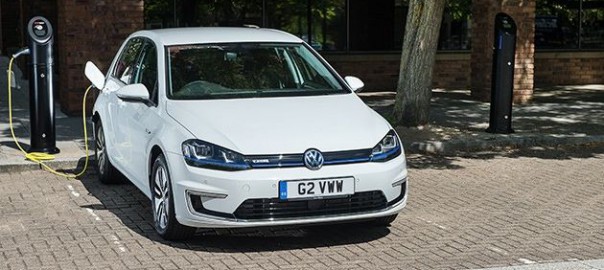
Volkswagen e-Golf (Image: J. Ramsey/Autoblog)

I have been a consultant for the automotive industry for some 20 years and I think that I know the way they operate. And I can tell you that they are not equipped for “cheating”, intended as willingly ignoring or breaking the law. They just don’t do that, they understand very well that the result could be something like what’s happening to Volkswagen nowadays; something that could lead to their end as a car manufacturer. On the contrary, carmakers tend to be extremely legalistic and apply to the letter the current laws and regulations.

This said, it is also clear that car makers are there to make a profit and their managers are supposed to “get results”. So, if the laws and the regulations are not clear, or do not explicitly say that something is forbidden; then, if that something is supposed to provide some advantage to the company, it may be done.

Read more: Cassandra Legacy
BMW i3 review – the ultimate commuting machine?

evo Verdict

bmw_i3_138_unk

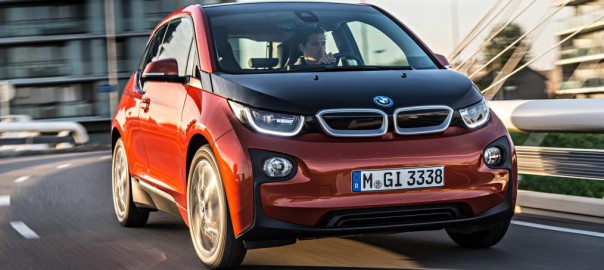
BMW’s i3 city car was one of two new vehicles to launch the Bavarian ‘i’ brand – alongside the seminal i8 sports car. While the latter is more of an evo kind of car, the i3 still holds a lot of appeal, especially for those that spend most of their time in a big city.

It looks like nothing else on the road, has a surprisingly spacious and yet genuinely interesting cabin plus the instantaneous maximum torque makes it a hoot to drive – albeit in an urban environment. The only thing holding it back is its ultimate range – as with nearly all electric cars.

evo Tip

We’d be flabbergasted to find a BMW i3 buyer that doesn’t have a smartphone, so assuming you do, it’s worth installing the bespoke BMW i Remote app, as it enhances the ownership experience no end. A particularly useful feature is remotely checking how a charge is getting on, while it’s also possible to pre-set the climate control temperature for when you return to the car. There’s also what BMW claims to be a world first intermodal route planning system – i.e. it’ll guide you whether you’re in the car, on foot or using public transport… perish the thought.

Read more: Evo

Renault Discusses EV Battery Second-Life

Renault promises to take care of batteries that lose 30% of initial capacity by using them in second life as energy storage systems.

70-80% is typically considered the point at which an electric car owner would be willing to swap an old battery for new one, although the battery itself still works just fine.

If old batteries, with 70% capacity, are not suitable for cars, they can still be used in energy storage systems to support the rollout of renewable energy, or for emergency power supply for another decade or so – thus enjoying a second life.

Only the deeply depleted batteries should go to the recycling process under Renault’s circular economy concept, to recapture things like cobalt, nickel, copper, manganese, aluminum, lithium and solvents.

“The batteries of electric vehicles may have several lives. They are reused, for example in response to energy storage requirements for the building. At end of life, all the elements contained in these batteries are recovered for recycling.”

Source: Inside EVs

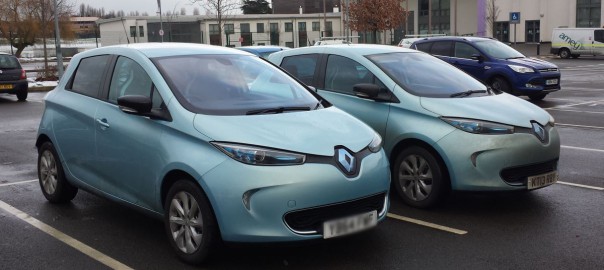
ZOE Twins (Image: T. Larkum)

Volkswagen Recall Casts Shadow Over France’s Auto Industry

How Will Emissions Scandal Affect The Future Of French Diesel?

ZOE Twins (Image: T. Larkum)
Renault’s electric car, the Zoe, accounted for half of all electric car sales in France in 2015. The car company, which traditionally produced diesel engines, has begun diversifying as the popularity of diesel wanes. (Image: T. Larkum)

Known for such cars as the classic Citroen Deux Chevaux and the luxury vehicles of powerhouse Renault, France has long been one of the largest and most recognizable car manufacturers in Europe — and indeed, in the world. But as its automotive market struggles to recover from lagging sales and more people grow skeptical of the environmental effects of diesel fuel (most French cars have diesel engines), a widening Volkswagen emissions scandal could mark a turning point for French auto manufacturing. A consumer shift to gasoline or alternative fuel would spell fiscal disaster for French car producers, unless they start diversifying engine fuels and looking to alternative energy, analysts said.

“I think it’s going to be negative; it’s very simple,” said macroeconomics analyst Jean Ergas, an adjunct assistant professor at the New York University School of Professional Studies. “This is going to be a big hit for them.”

Read more: IB Times

‘Think of what would change if we valued terrestrial water as much as we value the possibility of water on Mars.’ (Image: A. Krauze)

There may be flowing water on Mars. But is there intelligent life on Earth?

While we marvel at Nasa’s discoveries, we destroy our irreplaceable natural resources – so we can buy pre-peeled bananas and smartphones for dogs

‘Think of what would change if we valued terrestrial water as much as we value the possibility of water on Mars.’ (Image: A. Krauze)

Evidence for flowing water on Mars: this opens up the possibility of life, of wonders we cannot begin to imagine. Its discovery is an astonishing achievement. Meanwhile, Martian scientists continue their search for intelligent life on Earth.

We may be captivated by the thought of organisms on another planet, but we seem to have lost interest in our own. The Oxford Junior Dictionary has been excising the waymarks of the living world. Adders, blackberries, bluebells, conkers, holly, magpies, minnows, otters, primroses, thrushes, weasels and wrens are now surplus to requirements.

In the past four decades, the world has lost 50% of its vertebrate wildlife. But across the latter half of this period, there has been a steep decline in media coverage. In 2014, according to a study at Cardiff University, there were as many news stories broadcast by the BBC and ITV about Madeleine McCann (who went missing in 2007) as there were about the entire range of environmental issues.

Think of what would change if we valued terrestrial water as much as we value the possibility of water on Mars. Only 3% of the water on this planet is fresh; and of that, two-thirds is frozen. Yet we lay waste to the accessible portion. Sixty per cent of the water used in farming is needlessly piddled away by careless irrigation. Rivers, lakes and aquifers are sucked dry, while what remains is often so contaminated that it threatens the lives of those who drink it. In the UK, domestic demand is such that the upper reaches of many rivers disappear during the summer. Yet still we install clunky old toilets and showers that gush like waterfalls.

Read more: The Guardian

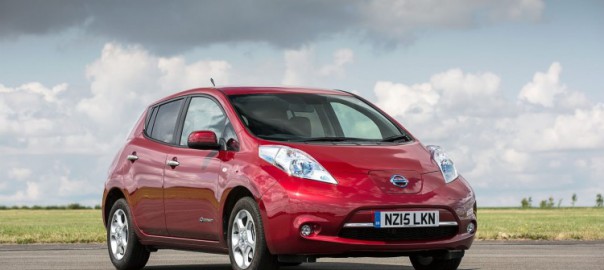
Nissan Leaf

Diesel scandal fuels electric vehicle interest

Interest in alternative fuels up by a quarter since Volkswagen ‘dieselgate’ scandal

Nissan Leaf
Nissan Leaf

Interest in hybrid and electric cars has rocketed since the Volkswagen diesel scandal, according to analysis by Carbuyer.

Traffic to electric and hybrid car reviews has increased by almost a quarter since news of the scandal broke. And those users are viewing far more pages in a visit than the average.

Carbuyer editor Stuart Milne said:

“It’s hard not be amazed at the scale of the diesel scandal affecting some of the most popular brands in Britain. It has understandably dented confidence in diesel models. But hybrids and all-electric vehicles (EVs) haven’t been touched by the scandal.”

“The events of the last few weeks could help to accelerate sales of hybrids and EVs. Indeed, our data suggests that ever more in-market car buyers are looking to hybrid and electric models rather than diesel engines.

“The rate of development in these models is impressive. A revised version of the Nissan LEAF – the world’s most popular electric car – now offers a range of more than 150 miles and the Mitsubishi Outlander PHEV (Plug-in Hybrid Vehicle) is a genuine alternative to the diesel version of that SUV.

“The continued financial incentives for motorists to buy a zero-emissions vehicle – or choose one as a company car – are exceptionally enticing.”

Carbuyer analysed traffic to its reviews of hybrid-only models, such as the Toyota Prius and Mitsubishi Outlander PHEV, as well as Carbuyer’s Best Hybrids and Best Electric Car features.

It found traffic from UK readers increased by 24.5% between 20 and 29 September compared to the previous period.

Source: Car Buyer

More Convenient Public EV Charging From POD Point

Recently, POD Point, a supplier of electric vehicle charging stations, launched a fresh network of public charging stations in the UK.

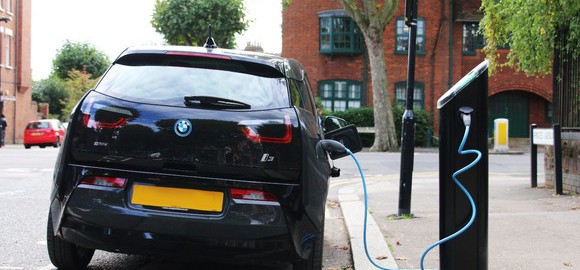
img-2098_i3_Charging_unk

The new public charging network will enable more convenient charging of electric vehicles. Business Green brings us the story, continuing,

“The new Open Charge network will allow EV owners to charge their cars via POD Point’s website or mobile app. It replaces the old POD Point system where users were required to scan an RFID card to initiate charging.”

Swiping a card isn’t all hat hard, but eliminating one more card from your wallet and allowing easy access via your smartphone is certainly a step forward, making charging even quicker and easier.

Erik Fairbairn, a founder of POD Point, points out how this move is about engaging more people to consider electric vehicles.

“We know that highly reliable, widely available and simple-to-use charging infrastructure will drive forward the take-up of electric vehicles,” he said. “We have listened really closely to the queries and pain points of our users, and we now have a system that is incredibly simple to use, even for new EV drivers.”

Read more: EV Obsession

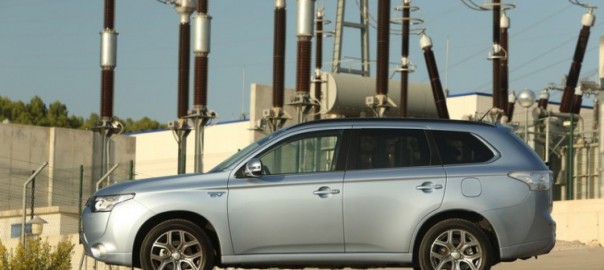
Mitsubishi Outlander PHEV

UK’s Top 20 Plug-In Electric Cars – Mid-2015

Mitsubishi Outlander PHEV remains the best selling plug-in car in the UK according to latest RAC Foundation report on plug-in car grant claims.

Mitsubishi Outlander PHEV

The Japanese plug-in hybrid, through the end of June, noted 12,066 registrations out of 35,241 total. That’s more than one third of all plug-ins sold in the UK.

The ratio in Q2 was even higher – 41% (2,293 out of 5,568).

With the newly refreshed, 2016 Mitsubishi Outlander PHEV coming, things become even more exciting.

Here are some interesting comments from Steve Gooding, director of the RAC Foundation:

“The march of Mitsubishi continues with the latest data showing the Outlander plug-in hybrid extending its lead over the Nissan Leaf as the most popular ultra-green car in the UK.

“The success of the Outlander looks to be down to three things: a high-profile advertising campaign, good range, and probably most importantly competitive pricing which makes it as affordable to buy as the diesel equivalent.

“But that price is dependent on the government grant. Ultimately all ultra-green cars will have to stack up commercially when the grants are withdrawn. What ministers must ensure is that both consumers and manufacturers have a clear idea of when and how the scheme will come to an end.

“The interesting question is whether Mitsubishi are making money from this model or using it as a loss leader to gain market share and drive out competitors.

“It is worth noting that the growth in the number of ultra-low carbon vehicles on the road slowed significantly in the latest quarter compared with the previous. This is probably due to seasonal variations in car buying volumes but industry and ministers will be keeping a keen eye on the trends to make sure demand isn’t stalling.”

Read more: Inside EVs

Mark Carney said: ‘Once climate change becomes a defining issue for financial stability, it may already be too late.’ He proposes that firms ‘would disclose not only what they are emitting today, but how they plan their transition to the net-zero world of the future’. (Image: Jonathan Brady/PA)

Carney warns of risks from climate change ‘tragedy of the horizon’

Business leaders are finally waking up to what’s coming down the line.

Bank of England governor tells Lloyd’s insurers that ‘challenges currently posed by climate change pale in significance compared with what might come’

Mark Carney said: ‘Once climate change becomes a defining issue for financial stability, it may already be too late.’ He proposes that firms ‘would disclose not only what they are emitting today, but how they plan their transition to the net-zero world of the future’. (Image: Jonathan Brady/PA)

Mark Carney, the governor of the Bank of England, has warned that climate change will lead to financial crises and falling living standards unless the world’s leading countries do more to ensure that their companies come clean about their current and future carbon emissions.

In a speech to the insurance market Lloyd’s of London on Tuesday, Carney said insurers were heavily exposed to climate change risks and that time was running out to deal with global warming.

The governor said that proposals would probably be put to the G20 meeting in Turkey in November urging the world’s leading developed and developing countries to bring in tougher corporate disclosure standards so that investors could better judge climate change risks.

“The challenges currently posed by climate change pale in significance compared with what might come,” Carney said. “The far-sighted amongst you are anticipating broader global impacts on property, migration and political stability, as well as food and water security. So why isn’t more being done to address it?”

Read more: The Guardian

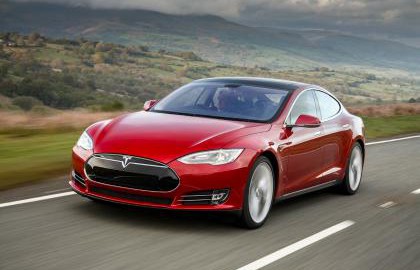
Tesla Model S (Image: AutoExpress)

Don’t buy an electric car

Don’t buy an electric car before you’ve read our 11 things you must know – The stuff they don’t always tell you

Like any radical new technology, electric vehicles (EVs) can be confusing. Are they cheap or expensive to buy and run? Do they actually do any good for the environment? Are range anxiety and charging real worries? And what are they really like to own, to drive and to look after?

The good news is there are undoubted up sides to owning an EV, but you need to know about the battery-powered pitfalls too. Good news for you, then, that this here is our guide to the 11 things every driver should know about electric cars.

1. Some electric cars are ludicrously fast

The latest Tesla Model S sports a ‘Ludicrous Mode’ that allows the four-door saloon to blast to 60mph in just 2.8 seconds. That’s precisely the same performance as Porsche’s 918 Spyder supercar and faster than just about anything else on the road. In other words, electric cars today are most definitely not the feeble carts of yesteryear. Just like combustion cars, they’re available in a wide range of specifications with performance to match. You simply cannot generalise about electric cars being slow any longer.

2. Some electric cars are cheap

front-tracking_renault_zoe_AutoExpress

Yes, the aforementioned Tesla might break the bank at upwards of £80,000, but cars like Renault’s Zoe are much more accessible. In many ways, the Zoe is a standard compact hatchback, similar in size to Renault’s own Clio or the Ford Fiesta. You can buy one from just £13,995. You can also put one on your drive for around £160 a month and a deposit of just £600 £155 a month and a deposit of just £250. So EVs are no longer the preserve of well-heeled early adopters. If you are in a position to buy almost any new car, you can probably afford to add electric to your shortlist.

Read more: T3