Monthly Archives: February 2015

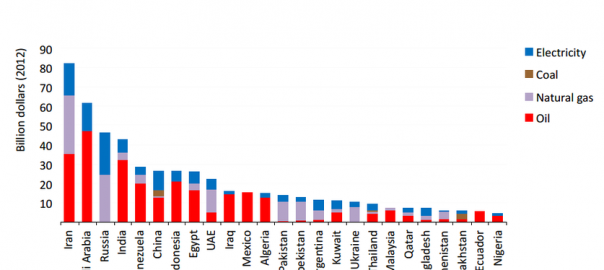
Fossil Fuel Consumption Subsidies (Image: IEA)

One upside of cheap oil — countries are ditching their fossil-fuel subsidies

In 2013, governments around the world spent $548 billion to subsidize the use of oil, gas, and coal. This practice drives economists absolutely nuts: they say it’s wasteful, eats up budgets, and leads to more pollution and global warming than would otherwise be the case.

Yet countries have long been reluctant to scrap these fossil-fuel subsidies. After all, if the government stops underwriting the cost of gasoline, prices will rise at the pump. That makes people upset — and can lead to protests or riots, as happened in Nigeria in 2012.

Lately, however, that’s started to change. The price of oil has been plunging, and gasoline is getting cheaper. And that’s made it less painful for nations that are trying to rein in bloated fossil-fuel subsidies. Back in July, Egypt began slashing billions in government energy subsidies. Indonesia has been doing the same. So has Ghana. India is now deregulating its diesel prices. Iran has been slowly hiking its artificially low gasoline prices.

It’s all starting to add up. In November 2014, the International Energy Agency (IEA) reported that 27 countries have been cutting back on fossil-fuel subsidies in some form or other. The agency no longer expects total subsidies to soar to $660 billion by 2020, as it once projected.

Fossil Fuel Consumption Subsidies (Image: IEA)

If these cuts continue, this could end up being a big deal: scaling back these subsidies is seen as one of the most straightforward ways to bolster the global economy and help address climate change.

Read More: Vox

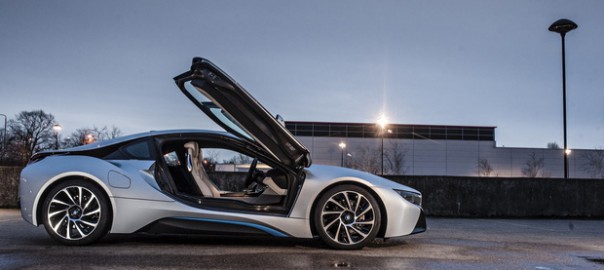
On the road: BMW i8 (Image: The Guardian)

BMW i8: Reviewing The Car Of Tomorrow

We were promised flying cars, teleportation and hover boards. We don’t have any of that. But now we have this: The BMW i8 and it’s a future that cannot get here soon enough.

My body hurt. My mind was numb. I had just spent a week in Las Vegas for the Consumer Electronics Show and was ready to fly home. But first I had to drive a brand-new 2015 BMW i8 to L.A. It’s a rough job, but someone has to do it.

The i8 is BMW’s latest supercar, able to go 0 to 60 in about 4.4 seconds with its hybrid electric/gas powertrain. The i8 looks like a Hot Wheels car, handles like a supercar and is as expensive as a high-end Porsche. With a starting price of $135,000, this isn’t the car for everyone. It’s actually a gateway into BMW’s other hybrid, the cute and cheap BMW i3, a shorter, sporty runaround that BMW is touting as their answer to crunchy hybrids from Honda, Nissan, and Chevy.

I set out, gassed up and fully charged. My time with the i8 was short. I had already spent several days cruising around Vegas where the i8 got more attention than the volcano in front of the Mirage. The car stopped traffic. People gawked from sidewalks and leaned out of cabs to snap pictures.

Stopping at a gas station was an exercise in patience. Everyone had to take a picture and tell me a story about a car they once loved but totaled. It got the most attention parked at a hotel across from CES where most thought it was part of BMW’s trade-show exhibit.

Nope, she was all mine for the next couple of days.

Since the i8 lacks a proper trunk, I jammed my luggage in the back seat and took off to LA down I-15. The sun was shining and the traffic was light. I didn’t plan on taking the quick route all the way to my airport hotel some hundred miles away. Nope, I had all day to get there and was going to make the most of my time with the i8. I turned off the expressway at the first sign of the Mojave National Preserve and found what I was looking for: empty desert roads. I smiled and I assume the i8 did as well.

It’s astounding BMW made the i8 at all. It’s a concept car turned production car. BMW released the stunning concept in 2009 at the height of the recession. Now, some five years later, I’m sitting on the side of an empty road with the i8’s scissor doors open and admiring the desolate beauty outside Las Vegas. All I can hear is a slight whine from the hybrid electric powerplant ready to be abused.

Nestled somewhere within the i8’s frame is an electric motor and tiny 3 cylinder, 1.5L turbocharged engine. They work in tandem to power the i8. The results will make treehuggers and gearheads equally happy.

When driven in hybrid mode, the i8 is quick and plentiful. It can go about 15 miles on effectively just electric power. When the gear shift lever is kicked over to sport mode, the i8 becomes exhilarating.

In either mode it’s quick off the line and at speed. Stomp the right pedal to the floor and the i8 flies to 60 mph in 4.4 seconds. Even more impressive, though, is when passing is required. As I understand it, the powertrain uses the electric motor to give the moving car an instant boost and then seconds later the 3 cylinder engine takes over. The car leaps forward with supercar might and plants occupants into the seats.

The car simply thunders when driven in sport mode and hugs the roads like a modern supercar should. BMW piped some of the engine noise back into the cabin through the audio system. Sure, that might be cheating a bit, but the notes are genuine and raw. I found the sound to be the most surprising thing about the i8. I simply wasn’t expecting the hybrid to sound so mean.

Read more: Tech Crunch

Environment officers show off new electric van

A new electric van has been bought for use by Environmental Health Officers at Daventry District Council as part of the authority’s drive to reduce carbon emissions.

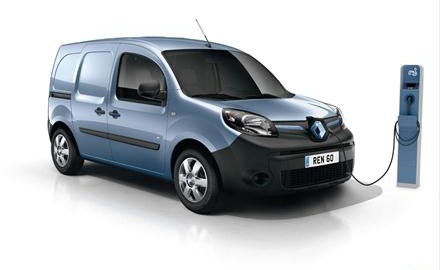
The Renault Kangoo Maxi ZE will be used for pest control, environmental crime and dog warden services, replacing a petrol-driven van.

The new vehicle has a range of about 100 miles, making it ideal for the trips around the district that it will be making. It has been bought following a successful trial held in February last year.

The petrol van was driven about 10,000 miles per year and based on that figure it is estimated that the new electric vehicle will allow the Council make a carbon saving of about 1.8 tonnes a year, as well as improving local air quality.

The Council benefited from a £5,000 Government Plug-In Grant, bringing the cost of the new vehicle down to £13,588 and, over four years, it is estimated it will be more than £2,500 cheaper to run than a diesel-powered equivalent.

Councillor Daniel Cribbin, Environment Portfolio Holder at Daventry District Council, said:

“This Council is always looking for ways to further reduce our carbon footprint so we saw this as a great opportunity. We also hope it inspires others, particularly local businesses, to look into the possibility of using electric vehicles.

“If it proves a success we will look to replace more of the Council’s vehicles with electric models. We’re also exploring the possibility of having an electric pool car for staff and increasing the number of electric vehicle charge points in the district.”

The move follows the installation of Daventry District’s first free public charging point for electric vehicles in the Lodge Road car park at the council offices in May 2013.

Sponsored by Woodford Halse firm Great Central Plastics, it allows owners of electric cars to recharge their vehicle for free for up to four hours in a designated parking bay.

Source: Northampton Herald and Post

2015 Volkswagen e-Golf First Test: A Wintry Week Spent e-Golfing

Temperatures in the teens and 20s don’t make for ideal electric-vehicle driving conditions, but that was the weather presented during my week in Motor Trend’s electric Car of the Year. How’d it work? Way better than expected in every way except range, which plunged about as much as we were told to expect.

VW rates the e-Golf’s real-world range at 70-90 miles, the EPA says 83, and the range-remaining display generally started out saying 65 miles on these cold mornings, when started in the Normal driving mode. This mode automatically dials up a cozy 72 degrees on the climate control system, which is warmer than I would usually set it, but it refuses to remember my 69-degree setting upon restart. (Eco reduces the climate control power, and Eco+ switches it off, increasing the remaining range.) When I hit the buttons for electric windshield, rear-window, and side-view mirror defrosting, as well as both front-seat heaters, one morning, that range estimate dropped to as low as 48 miles briefly, but minutes later, as I toggled off the high-power glass heaters, the range rebounded to well into the 50s.

Read more: Motor Trend

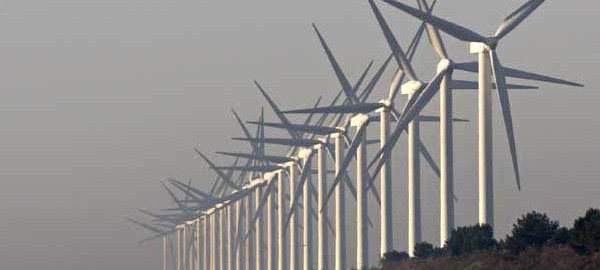
Wind farm in Europe (Image: EV World)

Wind Power Could Secure Energy Independence for Britain

A new study has shown that increasing Britain’s installed wind energy capacity could go a long way to securing energy independence for the island nation.

Commissioned by national trade body RenewableUK, and conducted by independent analysts Cambridge Econometrics, the report concluded that additional wind power in the country’s energy grid would make Britain’s energy supply more resilient, by way of cutting the need for ever-increasingly costly imports of fossil fuels.

In 2013, wind energy played a small role in minimising the need for coal and gas imports — reducing coal imports by an estimated 4.9 million tonnes, and gas by 1.4 billion cubic metres.
Increasing the level of wind energy generation would serve to increase these figures, minimising how much Britain needs to import.

Without wind, in 2013, Britain would have needed to acquire — somehow — an additional 6.1 million tonnes of coal, and 2.5 billion cubic metres of gas to generate the additional 45.8 TWh and 24.8 TWh of coal and gas respectively (these figures are so high, because there is a significant efficiency loss involved in converting fuel to electricity).

“Beyond the environmental benefits brought about by the continued deployment of wind power, this report shows that wind energy is contributing to reducing fossil fuel import dependence and that this contribution will grow in future as wind capacity expands,”

explains Phil Summerton, Director at Cambridge Econometrics.

“Investment into wind power acts as an insurance policy against uncertainty in future wholesale gas prices and could provide a degree of stability to future electricity prices.”

“This report shows how much the UK relies on wind power to reduce our dependence on sources of costly fossil fuels imported from abroad,” explains RenewableUK Chief Executive Maria McCaffery. “In these uncertain times, we need to recognise the wider benefits of wind. The costs for the entire life of a wind farm are known very early on, whereas the volatile price of fossil fuels can never be accurately predicted.

“Wind power is already helping us manage future price instability, and industry is confident that by 2020 onshore wind will be the cheapest form of new generation of any form of energy.”

Source: CleanTechnica

Solar panels fitted on 125,000 UK homes during 2014

Large amount of small-scale systems installed triggers 3.5 per cent fall in feed-in tariff subsidies for first time since 2012

Solar panels were fitted on the roofs of more than 125,000 homes last year, according to government figures.

The numbers also show that 700MW of solar was installed on buildings and in ground-mounted solar farms under the Feed-in Tariff subsidy scheme over the course of 2014 – the equivalent of powering 212,000 homes.

Alongside the statistics, the government also confirmed sufficient solar systems were deployed in the last quarter of 2014 to trigger 3.5 per cent cuts in tariffs from April for installations smaller than 10kW and between 50kW and 5MW. About 124MW of smaller systems were added over the three months and 53MW of systems between 50kW and 5MW.

The Solar Trade Association (STA) said this was the first time since 2012 that the tariff will fall because of the number of systems deployed rather than because of the automatic drop that kicks in every nine months.

The industry body added that solar PV installations between 10kW and 50kW, often fitted on schools, village halls or business units, grew by more than 50 per cent between October and December 2014 compared with the previous three-month period. However, the 38MW added over that time fell short of the 50MW that would have triggered.

David Pickup, business analyst at the STA, said that while the industry is experiencing “healthy growth”, the tariff banding needs to be reconfigured to allow for more growth in larger rooftop and smaller or community solar farm projects.

“We are particularly pleased to see good levels of growth in the large rooftop market with 33MW of solar – 164 installations – installed in the last three months of 2014, more than double that in the previous quarter,” he added. “But this isn’t enough – we need to see more solar going up on roofs and more gradual reductions in the tariff to get to the industry’s goal of subsidy-free solar.”

Source: SciTech News

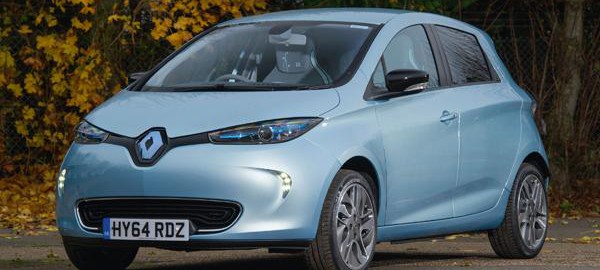
Renault ZOE EV

Next-Generation Renault ZOE With Real-World Range Of 186 Miles

Interesting and potentially huge news is coming out of France in regards to the new, next generation Renault ZOE and next-gen Nissan LEAF.

According to Les Echos, the new versions of both models will be ready in 2017 with double the range of today’s Renault-Nissan electric cars.

In the case of the next-gen ZOE, Beatrice Foucher, Director of Renault’s electric program, stated that the aim is 300 km (186 miles) of real-world range (and 400 km stated on NEDC).

The current generation of ZOE can go 210 km (130 miles) in NEDC testing.

Nissan apparently could equip the new LEAF with a 48-kWh battery pack, according to the report out of France.

Les Echos sees progress in battery technology, as well as in falling prices per kWh – from $1,000 in 2010 to $400 in 2014 and $180 in 2025 (forecast).

Source: Inside EVs

The Electric Vehicle: Celebrating Five Years of Progress

Towards the end of 2009, zero-emission electric cars were little more than concept cars. At that year’s Frankfurt motor show Renault displayed four electric prototypes – the Fluence, Z.E sedan, the Kangoo Z.E van, the Twizy tandem two-seater and the ZOE subcompact… but that’s all they were: ideas. Electric cars were an utopian dream, something for the sci-fi magazines.

What a difference five years makes. Today electric cars are a reality. Manufacturers, led by Alliance partners Renault and Nissan, have a growing number of pure electric vehicles on sale – indeed, the trail-blazing Nissan LEAF is the world’s bestselling EV.

Major cities across the globe all have extensive recharging posts in place, and extended fast charging networks now link countries. Electric bikes and scooters are readily available and Renault is behind a global single-seat motor racing championship purely for electric vehicles – Formula E.

Cities and towns in France – 18 in all, including Paris, Lyon and Bordeaux – have car-sharing programmes, called Autolib, based around electric vehicles. EVs have caught on in London, too, where the electric Nissan e-NV200 has been developed into an iconic black cab and is due to start taking fares next year.

So what’s going to happen between now and 2020? There can be no doubt that charging networks will continue to expand and sales of EVs will rise and rise. And, who knows, electric vehicles might no longer need humans behind the wheels. Autonomous cars might be at the concept stage at the moment… but as we have seen, a great deal can happen in five years.

Source: Renault-Nissan Blog

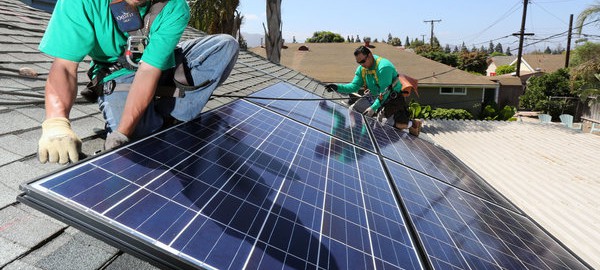
Workers for SolarCity installing solar panels (Image: JE Flores/NYTimes)

REA champions solar and storage with the launch of UK Solar and UK Energy Storage

The Renewable Energy Association announces the official launch of UK Solar and its first storage representation body UK Energy Storage

UK Solar will support and represent over 130 of its existing solar members and broadening its member base to become the trusted voice of solar power in the UK.

With nearly fifteen years of experience in supporting the growth of the solar sector, the REA has built a strong reputation within the government, with regulators and with industry stakeholders.

REA Chief Executive Dr Nina Skorupska said:

“The REA is excited to announce the launch of UK Solar. Solar power is one of the first major renewable energy technologies set to compete with traditional energy sources without subsidy. The integration of solar as a major player in the UK energy mix will transform the power market. Businesses, households and the public sector will see their energy bills reduced. It is the mission of UK Solar to support and drive the transition to this solar future”

The REA will be working with its existing solar members to develop a clear path to grid parity with wholesale and retail electricity prices across all sectors of the solar power market.

Further exciting news is that the REA is to represent renewable storage technologies with UK Energy Storage. UK Energy Storage is the trade body for all storage technologies across the UK.

Energy storage technologies offer huge potential for the UK’s energy supply mix. The ability to store renewable power which can then be used to meet demand when it is needed can deliver tremendous benefits for system stability and security of supply as well as decarbonising UK energy supplies.

Using the REA’s experience of successfully bringing new technologies to market, UK Energy Storage will ensure that storage technologies have a smooth path to commercialisation in the UK through delivering and developing effective policy.

REA Senior Advisor Ray Noble said:

“The potential for energy storage to transform the UK energy mix is immense. Through representing all types and scale storage technologies the REA will drive the commercialisation of viable storage solutions in the UK. The integration of storage technologies will bring down costs and increase the capacity of renewable energy available on demand, which could revolutionise the energy mix.”

The launch of UK Solar and UK Energy Storage will see exciting new developments in the REA, as it strengths and builds relationships with solar and storage members.

Source: Renewable Energy Association

Will 2015 Be a Breakthrough Year for Storage in the UK?

Despite an unpromising legislative landscape, storage is gaining momentum in the U.K.

The United Kingdom has no clear government policy on energy storage and offers no major incentives to companies and no subsidies at all to households to install energy storage. To date, only paltry sums have been invested in energy storage projects there.

And yet, many are feeling optimistic about where the storage industry is headed.

Several major manufacturers have either launched domestic solar-storage products in the U.K. in the last six months, or are planning to do so sometime this year. In the last week, the U.K. Renewable Energy Association has launched a new trade body dedicated to commercializing energy storage. The U.K. Electricity Storage Network is expecting a Minister from the Department of Energy and Climate Change (DECC) to participate in its annual meeting.

And to crown it all, the U.K. currently has the biggest battery in Europe.

So is storage really taking off? To date, according to the U.S. Department of Energy’s Global Energy Storage Database, the Brits currently have a grand total of 32 projects, providing 3,300 megawatts of storage, of which the vast majority comes from pumped hydro. Around 62 megawatts are (or soon will be) provided by batteries and 5 megawatts by mainly uninterruptible power supply flywheel systems. There are also experimental compressed air, cryogenic thermal and flow battery projects ongoing.

That 3,300-megawatt total compares quite favorably with 7,600 megawatts in Germany and 6,560 megawatts in California, a state with similar energy requirements to the U.K. But there’s a push for much more.

“Storing energy will become increasingly important in the move toward a low-carbon economy, and has the potential to save the energy system over £4 billion [$6 billion] by 2050,” said DECC Minister Greg Barker last year.

The DECC has also stated that the energy storage market is forecast to reach $17 billion in 2020, and to be nearly $30 billion in 2030.

Some argue that energy storage can help save consumers money by possibly reducing new grid buildout.

Anthony Price, director of the Electricity Storage Network, explains: “[The UK electricity and natural gas regulator] Ofgem has calculated that it will cost £50 billion [$76 billion] to rewire Britain. This will be to provide flexibility in the grid and allow the integration of more renewables, add resilience to the grid, and to improve energy efficiency across the grid. If you look at energy storage, it can help meet all three of those requirements. So we can spend £50 billion on rewiring the country, or we can have more energy storage.”

Price’s organization is lobbying for a minimum 2,000 megawatts of new network-connected electricity storage by the year 2020. A fairly modest figure, this represents less than 10 percent of the predicted increase in renewable generation capacity over the same time period. The question still remains whether the U.K. government will take investment in energy storage seriously. Price notes that while the current administration is happy to “pick winners” by promoting solar and wind, it refuses to do so in the case of storage.

On the other hand, it has provided a modest £50 million ($76 billion) in backing for research projects around the country. The most prominent of these is the Smarter Network Storage project, better known as the biggest battery in Europe. A 6-megawatt/10-megawatt-hour system, the battery is designed to explore alternative revenue streams for storage, while deferring traditional network reinforcement.

Numerous early-stage projects have emerged. Highview Power won funding for a demonstration of its liquid air storage technology. REDT is developing a vanadium redox flow battery for storing wind and wave power in Scotland. And Isentropic is building a demonstration project for its cryogenic energy storage technology.

Domestic solar-plus-storage is also taking off in the U.K. Last September, SMA launched its Sunny Boy Smart Energy PV inverter and battery system. Sharp followed suit at the end of last year by offering a solar-and-storage device that uses Samsung batteries. Bosch is hoping for certification of a solar-storage inverter next month, and various other solar players, such as ReneSola of China, seem to be clamoring to enter the U.K. market.

These companies could be looking to cash in on growth in U.K. solar installations. While much of the European solar market has suffered from a slowdown last year, Britain helped keep the overall picture a little rosier, with an estimated 3.2 gigawatts of PV installed in 2014.

One solution for boosting domestic supply of residential storage systems is to leverage vehicle battery manufacturers, said Frank Gordon of the newly launched energy storage section of the U.K.’s Renewable Energy Association.

“The U.K. is home to one of the only electric-vehicle battery plants in the world, the Nissan plant in Tyneside. These car batteries could offer good potential for small-scale energy storage applications,”

said Gordon.

In the meantime, storage supporters like Gordon are looking for clearer support signals from the government.

“As solar storage is still a developing technology, the need to establish a policy and technical framework for it to operate within is paramount,”

he said.

Source: Greentech Media