Category Archives: Energy Storage

Jaguar Land Rover to reuse its car batteries to store national grid power

The UK’s largest carmaker has announced plans to use old car batteries to store energy the national grid can’t use and return it to the network at peak times.

Jaguar Land Rover (JLR) is turning its used car batteries into what it says will be one of the largest energy storage systems in the UK.

Battery storage can be used to hold excess power during off peak times, when there’s a mismatch between supply of electricity (from wind farms, for example), and demand for energy.

That power can then be released and fed back into the grid when needed.

The JLR battery scheme aims to supply enough batteries to power 750 homes for a day, equivalent to 7.5 megawatt hours of energy, by the end of this year.

Electric car batteries can be reused, JLR said, due to the high standards they meet, meaning they can be used again when they fall below the “stringent” requirements of an electric vehicle.

Typically they’re left with 70% to 80% residual capacity.

The batteries will be stored in containers across the Chelveston renewable energy park in Northamptonshire
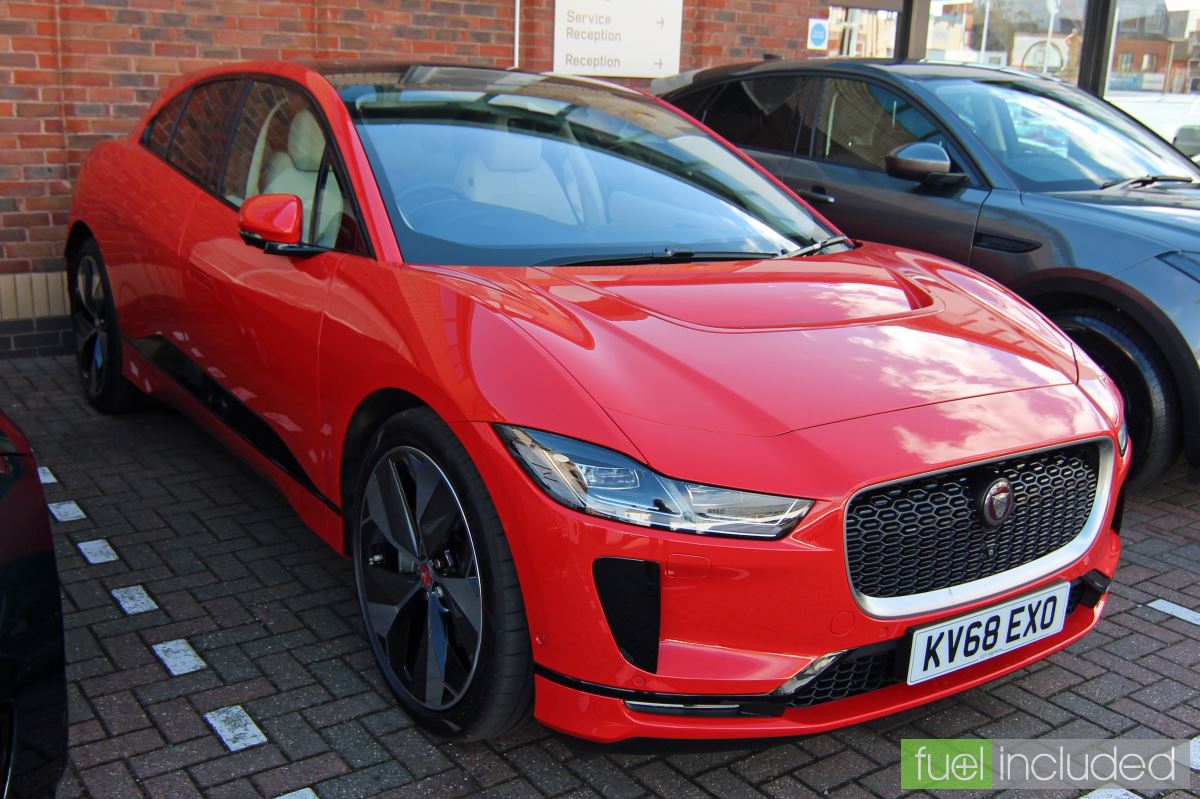
Jaguar I-PACE Electric Car (Image: T. Larkum)

And there’s scope to grow the programme as more containers can be created to house additional used batteries from vehicles in the future, JLR said.

Used batteries could be utilised even further in years to come, JLR added.

Used battery supply for energy storage could exceed 200 gigawatt-hours per year by 2030, creating a global value over $30bn (£23.5bn), according to a 2019 McKinsey report.

Read more: skynews

It’s Time to Go Green!

If you would like to know more about Solar Panels and the PowerBanx range of home battery systems, and get a free instant quote, please complete our online form:

cheapest electric car UK

OVO customers saved over £1 million in six months with its smart EV tariff

Energy supplier OVO says it has saved customers on its Charge Anytime tariff over £1 million in half a year.

The Charge Anytime tariff uses smart charging to power electric vehicles (EVs) for 10p per kWh at any time of day, saving the average customer £129 per month.

Customers have completed over 5 million kWh of smart charging, which uses an algorithm to automatically shift charging away from peak times, usually between 4-7 pm, to periods when the grid relies on cleaner energy sources.


POD Point installed (Image: T. Heale)

The 10p per kWh rate is three times cheaper than the national average (30p per kWh) and seven times cheaper than many public charge points. The tariff is powered by Kaluza’s smart technology, which OVO says has resulted in a 67% reduction in charging costs.

One OVO customer who drives over 1,000 miles per month to transport disabled, vulnerable, and elderly individuals to their appointments, is said to have seen their monthly costs drop significantly from over £120 in a petrol car to approximately £40 with her EV and the Charge Anytime program.

Alex Thwaites, director of EV, OVO, said: “It’s incredible to see the impact Charge Anytime is making for people and the planet. By using smart technology to shift EV charging out of peak times when the grid is more reliant on fossil fuels, we’re able to provide greener, cheaper energy for customers.

Read more: Current+

It’s Time to Go Green!

If you would like to know more about Solar Panels and the PowerBanx range of home battery systems, and get a free instant quote, please complete our online form:

Kia Soul EV 2020 (Image: Kia.com)

Used Kia EV Batteries Have A New Purpose Now – Energy Storage Systems For The Grid

Kia Europe has revealed a new partnership with Deutsche Bahn to reuse former EV batteries to develop scalable energy storage systems. The prototype is in works in Germany using Kia Soul EV batteries and marks the beginning of the automaker’s Europe-wide initiative.

The Hyundai Motor Group, Kia has fully adopted electrification as it moves toward zero-emissions and carbon neutrality throughout its businesses. Additionally, Kia and Hyundai Motor Group have invested in new technologies, like robotics and autonomy, to increase sustainability.

However, EV battery recycling is an issue. To address this issue, major manufacturers like CATL and recycling specialists like Redwood Materials are already helping reduce and reuse precious materials across the globe.


Kia Soul EV 2020 (Image: Kia.com)

Deutsche Bahn (encore DB) has been partnering up with many businesses to procure used batteries and give them a second life as energy storage solutions.

Kia announced the details of its new partnership with encore DB in a press release today, explaining how its EV batteries will be dismantled and repurposed for a second life cycle. Under the new agreement, Kia Europe will be the first mobility solutions provider to officially partner with encore DB.

Read more: WonderfulEngineering

It’s Time to Go Green!

If you would like to know more about Solar Panels and the PowerBanx range of home battery systems, and get a free instant quote, please complete our online form:

Comment: Connecting EV batteries to the grid is key to solving energy crisis

To solve the energy crisis and green the grid, we need to massively ramp up battery storage to help power the national and international grid; the successful trials of ‘Vehicle to Grid’ technology proves that electric vehicles could do just that, argues Aidan McClean, CEO of UFODrive.

Through charging the vehicle during periods of low energy cost, such as at night, and powering the national grid or home during periods of high cost, users reduced energy costs by at least 40%, some to zero.

Furthermore, charging the car during periods of high renewables generation and powering the home during fossil fuel generation (when renewable sources aren’t producing) allowed for reductions in carbon emissions of at least 25%, with some achieving 100% when timed correctly.


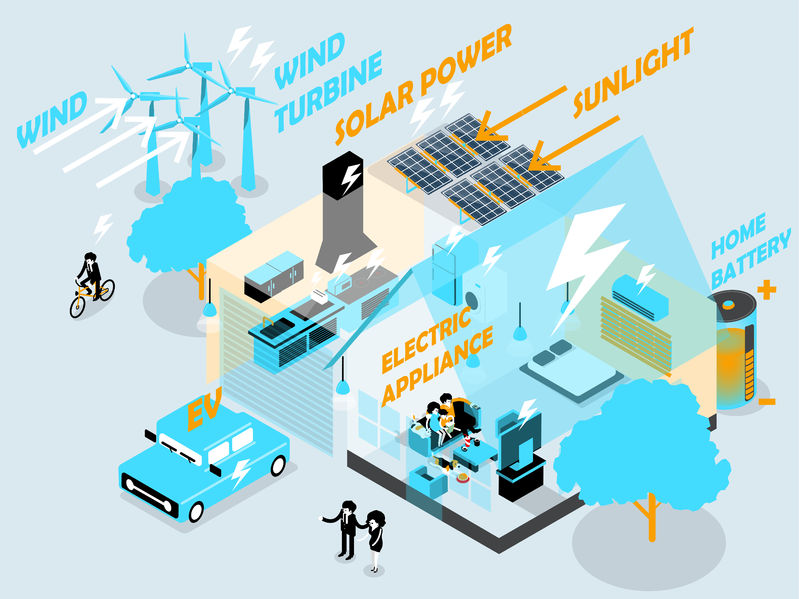
59210374 – beautiful isometric design of energy efficient house using renewable energy and home energy storage

At a similar time, an Open Letter to the European Commission was penned by major market leaders in battery storage technologies. It argued that Europe’s net zero, geopolitically independent energy goals, summed up in the REpowerEU plan, require a huge increase in battery storage infrastructure.

This letter argues that a renewable-powered grid needs a backup energy source when the sun isn’t shining or the wind blowing. Traditionally, this may have been gas, but this is now clearly not feasible due to the EU’s over-reliance on Russian gas supplies.

Read more: fleetworld

It’s Time to Go Green!

If you would like to know more about Solar Panels and the PowerBanx range of home battery systems, and get a free instant quote, please complete our online form:

Europe’s ‘most powerful’ EV charging hub opens in Oxford

Pivot Power has opened Europe’s “most powerful” electric vehicle (EV) charging hub in Oxford, with 42 fast and ultra-rapid chargers.

As part of the Energy Superhub Oxford project, the hub located at Redbridge Park and Ride could scale up to provide charging for 400 vehicles as EV adoption increases.

It will be entirely powered with renewable energy, with 10MW of installed capacity on-site.

“Electric vehicles form a key part of our strategy to decarbonise transport, so I’m pleased to see Europe’s most powerful EV charging hub opening in Oxford,” said Trudy Harrison MP, transport decarbonisation minister.

“Both the Government and industry, working together, are investing billions in projects like this to help provide the infrastructure to support the UK’s electric revolution and soaring EV sales. This in turn will help us decarbonise transport, create high-skilled jobs, and provide cleaner air across the UK.”

Several providers installed chargers at the facility, which has been developed by EDF Renewables subsidiary Pivot Power with the participation of the Oxford City Council, including 10 300kW charging bays from Fastned, 20 7-22kW from Wenea and 12 250kW Tesla Superchargers.

Read more: Current+

It’s Time to Go Green!

If you would like to know more about Solar Panels and the PowerBanx range of home battery systems, and get a free instant quote, please complete our online form:

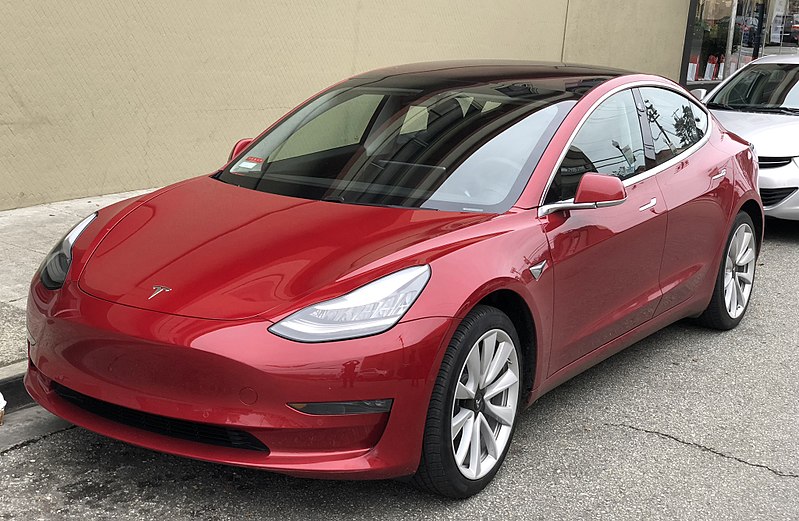
Tesla Model3 (Image: Wikimedia/Carlquinn)

Tesla’s Musk says solar, energy storage will grow faster than electric cars, and there’s some truth to it

  • Tesla CEO Elon Musk recently said the company’s solar and energy storage business will grow faster than its electric vehicle business.
  • With Tesla making progress on Model 3 production efficiency, Musk said on the most recent earnings call there will be more focus on solar and the broader Tesla Energy business, which includes aligning intermittent solar power with battery storage.
  • Tesla and Musk have faced criticism, and a shareholder lawsuit, over the solar business, the controversial acquisition of SolarCity, and issues at the company’s solar panel plant in Buffalo, New York.

A Model 3 ramp-up that resulted in a quarterly profit was a sign that Tesla’s automobile business finally may be financially stable. If so, it is a good time for Tesla to turn its attention to the energy business — encompassing solar and energy storage — that has for long taken a backseat to getting the electric vehicle assembly line in order.

Tesla Model3 (Image: Wikimedia/Carlquinn)

Elon Musk has been broadcasting this message since Tesla reported a surprise profit in the third quarter. On the call with Wall Street analysts after the earnings in November, the Tesla CEO said, “For almost two years we had to divert a tremendous amount of resources.”

Now Musk claims Tesla is poised for “the really crazy growth for as far into the future as I can imagine. … It would be difficult to overstate the degree to which Tesla Energy is going to be a major part of Tesla’s activity in the future,” he said.

Never one to shy away from bold claims or ambitions, Musk said Tesla Energy could grow to roughly the same size as Tesla’s automotive business, and solar would grow, on a percentage basis, the fastest of any, with storage second.

“I think both over time will grow faster than automotive,” Musk said. “They’re starting from a smaller base.” He added, “I think, especially, if you look at sort of — if you look at, like, year-over-year growth, it will be absolutely incredible … over the course of, say, a year, gigantic increase.”

In a recent internal email to Tesla employees, Musk outlined two critical year-end priorities: delivering all cars to their customers and boosting the rate of solar deployments by a significant degree.

Read more: CNBC

It’s Time to Go Green!

If you would like to know more about Solar Panels and the PowerBanx range of home battery systems, and get a free instant quote, please complete our online form:

What happens to used lithium-ion battery packs from electric cars?

Electric cars are a critical subject, and are likely to remain so as buyers respond to knee-jerk legislation by turning to electric vehicles (EVs) – be it plug-in hybrid or pure electric. Sales of those cars eligible for the (now reduced) government plug-in car grant are up 30 per cent year-on-year in the UK according to the SMMT, with 26,482 registered in the first half of 2018.

Notwithstanding the issues of excavating precious metals, there is a significant environmental burden associated with plug-in cars that must be considered: the batteries.


The scale of the issue

Most modern EVs use lithium-ion batteries; much the same as those that power your phone, toothbrush, tablet and most portable electrical items. Given how unfathomably numerous these small batteries are, it says a lot that EV batteries are expected to account for 90 per cent of the lithium-ion battery market by 2025 according to a recent forecast by consultancy firm Roskill.

For a longer-range forecast, consider that the UK government intends for all new cars and vans to be plug-in EVs by 2040. Assuming the new car market remains as buoyant as it is now, that equates to about 2.5 million new cars – and therefore battery packs – each year.

While the sheer volume of EV batteries that will need to be re-purposed or recycled is undoubtedly daunting, it’s worth starting on the positive note that these batteries have a long lifespan, and have proven very reliable. Most lithium-ion batteries will last about eight to 10 years before their performance drops to around 70 per cent (or less) of what it was when new.

So what can be done with these batteries when they reach the point that they need to be re-used or recycled?


Power storage for your home and business

One popular solution is to re-use them as power storage for domestic and commercial buildings. Nissan recently launched the largest power storage facility in Europe to use both new and used car batteries; the Johan Cruyff ArenA in Amsterdam uses 63 used EV battery packs and 85 new battery packs, which feed off of 4,200 solar panels on the stadium roof.

Read more: Telegraph

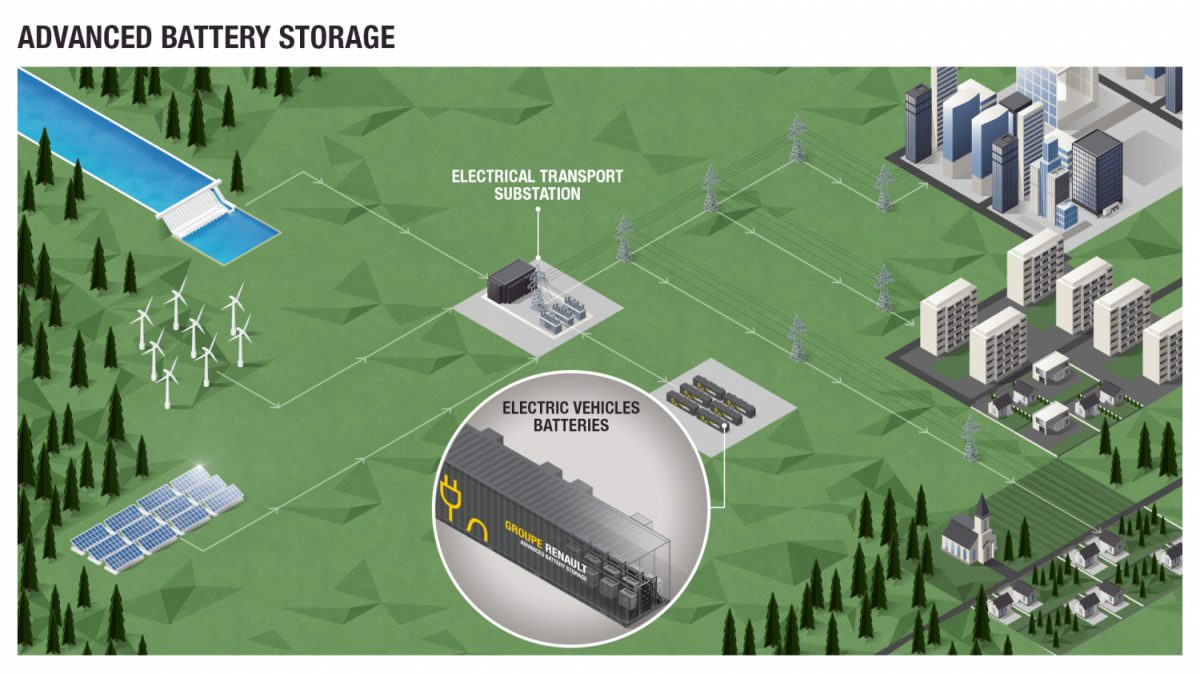
Groupe Renault is launching “Advanced Battery Storage” (Image: Renault)

Groupe Renault is launching “Advanced Battery Storage”

Groupe Renault is launching “Advanced Battery Storage”, the biggest energy stationary storage system from electric vehicle (EV) batteries in Europe

  • Groupe Renault is announcing the launch of its “Advanced Battery Storage” program, which aims to build the biggest energy stationary storage system using EV batteries ever designed in Europe by 2020 (power: 70 MW / energy: 60MWh).
  • This system, installed on several sites in France and Germany, will facilitate the integration of renewable energies into electric grids.
  • “Advanced Battery Storage” is part of Groupe Renault’s strategy to develop a smart electric ecosystem in favor of the energy transition.

Groupe Renault, the European leader in electric mobility, announced today the launch of Advanced Battery Storage, a stationary storage system for energy developed exclusively from EV batteries.

Groupe Renault is launching “Advanced Battery Storage” (Image: Renault)

It will have a storage capacity of at least 60 MWh, making it the biggest system of its kind ever built in Europe. The first facilities will be developed in early 2019 on three sites in France and Germany: at the Renault plants in Douai and Cléon and at a former coal-fired plant in North Rhine-Westphalia. The storage capacity will then be gradually expanded over time to contain the energy of 2,000 EV batteries. At this phase, the system will have reached – or more likely, exceed – the 60 MWh, equivalent to the daily consumption of a city of 5,000 households.

The purpose of this system is to manage the difference between electricity consumption and production at a given time, in order to increase the proportion of renewable sources in the energy mix. This means maintaining the balance between offer and demand on the electricity grid by integrating different energy sources with fluctuating production capacities. The slightest gap between consumption and production sets off disturbances that can compromise the stability of the local frequency (50 Hz). “Our stationary storage solution aims to offset these differences: it delivers its reserves to a point of imbalance in the grid at a given time to reduce the effects,” said Nicolas Schottey, Director of the Groupe Renault New Business Energy program. By helping to maintain the balance of the grid, the stationary storage system will boost the economic attractiveness of low-carbon energies.

This stationary storage system is built using EV batteries compiled in containers. The system uses second-life batteries, as well as new batteries stored for future use in standard replacement during after-sales operations.

“This unique assembly will give Advanced Battery Storage the capacity to generate or absorb, instantaneously the 70MW power. This high power combined with high capacity of our solution will allow to react efficiently to all major grid solicitations”, explains Nicolas Schottey.

Read more: Renault Press

Grid storage batteries help electric vehicles go truly green

Lower costs and wider take-up promise future where cars supply power to grids

In October 2015 a ruptured well in a natural gas storage facility in Aliso Canyon north of Los Angeles leaked 97,100 tonnes of methane into the atmosphere — making it one of the worst environmental disasters in the US since the Deepwater Horizon oil spill five years earlier. Thousands of people were displaced.

The following year utility Southern California Edison decided to invest in batteries to reduce the region’s reliance on gas for electricity — a contract that was won by Tesla. It was a turning point for electric utilities, which have relied on natural gas plants to provide power for over half a century.

Their greater use of batteries by utilities could help grids better integrate renewable sources of energy that are often intermittent. This in turn would help make electric cars truly green, by reducing their reliance on electricity supplied over the grid that is still often generated from fossil fuels.

Energy storage is set to see rapid growth as the plummeting cost of batteries has made them increasingly competitive with gas plants, providing power at periods of peak demand or when the sun does not shine and the wind does not blow.

“It’s cost-competitive right now,” says Praveen Kathpal, who heads the market applications team at Fluence, a joint venture between AES of the US and Germany’s Siemens. “The declining cost of energy storage is increasing the pace at which those needs will be met by storage. We believe storage is competitive with gas peaking plants almost anywhere.”

The need for energy storage is increasingly critical for states such as California, which has set a target of getting half of its energy from renewable sources by 2030.

Utilities have started to invest in ever larger battery projects over the past two years. Last year Tesla installed a 129 megawatt hours battery in South Australia, to store wind energy from the Hornsdale wind farm. Drax Power in the UK said in September it wanted to build 200MW of battery storage at its power station in Yorkshire.

The case for wider deployment of storage batteries on the grid has been helped by the rapidly declining costs of lithium-ion technology that is also used in electric cars. Invented in 1991 and commercialised by Sony for use in its camcorders, the cost of lithium-ion battery packs has fallen by 79 per cent over the past eight years, according to Bloomberg New Energy Finance.

Analysts at McKinsey estimate that the total costs for energy storage systems should fall by a further 50 to 70 per cent by 2025 due to economies of scale as well as design improvements.

As a result, consultancy IHS forecasts that the grid-connected storage market will grow tenfold to 52GW globally between now and 2025. The International Renewable Energy Agency predicts the market could hit 175GW by 2030.

Getting there may not even require factories to churn out ever more batteries. As the uptake of electric cars grows, their individual batteries could be linked up to provide a source of energy storage for electric grids, according to Chris Wright, co-founder of London-based battery start-up Moixa.

Read more: FT

The Transition Trinity: Electric Car, Solar and Home Battery

Fuel Included was founded in 2014 in response to the threat of global warming. Our aim is to promote sustainable technologies at affordable prices, a mission that becomes ever more important as global climate changes accelerate.

59210374_EnergyHome_IsometricGraphic_123RF
Initially we concentrated on electric cars but as they become increasingly mainstream we are able to focus on other green technologies. We now offer our own home battery system, the PowerBanx, to go along with solar panel installs.

While the Global Energy Transition often seems to be about big infrastructure projects, like offshore windfarms and grid battery storage, what’s happening at the home level is arguably more important, in terms of the impact on the individual and on the future requirements for national grids.

For years we have seen the rise of solar power as it becomes cheaper and undercuts other forms of power generation. More recently, we have seen the spread of electric vehicles (EV), as the replacement of fossil fuel vehicles accelerates.

Finally we are seeing the widespread introduction of battery systems (such as our PowerBanx) into homes; all already have solar and many already have an EV.

Read more: LinkedIn