Category Archives: Uncategorized

News posts not yet put into a category.

I test-drove the all-electric Hummer. Can it win over America’s EV skeptics?

A climate-friendly version of the macho, gas-guzzling pickup is aimed at obdurate devotees of US’s supersized car culture

It is the weight of an elephant, can move like a crab and in a previous life was reviled by environmentalists. The Hummer, that avatar of gas-guzzling machismo, has returned as an electric vehicle with an unlikely billing as an ally in the effort to avert the worsening climate crisis.


Cheapest Electric Cars UK (Image: Fuel Included)
Cheapest Electric Cars in the UK (Image: Fuel Included)

The reincarnation of the hulking pickup truck, test-driven by the Guardian in the searing heat of Arizona, has been lauded by manufacturer General Motors (GM) as proof that electric vehicles (EVs) can now reach even middle America’s most obdurate devotees of supersized car culture.

GM hopes to crush, under a brawny Hummer wheel, the notion that green cars must look like a Prius. “We want to turn EV skeptics into EV believers,” said Mikhael Farah, a GM spokesperson. This Hummer has even been endorsed as a climate boon by the White House – in November, Joe Biden screeched around GM’s Detroit plant in a Hummer EV. “This sucker is something else!” the president, a self-confessed “car guy”, exclaimed.

Read more: TheGuardian

It’s Time to Go Green!

If you would like to know more about Solar Panels and the PowerBanx range of home battery systems, and get a free instant quote, please complete our online form:

Electric cars prices will be ‘driven down’ by new govt plans, but environmentalists want more ambitious targets

Environmentalists say the target should be more ambitious still, while industry is calling for purchase incentives too.

Plans to ensure half of all new cars sold in the UK are fully electric by 2028 will drive down electric vehicle (EV) prices “further and faster,” experts have said.

Under Department for Transport (DfT) proposals, 22% of cars rolling off forecourts would have to be fully electric-powered from 2024, increasing to 52% of all cars by 2028. The targets for vans are 8% in 2024 and 34% in 2028.

OVO Vehicle-to-Grid (V2G) charging (Image: T. Larkum/Fuel Included)

Electric car prices could be about to plummet – here’s why

Electric vehicle (EV) prices have fallen significantly in recent years thanks to cheaper batteries and a growing market, but plans to mandate all carmakers to meet targets should “have quite a positive impact on price,” experts predict.

“More manufacturers trying to sell more EVs, trying to get us to buy them is going to be a more competitive and therefore better market for the consumer,” said Richard Allan from New AutoMotive, a research group aiming to accelerate the switch to EVs.


Economies of scale, competition and penalties for carmakers who miss targets make EVs much more affordable, he said.

The mandate is designed to accelerate the shift away from petrol and diesel vehicles, sales of which will be banned from 2030.

Read more: skynews

It’s Time to Go Green!


If you would like to know more about Solar Panels and the PowerBanx range of home battery systems, and get a free instant quote, please complete our online form:

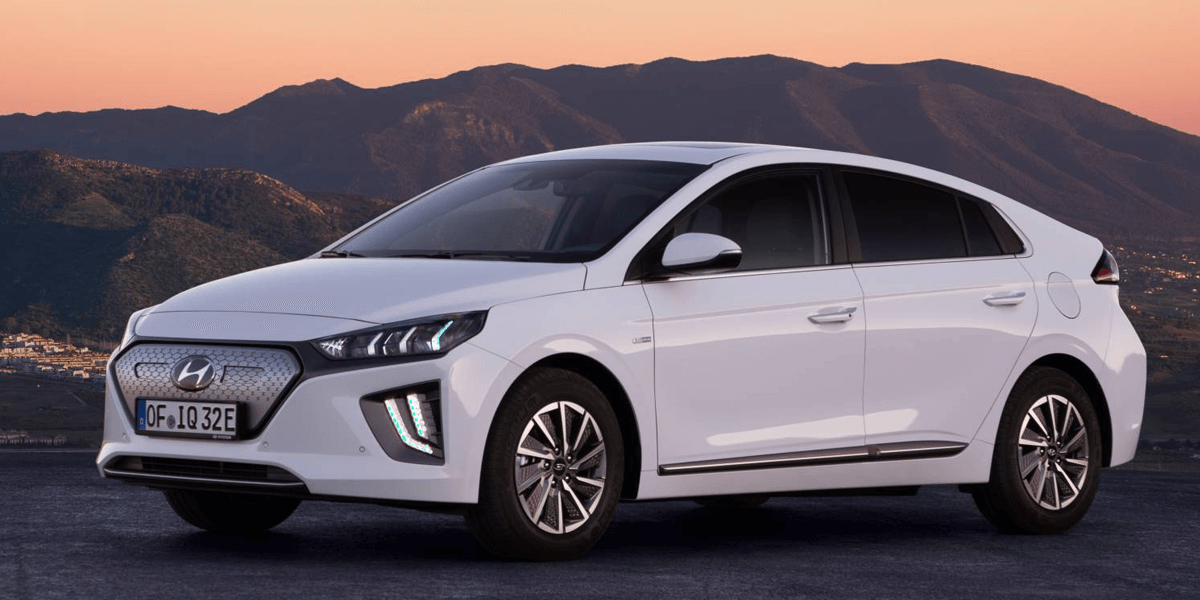
2020 Hyundai IONIQ (Image: Hyundai)

Hyundai develops V2X technology to stabilize the power grid

With V2X, BEVs can feed electricity back into the public power grid

At IAA Mobility 2021, Hyundai announced that it will become climate-neutral by 2045. From 2035, the South Korean brand will only offer zero-emissions vehicles (ZEV, zero-emissions vehicle) in Europe. The cornerstone of this company’s strategy is to develop clean mobility solutions and technologies. This also includes “combined to everything” technology, or “V2X” for short. It summarizes a number of technological innovations that could stabilize the power grid and support the use of renewable energy sources – using power from pure battery electric vehicles (BEV, Battery Electric Vehicle).

Hyundai Ioniq 5 (Image: hyundai.co.uk)

Stabilizing the electricity grid and supporting renewable energies

An applied example of V2X is Vehicle to Network (V2G). This technology enables electricity from BEVs to be fed into the public power grid (English: grid). The energy landscape benefits from the use of BEVs as electricity suppliers, because e-model owners can actively contribute to the stability of their local electricity grid.

Read more: TechNewsInsight

It’s Time to Go Green!

If you would like to know more about Solar Panels and the PowerBanx range of home battery systems, and get a free instant quote, please complete our online form:
Nissan Leaf 3.Zero e+ (Image: Nissan)

‘Informed consumers are vital to a mature electric car market’

Andy Palmer thinks motorists need to learn more about electric cars with the 2030 petrol and diesel new car ban looming on the horizon

Over a decade ago, when I began developing what became the world’s first mass-market electric car, the Nissan Leaf, it was considered an oddity. EVs back then were treated with scepticism and intrigue in equal measure. Why? Largely because the understanding of what they were, how they were made and how they benefit motorists (and the planet) was non-existent. In fact, one rival auto exec said I was crazy for pioneering an electric vehicle and I may as well have taken the cash invested in it and chucked it into the Pacific. Thankfully, I didn’t take his advice.

Nissan Leaf 3.Zero e+ (Image: Nissan)

Today, we are a better-informed audience. But by how much? There are around 395,000 battery electric vehicles on UK roads right now. That’s certainly a lot more than when I first began work on the Leaf, but compared to the 32.7 million total passenger cars on the road, it still barely registers. I have no doubt that’ll change and that in the near future, there will be more EVs than combustion engine vehicles. It’s as inevitable as death and taxes. But to get to that point and for the market to truly mature, we need an informed audience of motorists.

Read more: AutoExpress

If you are interested in learning what it would cost to charge an electric car, try GoCompare’s Charging Calculator.

It’s Time to Go Green!

If you would like to know more about Solar Panels and the PowerBanx range of home battery systems, and get a free instant quote, please complete our online form:

Solar EV Charging Hub on Princes Street, Dundee (Image: eVolt)

InstaVolt launches ‘one of the UK’s largest’ EV charging hubs with Banbury expansion

InstaVolt has said its electric vehicle (EV) charging hub in Banbury, Oxfordshire is now one of the UK’s largest following the installation of eight new 150kW chargers.

The Alpitronic chargers have been installed alongside an existing eight 125kW chargers at the site, with work on the new chargers beginning in January 2022.

InstaVolt said this is in response to increased demand for rapid, easy to use chargepoints across the country, with the company aiming to grow its network to 10,000 rapid chargers by 2032. By this summer, it is hoping to have 1,000 rapid chargers on its network.

Solar EV Charging Hub on Princes Street, Dundee (Image: eVolt)

The company said that in the 12 months to March 2022, it has grown its network by 45%, with deals for EV charging rollouts with companies such as Costa CoffeeMcDonald’s, Bannatyne Health Clubs and Booths Supermarkets forming part of its “active efforts” to improve EV charging infrastructure.

Alongside the new chargers, the overall services at the hub have also been upgraded, with additional lighting, wider access spaces and two longer spaces to accommodate the increasing number of electric vans and fleet vehicles.

There are also plans for seating on site and a small wildflower meadow to increase biodiversity and create a habitat for pollinating insects.

Read more: Current+

It’s Time to Go Green!

If you would like to know more about Solar Panels and the PowerBanx range of home battery systems, and get a free instant quote, please complete our online form:

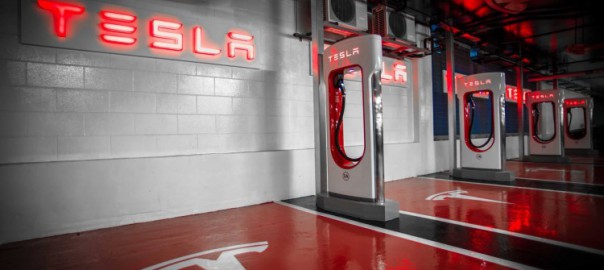
Tesla Supercharging Station at Westfield, London (Image: Tesla)

Britons buy more electric cars in March than in whole of 2019

Overall new car sales slump as petrol and diesel prices soar in Ukraine crisis

British drivers bought more electric cars in March alone than in the whole of 2019 even as the broader market slumped, according to figures that underline the accelerating pace of the UK’s transition away from internal combustion engines.

There were 39,315 new battery electric vehicle registrations during the month, according to the Society of Motor Manufacturers and Traders (SMMT), a lobby group. In 2019 there were 37,850 electric sales.

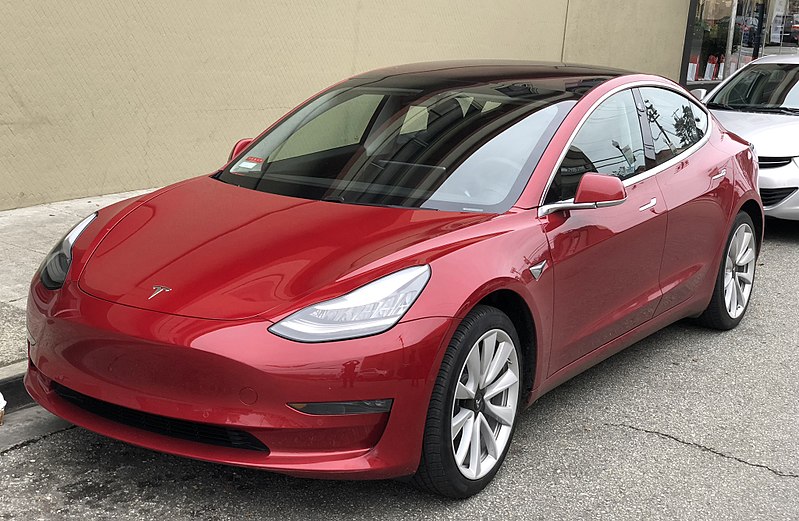
Tesla Model3 (Image: Wikimedia/Carlquinn)

Evidence of soaring demand for battery electric cars – which will become the most popular fuel type as soon as 2025 according to some analysts – has provided a bright spot for the car industry at a time when it has struggled for more than a year with computer chip supply bottlenecks.

Across electric and fossil fuel cars in total, the number of sales in the UK in March was the lowest for the month in 24 years.

March is an important month for the UK car industry, when buyers queue up for the latest number plates – a status symbol that can also help sustain secondhand values for a few months longer.

The slump in new car registrations, down 14% compared with March 2021, follows two months of year-on-year sales increases. The industry is concerned that it has missed a period of strong demand – buoyed up by household savings during pandemic lockdowns – and will be under pressure as household finances are squeezed by rising prices across the economy.

Read more: TheGuardian

It’s Time to Go Green!

If you would like to know more about Solar Panels and the PowerBanx range of home battery systems, and get a free instant quote, please complete our online form:

More battery electric vehicles sold in March than entirety of 2019 – SMMT

March 2022 was the best ever month for sales of battery electric vehicles (BEVs), according to the Society of Motor Manufacturers and Traders (SMMT).

In the month, there were 39,315 sales of new BEVs, a 78.7% increase on March 2021, when there were 22,003. This represented a 16.1% market share compared to 7.7%.

These figures mean that in March 2022 there were more BEVs sold than during the entirety of 2019, the SMMT said.

To date this year, there have been 64,165 sales of new BEVs, compared to 31,779 for the same period in 2021- a change of 101.9%.


The SMMT said that with grants for BEVs ongoing until at least next March, with interest rates being low and EVs benefitting from lower running costs, there are “significant benefits” for drivers who order new vehicles now.

“With increasing household and business costs, government must do all it can to support consumers so that the growth of electric vehicles can be sustained and the UK’s ambitious net zero timetable delivered,” Mike Hawes, SMMT chief executive, said.

Earlier this year, the SMMT called for VAT on electricity used for public chargepoints be cut to match that for home use, as well as for binding targets for the rollout of public chargepoints to help meet demand in light of surging BEV sales.

Read more: Current+

It’s Time to Go Green!

If you would like to know more about Solar Panels and the PowerBanx range of home battery systems, and get a free instant quote, please complete our online form:
BP Chargemaster Rapid Charger at Milton Keynes Charging Hub (Image: T. Larkum)

Government EV charging plan a ‘missed opportunity’ for drivers

The Department for Transport (DfT) has published plans outlining how it seeks to significantly increase the UK’s electric vehicle charging capacity.

Funding for the £1.6 billion Electric Vehicle Infrastructure Strategy has previously been announced. The DfT has now detailed exactly how the allocated money will be used.

At its core is the aim to have 300,000 public charging devices available by 2030. This represents a tenfold increase from the 30,000 currently installed across the country.

Rapid-charging roll-out

Tackling electric vehicle charging for the millions without access to off-street parking is a key part of the strategy.

Some £450 million will be used by the Local Electric Vehicle Infrastructure fund. This allows for local authorities to apply for money to deliver EV hubs and innovative on-street charging solutions.

Solar EV Charging Hub on Princes Street, Dundee (Image: eVolt)


An existing £950 million Rapid Charging Fund is intended to support the installation of fast-charging devices at motorway services. It expects to deliver 2,500 rapid-charging points by 2030, and 6,000 by 2035.

Charging operators will be mandated to provide customers with real-time data about the status of charge points. A 99 percent reliability rate for charging devices will also be expected.

Read more: MotoringElectric

It’s Time to Go Green!

If you would like to know more about Solar Panels and the PowerBanx range of home battery systems, and get a free instant quote, please complete our online form:
Milton Keynes 'Mushrooms' Charging Hub (Image: T. Larkum)

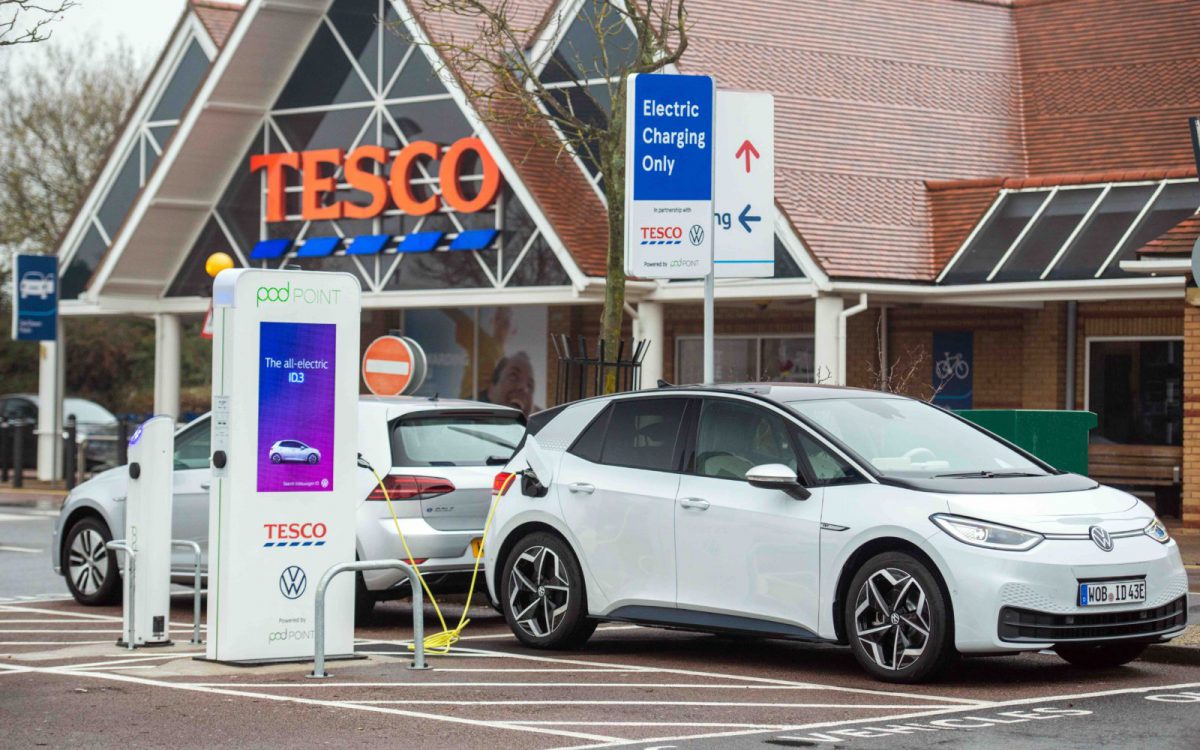
Tesco to make big change to car parks at 500 of its branches

Supermarket giant Tesco has announced a ‘big change’ is coming to 500 stores across the United Kingdom. The retailer revealed plans to bring electric charging points to its branches.

The giant expanded the UK’s largest free electric vehicle charging network after usage of the points surged by 300% over the past year, reports the Echo. It unveiled its 500th charging point at Tesco Extra in Inverness.

POD Point Rollout at Tesco Stores (Image: Tesco/POD Point)

Other areas that have benefitted from improved charging access include Southend-on-Sea, Bolton, Wirral and Port Talbot. Since the network was launched in 2019 by Tesco, Volkswagen and Pod Point, the charging points have provided more than 41 million miles of free electric driving.

The network uses renewable energy and, since it launched, has saved 8,786 tonnes of CO2 compared with travelling the same distance in a typical car with an internal combustion engine. Designed to offer Tesco customers a secure, reliable and accessible way to top up their electric cars, the network of more than 1,000 chargers at 500 Tesco supermarkets in the UK also now includes 100 rapid chargers.

Read more: msn


It’s Time to Go Green!

If you would like to know more about Solar Panels and the PowerBanx range of home battery systems, and get a free instant quote, please complete our online form:

ONE FAST CHARGE IN THE KIA EV6 TOLD ME EVERYTHING I NEEDED TO KNOW

And why it’ll win top trumps at every EV charging station debate

EARLY-ADOPTER EV lovers insist that range anxiety and charging speeds are red herrings, not actual issues with electric cars, but they’re wrong. These are legitimate concerns that will impede the growth and adoption of electric vehicles beyond the enthusiast set if not addressed.

But, after more than a decade of stops and starts in the development and deployment of electric vehicles, the marketplace has finally come up with an answer to both: really fast charging.

I was testing the Kia EV6 this week (corporate sibling to the Hyundai Ioniq 5 that I drove and loved last year) and was genuinely astonished by how speedy DC fast charging can be — less than 18 minutes to gain more than 200 miles of range — and it changes everything.

THE EV6 USES an advanced (and expensive) 800-volt architecture, achieved thanks to massive economies of scale from the E-GMP platform that will underpin most of the upcoming EVs from Hyundai, Kia, and Genesis. Competitors like the Ford Mustang Mach-E, Volkswagen ID.4, and Polestar 2 use 400-volt systems that charge much more slowly.

The increase in voltage is important, but we have to talk some physics to see why: volts * amps = watts. Translated into English, it means that if you want to increase an EV’s charging speed, you have to increase the volts or the amperage or both. By using an 800-volt architecture instead of a 400-volt, the E-GMP platform can charge twice as fast as a 400-volt vehicle at the same amperage.

Read more: Inverse

It’s Time to Go Green!

If you would like to know more about Solar Panels and the PowerBanx range of home battery systems, and get a free instant quote, please complete our online form: