Category Archives: Charging

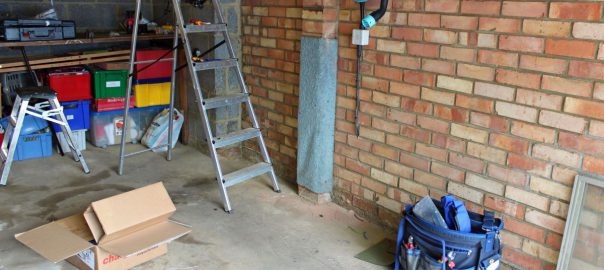
The Charge Point Being Installed for my First EV, a Renault ZOE (Image: T. Larkum)

Installing a Charge Point for your Electric Car

There can be a significant lead time in arranging the installation of a charge point so it is best if this gets underway as soon as possible after your new electric car is ordered.


If the car is a new Renault ZOE or Nissan Leaf on PCP (Personal Contract Purchase) then installation of the charge point will be organised by the manufacturer. As part of this deal the manufacturer will specify their preferred charge point.

In most other cases you will need to arrange the installation yourself. We can help you through the process with advice and guidance:

  1. We provide details of the main installation companies below.
  2. Our guide to selecting the most suitable charge point for you is here: Choosing a Charge Point.
  3. Our guide to check on your eligibility for a government grant for the charge point is here: Government Grant for Electric Car Home Charge Point.

If you are a Fuel Included customer then you can of course call or email us at any time for more detailed advice.

Note you may find that a charge point is occasionally referred to by its more technical name ‘Electric Vehicle Supply Equipment’ or EVSE.

Charge Point Installers

The biggest companies making and installing domestic charge points  – let’s call them the ‘Big 3’ – are the following (with links to their website and to our news feed with articles about them):

  1. Chargemaster PLC: Chargemaster website, Chargemaster news items.
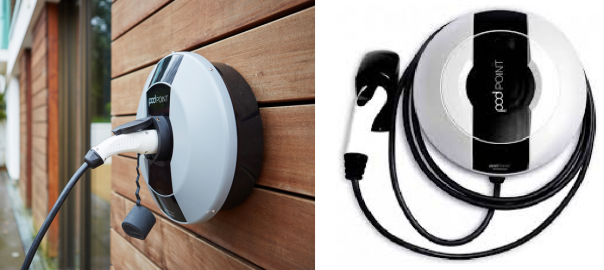
  2. POD Point: POD Point order page, POD Point news items.
  3. Rolec EV (part of Rolec Services Ltd): Rolec website, Rolec news items.

However, there are many other smaller manufacturers and installers; here’s a brief (not definitive) list:

  1. Andersen order page, premium charge points.
  2. ChargedEV, nationwide installation partners for Rolec, based near Sheffield.
  3. Charging Solutions Ltd, partner with Chargemaster, based in Wales.
  4. The Phoenix Works, nationwide installers, based near Leeds.
  5. SOL Electrical, install POD Point and Rolec charge points in the South West of England.
  6. EV Charging Solutions, based in the Midlands.
  7. API Electrical Ltd, install in the North West of England.
  8. Armstrong Renewables Ltd, install in the North East of England.
  9. New Motion EVSE Ltd, based in London and part of a Dutch group, the largest provider in Europe.


Installation Process

In most cases the installation company is likely to contact you for information on your property, including asking for photographs of your main consumer unit (‘fuse box’) and the preferred location for the charge point. Usually a dedicated cable will be run from the consumer unit to the charge point so sometimes the installer may also ask for information on, and photographs of, the route between the two. Generally an isolator switch will be installed in this new circuit.

The Charge Point Being Installed for my First EV, a Renault ZOE (Image: T. Larkum)

Typically a standard installation will allow for cabling of up to 20m in length. If the distance is greater than this then there may be an additional cost to the customer (of perhaps £5 per metre). Similarly there may be additional costs if the installation is complex (e.g. passing a cable over a walkway or under a path); these issues are likely to be highlighted by the installer ahead of the installation visit. Sometimes the electrical system in the house will lack a mains isolator switch and this may need to be installed in advance by your electricity supplier; again the installer should flag this ahead of their visit.

The installation itself will take less than a day (it can be as little as an hour). You will need to be in attendance and the electricity supply will be turned off for much of the work.

After the installation is complete you will likely be asked to sign off on the work (and will be given a set of keys to the charge point if it is key protected). You should test the charge point as soon as possible by connecting your car, ideally while the engineer is still present in case it shows up any issues.

PS: I have previously described the installation of my charge point in detail here and here.
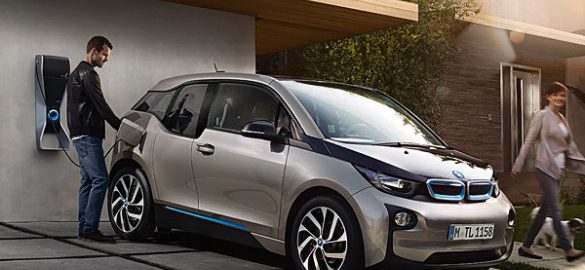
Charging a BMW i3 on the drive (Image: BMW)

Government Grant for Electric Car Home Charge Point

This is a summary of the UK Government’s scheme for subsidising home charge points for electric cars, known as the Electric Vehicle Homecharge Scheme (EVHS).

It has been kept relatively simple; if you need detailed guidance you should consult the original document (linked at the bottom).

1. Most plug-in vehicle owners carry out most charging at home.

2. Customers who are the registered keeper or have primary use of an eligible electric vehicle may receive up to 75% (capped at £500, inc VAT) off the total capital costs of the chargepoint and associated installation costs.

3. The key features of the Electric Vehicle Homecharge Scheme are as follows:

  • The grant is a 75% contribution towards the cost of one chargepoint and its
    installation up to a maximum of £500 (including VAT) per household/eligible
    vehicle.
  • Customers must provide evidence of being the primary user of an eligible electric vehicle or have a vehicle on order in order to be able to qualify for the grant.
  • The date of installation must not be more than 4 months ahead of the date
    of delivery or start date of vehicle use.

4. The grant covers up to 75% of the eligible costs of chargepoint installation, the
customer form requires confirmation of who is paying the balance of the
installation costs.

5. The grant for 75% must be claimed against an approved chargepoint and
made on your behalf by a chargepoint installer which has been authorised
by the Office for Low Emission Vehicles (OLEV).

6. You must have off street parking facilities suitable for chargepoint installation (a survey prior to installation should be conducted by your installer). If you do not have off street parking, your Local Authority may be able to help via a central Government grant.

7. The authorised chargepoint installer will claim the 75% (capped at £500) on your behalf. How the remaining cost is to be met should be agreed with your installer prior to installation. In any event, you should satisfy yourself whether you are expected to pay the remaining cost, and if not who will be paying for it, before the installation takes place. The grant will only be paid in arrears (i.e. once installation is complete).

8. No more than 2 chargepoints can be funded at one property irrespective of how many vehicles are registered there.

Source: EVHS – Guidance for Customers: November 2016

Untethered and Tethered Charge Points (Image: POD Point)

Choosing a Charge Point

When buying an electric car it is nearly always worthwhile to get a dedicated charge point installed at home.

It’s more convenient than an ‘occasional use’ or ‘granny’ (13 Amp) charge cable because you don’t need to reel it up and put it away each time.

Home Charging a Renault ZOE with a Dedicated Charge Point (Image: Charging Solutions)
Charging a Renault ZOE with a Home Charge Point (Image: Charging Solutions)

It will also be significantly faster because a dedicated charge point can provide more power without the risk of overheating. Also some electric cars, such as the Renault ZOE, don’t come with such a cable and buying one yourself can be very expensive (£500+).

The good news is that the installation of domestic charge points is subsidised by the UK government.

There are 3 decisions to be made when selecting the type of charge point for your car:

  • Tethered or Untethered
  • Connector Types
  • Power Level


Tethered or Untethered

There is usually the choice of a ‘tethered’ cable (it is fixed to the charge point) or an ‘untethered’ cable (it plugs into and can be removed from the charge point).

Untethered and tethered charge points (Image: Chargemaster)
Untethered and Tethered Charge Points (Image: Chargemaster)

Untethered has the advantage of allowing different cables to be connected (for example you can use the same charge point for a Nissan Leaf and a Renault ZOE). However, most people choose tethered because it avoids the inconvenience of connecting a cable whenever you need to charge (usually daily). It also reduces the risk of the cable being stolen.

A charge point with a tethered cable will usually cost more than an untethered one (typically about £50 more) because of the cost of its cable.

Untethered and Tethered Charge Points (Image: POD Point)
Untethered and Tethered Charge Points (Images: POD Point)

If you choose untethered you will need to use your own cable to connect to the car; it is the same cable that would be used to connect to a public charging point. It may come free with the car, for example the Renault ZOE or the Nissan Leaf with the 6.6kW charge option come with one. Otherwise you will need to buy one (we can advise you on suppliers).


Connector Types

All untethered domestic charge points supplied in the UK come with a Type 2 socket on the charge point, just as all public charge points now have (or at least officially should have) Type 2 sockets. Similarly all charge cables have a Type 2 plug at the charge point end.

Type 1 (5 pin) and Type 2 (7 pin) connectors

If the cable is tethered then you need to tell the installer the type of plug you want at the car end. This will depend on the car:

  • Type 1 socket: Nissan Leaf, Mitsubishi Outlander PHEV, Kia Soul EV
  • Type 2 socket: Renault ZOE, BMW i3, Tesla, VW e-Golf and Hyundai IONIQ

The Type 2 or ‘Mennekes’ connector is the official standard in Europe and should eventually replace the Type 1.


Power Level

A dedicated charge point can provide higher powers than a typical occasional use charging cable which will run at 10 Amps, equivalent at 230 Volts to 2.3 kilowatts. The charge will take place at the highest power that both the charge point can provide and the car can use.

There are two common power levels:

  • 16A = 3.5kW: This is the maximum charge level of the Nissan Leaf 3.3kW, the Mitsubishi Outlander and the VW e-Golf.
  • 30A/32A = 7kW: This is the maximum charge level of the Nissan Leaf 6.6kW, BMW i3, Kia Soul EV and Hyundai IONIQ. The standard Renault ZOE can use this level, in fact anything up to 22kW.

The higher power reduces the charge time so a typical EV battery will charge in about 8 hours at 16A but in about 4 hours at 32A.

It may be best to install the highest power charge point you can afford; even if your current car can’t use all the power, the next one almost certainly will be able to.