Category Archives: Tesla

News and reviews of Tesla electric cars (including plug-in hybrids).

Top Gear finally breaks free from Jeremy Clarkson with Tesla film

Rory Reid’s piece on Tesla’s revolutionary electric car in episode four shows the BBC2 programme is at least trying to head in a new direction

“This car might just be on the cusp of changing everything.”

ClUuOEwWYAA7x6Z_Tesla_ModelX_TopGear

Matt LeBlanc’s Top Gear intro last night didn’t just herald a brave new world in electric cars. It also suggested that the new show had finally turned a corner.

Chris Evans has been accused of simply trying to copy what Jeremy Clarkson did first and best. But last night at least hinted that the show is trying to put some distance between it and old Top Gear, thanks to some smart handling from occasional presenter Rory Reid.
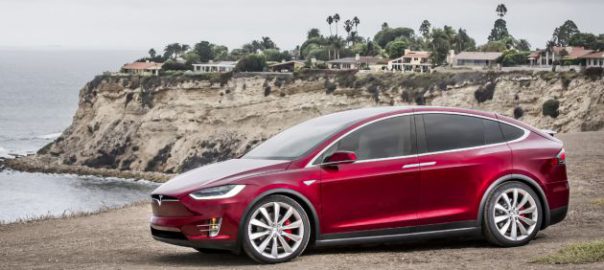
Reid was in New York City to drive new electric car the Tesla Model X.

Now, both electric in general and Tesla in particular have been dirty words round Dunsfold Aerodrome for years, ever since Clarkson eviscerated the company’s Roadster sports car in a film in 2008.

Back then Clarkson, shock horror, actually enjoyed his time in the electric car – until he realised how much it cost and how quickly it would run out of charge. “What we have here is an astonishing technical achievement: the first electric car that you might actually want to buy,” he said. “It’s just a shame that in the real world, it doesn’t seem to work.”

Tesla were so angry with the film that they attempted to sue Top Gear, but their appeal case was eventually dismissed by the court of appeal in 2013.

Fast forward to Clarkson-free Top Gear 2016 and Tesla were back with their new car, the Model X, which it is claimed will do 250 miles and charge in as little as 30 minutes.

Rory Reid was completely won over by the new motor and its ‘Ludicrous Mode’, which apparently turns it from family SUV into a drag racer that’s more than a match for even the biggest gas guzzlers.

“Everything changes right now,” Rory said pointedly. “The Model X pushes the reset button.”

Read more: Radio Times

Tesla showroom in Milton Keynes (Image: T. Larkum)

Tesla and SolarCity? Yes, it makes sense.

The combined company will be perfectly suited to markets that barely exist yet

Tesla showroom in Milton Keynes (Image: T. Larkum)

Elon Musk announced last week that he wants Tesla, his electric-car company, to acquire SolarCity, the rooftop-solar company he helped found and now serves as chairman. The result would be a single “end to end” energy behemoth.

“As a combined automotive and power storage and power generation company,” Musk said, “the potential is there for Tesla to be a $1 trillion company.”

Reaction was, by and large, skeptical. (Tesla stock dropped 10 percent the following day.) Over at Stratechery, Ben Thompson says Tesla already faces “very long odds of achieving its plans.” Adding SolarCity’s negative $2.6 billion cash flow to Tesla’s already negative $1.5 billion is no help to Tesla, though it might save SolarCity. Thompson thinks Musk wants it because he’s “highly exposed to SolarCity’s plummeting stock.” Otherwise it makes no sense, he says, because Tesla and Solar City have “zero business synergies.”

Analysts at research firm UBS, in a pair of briefs, echo that critique, arguing that there’s little these businesses offer one another that they couldn’t get from some kind of cross-marketing agreement.

I’m not qualified to comment on the near-term business merits of the deal. It may well prove to be a disaster. But I think Thompson and other critics are underestimating the synergies. They are limited now, but they will grow over time. (Over at Greentech Media, Julia Pyper also has good piece on this.)

How fast will the synergies grow? That depends on factors largely outside either company’s control.

That’s the big risk of this deal: Even assuming the merged company could get past its short-term challenges, its long-term fate rests on policy and regulatory decisions it can’t predict or determine. It’s a merger based on hope.

Synergy depends on future markets

The kinds of markets in which electric cars, home batteries, and solar panels could fully, uh, synergize do not currently exist in most places. They are precluded by the way the US structures its electric utility sector, as a patchwork of monopolies and quasi-monopolies.

Read more: Vox

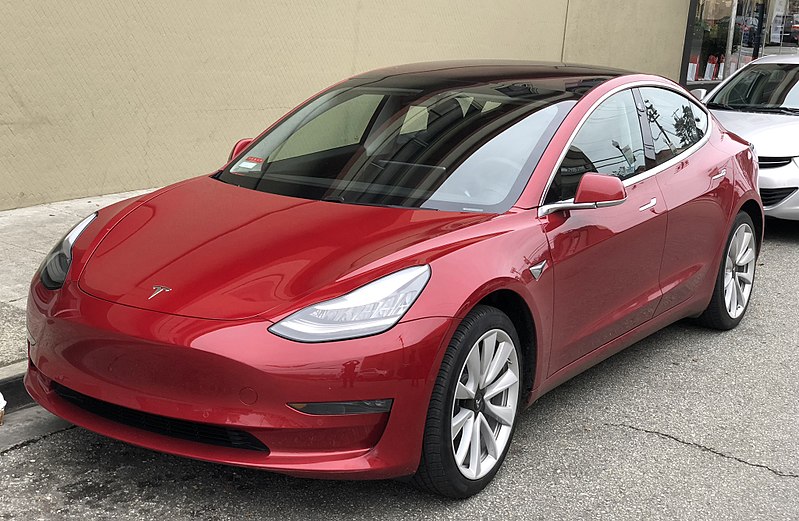
Tesla Model3 (Image: Wikimedia/Carlquinn)

U.S. Gasoline Demand Is Likely to Slide

Electric vehicles could slice fuel’s consumption up to 20% in two decades, new report says

Tesla Model3 (Image: Wikimedia/Carlquinn)

Electric cars are poised to reduce U.S. gasoline demand by 5% over the next two decades—and could cut it by as much as 20%—according to a new report being released Monday by energy consulting firm Wood Mackenzie.

The U.S., which currently uses more than nine million barrels of gasoline a day, could see that demand drop by as much as two million barrels a day if electric cars gain more than 35% market share by 2035, according to the report.

That aggressive case assumes Tesla Motors Inc. and other auto makers begin to deliver lower-cost electric vehicles that can travel longer distances in relatively short order, said the report’s author, Prajit Ghosh. A more likely scenario is a 5% drop in U.S. gasoline demand as electric cars build to more than 10% of the U.S. vehicle fleet by 2035, he said.

Even the low end of the forecast by Wood Mackenzie, which provides in-depth analysis for a wide range of clients including large oil companies, utilities and banks, is a more bullish outlook for electric-car adoption than many oil-and-gas companies have espoused.

Spencer Dale, the chief economist of energy company BP PLC, said last week in Houston that while he expects electric cars to start gaining traction, the internal-combustion engine still has significant advantages over electric alternatives and widespread adoption won’t happen in the next two decades.

“It will still take some time,” Mr. Dale said. “Electric vehicles will happen. It is a sort of when, not if, story.”

Read more: Wall Street Journal

Pricing and specification details for the UK Model X have been revealed

Tesla Model X launched in the UK

Pricing for UK specifications of Tesla’s Model X have been revealed, with the entry level 75D starting at £71,900. This will buy you a five seat all-electric SUV with four wheel drive, a quoted range of 259 miles, and a 0-60mph time of 6.0 seconds.

Pricing and specification details for the UK Model X have been revealed

Moving up a rung sees the 90D with a range of 303 miles, 4.8 second 0-60mph time and a cost of £82,400, while the top of the range P90D drops the fastest sprint time to 3.2 seconds and provides 290 miles of range at £99,800.

Five seats are offered as standard, while six and seven seat configurations are available at a cost of £2,550 and £3,400 respectively. Ludicrous mode for the fastest model costs £8,700, Autopilot £2,200, and smart air suspension the same – though this last point is standard kit on all but the entry level Model X 70D.

Standard equipment includes the much talked about Falcon Wing doors, all-wheel drive, parking sensors, DAB+ radio, keyless entry and start, a huge panoramic windscreen, electric tailgate, and maps and navigation with over-the-air updates. The cost also includes free use of Tesla’s Supercharger network for life.

No fixed date has yet been set for when the Model X will arrive in the UK, but orders placed now will arrive in ‘Late 2016’, while those who got in early can expect theirs around autumn.

Source: Next Green Car

The new model intends to offer a more affordable Tesla for customers

Tesla launches entry level Model S 60 range

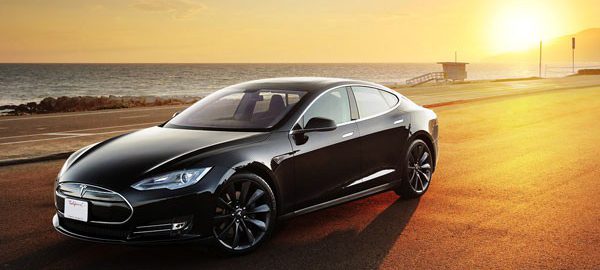
Tesla has launched a new entry level model for its Model S range in the shape of a 60kWh version. Coming in under the previously entry level 75kWh variant, the Model S 60 is available in either single motor configuration, or in dual motor 60D spec.

The new model intends to offer a more affordable Tesla for customers

The Model S 75 is now offered as an upgrade to the Model S 60 which increases driving range by around 19 per cent according to Tesla.

The changes come as part of the company’s continuous evolution of its range, whether that is in the form of regular software updates or changes in battery capacity offered. The Model S 60 is in response to customers saying they want a Tesla but can’t really afford the price of the Model S 70 – though those that can will be able to specify the 75 kWh battery for a cost of £7,850 on top of the Model S 60 price.

Quoted at offering a range of around 248 miles, the Model S 60 will still complete the 0-60mph sprint in 5.5 seconds and go on to a top speed of 130mph, while the 60D is faster still thanks to its all-wheel drive capability and increased power.

In terms of the battery specification, Tesla are fitting Model S 60 and 60D models with a 75kWh battery that then has its capacity restricted. This is in part to simplify battery production, while the main reason is that customers can retro-upgrade their model at any time in the future with a software update, should they wish to unlock the battery’s potential.

There are also small changes to the interior trim and equipment levels, while Tesla’s Autopilot system will be available as an option, and use of the Supercharger charging network is free for all customers.

The new Model S 60 and 60D are available to order now with prices starting at £53,400 for the single motor, or £57,800 for ths 60D. Both prices exclude the UK Government’s Plug-in Car Grant, which takes £4,500 off the cost.

Source: Next Green Car

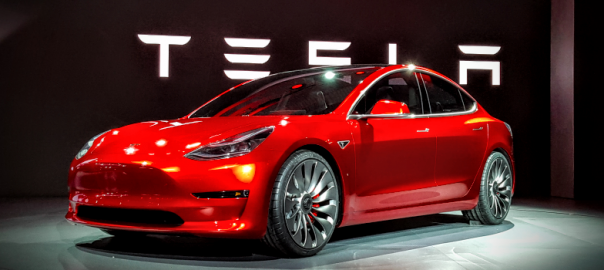
Tesla Model 3 at launch (Image: K. Field/CC)

Your time is up, Stanford tech expert tells petroleum industry

ADDRESSING a high-profile audience of the Thai energy sector last week, Stanford University lecturer and Silicon Valley investor Tony Seba minced no words in warning them that petroleum, which had been a source of livelihood to many of them, would become obsolete by 2030 or sooner.

Tesla Model 3 at launch (Image: K. Field/CC)

Citing four key technologies – energy storage, electric vehicles, self-driving cars, and solar – the author of the amazon.com best seller “Clean Disruption of Energy and Transportation” said the energy and transport industries were on the cusp of either being transformed or destroyed.

“The energy and transport industries will become high-tech industries” he told the Petroleum Institute of Thailand’s 30th anniversary event that was attended by energy and science ministers, privy councillor, director of the Crown Property Bureau Snoh Unakul, and other top energy officials and executives. Speaking at a press conference held at the conference, Seba said since consumers would switch “en masse” to electric vehicles by 2020, petroleum – 60 per cent of which is used for transport – was going to become obsolete.

The driving force will be the four key technologies that will improve exponentially, not because of climate change, he said.

Besides “exponential” technological development in key areas such as in lithium-on batteries, solar photovoltaic installations and generating costs, electric and autonomous cars, and LIDAR sensors, Seba pointed out business model innovations that could accelerate the changes such as storage-as-a-service, electric vehicles’ (EVs) free charging network, car-as-a-service, and “zero money down solar” leasing.

EVs will hit the low-end automobile segments by 2020 when their prices drop to $20,000 (Bt700,000) and will put an end to internal combustion engine cars when EV prices fall to $5,000 in 2030, he predicted. Tesla recently introduced its Model 3 at an unsubsidised retail price tag of $35,000. Within 24 hours, it received 180,000 bookings – a record for the car industry.

Read more: Nation Multimedia

Elon Musk: ‘We need a revolt against the fossil fuel industry’

Tesla chief says educating the public on climate issues is essential in countering oil and gas lobby’s influence over big political decisions

Tesla’s chief executive Elon Musk has accused politicians of bowing to the “unrelenting and enormous” lobbying power of the fossil fuel industry, warning that a global “revolt” may be needed to accelerate the transition to more sustainable energy and transport systems.

Speaking at the World Energy Innovation Forum at the Tesla Factory in California on Wednesday, Musk claimed that traditional vehicles and energy sources will continue to hold a competitive edge against greener alternatives due to the vast amounts of subsidies they receive.

The solution to this energy dilemma, Musk says, is to introduce a price on carbon by defining a tax rate on greenhouse gas emissions or the carbon content of fossil fuels.

“The fundamental issue with fossil fuels is that every use comes with a subsidy,” Musk said. “Every gasoline car on the road has a subsidy, and the right way to address that is with a carbon tax.”

“Politicians take the easy path of providing subsidies to electric vehicles, which aren’t equal to the applied subsidies of gasoline vehicles. It weakens the economic forcing function to transition to sustainable transport and energy.”

Read more: The Guardian

The possible irrelevance of oil

The average price of a barrel of oil has plummeted from over 120 USD / barrel to about 30 USD /barrel in the last three years. There may be a lot of geopolitical reasons why this has happened. There is also an analysis of how long this will persist. Relations between Saudi-Arabia and Iran, the situation in Iraq, OPEC relations and shale-oil boom in the US all play a part in this. But there may be another aspect of this situation which may be more relevant and inevitable than most of us may believe at the moment.

1461131183-8625_the-possible_irrelevance-of-oil_unk

There have been many “industrial disruptions” in the last few decades that most of us never really saw it coming. Products and companies which were household names have disappeared into the oblivion. For example Kodak was a company that was synonymous with photography. The brand was so well know that fifteen years ago when a family got together or there was a good photo opportunity it was popularly referred to as a “Kodak” moment. The company does not even exist now. Not because they were not performing well, but because the product that they were making suddenly became irrelevant. Similarly cassettes and VCRs are gone and children growing up today will only know them as novelties from the past.

An industry disruption, according to an expert in this field from Stanford University in the United States, Tony Seba, is when a new industry or product “disrupts” a previously well-established product or industry. If you look at what happened to Kodak, people did not stop taking pictures, but the way it was being done completely changed. Similarly, music is still popular, but the cassettes and VCRs have been replaced with new and more convenient devices.

A similar disruption is possibly taking place in the automobile industry, at this very moment. Automobiles need petrol or diesel as fuel to function. In fact, more than 50% of crude oil produced gets converted to fuels used by automobiles. But the new generation of cars may not need petrol or diesel at all to function. These may not contain the traditional internal combustion petrol or diesel engine.

A few years ago, nobody had heard of a car company called Tesla Motors. The company was founded by a charismatic US based entrepreneur named Elon Musk, in 2003. The cars made by this company are fundamentally different from cars being produced by other large automobile companies like Toyota, Volkswagen and GM. Tesla cars don’t have a petrol or diesel engine but contain electric motors and batteries. The basic concept is simple. The battery is charged like how one charges a mobile phone or a laptop and the power stored in these batteries is then delivered by electric motors to the wheels. The most amazing thing is that the final product is not an experimental or a concept vehicle anymore, but is a thoroughly acclaimed luxury car which is now being compared to the likes of best traditional cars in the business such as Mercedes Benz S class.

Read more: Nation

Electric cars dominate Driver Power 2016, the UK’s biggest car satisfaction survey

Tesla Model S tops Driver Power 2016 with highest-ever satisfaction rating, with Renault ZOE in second and four hybrids in the top ten

dpbest_cars_toowngraphic_autoexpress

British car owners who’ve taken the plunge and bought electric cars are raving about them, according to Driver Power 2016. This year’s car ownership survey – now in its 15th year – is dominated by electric and hybrid vehicles, with Tesla’s Model S taking first place in seven out of ten categories as well as the overall number one position.

The survey covers the issues that really matter to motorists with owners rating their vehicles over ten categories including reliability, running costs, practicality and in-car tech. This year, Driver Power received nearly 50,000 responses, with 32 makes and 150 models ranked.

This year’s winner, the Tesla Model S, received a highest-ever satisfaction rating of 97.46%, which included a 100% satisfaction rating in the Ease of Driving category – the first time any model has received full marks in the history of the Driver Power survey.

Brian Walters, Director of Research and Insight at Driver Power, said:

“With seven individual category wins it’s hard to dispute the appeal of the Tesla. This is the first time this manufacturer has appeared in the Driver Power survey, but with results like these I’m certain we’ll see more of it in the future.

“The in-car tech has raised the bar for other manufacturers, and the growing network of rapid-charging points that are free for owners to use makes it the number one for running costs as well. The only area for concern is build quality, but if Tesla can sort this out then I think it’s going to be a tough brand to beat.”

As well as the ZOE in second place, Renault took third spot with the new Kadjar SUV. Last year’s number one brand, Lexus, took four of the top ten positions with its IS, GS and RX (marks two and three) models.

Read more: AutoExpress