Category Archives: Model S

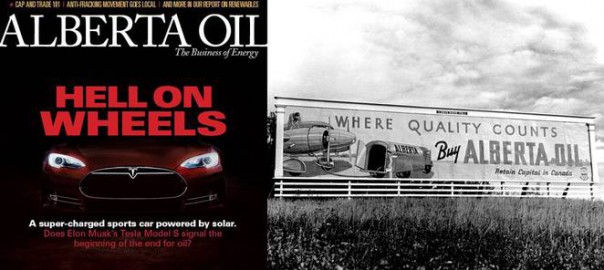
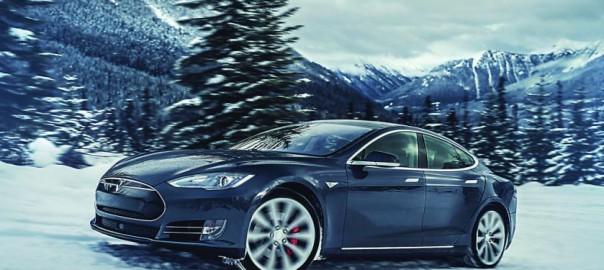
Tesla on industry magazine - end for oil? (Image: Wikipedia)

Tesla is the beginning of the end for oil?

A good find by our friends at EV Obsession, apparently a trade magazine from the oil industry, Alberta Oil, has put a Tesla Model S electric car on its cover (“Hell on wheels”) and published an article with this title and sub-title: “Is Tesla’s Model-S the Beginning of the End for Oil? Why battery technology could drive the electric vehicle to new heights – and disrupt the fossil fuel industry in the process”.

You get the feeling that the thinking of many inside the oil industry is starting to change; for the longest time, most of the comments and official forecasts from the industry basically said that, yes, electric vehicles are coming, but they won’t be a big deal for many decades, and that maybe in 30-40 years they’ll represent a few percents of the vehicles out there.

Tesla on industry magazine - end for oil? (Image: Wikipedia)
Tesla on industry magazine – end for oil? (Image: Wikipedia)

This reassuring (for them) prognostication about the status quo was repeated like a mantra until even most people who heard it over and over in the media accepted it as truth. But that’s not how things work. We can’t know that far in advance how things will be, and if you had asked someone in 2006 whether billions of people were going to own super-powerful internet-connected smartphones within less than a decade, they’d have thought you were crazy. What looks obvious in hindsight isn’t obvious at all looking forward. Why? Because change is non-linear. Things move slowly for a long time, and then you reach a special tipping point where change accelerates. For example, solar power adoption was relatively slow until the price per watt of solar started getting close to other sources (first with incentives, and now without). That changed the game and things shifted in a higher gear. And as we get close to solar being cheaper than all other sources of energy, things will shifter in even higher gear…

Read more: Treehugger

Tesla and i3 are Top Two Cars of 2015

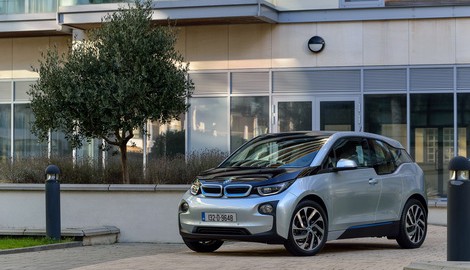
CNET has recognised the Tesla Model S and the BMW i3, giving them the top two spots in its Top 5 Cars of 2015.

Both vehicles are deserving of their rank. The Tesla Model S P85D redefines the electric car segment due to its sheer power and speed, while the i3 makes its mark by being the world’s most efficient electric car and perhaps the most exotic electric car out there today with its use of carbon fiber, available REx and more.

Source: Inside EVs

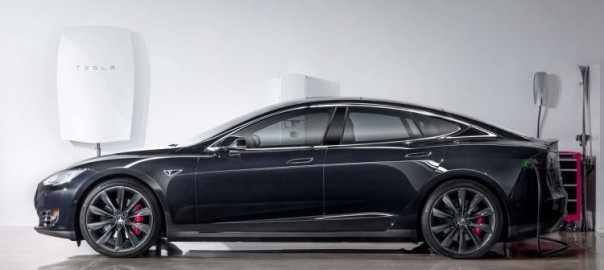
The Tesla Model S And The Powerwall (Image: Tesla)

Tesla Reveals Battery Storage Solutions

Late Thursday night [30 April] in Hawthorne, California, Tesla revealed its “missing piece to building a sustainable future,” which the company says puts the world on the road to “enabling zero emissions power generation.”

Tesla notes that the world currently uses 20 trillion kWh of energy annually, which is:

“Enough energy to power a single family home for 1.8 billion years or supply energy to a nuclear power plant for 2,300 years (or launch the Falcon 9 rocket seventeen million times).”

The company says that the Tesla Energy products launched today will help to start to wean the world off fossil fuels.

The Tesla Model S And The Powerwall (Image: Tesla)

More specifically the company is offering “a suite of batteries” for residential, business and utility use. Those solutions are outlined below.

As for what was available before today, Tesla CEO Elon Musk was very candid, “The issue with existing batteries is that they suck. They are expensive, unreliable and bad in every way.”

The Tesla CEO said that the first residential units will start shipping in about three months, but that the initial ramp will be slow, as early batteries will be built at the company’s Fremont factory.

However, next year production will switch to Tesla’s Nevada Gigafactory, and things will quickly speed up.

As a special bonus, the whole presentation made from California was done off the grid, via the company’s new utility grade “Power Packs”.

Read more: Inside EVs

10 Best ‘Eco Friendly’ Cars Of 2015

The 10 best ‘eco friendly’ cars of 2015 — as determined by the editors over at the noted vehicle valuation and information source Kelley Blue Book — were recently outlined in an interesting new list.

The top spot for the year was (not completely surprisingly) nabbed by BMW’s all-electric i3 model — following on the i3 grabbing other such honors elsewhere as well, and sitting at the top of all cars in the US in terms of “fuel” efficiency.

image24-e1429804688958_Green_Cars_Kelley

The new list from Kelley Blue Book is part of its yearly practice of compiling a ranking of the most efficient vehicles for the year, across all price ranges and power train variabilities.

“The list of ‘green’ vehicle standouts continues to blossom, and with strict Corporate Average Fuel Economy (CAFE) requirements coming down the pipeline, auto manufacturers are making stronger advancements each year in creating more environmentally friendly vehicles,” stated Jack R Nerad, executive editorial director and executive market analyst for Kelley Blue Book’s KBB.com.

“Topping this list for the second year in a row is the BMW i3 – an electric car that can sprint to 60 mph in just over 7 seconds, and is made in a factory powered entirely by four wind turbines. And if 81 miles of electric range doesn’t work for you, the i3 can be had with a small gas generator that lets you go as far as there are gas stations.”

Other vehicles that were ranked highly by the list include: the Volkswagen e-Golf (2nd); the Nissan Leaf (3rd); the Toyota Prius (4th); the Honda Accord Hybrid (5th); the Tesla Model S (6th); the Chevy Volt [Vauxhall Ampera] (7th); and onwards through the rest of the top 10.

Overall, a pretty ‘safe’ ranking arrangement — the e-Golf, the Leaf, and the i3 all got due recognition, as many other lists have been providing them. I suppose you could always contest Tesla’s position further on down the list, but all things considered, I’d say it’s probably fair. Myself, I’m heavily biased towards the Leaf, and would have placed it higher.

Source: Clean Technica

Tesla Model S Test Drive

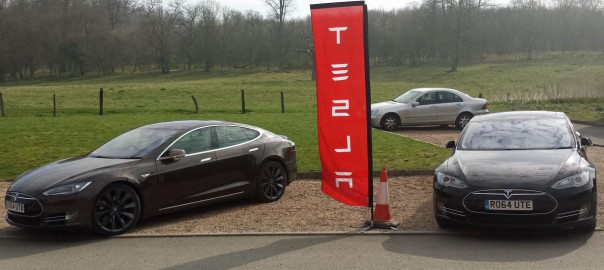
In April we organised a test drive of the Tesla Model S for a group of drivers. There was a Tesla Event scheduled for Warwick so we booked in for that. On the morning of the big day we headed over there in my ZOE.

Our very own Tesla Model S – for a while anyway (Image: T. Larkum)

We arrived a little early and they were still setting up so we waited with a coffee and Danish pastry before having a brief presentation on the Model S. Then we headed out with our guide, Adrian. We each took a turn of 10-15 minutes driving before swapping over, and overall took in a large loop around the local area.

The Model S touchscreen system (Image: T. Larkum)

I was very impressed with the car, both with the driving and the technology. It really does accelerate very hard and fast, yet quietly and smoothly. It feels a little unnerving, a bit like holding a loaded gun, as it can just take off at any moment. And this was only a standard performance model, the P85, not the new higher performance 4WD version, the P85D.

The boot – with the lift-up panel for the rear jump-seats just visible (Image: T. Larkum)

I very much liked the media system with its large 17” touchscreen. It seemed very futuristic, and was intuitive to use. Certainly I can appreciate the attraction of having such a large display for your satnav, or the option of the satnav and media player each having half the screen.

The famous ‘frunk’ (front trunk) since the motor is between the rear wheels (Image: T. Larkum)
The famous ‘frunk’ (front trunk) resulting from the motor being between the rear wheels (Image: T. Larkum)

The time to return the car came only too quickly. After a quick debrief we headed back to Northampton in the ZOE. I very much enjoyed the test drive, and I know it definitely opened the eyes of a group of petrol-heads to the possibilities of driving on electricity – the Tesla grin was evident. One of the drivers has since bought a Leaf. Roll on the UK launch of the more affordable Tesla Model 3!

A classic Tesla grin (Image: T. Larkum)
Tesla Model S P85D (Image: AutoExpress)

Norway to review electric car subsidies as sales soar

Norway is reviewing its subsidies for electric vehicles after generous government incentives made the country the biggest user of battery powered cars in the world, hurting state revenues, the finance ministry said.

Norway registered its 50,000th electric car on Monday, almost three years earlier than expected thanks to government schemes that have cut taxes and provided a plethora of benefits, including an exemption from tolls and parking fees, free recharging stations and the use of bus lanes.

A fifth of all new cars sold in Norway have been electric so far this year and tiny Norway, with just 5.1 million people, accounted for a third of all European battery powered car sales last year, official data showed.

“Our goal is to present a final agreement on the review of the future of automotive and fuel taxes,” the finance ministry said. “The outcome of the review will be announced in the revised budget (due in May).”

The current incentive scheme has been in place since 2012, but it came under criticism last year when sales of the Tesla Model S, a luxury sedan, soared and the budget lost 3 to 4 billion crowns ($380 to $510 million) in expected revenue.

Teslas, starting at about $70,000 and retailing for about$100,000 with extras, accounted for three percent of sales last year, prompting calls to end subsidies for wealthy buyers. Sales of the Nissan Leaf and Volkswagen e-Golf have also risen.

The Norwegian Electric Car Association argues that the benefits need to be maintained longer as only two percent of the cars on the road are electric, still a relatively small figure even if Norway leads the rest of the world by a wide margin.

Norway generates nearly 100 percent of its electricity from hydropower so the shift to battery powered cars results in a net reduction in greenhouse gas emissions — part of the country’s plans to reduce emissions by at least 40 percent by 2030 compared to the 1990 level.

Norway is also Western Europe’s biggest oil and gas producer with about 3.7 million barrels of oil equivalents per day and its offshore energy sector accounts for a fifth of the economy.

Source: Reuters

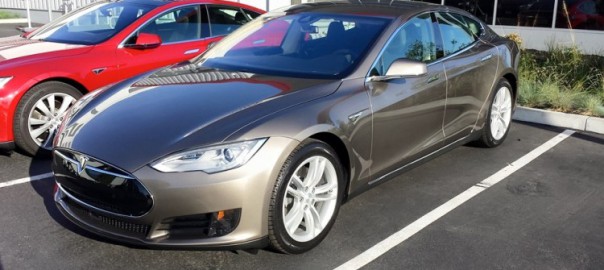
Warm Silver Tesla Model S 70D

Automobile Magazine Test Drives Tesla Model S 70D

Automobile Magazine released one of the first reviews of the Tesla Model S 70D.

Overall, the review basically states that the 70D is just a better entry-level Model S that’s slightly less capable than 85D.

The new Tesla 70D that jumps in place of 60 has 10 more kWh of battery capacity and more range (increase from 208 to 240 miles EPA). Because there are two motors instead of one and more total power, acceleration from 0-60 mph now takes 5.2 seconds (60 kWh Model S does it in 5.9). Top speed for 70D is 140 mph.

Warm Silver Tesla Model S 70D

There are new standard features and finally the price is higher by roughly five grand ($76,200).

The most significant change influencing the driving experience compared to the previous Model S 60 is all-wheel drive:

“Like every Tesla Model S, the 70D’s acceleration is instantaneous and unending. With no shift points or drops in torque, planting your right foot forces your passengers into their leather seats as the numbers on the digital speedometer soar. All-wheel drive now comes standard on the base Tesla Model S, as the 70D replaces last year’s rear-wheel-drive Model S 60 at the bottom of the food chain. The extra traction helps our car hustle away from a stop on rain-slicked pavement with no drama.”

We probably could assume that Tesla replaced 60 with 70D because the automaker believes that the combination of better performance/range and new standard features at slightly higher price will improve sales of the entry-level version.

“As much as we enjoy driving the Model S, we also like that it makes life easy for its driver and passengers. The Model S boasts super-intuitive controls on the touchscreen (only the hazard lights, transmission, windshield wipers, and power windows have physical switches), build quality rivaling a Lexus, and a comfortable ride that soaks up the worst potholes we can find. Fitting five people into the Model S reminds us how easily the Tesla could work as a family sedan, especially given the generous sizing of the front and rear trunks.”

“The Tesla Model S blew us away when we first drove it three years ago, and the magic continues today. From minor software updates to the addition of all-wheel drive, Tesla has continued to tweak and refine its pioneering electric sedan into something any car shopper would lust after. Its blend of efficiency, a super-futuristic driving experience, and a luxurious cabin helps the car appeal to a far greater swath of car shoppers than just tech-savvy Silicon Valley residents. With all those virtues and a competitive starting price, the 2015 Tesla Model S 70D makes a serious case for switching from a gas-powered luxury sedan.”

Automobile Magazine’s associate web editor Joey Capparella said:

“More than any other Tesla before it, the 70D strikes me as a legitimate competitor to cars like a BMW 5 Series or a Mercedes-Benz E-Class. Before, it seemed like a pie-in-the-sky early-adopter’s toy, but now I can see many more buyers considering a Model S.”

Senior editor David Zenlea said:

“This cabin is airy, spacious, and thoughtfully packaged. The center console is scooped out in the back to provide more room for the middle-seat passenger, and there is no transmission tunnel to eat up his or her legroom. Small details, but it’s part of what makes the Model S special.”

Source: Inside EVs

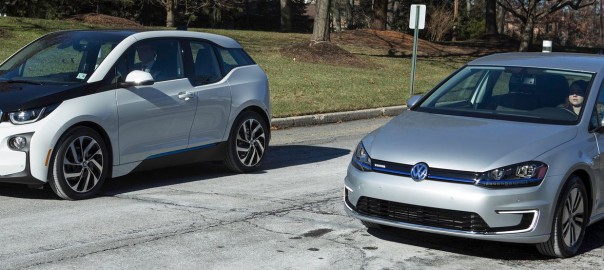
BMW i3 and Volkswagen e-Golf

Kelley Blue Book Announces Best Green Cars For Earth Day – BMW i3 Declared Winner

April this year, Kelley Blue Book (KBB) compiled a list of the most efficient stand-out cars of the year that are chosen based on efficiency, price, practicality and powertrain, just in time for Earth Day.

KBB’s “Best Green Cars of 2015″ list includes 10 vehicles, 5 of which are plug-in electric cars.

For 2015, the BMW i3 is the repeat winner. It captured the top spot from KBB last year too.

BMW i3 and Volkswagen e-Golf

In #2, we find the Volkswagen e-Golf, followed by the Nissan LEAF in third. The two other plug-ins to make the cut are the Tesla Model S in sixth and the Chevrolet Volt [Vauxhall Ampera] in seventh.

And here’s the ranking:

KBB.com’s 10 Best Green Cars of 2015

Rank 2015 Model-Year Vehicle

1 BMW i3
2 Volkswagen e-Golf
3 Nissan Leaf
4 Toyota Prius
5 Honda Accord Hybrid
6 Tesla Model S
7 Chevrolet Volt
8 Toyota Camry Hybrid
9 Ford C-Max Hybrid
10 Volkswagen Jetta TDI

Car review: The Tesla Model S P85D is seriously fast

Car review: The Tesla Model S P85D is seriously fast, with an “Insane” mode to scare off its rivals

Tesla, the darling of the alternative-power car makers, has made more progress in a few short years than the likes of Ford, General Motors and even Toyota when it comes to electric cars.
The American firm, co-founded by Elon Musk of PayPal fame, has not only made great strides technology-wise, but has also achieved much in terms of brand awareness. But Tesla is a fraction of the size of a traditional car maker, and it’s this that’s likely to have enabled the bullish firm to outmanoeuvre the lumbering giants who still have one foot in the previous century.

While the current focus is on Tesla’s premium market Model S, the firm’s original foray into electric was with Lotus Elise. The car’s 200-ish mile range and rapid acceleration were ample trade-offs for the patience required for charging the car.

Tesla’s moved on from the Roadster to the Model S, an altogether more upmarket and refined proposition, that’s not really a saloon but a large five-door hatchback. The car’s appearance is risk averse when viewed from a more adventurous European perspective, but that’s where the comparisons end.

The car’s voluminous hatchback boot, which is big enough to accommodate two rear-facing child seats if desired, is bookended by an impressively capacious front boot like what you’d find with Porsche’s Boxster, Cayman and 911 family.

Even the car’s cabin trumps many of its rivals. There are no bulky oily bits underneath to impact on cabin space, which is why the big Tesla offers its occupants a near flat floor, a generous amount of legroom and, upfront, oddment storage space where you’d normally find the gearlever and handbrake.

Where the Model S really differs from the usual premium suspects is in the ownership proposition and how it drives. And remember Tesla’s first model, the sporty Roadster? The firm has well and truly nailed its colours to the performance saloon mast with a supercar-baiting variant boasting two electric motors.

Heading up Tesla’s admittedly modest Model S line-up is the P85D, an all-wheel drive model complete with a similar electric range to the lesser variants and a zero to 60mph sprint time of 3.2 seconds. To put that into perspective that’s Porsche 911 Turbo territory. Not bad for a five-seat car positioned size-wise between BMW’s 5 and 7 Series.

The key to this performance is Tesla’s use of twin motors – one at each axle – producing a combined 682bhp and a similar amount of torque. And it’s the latter’s “twist action” that has the wow factor, as even the best supercar in the world can’t spin up its turbos fast enough to match the P85D’s rocketship-like acceleration.

Read more: City AM

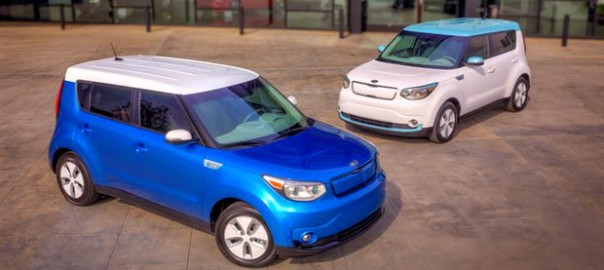
Kia Soul EV second only to Model S in driving autonomy

In my previous post about EVTEC’s four-port 100+ kiloWatt DC Fast Charging station, there’s a little footnote that deserves more attention — the Kia Soul EV supports 100 kiloWatt DC Fast Charging via CHAdeMO. The Kia Soul EV is getting strong reviews, with Kia making it available in several European countries, in Canada, and several U.S. States. The reviews indicate Kia carefully crafted an excellent electric car, and as a Soul EV owner I can attest to how good a car it is. That it also supports a 100 kiloWatt charging rate demonstrates the assertion that Kia paid attention to details with the Soul EV.

This, and the Soul EV’s driving range, make it second in driving autonomy to the Tesla Model S.

That’s a big claim to make about a car many people dismiss as a compliance car (it’s not), so let’s take a look at what it means.

Since September, the Soul EV has been shown twice alongside 100 kiloWatt CHAdeMO charging stations. Last September it was a Korean charging station maker demo’ing their station and the Soul EV in Europe. Then in late March, it was EVTEC (a Swiss company) showing off their four-port CHAdeMO/CCS station, alongside a Soul EV. Hence, while Kia hasn’t said much about it in public, this demonstrates the Soul EV’s capability of charging at 100 kiloWatts via CHAdeMO.

To my knowledge no other CHAdeMO or Combo Charging System (CCS) car can charge at this rate. Well…. that’s a hard assertion to test because the CHAdeMO and CCS public infrastructure doesn’t support 100 kiloWatts.

The Tesla Supercharger network, however, supports a 120 kiloWatt charging rate which is how the Model S is the first electric car that can implement proper road trips. That charging rate means a sub-1-hour recharge for a 260+ mile driving range.

Therefore, by supporting a 100 kiloWatt CHAdeMO charging rate, the Soul EV has the second fastest charging behind the Model S. BUT .. of course .. it’s difficult to be happy about that if you can’t find a 100 kiloWatt CHAdeMO station anywhere. We have to be satisfied with our 50 kiloWatt (or less) charging rate supported by the current infrastructure.

It does point to future standards compliant EV charging infrastructure, supporting electric cars from any manufacturer, with charging rates as fast as Tesla’s Supercharger system.

I said the Soul EV is “second in driving autonomy to the Tesla Model S”. We’ve just gone over the charging rate side of that, let’s now go over the driving range.

The Model S comes with two battery pack sizes – 60 kiloWatt-hours, 208 mile EPA range – 85 kiloWatt-hours, 265 mile EPA range.

The next longest electric car EPA range is the Kia Soul EV, coming in at 93 miles with many people reporting testing it at over 100 miles range. The Gen2 Toyota RAV4 EV has a longer EPA range, but is no longer on the market. The Mercedes-Benz B-Class Electric has a larger battery pack, but an 87 mile EPA range. Neither have fast charging.

The Kia Soul EV supports a 93 mile (or more) range, and 100 kiloWatt charging rate, with a 27 kiloWatt-hour battery pack. Some claim that a small pack like this cannot charge at such a rate without damaging the pack. Supposedly the rule of thumb is to not charge faster than 2x the pack capacity, so a Soul EV should max out at 54 kiloWatts charging rate.

That “rule of thumb” is a way of describing a 2C charging rate (1C means a 1 hour charging time, and 2C means a 1/2 hour charging time). The actual safe charging rate (“safe” meaning both actual safety from events like fire, and “safe” as in not damaging the pack) depends on the battery chemistry. Some chemistries can charge at a higher C rate than other chemistries. Did Kia choose battery technology that can charge at a 4-5C rate?

The phrase “driving autonomy” means a combination of charging speed and driving range. The gasoline cars are tops in both measures, with a 300+ mile driving range and a 5 minute recharge time. Our gasoline driving cousins prove every day what they can do with that sort of autonomy. It’ll be awhile before electric cars catch up (1 megaWatt charging rate?) but as the manufacturers push both driving range and charging rate forward we’ll get closer and closer to what the gasser drivers enjoy.

Going forward it’s best if electric vehicle drivers demand “autonomy” from automakers and charging network operators. That’s the only way to convince those stuck with range anxiety issues that electric cars are safe for adoption.

Source: The Long Tail Pipe