Category Archives: Sales

Dacia Spring 2021 (Image: Dacia.co.uk)

‘EV-incentivising BiK tax structure’ brings huge surge in electric vehicle orders

Fleet Alliance has reported a huge surge in electric vehicle orders, driven by both the 0% Benefit-in-Kind rate and the 2030 fossil-fuelled vehicles ban.

The fleet management specialist, which manages a fleet of over 37,000 vehicles, saw a 214% increase in EV orders in 2020 – and has recorded a rise of over 5,000% since the start of 2018.

The increase mirrors national new car registrations figures for 2020 from the SMMT, which show battery and plug-in hybrid electric cars (PHEVs) together accounted for more than one in 10 registrations – up from around one in 30 in 2019. This was despite a 30% downturn in total new car sales.

Such a rise in demand can be seen in the make-up of the Fleet Alliance fleet. Among the orders for alternatively fuelled vehicles in 2020, some 48.2% were for pure EVs, up from 28.5% in 2019. A further 48.9% were for petrol PHEVs, although this figure was down from 68.9% the previous year as pure EVs gained in popularity at the expense of hybrids.

Pure EVs now account for 15.2% of the Fleet Alliance managed fleet – compared to only 3.8% in 201, and 0.3% in 2018.

Dacia Spring 2021 (Image: Dacia.co.uk)

In contrast, diesel cars have plummeted to account for just 26.2% of the Fleet Alliance fleet, compared with 45.4% last year and 58.5% two years ago.

Orders of petrol cars have plateaued and account for 35.9% of the Fleet Alliance fleet, compared with 35.3% last year, and 34.1% in 2018.

Managing director Martin Brown said the figures show how the current 0% BiK rate for pure EVs has had a big impact on buying habits.

“EVs have seen a year-on-year increase of more than 200% and now account for over 15% of our fleet. “The increase in EV orders last year was at the expense of a fall in orders for PHEVs, which suggests that hybrid sales are starting to plateau while those of pure EVs are clearly accelerating.

“The new EV-incentivising BiK tax structure has undoubtedly played a large part in the switch to EVs,” he added.

Looking at individual models, the most popular is the Tesla Model 3, which now accounts for more than 40% of new EV orders at Fleet Alliance. It’s followed by the Kia e-Niro, which accounts for 9.1%, then the Mercedes-Benz EQ (8.0%), Nissan Leaf (5.4%) and Porsche Taycan (4.7%).

Among hybrids and plug-in hybrids, the Mitsubishi Outlander has slipped from its perennial top spot to fifth place, presumably because the manufacturer has announced it will no longer support the brand in the UK. The most popular model is now the BMW 330e plug-in hybrid with 11.5% of orders, followed by the Mercedes-Benz A-Class (10.4%), then the Toyota Corolla hybrid (6.6%), Volvo XC40 Recharge PHEV (5.7%) and the Mitsubishi Outlander at 5.1%.

Read more: fleetworld

It’s Time to Go Green!

If you would like to know more about Solar Panels and the PowerBanx range of home battery systems, and get a free instant quote, please complete our online form:

More drivers than ever plan to ‘go electric’ when they next change their cars

Nearly eight-in-10 drivers (78%) think that pure electric cars are still too expensive when compared to conventional vehicles of a similar size, although a steadily increasing proportion are planning to choose one when they next change their car, research from the latest RAC Report on Motoring shows.

Nine per cent of the 3,000 respondents to the study said they intended to ‘go electric’ next time around, up from 6% in 2019 and 3% a year earlier, clearly highlighting drivers’ growing willingness to opt for a zero-emissions model. But with the current retail price of new pure battery electric vehicles significantly higher than their petrol or diesel-powered equivalents, they remain out of many drivers’ price ranges, prompting most to say they would like more financial help from the Government.

More than half of drivers (53%) said they would like to see VAT on zero-emission vehicles either cut or abolished entirely, with a slightly smaller proportion (48%) favouring a scrappage scheme to make switching from a conventionally powered one to a battery-electric model affordable.

Three-in-10 motorists (30%) favour an increase to the current Plug-in Car Grant (PiCG) of £1,000, taking it up to £4,000, which is arguably the most straightforward policy change the Government could implement if it chose to.
Making vehicles more affordable for drivers is not the only thing that could entice drivers into a pure electric model next time around. Motorists also want to know they can charge these vehicles up easily when they are away from home, something that will be vital for the estimated third for whom home-charging is not an option.

More than four-in-10 drivers (43%) say they want the Government to set a binding national target for access to public chargepoints, such as ensuring 95% of the population live no further than five miles from the nearest chargepoint. Three-in-10 (28%) meanwhile believe the price of charging at public chargers should be capped.

The RAC Report on Motoring research also found the extent to which drivers believe the average range of battery-electric vehicles needs to increase before they will choose one over a petrol or diesel model – or rather how drivers’ expectations about the sort of distance they need to be able to go on a single charge might need to change, given that more than half (58%) of car trips are under five miles in length and the average car trip is just 8.4 miles long.*** For the second year running, drivers said they would want a car to have a range of some 375 miles – roughly the distance from Cambridge to Edinburgh – yet RAC analysis shows the average stated basic range of the top 10 pure electric cars sold in the UK stands at 235 miles. Only one model offers a range of 375 miles and upwards on a single charge.

Read more: About Manchester

It’s Time to Go Green!

If you would like to know more about Solar Panels and the PowerBanx range of home battery systems, and get a free instant quote, please complete our online form:

2020 Renault Zoe (Image: Renault)

Open The Gates! 23% Plugin Vehicle Share In Europe!

While the overall automotive market was still in the red in December (-4% YoY), Europe’s passenger plugin vehicle market had an historic month, having registered a record 281,000 vehicles (+264% YoY!)

While the overall automotive market was still in the red in December (-4% YoY), Europe’s passenger plugin vehicle market had an historic month, having registered a record 281,000 vehicles (+264% YoY!) — adding an amazing 115,000 units to the previous record, which was set in the previous month.

This impressive result shot December’s plugin share to 23% share (14% BEV), helping the 2020 numbers to rise 142% over those of the previous year, to well over 1 million units, and pulling the market into the … Disruption Zone. The 2020 PEV share ended at 11% share (6.2% for BEVs alone), a significant departure from the 3.6% of 2019 (2.2% BEVs), so we can say with some certainty that part of the fall on the overall market has more to do with the disruption provoked by plugins than Covid-related issues. And so, let the games begin. …

Expect 2021 to continue the disruptive trend. I expect 15%-plus 20% market share by the end of the year.

2020 Renault Zoe (Image: Renault)

In December, BEVs ran fast (168,912 units, +223% YoY), but PHEVs were even faster (+347%, 112,260 units). So, in the final 2020 numbers, while plugin hybrids ended below full electrics (46% vs 54% share), they recovered a massive 10% share compared to the previous year.

Last month’s best seller, the Volkswagen ID.3, had a Tesla-like peak in December and has beaten the Tesla Model 3 in a high-tide month, the first time any model achieved such a feat.

Last month’s podium welcomed the fresh Renault Captur PHEV, with Renault for the first time placing two models in the top 5. It was also the first time that the French brand won the monthly Best Selling PHEV title. Something it will repeat in 2021?

#1 Volkswagen ID.3 — The much anticipated German EV was finally delivered in large volumes, by delivering a massive 28,108 units, which might make it look like the VW hatchback has finally grown into its big shoes, but one wonders how many of these registrations’ were actual deliveries and how many were just “self-registrations” in order to avoid the EU’s CO2 emission fines. Moving on, the first MEB-platform based EV had the most success in Germany (7,144 units), the Netherlands (6,083), and the UK (3,200), with Norway (2,303), France (2,550), and Sweden (2,564) also posting four-digit scores. Expect VW’s new baby to become a familiar face in the medal positions, racing with the Tesla Model 3 and Renault Zoe for the monthly best seller title. Unless, of course, the new VW ID.4 starts to cast its shadow over its lower-riding sibling.

#2 Tesla Model 3 — The 2019 Best Selling EV in Europe delivered a record 24,664 units, which in normal times would grant it the Best Seller honour. But in the current disruption period, anything can happen. … The sports sedan’s main markets in December were the UK (5,700 deliveries), Norway (4,232), and Germany (3,293 units), with Switzerland (1,560) and Denmark (1,460) also scoring four-digit results. Expect the Model 3 to continue in the race for #1 throughout 2021. Unless, of course, the new Tesla Model Y starts to cast its shadow over its lower-riding sibling. (Haven’t I written this already?)

#3 Renault Zoe — Despite ending only in 3rd, December was another great month for the French EV, with the 16,322 deliveries of the Renault model representing a record score. The automaker profited from a mature manufacturing capability that allows it to respond almost immediately to demand peaks, thus avoiding the pesky waiting lists that are so common with many other OEMs. Last month, the Zoe’s main markets were France (5,978 units) and Germany (5,349), with Italy (1,153 units) a distant 3rd. Expect the Zoe to continue competing for the leadership title during 2021, unless, of course, the new Renault Captur PHEV starts to cast its shadow over its lower-riding sibling. (I am sure I’ve already written something like this before. …)

Read more: Clean Technica

It’s Time to Go Green!

If you would like to know more about Solar Panels and the PowerBanx range of home battery systems, and get a free instant quote, please complete our online form:

Charging Station in Sunderland (Image: Fastned)

General Motors plans to exclusively offer electric vehicles by 2035

DETROIT — General Motors wants to end production of all diesel- and gasoline-powered cars, trucks and SUVs by 2035 and shift its entire new fleet to electric vehicles as part of a broader plan to become carbon neutral by 2040, the company said Thursday.

The company plans to use 100% renewable energy to power its U.S. facilities by 2030 and global facilities by 2035 — five years ahead of a previously announced goal.

GM’s announcement comes a day after President Joe Biden signed a series of executive orders that prioritize climate change across all levels of government and put the U.S. on track to curb planet-warming carbon emissions.

Shares of GM increased as much as 7.4% during intraday trading Thursday morning to $53 a share. As of midday Thursday, shares were up about 4%. GM has a market cap of about $73 billion.

For several years, GM has touted a guiding “triple zero vision,” including a future with zero emissions through electric vehicles, but it never announced a time frame. The other goals include zero congestion and zero crashes through advanced safety technologies and self-driving vehicles.

Charging Station in Sunderland (Image: Fastned)

“For General Motors, our most significant carbon impact comes from tailpipe emissions of the vehicles that we sell — in our case, it’s 75 percent,” GM CEO Mary Barra said in message on LinkedIn. “That is why it is so important that we accelerate toward a future in which every vehicle we sell is a zero-emissions vehicle.”

The company characterized its 2035 EV goal as an “aspiration,” citing regulations, infrastructure and other factors need to come together for the plan to be achieved. David Friedman, vice president of advocacy at Consumer Reports, criticized the automaker’s lack of commitment to the goal.

“Strong aspirations are important and inspirational, but firm production plans and strong policies are what move the market and the climate,” he said in a statement.

Electric vehicles, including battery-electric and fuel cell-powered vehicles, are currently a niche segment of the global automotive industry, estimated at less than 5% of sales by analysts. EVs are more costly to produce than those with internal combustion engines due to the battery and fuel cells that power the vehicles. But automotive executives and analysts are bullish that EVs, led by stricter regulations to reduce carbon emissions, are the future for the automotive industry.

Dane Parker, GM chief sustainability officer, reiterated that the company plans to be profitable in its transition from vehicles with traditional internal combustion engines to EVs.

“We feel this is going to be the successful business model of the future,” he said during a media briefing Thursday. “We know there are hurdles, we know there are technology challenges, but we’re confident that with the resources we have and the expertise we have that we’ll overcome those challenges and this will be a business model that we will be able to thrive in the future.”

GM has already announced plans to shift three of its U.S. plants to produce electric vehicles. Parker said the company is “excited” about the transition at its other plants.

Read more: CNBC

It’s Time to Go Green!

If you would like to know more about Solar Panels and the PowerBanx range of home battery systems, and get a free instant quote, please complete our online form:

Ubitricity Electric Avenue project lamppost charging (Image: Siemens)

How electric cars are mapping UK house prices

The size and style of the houses, the goods in the shops nearby – all this can help build a picture of the relative affluence of a neighbourhood. Now it seems we can add the number of electric cars to the mix.

One of the building blocks to becoming zero carbon by 2050 will be the phasing out of petrol and diesel vehicles, with the UK government committed to all new cars being ULEVs or Ultra Low Emission Vehicles by 2030. Seemingly not a week passes without a car manufacturer releasing its latest electric vehicle or plug-in hybrid.

But while the number of new registrations of ULEVs doubled in the year to the end of September 2020, they still account for less than one per cent of all existing vehicle registrations. Despite lower running costs, the additional cost of production means a lot of those vehicles are targeted at the top end of the car market, while those produced by non-luxury brands still carry a significant up-front premium compared with their more traditional equivalents.

Partly for that reason, such cars are increasingly being seen as a status symbol.

Our research shows that on average, levels of private ownership of electric vehicles and hybrids in local authorities with an average house price of over £500,000 are more than four times those seen in the local authorities where the average price is under £200,000.

Ubitricity Electric Avenue project lamppost charging (Image: Siemens)

In the extreme they account for 1 in 27 privately registered vehicles in the five London boroughs with an average house price over £1 million – Kensington and Chelsea, Westminster, the City of London, Camden and Hammersmith and Fulham. Meanwhile they account for fewer than 1 in 500 privately registered vehicles in eight local authorities, including Middlesbrough, Blaenau Gwent and Hull.

And while 40 per cent of private ULEV registrations are in London and the South East, their highest concentrations are in some of the most affluent areas in each of the 11 regions of the country, with Harrogate topping the list in the North of England, Rushcliffe and Stratford upon Avon doing so in the Midlands.

How then do we get from a position where the electric car is the preserve of the wealthy to one where we have widespread adoption? Much is made of the need for a widespread public charging infrastructure. Generally the growth in the provision of these facilities has gone hand in hand with the rise in vehicle registrations.

Across the country as a whole there are 7.5 ULEVs and 20.5 fully electric vehicles for every public charging point. But there are significant local and regional disparities. London sits alone in terms of having relatively high rates of ULEV registrations and a relatively high number of public charging facilities.

The logistical challenge of the roll out of a public charging infrastructure will mean that access to charging facilities at home will be critical. However, the English Housing Survey tells us that 33 per cent of dwellings do not have a garage or off-road parking facilities, rising to 63 per cent in urban and city centres.

Ultimately, although home charging is critical the importance of destination and on-route charging should not be overlooked. Colleagues in the sustainability team at Savills are working with a number of installers to help with the national roll out of EV charging infrastructure, with the expectation that EV forecourts and charger hubs will have an increasingly important role to play in the coming years.

In the meantime, the extent of electric vehicle ownership in an area is as good a measure as any of the affluence of the neighbourhood. So if the growl of a V8 is being replaced by the whizz of an electric motor where you live, the chances are it is on the up.

Read more: savills

It’s Time to Go Green!

If you would like to know more about Solar Panels and the PowerBanx range of home battery systems, and get a free instant quote, please complete our online form:

Has the electric car’s moment arrived at last?

We’re on the cusp of transitioning to electric vehicles—if Biden and Congress take the right steps.

Joe Biden’s father sold used cars, steeping the future president in the world of combustion engines. The younger Biden washed vehicles on weekends, borrowed a Chrysler off the lot to drive to the prom, and hit automobile auctions to help stock his dad’s dealership. President Biden still owns the green ’67 Corvette his father gave him as a wedding gift, which he told Car and Driver magazine has “a rear-axle ratio that really gets up and goes.”

But if the White House’s resident motorhead gets his way—and that remains a big “if”—we may one day look back on the Biden presidency as the beginning of the end for gasoline-powered cars and trucks in the United States.

Biden is proposing sweeping reforms to the nation’s energy system to tackle climate change. But they aren’t just aimed at greening the electric grid or driving the nation away from coal and natural gas. Transportation accounts for more than a quarter of U.S. greenhouse gas emissions; it’s proven particularly thorny to figure out how to reduce that, given the number of vehicles on the roads. So, Biden is pitching a host of ways to steer the country toward electric vehicles, or EVs.

By nearly every measure, the popularity of EVs and hybrid vehicles is already surging. Yet despite an avalanche of promising news, the shift away from gas-fueled cars remains stubbornly marginal, compared with the scale of the problem, even as global temperature records driven by fossil fuel use are broken year after year. Clean vehicles still account for just 2 percent of cars sold in the United States, 5 percent in China, and 10 percent in Europe—and those are the world’s biggest markets.

“This transition is by no means inevitable,” says Nic Lutsey, with the International Council on Clean Transportation, an independent research outfit that works with policymakers around the world.

Yet analysts, environmentalists, clean-tech experts, and auto industry-backed researchers all say the right mix of regulation, consumer incentives, and research support might just be enough to spur dramatic acceleration. And thus far, these experts agree, Biden seems intent on pulling the right levers.

“The dam is breaking; the tipping point is here,” says Sam Ricketts, a member of the team that authored Washington Governor Jay Inslee’s climate action plan during his presidential run. Many of Inslee’s ideas have since found their way into Biden’s plans. “The question is how fast can the auto industry go,” Ricketts says, “and can it be fast enough to confront the climate crisis?”

That will depend in no small part on what happens next in Washington, D.C.—and whether Biden and the Democrats, who hold the White House and a razor-thin majority in Congress, can even get the pieces into place.

So close, yet so far
Vehicles powered by electricity have been around since the auto industry’s inception—several of the first 19th-century cars were powered by electrons. But their real promise wasn’t apparent until Toyota began globally mass-producing the Prius hybrid 20 years ago. Less than a decade later, Tesla introduced the Roadster, its all-electric sports car, and got a $465 million Department of Energy loan, jump-starting production of its all-electric sedans. The loan has since been repaid, and Tesla is currently worth seven times as much as General Motors.

Today, the trend is impossible to miss. Just since 2016 EVs and hybrid sales have nearly doubled in North America, and in 2018, for the first time ever, sales rose even as gas prices collapsed. Last year, with an economy wracked by COVID-19, electric or partly-electric vehicle purchases rose almost 5 percent over 2019 as auto sales overall declined by 15 percent.

Read more: National Geographic

It’s Time to Go Green!

If you would like to know more about Solar Panels and the PowerBanx range of home battery systems, and get a free instant quote, please complete our online form:

Volvo XC40 P8 (Image: media.volvocars.com)

The Five Factors Driving The Mass Adoption Of Electric Vehicles

Global electric vehicle sales grew by 43% during 2020, and in some markets such as Norway or the Netherlands sales outnumber petrol and diesel cars.
In Europe overall, electric sales during 2020 exceeded half a million units, while in the United States, the new Biden administration is considering incentives to put millions of electric vehicles on the road. Finally, after much lost time, everything indicates that we have reached the tipping point, that 2021 will mark the beginning of mass adoption, and that the internal combustion engine will have seen its day.

There are five factors behind the consolidation of the electric vehicle as a market trend:

Technology: the critical threshold that many considered necessary for the adoption of the electric vehicle as a mainstream automotive technology, consisting of improved and cheaper batteries below $100 per kilowatt hour, has recently been recently surpassed. In addition, battery technology continues to improve continuously, meaning we could soon be able to travel hundred miles on a five-minute charge, and having practically no problems with degradation over time.

Volvo XC40 P8 (Image: media.volvocars.com)

Emissions regulations: the imposition of emissions limits for vehicle manufacturers in the European Union — calculated on the total number of vehicles sold — has led the traditional car companies to begin switching to electric vehicles as the only way to avoid heavy fines. More and more companies are now considering their engine plants as assets that need to be disposed of urgently, disinvesting at an accelerated pace if emissions targets are to be met. In addition, several countries have brought forward the ban on the sale of petrol and diesel vehicles: in the United Kingdom, news that the target date for the phase-out has been brought forward to 2030 has increased interest in electric vehicles by 500%.

The environment: the growing evidence that the myths fed by the oil companies were false: electric vehicles are cleaner regardless of the origin of the electricity they consume.

Cost: although the price of electric vehicles is still somewhat higher than that of traditional vehicles, we’re getting ever-closer to parity, and there is growing evidence that in terms of total costs, running an electric vehicle is far cheaper, partly due to the price differential between electricity and diesel or gasoline, along with low maintenance. This change, in fact, threatens the traditional distribution structure of the automotive industry: one in six Cadillac dealers decided to close rather than follow the brand’s recommendations and start selling electric cars. Simply put, when you take maintenance out of the equation, there’s not much in it for dealers.

A fast-changing market: Volkswagen, copying Tesla, has launched its ID range; GM is pressing ahead with a complete transition; Toyota, after many years on the sidelines of electrification, has finally announced an all-electric vehicle. And then there are companies such as the UK’s MG, the alliance between the Chinese technology company Baidu and the automotive giant Geely, the announcement that Hyundai will manufacture electric vehicles designed by Apple, and the major investment round obtained by Rivian. Companies such as Volkswagen, the Renault-Nissan-Mitsubishi consortium or the alliance between Hyundai and Kia match or surpass the all-powerful Tesla in the European market. Technologically, Tesla is still several years ahead of its competitors, but undoubtedly, the arrival of cheaper electric vehicles from other brands, which brings a more complete range of models and prices, has acted as a real catalyst for market development.

At this stage in the game, as deadlines on their sale and restrictions on their movement loom, along with higher fuel prices and taxes, buying a petrol or diesel vehicle makes no sense and so more and more brands are reducing the presence of these vehicles in their range. Simply put, an obsolete technology is now being abandoned, a process that points to a healthier, brighter future for all.

Read more: Forbes

It’s Time to Go Green!

If you would like to know more about Solar Panels and the PowerBanx range of home battery systems, and get a free instant quote, please complete our online form:
Ubitricity Electric Avenue project lamppost charging (Image: Siemens)

Plug-in car sales grew by 140% in 2020

Sales of pure electric and plug-in hybrid cars soared last year, with more than 175,000 vehicles registered representing a growth of 140%.

The figures confirm that, for the first time, one in 10 cars registered in the UK last year were electric, with one EV registered every three minutes.

Across 2020, 108,205 fully electric vehicles were registered, up 185% year-on-year. Meanwhile, plug-in hybrid registrations rose by 91%, amassing 66,877 units.

This means the total number of electric and plug-in hybrid cars registered in the UK is fast approaching the half-a-million mark (409,330).

Ubitricity Electric Avenue project lamppost charging (Image: Siemens)

New company car tax rates helped drive the increased adoption.

Poppy Welch, head of Go Ultra Low, said: “The increase in uptake of EVs never ceases to impress me. While there were less than a handful of EVs to choose from in 2011, there are now more than 100 models available and for the first time ever, manufacturers are scheduled to bring more brand-new EVs to market than either petrol or diesel models. 2020 really was just the start of the electric revolution, and we’re looking forward to helping even more consumers and businesses begin their EV journey.”

The Tesla Model 3 topped the overall best-sellers list for two months of the year (April and December), while the BMW 3 Series established itself as the most popular plug-in hybrid.

Transport Minister Rachel Maclean added: “In what has been a difficult year for the wider car market, it’s encouraging to see that EV sales have dramatically increased over the year. This government is going further and faster than ever before to decarbonise transport and this is welcome news as we accelerate towards a cleaner, greener transport future.”

Read more: Fleet News

It’s Time to Go Green!

If you would like to know more about Solar Panels and the PowerBanx range of home battery systems, and get a free instant quote, please complete our online form:
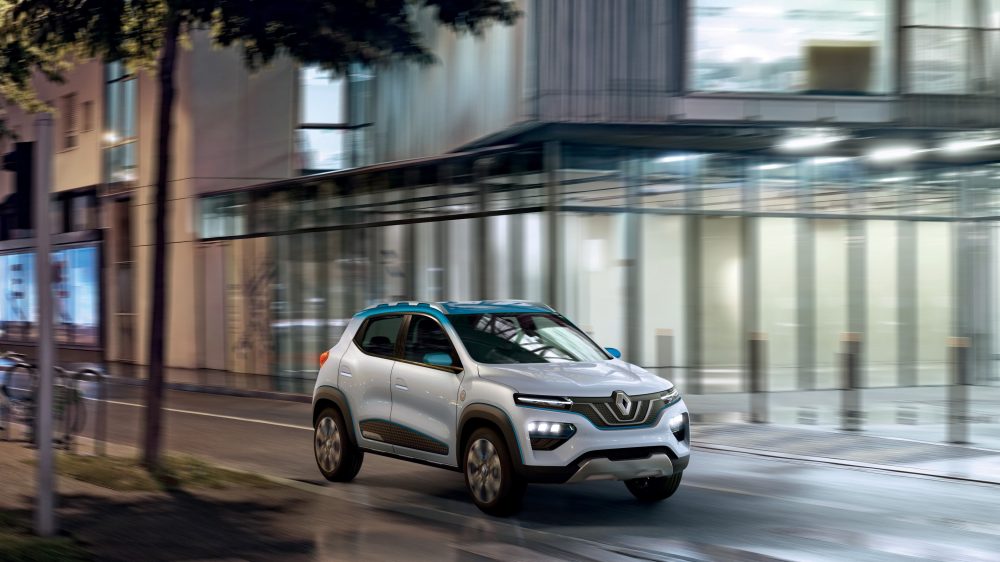
K-ZE All-electric Crossover (Image: Renault)

Inside the industry: Why rule of origin is a Brexit time bomb

EV batteries sourced from abroad could be subject to a 10% tariff, spelling trouble for cars assembled in UK

Feet up, mug of tea in hand and… breathe. Time to tick Brexit off your worries list? Don’t you believe it, because among the devilish details (most of which present more difficulties than impossibilities, thereby still eating time and expense) lurks a ticking time bomb that threatens to destabilise the UK car industry unless urgent action is taken.

It relates to a requirement for the UK or EU content of cars to ramp up between now and 2027, with a particular emphasis on the entire battery in any EV being sourced from either of the regions by that date. Failure to meet these ‘rules of origin’ will result in 10% tariffs being added that would threaten the value of assembling cars in the UK.

If you judge on EVs’ UK market share of 6.6% last year, you might well see it as an issue gladly kicked down the road, but the trajectory of uptake is heading only one way to 2030 and beyond.

Some 200,000 today work in vehicle manufacturing and its supply chain, many in jobs, most notably engine-related, that are on a path to no longer existing.

K-ZE All-electric Crossover (Image: Renault)

The choice is between encouraging battery makers to invest here (gigafactories cost billions, take around two years to build and need very complex supply chains) or giving away the skills and employment opportunities and importing from the EU, as Mini does on a relatively small scale for the Electric (proving that the objections over complexity and cost are surmountable, at least).

At present, the latter looks more likely than the former. Today we have one battery facility – in Sunderland, built by Nissan to support Leaf EV production, now sold but still supplying the factory – and a second at the late planning stage, being set up by Britishvolt, a start-up that’s set to launch in 2024 to supply a currently unknown customer base.

Sunderland makes about 2GW of batteries per year, and Britishvolt will take that figure to 15GW, or enough to make around 250,000 EVs. In normal times, the UK makes around 1.3 million cars annually, so the need to scale up again if we want homegrown production beyond 2030 is clear.

Yet for now, there’s no visible queue of willing investors or government encouragement to make the UK look more enticing to investors. Meanwhile, EU nations are fast-tracking their plans and getting a headstart on developing the infrastructure that will be at the heart of the industry in the future.

Our place in the car-making hierarchy right now drives huge amounts of employment, revenue and investment. But without long-term planning, a large slice of its competitiveness is going to come back into the spotlight in just a few years.

Read more: AUTOCAR

It’s Time to Go Green!

If you would like to know more about Solar Panels and the PowerBanx range of home battery systems, and get a free instant quote, please complete our online form:

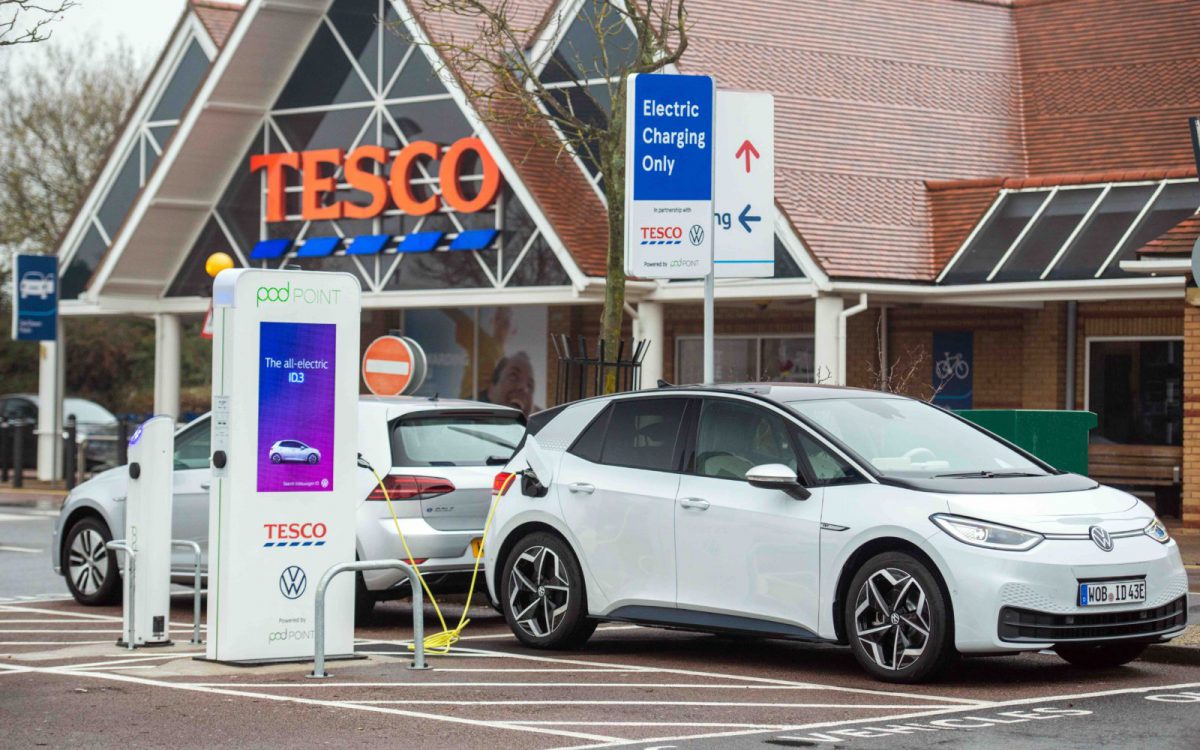
POD Point Rollout at Tesco Stores (Image: Tesco/POD Point)

Analysis: Demand for plug-ins rose, while fossil fuels dipped

That’s the precis of the sales story for new cars in 2020 but the devil is in the detail

New car registrations fell by around 29.4% in the UK last year, with the 1,631,064 cars sold the lowest total since 1992, as the industry was hit hard by the effects of Covid-19 lockdowns. But new sales of both electric cars and plug-in hybrids both rose sharply, with plug-in cars now accounting for more than 10% of UK sales.

Data from the Society of Motor Manufacturers and Traders (SMMT) reveals 680,076 fewer new cars were sold in the UK last year than 2019, the largest year-on-year fall since 1943.

The bulk of the sales decline in 2020 was attributed to the first lockdown, from March to June last year, when many dealerships were shut. Although sales fell during the second lockdown, in November, dealerships were able to continue offering ‘click and collect’ online sales – which will also be allowed during the current lockdown introduced in England by the UK government.

Before the pandemic began, the SMMT estimated around 2.2 million cars would be sold in the UK last year. The final figure represents a loss to the industry of around £20.4 billion and a £1.9bn loss to the UK government in VAT receipts.

“There’s no surprise it was a very, very difficult year,” said SMMT chief executive Mike Hawes. “These are unprecedented levels and it’s challenging the industry continuously.”

While the overall figures are grim, there are some positive signs for the industry. Sales of battery-electric vehicles (BEVs) and plug-in hybrids (PHEVs) both increased substantially. Those rises will be viewed against a backdrop of the UK’s intention to ban sales of all non-zero-emission cars, with the exception of certain hybrids, by 2030.

POD Point Rollout at Tesco Stores (Image: Tesco/POD Point)

How Covid-19 impacted the UK industry in 2020

Hawes said the UK car market outperformed Spain but fared worse than Germany, France and Italy, adding: “It’s notable that those countries had some form of incentive [for buyers, to boost new cars sales], sometimes confined just to PHEVs and battery-electric vehicles.”

The sales decline was particularly sharp in the fleet and business sectors. While sales of private cars fell 26.6%, fleet sales dropped 31.1% and business sales slumped 43.3%.

Aside from specialist sports cars (up 7.0%), every sector of the market declined in terms of total sales last year, but some performed better than others. Sales of superminis showed the smallest fall in total sales and their overall market share grew from 29.7% to 31.2%.

EV and PHEV sales increase dramatically

The rise in the number of BEVs and PHEVs on sale in the UK helped to significantly increase sales of both last year. A total of 108,205 EVs were sold, representing a 185.9% year-on-year increase and rising from 1.6% of the overall UK car market to 6.6%. Meanwhile, PHEV sales rose 91.2% to 66,877, increasing from 1.5% of the market to 4.1%.

This means that 10.7% of all new cars sold in the UK in 2020 had some level of zero-emission running capability and could be plugged in. With standard hybrids included, 17.5% of cars registered in the UK last year were electrified. Sales of mild-hybrid petrol and diesel cars both increased.

Although that’s encouraging, Hawes noted that these figures will need to continue rising, given the UK government’s target of banning most internal-combustion-engined cars by 2030. He added that meeting this date requires “a strong industrial strategy from government that really ensures the UK remains competitive, attracts investment and remains a strong market [for EVs].” He also said “massive investment” is needed, both to develop battery manufacturing capability and the infrastructure required for mass EV uptake.

“We need an investment in infrastructure of something in the tune of £16bn, with a lot of that going into public on-street charging because not everyone has a driveway or designated parking spot with access to their own charging infrastructure,” said Hawes.

Although they remain the two most popular fuel types, the market share of both petrol and diesel cars declined in 2020. Sales of diesels fell 55.0%, from 581,774 in 2019 to 261,772, while mild-hybrid diesel sales rose from 33,931 to 60,953. Combined, diesel-engined cars now account for 19.7% of the UK market. That compares with 25.2% in 2019 and represents their lowest market share since 2001, when they accounted for 17.8%.

Read more: AUTOCAR

It’s Time to Go Green!

If you would like to know more about Solar Panels and the PowerBanx range of home battery systems, and get a free instant quote, please complete our online form: