Category Archives: Sales

The Long And Winding Road Will Lead To Tens Of Millions Of Electric Vehicles Being Sold

When Tesla founder Elon Musk appeared on the television magazine show 60 Minutes last Sunday, he acknowledged that the timing of his latest electric vehicle rollout had been slowed. But he nonetheless restated that he is committed to something far more profound — decarbonization of the automotive and energy sectors.

His goal, overall, is to make sure we leave behind a healthier planet for those who follow — that the technologies to which he pursues get mainstreamed and become economically attractive for all drivers. To that end, he wants his efforts to electrify the automotive sector to be the catalyst that prompts the entire industry to mass produce those vehicles. The odds?

Transport will drive energy demand. And growing markets in China, India and the Middle East are expected to increase oil demand by 12% between now and 2035, says Wood Mackenzie. But the advisory firm adds that these same locations will be the ones to widely employ electric cars. That will occur because of advances in electric batteries, which Wood Mackenzie thinks will hit pay dirt by 2027.

Electric car sales are expected to overtake petrol

“The threat from electric vehicles (EVs) beyond 2025 is material. Sales are growing exponentially and have outpaced expectations, boosted by faster than anticipated battery improvements,” it says.

It predicts EVs to grow from about 5 million today to 100 million by 2035, as the current fleet of cars is retired and as battery technologies improve — those that allow such cars to travel further before they would have to be plugged in. Today EVs comprise about 1.5% of the auto market.

Read more: Forbes

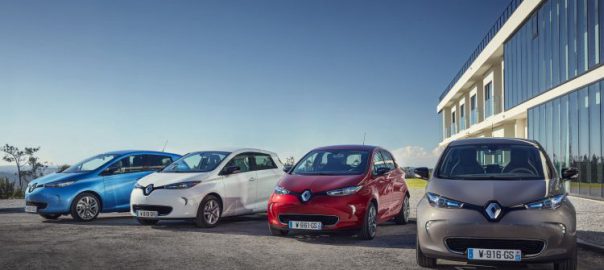
Electric Car Line-up (Image: Go Ultra Low)

What could lead to an electric vehicles inflection point?

Traditional auto manufacturers and middle distillate refiners should be wary that a niche technology could be about to snowball into full-scale disruption

Clayton Christiansen’s classic business book The Innovator’s Dilemma argues that value to innovation is an S-curve, with a long initial phase of relatively slow value growth followed by an explosive ramp-up once the disruptive innovation reaches an inflection point. Data from China and the US and China suggest that electric vehicles (EVs) might be at least close to hitting said point.

Electric Car Line-up (Image: Go Ultra Low)

“If you look at how policy is currently lined up, … EVs will be taking a 20% market share for new vehicles in China by 2025,” says Hui He, senior researcher and policy analyst at the San Francisco-based International Council on Clean Transportation (ICCT). The ICCT analyses policy to suggest likely outcomes, and the data says the 2025 outcome is likely. In August, Chinese EV sales hit 100,000 units, a new monthly record, putting cumulative EV sales for the year to date at 600,000. The most optimistic forecasts for full year 2018 sales were just shy of 1m at the start of year but may now need to be revised to at least 1.1m and even as much as 1.3m, as, like in the US, Chinese auto sales tend to be at their strongest in the year’s final four months.

In a Chinese new vehicle market expected to reach 29.2m units this year, EVs may take a 3.8% market share. Next year, with a forecast 1.7% increase to 29.7m new vehicles, EV sales could top 1.6m, or a 5.4% market share, and well on target to reach 20% by 2025 if not before.


Staying alert

The key to achieving a disruption innovation break-out is maintaining high annual growth rates once overall volumes grow to material levels. In the Chinese EV market’s infancy, 100% year-on-year growth rates were unsurprising. But the market, even at much higher sales levels, is still maintaining a 45% growth rate.

The ICCT’s He sees two key Chinese aims in fostering the rapid adoption of EV—the first being reduced air pollution, and the second developing world-leading EV car makers. What established auto manufacturers and the refiners that supply their fuel may have underestimated, says He, is China’s history of supersizing markets through bold policy initiatives.

China’s EV market also merits drilling into the headline figures. “A lot of analysts look at the quantity of EVs being sold, but it is also important to look at types,” says He. “In China’s Tier 2 cities outside the mega-regions, 70% of EVs sold are dedicated electric ultra-minis. They have more limited range, but are cheap, and the growth rate has been incredible.” China has, in effect, two separate EV car markets, and, according to He, adoption rates in the Tier 1 cities have been lagging their smaller counterparts. When Tier 1 cities start to catch up, that could extend the country’s high growth rate for longer.

In the US, EVs’ share of the new vehicle market looks set to surpass 2% this year, with a 75% annual growth rate. In California, their market share was close to 5% in 2017, and will climb above 8% in 2018. Relatedly, the US’ EIA predicted that 2019 gasoline demand was expected to be flat for a fourth consecutive year.

Read more: Petroleum Economist

Electric vehicle sales to ‘see a big lift’ over the next 2 to 3 years

  • Electric vehicle sales are likely to jump over the next two to three years as prices fall and more options are made available to customers, according to Evy Hambro, BlackRock’s global head of thematic and sector investing.
  • Customers will have more opportunities to move away from traditional combustion engines to electric vehicles and their options will not be restricted to only certain auto suppliers, he told CNBC’s “Squawk Box.”
  • Earlier this year, the International Energy Agency predicted that electric vehicle ownership will jump to about 125 million by 2030, spurred by policies that encourage the purchase of clean-running cars.

Electric vehicle sales will likely jump over the next two to three years as prices fall and more options are made available, according to BlackRock’s global head of thematic and sector investing.

Customers will have more opportunities to move away from traditional combustion engines to electric vehicles and their options will not be restricted to only certain auto suppliers, Evy Hambro told CNBC’s “Squawk Box” on Thursday.

“I think we’re at this tipping point of change,” Hambro said. “Over the next two years, we’re going to see this massive extension of breadth of models, we’re going to see price point of entry drop as well. We’re expecting to see a big lift in electric vehicle sales over the next two to three years.”

Earlier in the year, the International Energy Agency predicted that electric vehicle ownership will jump to about 125 million by 2030, spurred by policies that encourage the purchase of clean-running cars. That would mark a big jump from 2017 when the agency estimated there were 3.1 million electric vehicles in use.

That’s because most traditional automakers are now investing to create their own electric vehicles. For example, Volkswagen recently said it will spend about $50 billion on new plants, electric cars, autonomous driving and other mobility services in an attempt to be the most profitable maker of electric cars.

Read more: CNBC

Minister signals shift away from electric vehicle ‘buyer subsidy’ to lower costs

Recent cuts to the grants available for the purchase of electric vehicles are intended to move the sector away from “buyer subsidy”, according to energy and clean growth minister Claire Perry.

Speaking to the business, energy and industrial strategy select committee, she added that grant payments potentially offered cash to vehicle owners who could already afford to pay for electric vehicles.

Plug-in car grants for new plug-in hybrids were recently scrapped earlier, while cash for fully electric vehicles were cut from £4,500 to £3,500.

Perry added that public grant reductions would help lower the cost of electric models, suggesting that vehicle manufacturers were selling their vehicles at lower prices in other markets. She added that consumer demand for lower prices would see companies respond.

“We cannot transition to a low carbon economy through government subsidy. Somebody has to pay; it’s either taxpayers, consumers or shareholders and there is a constant interplay of these three,” the minister said.

Perry went on to place more focus on the role of government to grow the infrastructure required to accommodate increased numbers of EVs, which would help to grow the market in tandem with falling costs.

“We can no longer define success as how much government subsidy is going into a particular technology, we need to define it based on what is actually happening.

“Subsidising or not is not going to change the market, what is going to change the market is a rapid reduction in technology costs and investment in infrastructure,” she told the committee.

Read more: Current News

Cheapest electric car uk

Demand surges for hybrids and EVs in used car market

Consumer appetite for alternatively fuelled vehicles (AFV) is growing fast in the used car market.

Over the last three months the percentage of fuel related searches on Auto Trader attributed to AFVs almost doubled, increasing from 4% to 7%.

And in July, the UK’s fastest selling used car was a Renault Zoe; a first for a fully electric vehicle.

Renault ZOE Z.E. 40 Example Colours (Image: Renault)
Renault ZOE Z.E. 40 (Image: Renault)

“However, whilst AFVs undoubtedly represent an exciting opportunity for retailers, significant growth may be hampered by a lack of availability,” said Auto Trader director Ian Plummer.

In terms of stock to search ratio, each AFV car advertised on Auto Trader receives an average of four times as many searches than the average petrol car. Purely electric vehicles (EV) receive nearly nine times as many.

Plummer said the next generation of EVs will be in high demand throughout Europe.

“And with some manufacturers questioning the ROI in supplying post-Brexit UK with the much anticipated second generation EVs which will be in high demand throughout their other European markets too, demand may outstrip supply in both the new and used markets,” he said.

The biggest challenge to the government’s road to zero ambitions may no longer be the traditionally perceived barriers to entry, such as cost and infrastructure, but rather a matter of long-term supply and demand” said Ian Plummer, Auto Trader Director.

Read more: Motor Trader

What happens to used lithium-ion battery packs from electric cars?

Electric cars are a critical subject, and are likely to remain so as buyers respond to knee-jerk legislation by turning to electric vehicles (EVs) – be it plug-in hybrid or pure electric. Sales of those cars eligible for the (now reduced) government plug-in car grant are up 30 per cent year-on-year in the UK according to the SMMT, with 26,482 registered in the first half of 2018.

Notwithstanding the issues of excavating precious metals, there is a significant environmental burden associated with plug-in cars that must be considered: the batteries.


The scale of the issue

Most modern EVs use lithium-ion batteries; much the same as those that power your phone, toothbrush, tablet and most portable electrical items. Given how unfathomably numerous these small batteries are, it says a lot that EV batteries are expected to account for 90 per cent of the lithium-ion battery market by 2025 according to a recent forecast by consultancy firm Roskill.

For a longer-range forecast, consider that the UK government intends for all new cars and vans to be plug-in EVs by 2040. Assuming the new car market remains as buoyant as it is now, that equates to about 2.5 million new cars – and therefore battery packs – each year.

While the sheer volume of EV batteries that will need to be re-purposed or recycled is undoubtedly daunting, it’s worth starting on the positive note that these batteries have a long lifespan, and have proven very reliable. Most lithium-ion batteries will last about eight to 10 years before their performance drops to around 70 per cent (or less) of what it was when new.

So what can be done with these batteries when they reach the point that they need to be re-used or recycled?


Power storage for your home and business

One popular solution is to re-use them as power storage for domestic and commercial buildings. Nissan recently launched the largest power storage facility in Europe to use both new and used car batteries; the Johan Cruyff ArenA in Amsterdam uses 63 used EV battery packs and 85 new battery packs, which feed off of 4,200 solar panels on the stadium roof.

Read more: Telegraph

Global oil demand under growing threat from electric cars, cleaner fuel

LONDON (Reuters) – Electric vehicles and more efficient fuel technology will cut transportation demand for oil by 2040 more than previously expected, but the world may still face a supply crunch without enough investment in new production, the International Energy Agency (IEA) said on Tuesday.

Oil demand is not expected to peak before 2040, the Paris-based IEA said in its 2018 World Energy Outlook.

The IEA’s central scenario is for demand to grow by around 1 million barrels per day (bpd) on average every year to 2025, before settling at a steadier rate of 250,000 bpd to 2040 when it will peak at 106.3 million bpd.

“In the New Policies Scenario, demand in 2040 has been revised up by more than 1 million bpd compared with last year’s outlook largely because of faster near-term growth and changes to fuel efficiency policies in the United States,” the agency said.

The IEA believes there will be around 300 million electric vehicles on the road by 2040, no change on its estimate a year ago. But it now expects those vehicles will cut demand by 3.3 million bpd, up from a previous estimated loss of 2.5 million bpd in its last World Energy Outlook.

Read more: Reuters

Copyright: arisanjaya / 123RF Stock Photo

Why Fleets Will Drive Adoption of Electric Vehicles

Electrification is one of the most significant trends in transport today.

Future demand for both electric vehicles (EVs) and the associated electric vehicle supply equipment (EVSE) will, of course, be driven by increased adoption of electric vehicles by individuals and businesses. In this post, I will be making the case that the economics of EVs prove particularly favorable for fleet operations, focusing on full-battery as opposed to plug-in hybrid electric vehicles (BEVs vs. PHEVs).

Electric Vehicles Have Operating Cost Advantage

Electric vehicles are cheaper to operate than those powered by fossil-fuels.

To start, electric powertrains have lower energy costs on a per-mile basis than internal combustion engines. They convert energy into motion more efficiently, with today’s BEVs attaining the miles per gallon equivalent (MPGe) of around three times the MPG of their traditional counterparts. Electricity and gasoline prices vary significantly by region, with some countries imposing heavy taxes on transport fuel.

Copyright: arisanjaya / 123RF Stock Photo

Beyond enjoying lower energy costs, BEVs have fewer moving parts than internal combustion engine vehicles (ICEVs) and forgo liquid fuels entirely. Below is a list of part replacements/maintenance/issues that BEV owners do not need to worry about:

  • Oil changes, oil filters
  • Spark plugs, wiring, ignition coils
  • Muffler, timing belt, catalytic converter, air intake filters
  • Fuel filters, fuel injector cleaning
  • Engine sludge
  • Emissions checks
  • Less frequent brake replacement due to regenerative braking

An EV owner does need to be mindful of their lithium-ion battery, as these lose charging capacity over time and may need to be replaced. Fortunately, data from drivers of Tesla and Chevy BEVs point to significant battery resilience.

BEVs are expected to last a long time thanks to their simplicity and lower number of moving parts. For this reason, an owner may find that when a battery does eventually wear out, it may make sense to replace it instead of buying a new vehicle. Furthermore, since grid/building operators are making use of Li-ion batteries to improve power quality and better integrate renewables, the residual value of a lower capacity BEV battery is expected to be far larger than the scrap value of an entire ICEV.

Read more: Arc Web

Electric vehicles are going to render the fight over fuel economy standards moot

The auto industry is headed for revolution, Trump notwithstanding.

Though it may seem like several dozen scandals ago, the Trump administration is just now finalizing plans to freeze national fuel-economy standards in place, rather than steadily increasing them as Obama planned.

This is a terrible idea, for reasons I have detailed at length — it will cost consumers more, ensure more air and climate pollution, and, obviously, yield less fuel-efficient vehicles. It’s a bad idea economically, environmentally, and in terms of America’s international reputation.

I’m not going to go through all that again, though. Instead, in this short post, I want to do two things: point out a fact about the political calculations of this plan, namely, that it is opposed by the very corporate entities for which it was designed; and, second, make a bold prediction about the effect of electric vehicles on this fuel-economy debate. Basically, I think EVs are going to render the whole dispute moot!

First, the fact.

Car companies don’t like this plan

Car companies have acted with grotesque dishonesty throughout the history of the fuel-economy debate. It was only when Obama bailed them out — literally saving them from bankruptcy — that they agreed to come to the table to work out increased national standards.

When Trump took over, they immediately reversed course and, like jackals, descended on the new administration, pleading for regulatory relief, for a few more years of SUV profits.

And as in so many other areas, Trump gave business what they wanted. More than what they wanted. So much of what they wanted that they don’t want it anymore! Let me explain.

The administration has been holding public hearings on its proposal, and not surprisingly, it has received a torrent of opposition from the usual suspects — environmentalists, health groups, California. What is somewhat surprising is that considerable opposition has come from the auto companies themselves. (Also speaking out against, Axios reports: Shell Oil! When you’ve lost Shell …)

Ford has opposed it, along with the United Auto Workers. “Let me be clear,” said Bob Holycross, Ford’s global director of Sustainability & Vehicle Environmental Matters. “We do not support standing still.” GM and Chrysler have also lobbied the administration to alter its plans.

The Alliance of Automobile Manufacturers, a major automaker trade group, has also opposed the plan. “We support standards that increase year over year,” said AAM CEO Mitch Bainwol at a hearing.

“The industry is united in its request that the agencies work out an agreement with California” for a single, rising national standard, Honda said in recent comments.

As for Trump’s plan? “We didn’t ask for that,” Robert Bienenfeld, Honda’s assistant vice president in charge of environment and energy strategy, told the New York Times. “The position we outlined was sensible.”

Read more: Vox

Electric vehicle chargers could offer £6 billion opportunity to 2040 across shops, workplaces and motorways

An investment opportunity of up to £6 billion is available to 2040 owing to the need for millions of electric vehicle chargers at workplaces, shops and motorway services, according to a report out this week.

Released by Aurora Energy Research and supported by Eaton, NatWest, Lombard and the Renewable Energy Association, the study states the number of chargers needed at commercial and industrial (C&I) units could hit 3 million.

This would occur under a high deployment scenario with 35 million EVs on the road in Great Britain, as demand for charging facilities away from the residential sector increase.

Demand for these would be spread across fleet vans, workplace commuters, pubic car parks, and motorway stops, requiring between £2 billion to £6 billion of investment to fund the total cost of equipment and installation.

Dr. Felix Chow-Kambitsch, head of flexible energy and battery storage at Aurora said:

“High electric vehicle deployment over the next twenty years will radically transform Great Britain’s energy system, stimulating innovation through a shift to ‘smart’, increasing flexibility and enhancing the role of renewables in the energy mix.

“Commercial and Industrial ‘smart’ charging has a key role to play in meeting high levels of consumer ‘away-from-home’ EV charging demand and represents an exciting development for the whole energy industry.”

Read more: Current News