Category Archives: Sales

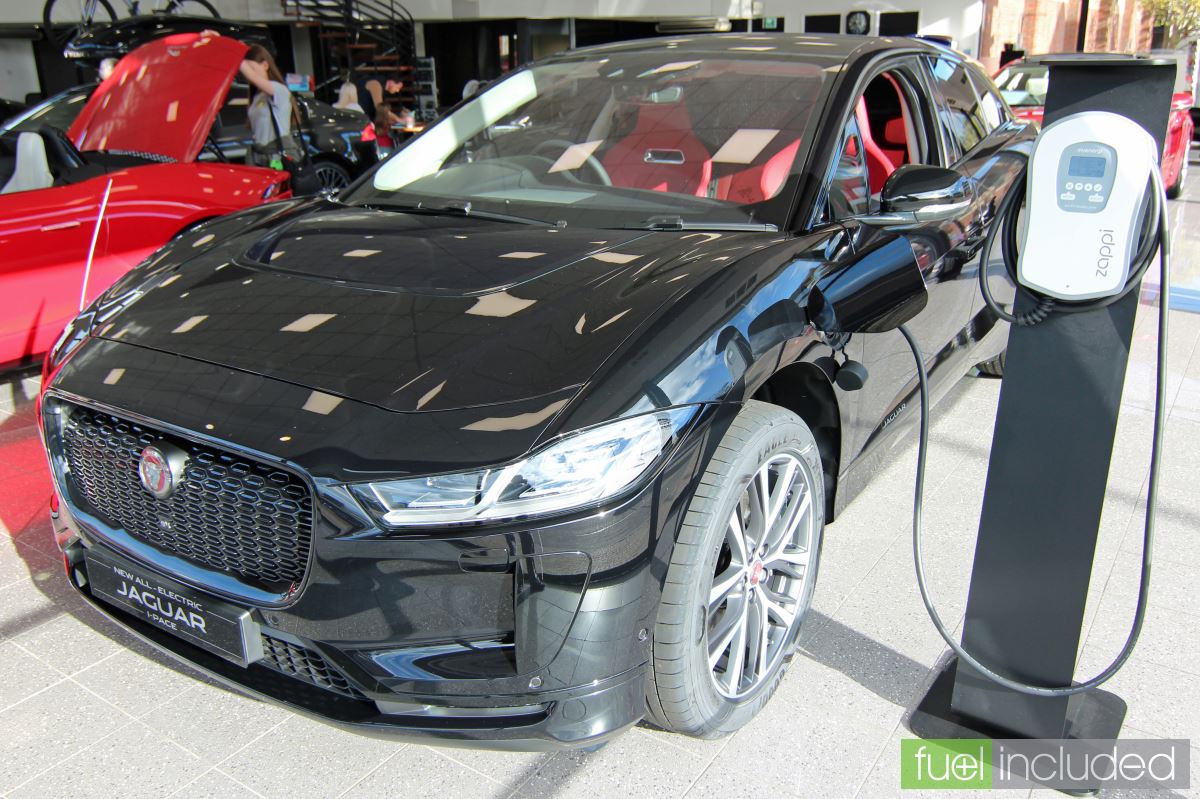
Jaguar I-PACE Electric Car (Image: T. Larkum)

Lease costs for electric vehicles fall in 2018

Leasing costs of battery electric vehicles (BEVs) have fallen throughout 2018 according to data experts at Cap HPI.

The study looked at five of the best-selling models in the UK and discovered that monthly lease costs had fallen by 9.5% on average.

The UK’s best-selling electric car, the Nissan Leaf saw monthly lease values fall by 6.6% between January and November 2018. Monthly lease prices for the Renault Zoe fell by 16% between June and November.

Between in the 12 months up to November 2018, the BMW i3 saw lease prices drop by 9.2%. The Volkswagen e-Golf saw prices drop 14% over the same period.

The Jaguar I-Pace saw the smallest price drop with a fall of only 1.7% since April 2018.
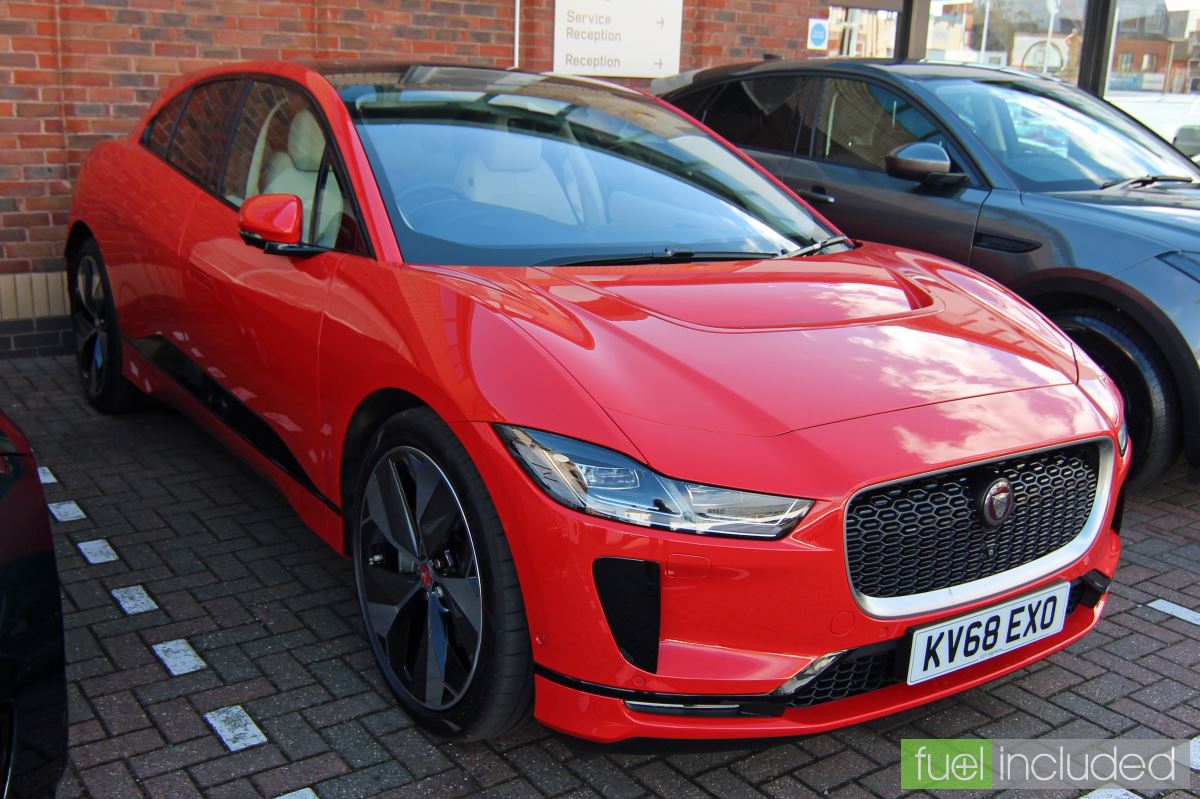
Jaguar I-PACE Electric Car (Image: T. Larkum)

Mark Turnbull, global head of consulting at Cap HPI, said: “Over the next few years the new price of BEVs will come down as more affordable ‘mainstream’ model ranges are introduced by many manufacturers.

“Used buyer perception will continue to improve as battery ranges are extended and charging times are reduced, and electric car technology proves to be robust and reliable. So subject to adequate investment in charging infrastructure, and positive government legislation, I believe their residual values will be stronger.

“A pincer movement of lower new prices and improved RVs will mean less depreciation in pound terms, and cheaper lease rates will speed up the adoption of this technology.”

Read more: Fleet News

Best tax-free cars 2019

Want to pay nothing in VED road tax? You’ll have to buy an EV. Here are out top 10 tax-free cars under the latest rules

The UK VED road tax system can be full of pitfalls, especially for the unacquainted. If you’re buying a new car, you’ll want to know how much that vehicle is going to cost you on a month-by-month basis, and that can vary wildly depending on which of the car tax bands your new wheels fall into. More often than not, a car’s on-the-road price will include its first year of tax, but after that it’s down to you to pay up every year.

From 1 April 2017, the government introduced new rules which completely shook up the system. Cars which previously cost pennies to tax now face significant annual bills and if you want a vehicle that’s free to tax for the foreseeable future you’ll now need an electric car.

That’s right, gone are the days when you could buy a tax-free car running on conventional fuel. Only zero-emissions vehicles will qualify for that particular privilege, and even then there’ll be something to pay annually on models costing over £40,000, so even hydrogen fuel cell cars pay the taxman for the first few years.

Read more: Auto Express

Jaguar I-PACE Electric Car (Image: T. Larkum)

Jaguar I-PACE = #1 Vehicle (Not Just EV) in Netherlands in December 2018!

The Jaguar I-PACE was the best selling vehicle (of any type) in December, while the Tesla Model S was the #1 plug-in vehicle for all of 2018.

December had 6,232 plug-in vehicle registrations in the Netherlands, a four-fold increase compared to the same month last year and the market’s best month since December ’16. The sales total translates into a stratospheric 31% plug-in electric vehicle (PEV) share in December, pulling the 2018 PEV share to 6%, a great result, especially when we realise that BEVs represented 89% of PEV registrations in 2018 and 98% in December alone.

Of course, the higher taxation of expensive BEVs in 2019 is the major reason for this surge, but something tells me (ahem, Tesla Model 3 …) that this exponential growth is set to continue through 2019.

Jaguar I-PACE Electric Car (Image: T. Larkum)

This good market performance was the result of three exceptional individual results, starting with the Best Seller of the Month, the Jaguar I-PACE, which delivered 2,621 units, not only a new all-time record for a BEV, but also the first time that a 100% electric vehicle became the best selling model in the mainstream market.

Read more: Clean Technica

Jaguar I-PACE Electric Car (Image: T. Larkum)

Electric Cars Sales Are Forecasted To Dramatically Rise in 2019

Latest electric cars sales results show we may expect a dramatic rise this year. Lead times should increase too.

In 2018 the electric vehicle segment grew by 10%. If we look at available figures, we’ll see, that one in every 100 cars sold in November 2018 was pure electric. Compared to the same month of 2017, it is almost by 70% more.

Experts have advised customers to make orders for EVs promptly to beat lengthening lead times.

A period from placing an order and its delivery to a customer (lead time) vary from 10 weeks to half a year for new electric cars, depending on a model.

Jaguar I-PACE Electric Car (Image: T. Larkum)

For example, the lead time for the Jaguar I-Pace (pictured) is 6 month, for the popular Hyundai Kona Electric – up to 10 months, the Hyundai Ioniq – 4 month, for the Volkswagen e-Golf – 18 weeks.

As for the all-electric Kia Soul, a small number of vehicles left in showrooms, as a newer model will replace the current one this year. Supplies are running low.

Read more: Car Glancer

Cheap Motoring

Let The Fully Electric Flood Begin!

After a couple of slow performances in previous months, in November, the European passenger plug-in market was back at cruising speed, with +31% year over year (YoY) sales.

There were some 37,500 registrations, pulling the year-to-date (YTD) count to 345,000 deliveries (+34%). In broader context, 2018 EV market share grew to 2.4%, thanks to a 3.2% market share in November.

But if on the surface everything seems to be back to normal, when you separate the fully electric (BEV) and plug-in hybrid (PHEV) powertrains, there are seismic changes. On the BEV side, sales (or I should say deliveries) jumped 96% YoY, the segment’s highest growth rate since July ’14. Fully electrics reached a record 23,000 registrations (61% share of all plug-ins), allowing them to (finally!) surpass PHEVs in the total year breakdown. This is the first that has happened since 2014. Historic month, indeed!

Cheap Motoring

On the other hand, PHEVs continue feeling the sting of the new WLTP standard, with sales down (-14% in November) for the third month in a row, the segment’s worst downward trend since … well, forever. Will PHEVs in Europe recover sometime in the future, or are they going to be swallowed by the upcoming BEV flood?

One thing is certain, BEVs start 2019 with the upper hand.

But the PHEV debacle isn’t equal across all brands. Some automakers (BMW, Mitsubishi, Volvo…) did their homework and continue to thrive under the new rules, leading to some brilliant performances. In particular, the #3 Mitsubishi Outlander PHEV is soaring again.

In November, the top spots didn’t have major surprises since sales were high across the board. Three of the top 5 best sellers last month hit record performances (the i3, e-Golf, and Zoe), while the Outlander PHEV had its best month since 2015. The leader, Nissan Leaf, didn’t have a memorable score simply because Leaf output in the Sunderland factory is limited by the weight of the Qashqai production there. Maybe Nissan should think about sending units from the US to Europe?

Read more: Clean Technica

Electric vehicles showed the strongest used performance in 2018

USED car values fell by 1.7 per cent in December as demand weakened to its lowest since November 2017, according to Cap HPI.

The December used car market saw the usual drop-off in retail and trade demand, with some vendors deciding to hang on to stock and aiming to sell for higher prices in January. Any fall in values, however, has to be seen in the context of an exceptionally strong year overall in 2018.

Electric vehicles showed the strongest average performance with values rising by 0.3 per cent at three years and 60,000 miles. Models such as the Renault Zoe, Nissan e-NV200 and Nissan Leaf continued to be in demand, with prices increasing, while Tesla and BMW models struggled to achieve cap clean prices.

Derren Martin, head of UK valuations at Cap HPI, said: ‘The pattern continues for the more affordable electric cars to be sought after, whereas at the higher end finding buyers is more difficult.

‘As a new year gets under way, there is often a feeling amongst vendors and buyers that prices go up as we enter January. Over the last five years, the average value movement in our Live product during January has actually been a drop of 0.4 per cent.’

Read more: Car Dealer Magazine

Chris Grayling under fire as promise to boost electric cars backfires

Less than 2% of vehicles used by transport department are electric, despite minister’s vow

Chris Grayling has been accused of failing to back up his positive words on electric cars with action after it emerged they account for less than 2% of his department’s car fleet.

The UK transport secretary said the government would “lead consumer uptake” of the cars when he laid out his plan for tackling air pollution with a switch to battery-powered vehicles.

However, he has come under fire for subsequently scrapping grants for plug-in cars, in a move condemned by vehicle manufacturers as “astounding”. Now official figures have revealed that only 29 of the 1,830 vehicles run by Department for Transport and its agencies are electric.

Labour said it was “laughable” that two months ago Grayling had been “bragging” about the DfT’s plans to take on more electric vehicles.

“The Tories’ policies show how little they care about the environment and dealing with air pollution. Chris Grayling’s hypocrisy and failure to get his own department to order more low-emission vehicles is further proof of that,” said Andy McDonald, the shadow transport secretary.

The Maritime and Coastguard Agency and Driver Vehicle and Standards Agency, which carries out driving tests, are the worst performers. Neither has a single electric model among their hundreds of cars.

So far this year, the DfT has bought 10 electric vehicles, including some of Jaguar’s £64,450 well-reviewed I-PACE models. Last year, it bought three. Other popular models in the UK include the Tesla Model S, which sells from £53,500, and the smaller Nissan Leaf, which starts at £21,990.

The government has set itself a target of making a quarter of its car fleet electric within four years, and 100% by 2030. About 2% of new car sales in the UK are of electric models, either fully electric or plug-in hybrids.

Read more: The Guardian

Electric vehicle leasing expected to become cheaper and more popular

Electric vehicles are expected to become much cheaper over the next two years as stronger residuals make them more attractive to the leasing sector.

Vantage Leasing says it should become cheaper to lease a battery powered car.

There is anticipation of a strong second-hand market for electric vehicles in 2021/22, which will in turn reduce the depreciation cost in a lease payment before then.

“Higher residual values for EVs in coming years due to the anticipation of a second-hand market should also make it cheaper to lease an electric vehicle in the very near future.

“That’s because any enhancement of EV residual values means the depreciation cost in a lease payment will also be smaller,” said James Buttrick from Vantage Leasing.

Registration figures from the Society of Motor Manufacturers and Traders (SMMT) show a dormant EV market, where sales of pure electric vehicles only increased by 1,307 vehicles from 2017 to 2018 year-to-date.

However, supply issues and the switch to WLTP has affected the availability and lead times of many electric and plug-in hybrid cars in the last 12 months.

Read more: Fleet News

Cheap Motoring

In the Switch to Electric Vehicles, Expect a Few Giants to Crash

“Every manufacturer feels like, ‘We’ve got to at least have a dog in this hunt or we’ll be completely left behind.’”

The future of the auto industry is going to look like the history of the cell phone. The two even share technology: the lithium-ion battery. As the world’s automakers gradually switch from combustion to charging, some of today’s dominant car companies will share the fate of a few former titans of the smartphone. Remember BlackBerry, Nokia and Palm?

“Who will be the winners in the electric car race? Who knows?” said Mike Ramsey, senior director of research at Gartner Inc. “The incumbents could be, or they could be cut out entirely.”

This transition will play out as a plethora of electric options land in showrooms. In the next two years, an additional 85 battery-powered models will be marketed, bringing the global fleet to 357, according to the latest tally by Bloomberg New Energy Finance. Volkswagen AG is near the front of the pack, promising 20 new electric models by 2020 and another 80 by 2025. Just this month, the German automaker said the internal combustion vehicles being designed now will be its last.

Cheap Motoring

“Every manufacturer feels like, ‘We’ve got to at least have a dog in this hunt or we’ll be completely left behind,’” said Karl Brauer, executive publisher for Autotrader and Kelley Blue Book. “If you ignore it and act like the market is never going to be ready, then you’re setting yourself up for real trouble.”

Being first, however, is no guarantee of success. Honda’s Insight promised a space-age 70 miles to the gallon on the highway when it rolled into dealerships as the first U.S. hybrid in December 1999. Yet the Toyota Prius, which reached the market months later, became the icon of greener wheels. A crowd of copycat hybrids arrived but none came close to matching the Toyota model’s cachet.

“An entire segment can be sucked up by one or two models,” Brauer said. Two decades later, the Prius accounts for almost half of electric vehicle sales to date.

The automaker that can capture this kind of icon status in the electric-vehicle space will be in a different gear for years. At the moment, Tesla Inc. appears to have that advantage, although there’s probably room for another paragon vehicle or two—a more affordable SUV, for instance, or an electric pickup truck.

Read more: Industry Week

Hyundai Kona Electric (Image: Hyundai)

2018 brought the electric car to everyone

The Model 3 might still be pricey but there are alternatives.

It’s easy to look at a luxury automaker like Jaguar and declare 2018 the year the automotive industry caught up with Tesla. But like the Model X and Model S, the I-Pace is out of reach for most folks. It’s great that people with large bank accounts can get behind the wheel of a vehicle that runs on electrons instead of dead dinosaurs. What’s better is that 2018 showed that the rest of us can do the same thing.

Elon Musk promised a $35,000 electric vehicle with a range of more than 200 miles. The Model 3 is supposed to be the result of that pledge. But the company has yet to deliver a base-model version of the car. Building cars is hard; building inexpensive cars for the masses is near impossible. But that oath, and the fact that Tesla made electric cars “sexy,” inspired (or forced) other automakers to realize there is a market for electric-powered transportation.

Hyundai Kona Electric (Image: Hyundai)

The result: On the horizon, there’s a wave of electric vehicles truly built for everyone — and that’s where real change comes from. The spark of revolution might begin with a few rich people here and there, but the fire needs to spread beyond the loading zones of private schools and the valet parking of fusion restaurants. The real transformation is parked in front of Denny’s and charging outside Target while the driver is taking care of back-to-school shopping.

It was possible to get behind the wheel of an EV without dropping a huge chunk of cash before now, but it was a hard sell. If you only have the money to buy one vehicle, something with a range of 100 miles seems like a bad investment. Sure you want to save the planet, but you also want the peace of mind of being able to run errands before and after work without worrying about running out of juice.

We started 2018 with a car that was ready to tackle range anxiety while delivering on outstanding value: the Chevy Bolt. It’s on sale right now and is a perfect entry into the EV world. Even if you hadn’t planned on buying an electric car, get behind the wheel and drive it. At that point, you’ll understand just how great an electric car, SUV or even truck can be.

Read more: Engadget