Category Archives: Sales

Cheap Motoring

The impact of Covid-19 on the electrification of transport: a UK perspective

Will the pandemic set back the work of the last 5 years another 20 years?

The global economy is facing an unprecedented downturn due to Covid-19. All major researchers and banks are forecasting global GDP drops, and the IMF is predicting the worst recession since the Great Depression. Global stock market performance indicators by sector highlight a 35% year to date drop (at time of writing) in share prices in the automotive sector, which has been hit hard by disruptions to global supply chains, the halt of factories, and the sharp drop in demand caused by the lockdown. The expected economic impact is grim, and the global economy faces some tough challenges in the coming years.

Cheap Motoring

Historically, the UK’s —and indeed Europe’s— track record at driving decarbonisation and investment in future emission-reduction measures during a recession, when the focus shifts to jobs and economic recovery, has not been good.

If the EU emission targets are changed, if the automotive sector reduces their focus on Electric Vehicle (EV) production, if the Energy industry does not maintain its drive, innovation and investment to decarbonise transport and if Government scales back its spending or subsidies on EVs (like China has been considering) or delays its ambitions—all of which are possible given the challenges of the current crisis—the UK could see a significant trough in EV adoption.

There is a mounting body of breath-taking evidence indicating that nature is the real winner in this crisis. For the first time we as consumers realise what it could feel like to achieve clean air in our cities. Our perspective on working and commuting has changed as we have rapidly adjusted to working from home. This is why industry and government must not lose momentum. Investment into the electrification of transport can become a lever to stimulate our economies and industry back to life.

Read more: Baringa.com

It’s Time to Go Green!

If you would like to know more about Solar Panels and the PowerBanx range of home battery systems, and get a free instant quote, please complete our online form:

Battery EV sales beat out diesel, scooping up 32% of the market

Battery electric vehicles (BEVs) outsold all fuel types except petrol cars in April 2020 as the new car market saw sales plummet -97.3%.

Only 4,321 new cars were registered in April, according to new figures from the Society of Motor Manufacturers and Traders (SMMT), coming in a 156,743 less than the same month a year prior.

Of these, 1,374 were BEVs, making it the second most popular vehicle type and taking home 31.8% of the market, following closely behind petrol (1,553).

Diesel, however, saw 1,079 registrations, marking the first occasion BEVs have outperformed either petrol or diesel cars in new sales.

Whilst sales of BEVs only dropped 9.7% in the month, sales of petrol and diesel cars fell 98.5% and 97.6% respectively due to COVID-19 restrictions, allowing for BEVs to pip diesel to the post.

The SMMT is predicting that the BEV market will double in 2020 to 77,300 units as a result of new models bolstering the market. In April, the Tesla Model 3 was the best-selling model across all the fuel types, followed by the Jaguar I-Pace. The Nissan Leaf also made an appearance in the top ten as the eighth best selling car of April 2020.

Read more: Current News

It’s Time to Go Green!

If you would like to know more about Solar Panels and the PowerBanx range of home battery systems, and get a free instant quote, please complete our online form:
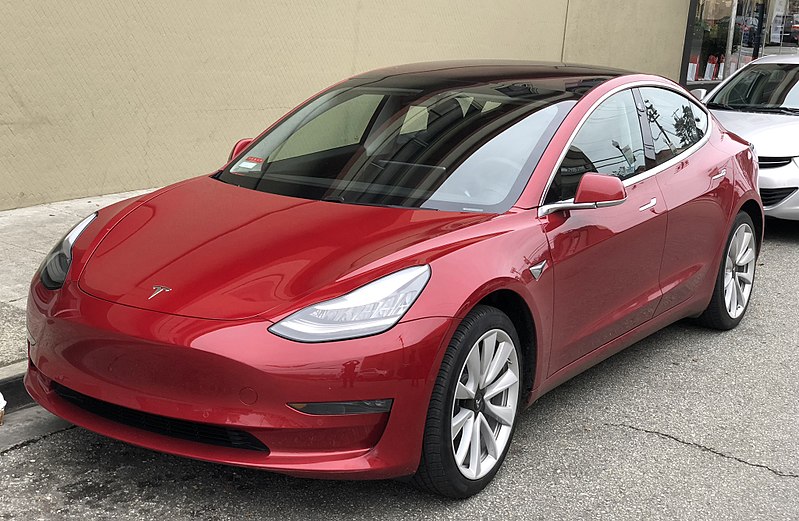
Tesla Model3 (Image: Wikimedia/Carlquinn)

Battery electric cars driven 26% further than petrol models, finds RAC Foundation

Electric cars are driven for 26% more miles in their first three years on the road than petrol models, research from the RAC Foundation has found.

The analysis, which pre-dates the steep fall in road traffic seen since the start of the coronavirus pandemic, is based on the MOT data for 516,936 vehicles.

It found battery electric cars cover an average of 9,435 miles per year over their first three years, compared to a petrol car’s 7,490.

Tesla Model3 (Image: Wikimedia/Carlquinn)

Diesel cars are driven the most, and cover an average of 12,496 miles in each of their first three years.

Steve Gooding, director of the RAC Foundation, said:

“Unsurprisingly people with diesels have been doing most mileage, probably seeking better long-distance fuel economy, but this study is also evidence that battery-electric powered cars are not just trophy vehicles signalling their owners’ green credentials but prior to the lockdown were racking up the miles as everyday transport.

“Tens of millions of people still drive petrol and diesel-powered cars, but this data suggests that owners of electric cars have found them to be a practical proposition, running up the sort of big annual mileages that many of us need to do, challenging preconceptions about their range and the ease of re-charging.”

Read more: Fleet News

It’s Time to Go Green!

If you would like to know more about Solar Panels and the PowerBanx range of home battery systems, and get a free instant quote, please complete our online form:

Number of hybrid and electric vehicles on UK roads reaches all-time high

Nearly 20 per cent of all new cars that joined UK roads last year were either fully electric or plug-in hybrid vehicles, an all-time record, new figures from the Society of Motor Manufacturers and Traders (SMMT) show.

While the number of vehicles on UK roads surpassed 40 million for the first time, CO2 emissions fell to the lowest on record.

The UK now has more than three quarters of a million low, ultra-low and zero-emission cars, although this makes up only around 2 per cent of all vehicles.

The number of these cars grew by 26 per cent last year, with 532,603 hybrids, 144,335 plug-in hybrids and 92,913 battery electric vehicles now in use.

Meanwhile the number of diesel cars in use fell marginally by -0.9 per cent to 13,723,299, accounting for 39 per cent of the parc, while petrol cars grew by 1.2 per cent to 20,657,838.

Diesel vehicles have seen declining sales ever since VW was caught using emissions-cheating software in its vehicles, coupled with rising concerns about their impact on air pollution.

SMMT chief executive Mike Hawes said the figures highlight the “essential role” the UK’s vehicle fleet plays in keeping vital goods and workers moving during the coronavirus pandemic.

It also illustrates that investment in cleaner, safer and more reliable vehicle technology is paying off as “demand for mobility grows”, he claimed.

“To ensure this trend continues, we must get the right support for businesses and their workers in place now so that when this crisis is over, the sector can help get the whole country and our economy back on the move,” he added.

Read more: IET

It’s Time to Go Green!

If you would like to know more about Solar Panels and the PowerBanx range of home battery systems, and get a free instant quote, please complete our online form:

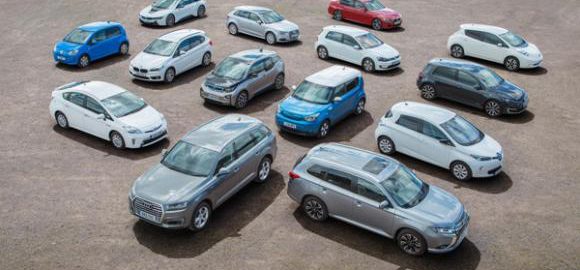
Electric Car Line-up (Image: Go Ultra Low)

Norway and the A-ha moment that made electric cars the answer

A country fuelled by hydropower has become the world’s electric vehicle leader

In 1995, the lead singer of the 1980s band A-ha and the head of the Norwegian environmental group Bellona climbed improbably into a converted electric Fiat Panda they had imported from Switzerland and set off on a road trip.

Electric Car Line-up (Image: Go Ultra Low)

They drove around Oslo refusing to pay the city’s sky-high road tolls, parking illegally wherever they could, and ignoring every penalty notice they were given. Eventually, the authorities impounded their car and auctioned it off to cover the fines.

But the stunt attracted massive media attention, and the point was made. Soon after, electric vehicles were exempted from road tolls, one of a large raft of incentives that have, over the years, helped make Norway the country with the world’s highest per capita electric vehicle ownership.

Last month, in an economy hit by the coronavirus crisis, fully electric cars accounted for just under 60% of Norway’s new car market, and plug-in hybrids just over 15% – meaning three in four of all new cars sold were either wholly or partly electric.

It still has some way to go, but the country looks on course to meet a government target – set in 2016, with full cross-party parliamentary support – of phasing out the sale of all new fossil-fuel based cars and light commercial vehicles by 2025.

“It’s actually quite amazing how fast the mindset’s changed,” said Christina Bu of the Norwegian EV Electric Vehicle Association. “Even in 2013 or 2014, people were sceptical. Now, a majority of Norwegians will say: my next car will be electric.”

Read more: The Guardian

It’s Time to Go Green!

If you would like to know more about Solar Panels and the PowerBanx range of home battery systems, and get a free instant quote, please complete our online form:

Volkswagen ID.3 electric car (Image: Volkswagen.com)

Electric Cars Fight Off Coronavirus Attack In Europe As Regular Auto Sales Tank

Battery-electric car sales in Europe are holding up well, even as regular internal combustion engine (ICE) demand crashes around them, but forecasters are scaling back much stronger pre-coronavirus predictions.

Projections may yet take a hit if the year’s most important battery electric vehicle (BEV) launch – Volkswagen’s designed-from-the-ground-up to be electric ID.3 – is delayed beyond its promised summer debut date. Delays in software development had threatened that launch, but VW said it still expects an August start to sales.

Volkswagen ID.3 electric car (Image: Volkswagen.com)

And there is a variation on the old adage at work here – it’s an ill-wind that blows nobody any good.

Manufacturers like Audi and Porsche had whipped up a formidable demand for their new electric cars, but shortages of batteries would have led to failures to deliver on time. The fact that the edge has been taken off new BEV demand has spared manufacturers the embarrassment of disappointing these well-heeled customers.

2020 was supposed to be the year when European BEV demand finally accelerated into an unstoppable high gear. These sales are crucial because of European Union (EU) regulations, forcing manufacturers to ratchet up the number of electric cars, with massive fines for those failing to do this. But despite the horrendous market conditions in Europe, where sales of regular ICE vehicles in April might be barely perceptible and most forecasts now reckon overall sales for the year may be down about 20%, BEVs are holding up well.

Read more: Forbes

It’s Time to Go Green!

If you would like to know more about Solar Panels and the PowerBanx range of home battery systems, and get a free instant quote, please complete our online form:

Climate crisis: Demand for electric cars triples, as wait times for new vehicles fall

Electric vehicle registrations were up almost 200% year-on-year in March

The demand for electric vehicles is rising dramatically in the UK and the wait time for new electric cars to be made available by manufacturers has fallen significantly.

The findings, from What Car magazine, come after the Society of Motor Manufacturers and Traders (SMMT) announced that new car registrations in Britain fell by 44.4 per cent in March due to the effects of the coronavirus shutdown.

But despite this, electric vehicle registrations were up by 197.4 per cent year-on-year in March, reflecting a surge in interest.

The growing market for electric vehicles comes as the government plans to implement a ban on selling new petrol, diesel or hybrid cars in the UK. In February the government said the ban will be brought forward from 2040 to 2035 “at the latest”.

Experts warned the government 2040 would be too late if the UK wants to achieve its target of net zero greenhouse gas emissions by 2050.

Read more: Independent

It’s Time to Go Green!

If you would like to know more about Solar Panels and the PowerBanx range of home battery systems, and get a free instant quote, please complete our online form:

Tesla Model3 (Image: Wikimedia/Carlquinn)

Waiting times for EVs expected to match petrol and diesel as market recovers

The average waiting times for the most popular electric vehicles on sale is expected to match that of conventional petrol and diesel models as the market recovers from the coronavirus crisis, new research has shown.

Though recent figures from the Society of Motor Manufacturers and Traders (SMMT) revealed that new car registrations fell by 44.4 per cent in March due to the effects of the worldwide pandemic, electric car registrations rose by 197.4 per cent year-on-year.

Tesla Model3 (Image: Wikimedia/Carlquinn)

Despite this increase in demand, the average waiting time for electric models has fallen significantly over the last 12 months, with the majority of EVs now available within 12 weeks, according to analysis by WhatCar?.

It contrasts with waiting times in 2019, which often exceeded 12 months.

The research also found that eight manufacturers have stock of their electric models in the UK now, which will allow for even shorter waiting times between ordering and taking delivery. These include the Tesla Model 3 and the Renault Zoe.

Read more: AOL

It’s Time to Go Green!

If you would like to know more about Solar Panels and the PowerBanx range of home battery systems, and get a free instant quote, please complete our online form:

March sees tripling of battery EV sales despite slumping new car market

Sales of battery electric vehicles (BEVs) soared in March 2020 to 11,694 despite a significant drop in sales of new cars overall.

In March, registrations of BEVs almost tripled, accounting for 4.6% of the market, according to new figures released by the SMMT. Plug-in hybrid electric vehicle (PHEV) sales also saw a boost, growing 38% in the month, however they fell short of the numbers BEVs achieved, with 6,818 registrations compared to 11,694.

However, the new car market saw an overall drop in sales of -44.4%, a harsher fall than during the last financial crisis and the worst March since the late nineties, the SMMT said.

203,370 fewer cars were registered than in March 2019, a fall larger attributed to the closure of showrooms in line with government advice to contain the spread of COVID-19.

The reason why BEVs saw a huge spike despite the overall decline is likely to be attributed to several reasons, according to Cornwall Insight’s EV specialist Katie Hickford, one of which is the changes to Benefit in Kind tax which came into effect on 1 April, providing a strong financial incentive for fleet EV purchases.

Another large contributing factor is also likely to be the Tesla Model 3, Hickford said, which is “likely the 9th best-selling car model during March 2020”.

Read more: Current News

It’s Time to Go Green!

If you would like to know more about Solar Panels and the PowerBanx range of home battery systems, and get a free instant quote, please complete our online form:

Car tax changes 2020: What updates are coming into effect? How will new rules affect me?

CAR TAX changes for 2020 are set to come into effect in April and will introduce a widespread package of updates to all vehicle owners.

Those with an electric car are set for further tax breaks which will remove all car tax charges for owners of zero-emissions vehicles. However, costs are set to rise for other vehicle owners as the government attempts to push drivers to take up electric vehicles.

Are car tax rates changing for petrol and diesel cars?

The chancellor’s budget confirmed car tax rates for non-electric vehicles will be increasing under the new updates.

VED costs will increase from 1 April although heavy goods vehicles will be exempt from rises to support the sector.

The budget statement says: “The government will uprate VED rates for cars, vans and motorcycles in line with RPI from 1 April 2020.”

Vehicle emissions will be calculated using the Worldwide Harmonised Light Vehicles Test Procedure (WLTP) for the first time in 2020.

Read more: Express

It’s Time to Go Green!

If you would like to know more about Solar Panels and the PowerBanx range of home battery systems, and get a free instant quote, please complete our online form: