Category Archives: Electric Cars

News and reviews of the latest electric cars (full electrics and plug-in hybrids).

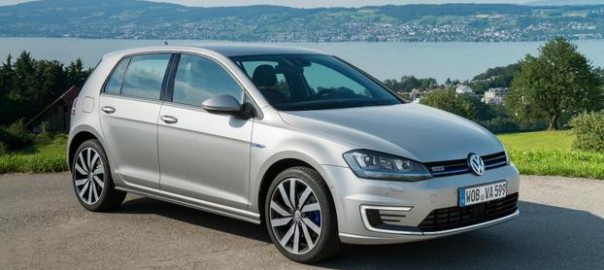
Volkswagen Golf GTE (Image: Evo)

Volkswagen Golf GTE Plug-in Hybrid

Volkswagen’s versatile 2015 Golf GTE plug-in hybrid has officially gone on sale in the UK.

Designed on the same Volkswagen MQB platform as the rest of the seventh-generation Volkswagen Golf family, the 2015 Golf GTE combines a 75 kilowatt electric motor mounted inside the gearbox and 8.8 kilowatt-hour lithium-ion battery pack with a 1.4-litre, TSI direct-injection gasoline engine capable of producing 148 horsepower.

Complete with a six-speed DSG gearbox designed specifically for use with hybrid drivetrains, Volkswagen says the Golf GTE is capable of producing a total power output of 201 horsepower (150 kilowatts) and a maximum available torque of 350 Nm (258 lbs ft) when both engine and motor work in concert.

In all-electric mode, Volkswagen claims a range of up to 31 miles per charge are possible, although based on previous brief drives with the Golf GTE we’d suggest a real-world range of between 20 and 25 miles per charge is more realistic.

Unlike some plug-in hybrids however, the Volkswagen Golf GTE operates in all-electric mode at speeds of up to 81 mph, with the gasoline engine only kicking in under extremly heavy acceleration. Due to its small size, the battery pack can be recharged from empty too full in just under four hours with a domestic power socket, or two and a quarter hours from an appropriate 16-amp charging station.

On power up, the Golf GTE’s default is to enter into all-electric mode, using up the energy in its battery pack first before switching on its gasoline engine. It can also be entered at any point during the trip after engaging anther mode by pressing the mode switch.

Like most other plug-in hybrids on the market today however, it’s possible to enter into ‘Battery Hold’ mode, which allows the driver to reserve their car’s battery charge for later use in the trip.

There’s also a ‘Battery Charge’ mode, which makes it possible for the Golf GTE to use excess energy from its internal combustion engine to recharge the battery pack as it is driving along. While this will result in temporarily dropping fuel efficiency, it does make it possible to drive in all-electric mode more than once in a trip although any driving made in electric mode using power generated by the engine has obvious emissions implications from an environmental standpoint.

Read more: Transport Evolved

Car exhaust (Image: BBC)

Why cheap gas can’t kill the electric car

From 2010 to 2014, U.S. electric car sales surged from almost nothing to about 120,000 per year. But the haters and doubters persist. Analysts and investing forums are buzzing about a coming stagnation. After all, in the past seven months the price of oil has collapsed from $115 a barrel to below $50. Gasoline prices have plummeted, too, fast approaching $2 per gallon nationally, and commuters are rejoicing. That means a key selling point for electric vehicles — low fuel costs — is gone. The electric car appears to be in trouble.

Surprisingly, it is not. This past week, the floor of the North American International Auto Show in Detroit was stacked with glitzy new electric cars, from the BMW i3 to the Chevrolet Bolt to SUVs and micro-cars. That’s because today’s electric car boom isn’t really about oil prices at all; it’s about clean air. Under the leadership of California, a group of environmentally progressive states (Oregon, New York, Maryland, Massachusetts, Vermont, Rhode Island and Connecticut) has created market-based mandates that set a floor under the electric-vehicle market. In other words, they’re forcing automakers to sell electric cars. The goal is to have 3.3 million of them on their roads by 2025. Thanks to clever policy design, the survival of electric cars doesn’t depend on the vagaries of the global oil market.

For more than a century, electric cars have repeatedly lost out to oil. As early as the 1890s, electric taxi fleets were stealing market share from horse-and-buggy drivers in New York, Philadelphia and Atlantic City. Even Thomas Edison was in on the game, spending more than a decade — and $1 million of his own fortune — developing a battery technology aimed at electric cars.

Electric cars, however, couldn’t keep pace with the fast-improving internal combustion engine. Its range, power and portability were all superior, thanks to oil. By 1910, Henry Ford (a former Edison Illuminating Company employee) had effectively crushed the early electric car. By 1927, half of all American families owned an oil-fueled car. Electric cars were no longer serious contenders.

But between 1969 and 1979, oil prices spiked, reviving interest in electric cars. In 1975, Congress took up a bill called the Electric and Hybrid Vehicle Research, Development, and Demonstration Act, which included $30 million for studies and deployment. A year later, Congress overrode a presidential veto to authorize $160 million for electric-vehicle research and testing over a five-year period. But when oil prices plummeted in the 1980s, policymakers retreated, halting funding for research.

Today, pessimists see a depressingly familiar pattern: Energy prices spike; huge sums of capital flow from the government and the private sector into oil alternatives; energy markets crash; those funds vanish and industries wither. And, of course, the electric car dies.

What makes California different is that its electric-car program isn’t tied to oil prices — because the project predates the oil shocks by more than two decades. After World War II, a mysterious pall of smog strangled Los Angeles. California’s response was to build a potent architecture for researching and regulating air pollution. This eventually became the California Air Resources Board (CARB), a body that rapidly outpaced the federal government in the science and policy of pollution control.

By 1970, California’s regulatory infrastructure was so developed that the national Clean Air Act allowed the state to set its own standards for emissions — and gave other states the option to follow its strict guidelines in lieu of those set by the federal government. If automakers wanted to sell cars in California — or in other states with similar regulations — their vehicles had to adhere to California’s emissions standards. These efforts accelerated in 1975 when Gov. Jerry Brown installed a new, aggressive chairman, Tom Quinn, at the state Air Resources Board. For a decade, CARB focused on cleaning up the exhaust from combustion engines. In 1990, with oil prices around $20 a barrel, CARB went even further, setting its sights on a car that didn’t pollute at all: a zero-emissions vehicle, an electric car.

California mandated that a certain percentage of cars sold in the state had to be electric — initially 2 percent by 1998 and escalating to 10 percent by 2003 — and then set about building a long-range strategic plan to help automakers fulfill the mandate. One key element was creating a market for car companies to buy and sell zero-emissions vehicle (ZEV) credits issued by the state for electric vehicle sales. If one automaker failed to sell electric cars, it could buy credits from a competitor who had succeeded. While building electric cars was expensive, so was buying credits; it also took a toll on a company’s reputation and deprived manufacturers of the technological insights they would gain by developing the cars. The incentives for automakers to push forward were in place.

Implementing the mandate was a long, iterative process, and the regulators’ initial goals proved to be overly ambitious. Over the decades CARB muddled through lawsuits and high-stakes policy brawls with automakers and the George W. Bush administration. Carmakers grumbled that California could not simply mandate innovation. “I wish that, instead of zero-pollution vehicles, CARB had mandated a cure for cancer,” Automotive News sneered. Then, for years, the Bush administration refused to grant California regulators a federal waiver for emission standards that until then had been practically pro forma.

But California kept going. Because the state was America’s largest auto market, it was too big for carmakers to abandon.

In 2010, automakers began selling a new generation of truly mass-produced electric vehicles, starting with the Nissan Leaf. California’s market for credits rewarded companies such as Tesla and Nissan that got out in front. These companies have reaped hundreds of millions of dollars from selling credits to laggards that did not fulfill their quotas. In the third quarter of 2014, Tesla Motors earned $76 million on ZEV credits alone.

California has also rewarded buyers of electric cars. It granted cash incentives to early adopters and gave them access to high-occupancy vehicle lanes so they could bypass the daily crush of rush hour. And California helped other states design their own incentive programs, which include perks such as rebates, free city parking and in some places free charging. The benefits make electric cars more attractive financially, particularly since the upfront costs of purchasing one might not be offset by fuel savings for years.

Today America is the world’s largest market for electric cars, and about 90 percent of them are sold in states following California’s program. The project took time to develop, but it finally broke the link between innovation policies and the capricious commodity cycle. The electric-car effort is just the kind of strategic planning that will be needed to transition away from fossil fuels, avoid the next oil shock and drive America toward a clean-energy economy.

Electric-vehicle sales may sag for a month or a quarter, but will cheap oil kill the electric revolution? Don’t bet on it. Electric cars are here to stay.

Source: Washington Post
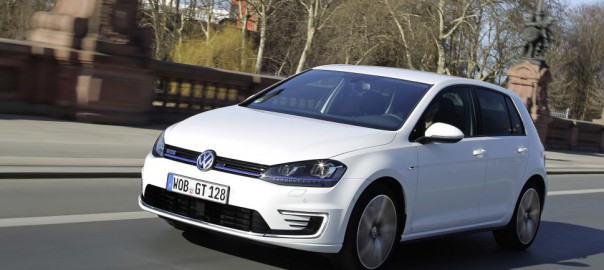
Volkswagen Golf GTE (Image: VW)

Golf GTE order books open

The Volkswagen Golf GTE is available to order from today [published 14 January], costing £28,035* RRP.

And unlike Volkswagen’s other electric vehicles (the e-up! and e-Golf) which are sold through a network of 25 e-Retailers, the GTE will be available through all of the company’s franchised sales outlets.

The name of Golf GTE reflects its standing in the line-up alongside the petrol-powered GTI and diesel GTD, while its pricing also reinforces this position. The new car is driven by two engines: a 1.4-litre 150 PS TSI direct-injection petrol engine and a 102 PS electric motor. Together, they produce a maximum power of 204 PS and a theoretical range of 580 miles, while maximum torque is 350 Nm (258 lbs ft). A six-speed DSG gearbox developed for hybrid vehicles is standard.

The electric motor is integrated into the gearbox housing, while further hybrid components include power electronics and a charger. An electro-mechanical brake servo and an electric air conditioning compressor make for energy-efficient braking and air conditioning. There are five operating modes: ‘E-mode’, ‘GTE mode’, ‘Battery Hold’, ‘Battery charge’ and ‘Hybrid Auto’. In pure electric mode (activated at the press of a button), the Golf GTE can travel up to 31 miles. Electric power can also be saved – for example when driving to a zero-emissions zone – and in electric mode, the GTE is capable of speeds of up to 81 mph.

With the TSI engine engaged as well, the Golf GTE can sprint from zero to 62 mph in 7.6 seconds and on to 138 mph, yet returns a combined cycle figure of 166 mpg and CO2 emissions of 39 g/km. As such it is expected to be exempt from VED and the Congestion Charge.

The Golf GTE’s 8.8 kWh lithium-ion battery can be charged in 3.75 hours from a domestic mains outlet, or 2.25 hours from a domestic wallbox.

The Golf GTE is available in five-door bodystyle only and in one highly-specified trim level. Visually, it combines elements of the e-Golf and Golf GTI, with C-shaped LED daytime running lights (e-Golf) and aerodynamic horizontal ‘fins’ (GTI). Where the GTI features red, the GTE has blue accents, including across the radiator grille and into the headlights (which as on the e-Golf are LED), while 18-inch ‘Serron’ alloy wheels are fitted as standard.

Inside too, the GTI’s red highlights are turned to blue – including the stitching on the steering wheel, gear lever gaiter and seats, and a blue stripe in the tartan pattern on the sports seats. Touchscreen infotainment system with DAB radio and Bluetooth is standard, while optional navigation includes bespoke EV features such as the ability to identify potential destinations on electric range, and charging points.

The GTE also has an e-manager which allows the driver to preset vehicle charging, as well as interior cooling or heating and these functions can be operated remotely using the Car-Net app on a smartphone; a three-year subscription is standard in the UK. The speedometer and tachometer are familiar, and the latter is supplemented by a power meter in the central display, which shows the status of the battery, whether or not power is being used and the intensity of any regeneration.

(*RRP OTR after £5,000 Government plug-in car grant has been deducted)

Source: Diesel Car Magazine

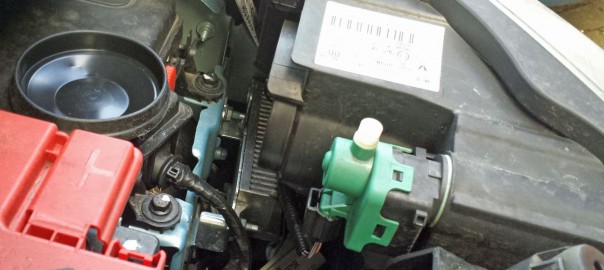
The left-hand headlight assembly with the rubber cover removed (Image: T. Larkum)

Changing the Headlamp Bulbs in a Renault ZOE

ZOE Headlight Bulb and Owner's Manual (Image: T. Larkum)
Figure 1: ZOE Headlight Bulb and Owner’s Manual (Image: T. Larkum)

The headlights in a Renault ZOE are not particularly powerful at the best of times, but recently it became clear that my car was giving out so little light that it must have a blown headlamp. Having often changed the bulbs in other cars I decided to take this job on myself, despite finding that changing the bulb in my wife’s Ford Focus was something of a trial.

The left-hand headlight assembly with the rubber cover removed (Image: T. Larkum)
Figure 2: The left-hand headlight assembly with the rubber cover removed (Image: T. Larkum)

I dived into the Owner’s Manual (see Figure 1) to confirm the type required – “Bulb Type: H7, use anti U.V. 55W bulbs so as not to damage the plastic on the headlight” – and picked one up from the local Halfords.

Renault ZOE headlamp bulb assembly (Image: T. Larkum)
Figure 3: Renault ZOE headlamp bulb assembly (Image: T. Larkum)

The process of changing the bulb (the left-hand one) was surprisingly easy:

1. Pull off the rubber cover. See Figure 2 – the bulb is located in the housing just below the big white sticker.

2. Reach into the housing and grasp the headlamp assembly – it’s pretty fiddly, particularly if you have large hands – see Figure 3.

3. Twist the headlamp assembly anti-clockwise about 20 degrees. This is the trickiest bit as it’s both hard to hold and see. I jiggled it and eventually it turned enough to come out.

4. Pull out the bulb from its holder, and replace. Again this is a bit tricky as the bulb can be seated very firmly, just pull and jiggle to get it out. See Figure 4.

5. Repeat sequence in reverse, but try not to touch the glass of the new bulb.

Headlamp assembly removed ready for new bulb (Image: T. Larkum)
Figure 4: Headlamp assembly removed ready for new bulb (Image: T. Larkum)

That’s it – job done, and it was much easier and quicker than many other cars (including the Ford Focus!).

Plug-in Car Registrations in UK – December 2014 (Image: Inside EVs)

Plug-In Electric Car Sales In UK Continue To Grow

December 2014 was the second best month ever in terms of plug-in electric car sales in the UK.

2,114 registrations (2,141 according to data in the SMMT table here) is seven times more than in December 2013 and allows plug-ins to take over 1.27% market share.

For the year 2014, registrations reached 14,498, four times more than in 2013.  Average market share for the year is rising – 0.585%.

Plug-in Car Registrations in UK – December 2014 (Image: Inside EVs)

Mitsubishi stated that the Outlander Plug-in was the best-selling plug-in car in the UK, without revealing numbers though:

“The Mitsubishi Outlander Plug-in electric vehicle has been the major highlight of the UK car market in 2014. Its introduction has transformed the plug-in market, which it now leads by a significant margin, accounting for nearly half of all FYTD sales.”

As we know from previous stories, Nissan LEAF had 4,051 registrations (55% market share of all-electrics).

There are now over 23,000 plug-in electric cars in the UK.

Source: Inside EVs

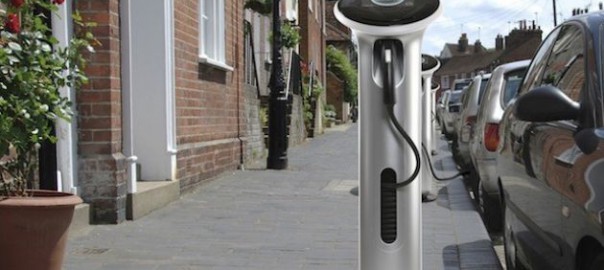
General Electric Watt Station Charge Post (Image: GE)

Innovative on-street EV charging solutions

While around 70% of UK households have access to an off-street location which can potentially be used for charging an EV, around 30% of UK households (40% in London) do not have a suitable location for home-based, overnight EV charging. This is potentially a significant barrier for EV adoption given the early stages of UK market development.

For EV-owning households with no off-street parking provision, the technical options and level of financial support are limited. While, in principle, local authorities are able to apply for funding to install an on-street charge point close to the EV-owner’s property, recent information from the DfT reveals that only two local councils have opted to provide this type of support.

Given that on-street units are also costly to purchase and install, the challenge therefore is to develop innovative and low-cost EV charging solutions for households and residential areas where no off-street parking/ charging facilities exist.

General Electric Watt Station Charge Post (Image: GE)

This white paper therefore outlines five possible alternative options which, depending on context, could provide safe, low-cost EV charging solutions for households with no off-street parking:

1. Cable channels and guides
2. Drop kerbs
3. ‘Pop-up power’ units and ‘power bollards’
4. Street lighting – shared power supplies
5. Shared EV-parking solutions

While, relevant legal and regulatory factors would have to be checked as would electrical safety, insurance and liability issues, it is hoped that the alternatives outlined will provide local authorities with new approaches to supporting the use of electric vehicles within their respective areas of influence.

This white paper is published jointly with Ecolane Consultancy.

Download: White paper: Innovative on-street EV charging solutions

Source: Next Green Car

Electric Cars Fast Charging (Image: BusinessCarManager.co.uk)

11.5 Million Drivers Missing Out On Cheaper Motoring

MILLIONS of drivers could be missing out on savings of around £860 per year in fuel and tax because myths still exist about running electric and plug-in hybrid cars.

The findings are the result of new research released today by Go Ultra Low, a joint initiative by government and the UK automotive industry.

According to the research, around 11.5 million motorists could benefit from the lowest cost, tax-free motoring by switching to pure electric vehicles, because in a typical year they don’t drive further than 80 miles in a single trip.

Millions more could benefit from other ULEVs, which can travel between 150 and 700 miles between charges thanks to range-boosting petrol and diesel assistance.

The Go Ultra Low research shows that 70% of car owners are planning to change their car within the next four years, while three in ten say they have considered purchasing a ULEV. Two thirds of motorists under the age of 24 have considered a ULEV compared to just a quarter of drivers over 55.

The survey also reveals that the majority of motorists still don’t fully understand how electrically-powered vehicles work and believe outdated myths across a number of topics, from range and charging to cost and practicality.

Commenting on the findings, motoring journalist Quentin Willson, said:

“Ultra low emission vehicles make so much sense, they are cheap to run, hugely practical and now almost every major manufacturer has something to offer.

“The Go Ultra Low research shows that a host of misconceptions are hampering consumer uptake, and more needs to be done to educate people about the numerous benefits of these vehicles.”

The survey discovered that a quarter of motorists misunderstand the range capabilities of ULEVs, with 16% believing electric vehicles are unable to travel 50 miles without recharging.

Yet the research also shows that more than a third of drivers said the furthest they drove in a single journey during 2014 was 80 miles or less.

With pure-electric vehicles able to travel up to 100 miles on a single charge and other plug-in ULEVs boasting up to 700 miles’ range, the survey’s authors claim electrically-powered cars are a viable, low cost option for millions of motorists.

Go Ultra Low is a campaign to help motorists understand the benefits, cost savings and capabilities of the raft of new ultra-low emission vehicles on the market.

The collaborative campaign is the first of its kind, bringing together the Department for Transport, the Office for Low Emission Vehicles, SMMT and a consortium of leading car manufacturers: Audi, BMW, Mitsubishi, Nissan, Renault, Toyota, and Volkswagen.

Source: Press Association

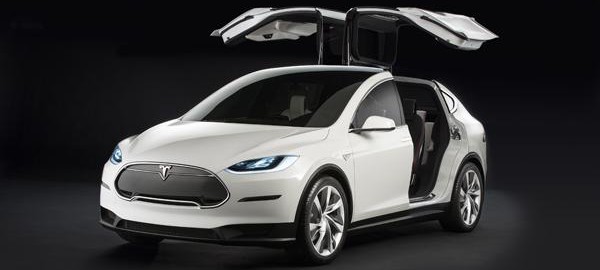
Tesla Model X (Image: Tesla)

Top 10 Electric Vehicles Coming Soon in 2015

Last year marked a big breakthrough for electric cars; the majority of major manufacturers invested heavily in developing electric drive-trains and subsequently added an array of appealing battery-electric (BEV) and plug-in hybrid (PHEV) models to their rosters.

By the end of 2014 there were over 17,000 plug-in cars and vans on UK roads with that number expected to more than double by the end of this year.

As noted by Dr Ben Lane, Managing Editor of Next Green Car: “2015 will see a continuing roll out of battery electric and plug-in hybrid models as UK motorists become more accustomed to electric drive-trains. This year will be the year when EVs start to considered as ‘normal’.”

The future is only looking bright for electric mobility and there a number of exciting EV prospects expected to feature prominently this year. Below is Zap-Map’s list of top 10 electric vehicles coming soon in 2015:

1. Tesla Model X – BEV

Tesla Model X (Image: Tesla)

Originally scheduled for 2013, Tesla recently announced that the eagerly anticipated Model X crossover will be launched in the third quarter of 2015. Despite being larger than the Model S, the all-wheel electric drive will give the Model X a similar level of performance (that’s 0 to 60 mph in around 5.9 seconds!). With 10% additional weight, the expected driving range will be slightly less; around 170 miles for the 60 kWh battery pack or 230 miles for 85 kWh battery. One the striking features of the next Tesla will be its rear ‘Falcon’ doors which open upwards instead of swinging outward. Final pricing has yet to be announced. Although it’s been a while coming, with the new Model X, Tesla is unlikely to disappoint.

2. Volkswagen twin-up! – PHEV

Volkswagen twin-up! PHEV (Image: VW)

The twin-up!’s 55kW powertrain consists of a 0.8 litre TDI diesel engine working in conjunction with a 35kW electric motor. The energy storage system includes a lithium-ion battery (energy capacity: 8.6 kWh), a conventional 12V battery for on-board electrics, and a 33 litre capacity fuel tank. On the official test cycle, the twin-up! delivers a combined fuel economy of over 250 MPG with a CO2 emissions of just 27 g/km. In zero-emission operation the PHEV can cover a range of 31 miles and is anything but a slouch: the twin-up! accelerates up to 62 mph in 15.7 seconds and has an all-electric top speed of 80 mph. Pricing to be announced.

3. Mercedes-Benz B-Class Electric Drive – BEV

Mercedes B Class Electric (Image: Mercedes-Benz)

The Mercedes-Tesla relationship is evident (and welcome) in the B-Class ED with the drive-train and battery pack coming from the California-based company. Capable of 125 miles per full charge, the B-Class ED provides electric motoring in a quality package with more reserved styling than some other brands such as the BMWi range. While the motors can deliver up to 179 bhp (Sport mode), two other driving modes are available: ‘Economy’, where power is limited to 131 bhp; and ‘Economy Plus’ with just 87 bhp and a maximum speed of 70 mph. Expected to be priced from around £27,000.

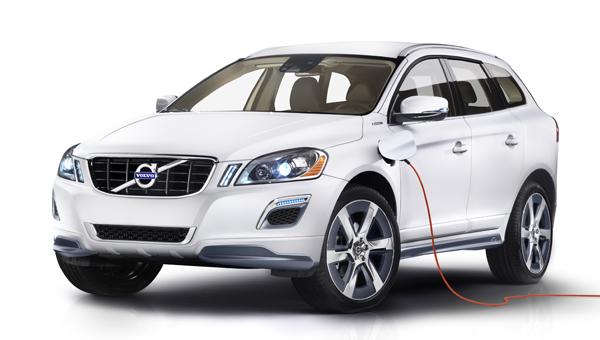
4. Volvo XC90 plug-in hybrid – PHEV

Volvo XC90 PHEV (Image: Volvo)

No doubt encouraged by the huge success of the Mitsubishi Outlander PHEV, Volvo will bring its own plug-in SUV to market in 2015, in addition to the usual range of petrol and diesel engines. While all will offer four-wheel drive, for the first time there will also be a front-wheel drive option. The XC90 PHEV will also feature a collection of entertainment and safety technology including a 9.3 inch screen compatible with Apple’s new CarPlay interface and Volvo’s new collision avoidance system. The XC90 range is priced from £45,750.

5. Volkswagen Passat GTE plug-in hybrid – PHEV

Volkswagen Passat GTE PHEV (Image: VW)

Now in its eighth incarnation, the new Passat range includes the GTE, the first Passat with a plug-in hybrid drive. Powered by a turbocharged direct injection petrol engine (TSI) and an 85kW electric motor, the GTE is capable (on the official test) of over 141 MPG (petrol) and 13.0 kWh/100km (electric) with CO2 emission of under 45 g/km. On a full tank and fully recharged 9.9 kWh lithium-ion battery, the new PHEV has a total driving range of over 620 miles. In ‘E-Mode’, the Passat GTE can also cover a distance of up to 31 miles with zero emissions. AC charging options include standard (or ‘slow’) charging at 2.3 kW from a domestic socket in 4.25 hours or an optional a home 3.6 kW charger which provides a full charge in 2.5 hours. Anticipated pricing from around £20,000.

6. BMW X5 e-drive – PHEV

BMW X5 e-Drive PHEV (Image: BMW)

The BMW X5 e-drive concept was first unveiled at the 2013 Frankfurt International Motor Show and is seen as the logical next step for the successful X5 series. Combining a four-cylinder combustion engine with BMW TwinPower Turbo technology and lithium-ion battery, the plug-in hybrid can driver approximately 19 miles solely on electric power. There is a choice of three driving modes, depending on requirements and situation – the intelligent hybrid drive option for a balance between sportiness and efficiency; pure electric and therefore emission-free driving; or Safe Battery mode to maintain the current battery charge. According to BMW, the X5 e-drive is capable of 74.3 mpg and on average emits 90g of CO2 per kilometre. Estimated to be priced at £55,000 – £60,000, the X5 e-drive is on course to directly compete with the Volvo XC90 PHEV.

7. Renault Zoe 2015 (new battery) – BEV

Renault ZOE EV
Renault ZOE EV

Renault’s battery-electric Zoe, the second best-selling EV after the Nissan LEAF, will be revitalised by a smaller and more efficient electric motor in 2015. By reducing the motors size, Renault expects a 10% increase in the Renault Zoe’s official 130 mile range. Renault also claims the improvements will reduce charging time by 20-30 minutes when using low-level power supply such as a 3kW 3-pin slow charging unit. The upgrades to the Zoe will be added to all new models from Spring 2015 Renault say.

8. Mitsubishi Outlander PHEV S – PHEV

Mitsubishi Outlander PHEV-S (Image: Mitsubishi)

Following on from the successful Outlander PHEV launch in 2014, Mitsubishi plans to release the Outlander PHEV-S. Power for the Outlander PHEV-S is expected to come from the same four-cylinder 2.0-litre petrol and twin electric motor system that drives the original car. This will see up to 204bhp sent to all four wheels, resulting in a 0-62mph time of 11 seconds and a 106mph top speed, whilst offering 148mpg and emissions as low as 44g/km CO2. The main difference will be in appearance, offering a refined interior and exterior design that will magnify the Outlander PHEV’s unique driving experience. Pricing to be announced.

9. Audi Q7 Quattro plug-in hybrid – PHEV

Audi Q7 e-tron Quattro (Image: Audi)

The Audi Q7 e-tron quattro, which will be launched soon after its conventionally powered counterparts in the spring, is the first plug in hybrid from Audi with a diesel engine. It is also the world’s first diesel PHEV with quattro all-wheel drive in the premium SUV segment. It returns the equivalent of up to 166.1mpg, which corresponds to less than 50 grams of CO2 per kilometre and can travel just under 35 miles on battery-electric power alone. Pricing to be announced.

10. Peugeot Quartz – PHEV

Peugeot Quartz PHEV (Image: Peugeot)

The Quartz plug-in hybrid concept mixes elements of a crossover vehicle and a saloon, to bring a new take on the SUV segment. It uses a plug-in hybrid drive train comprising of a 1.6-litre petrol engine supplemented by two 85kW electric motors, driving each axle. When the vehicle is in ZEV mode, it utilises the electric motor only and can cover up to 31 miles on a single battery charge. Peugeot have estimated the vehicle will not reach production until 2016; it will be interesting to see if the striking design mellows between now and then.

Source: Zap-Map

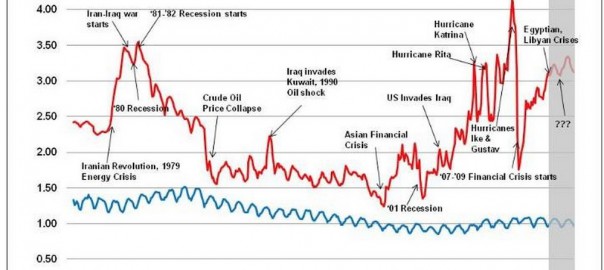
Gasoline Price vs Electricity Price (Image: EEI)

Oil Price Drop Kills Electric Car Sales?

Cheap Oil and Electric Cars

You are probably aware of the massive drop in the price of crude oil. It started before Christmas and it continues to fall.

This can only mean one thing, electric car sales will plummet, people will start buying bigger cars with bigger engines because petrol and diesel will be dirt cheap. Forever.

We all know that, once the price of oil goes down, it stays down, forever.

Oh wait, I’ve just remembered, no it doesn’t. It goes up again just as sharply, then down again, then up.

Gasoline Price vs Electricity Price (Image: EEI)

It’s a highly volatile market which keeps financial journalists busy so that’s good for them.

So why did the price of oil go down?

Oh yes, fracking. Of course, if only the namby-pamby-greenie-weeny-nimbies would allow this government and their mates to frack the hell out of Berkshire we’d have almost free oil and gas forever.

Except of course we wouldn’t, and now it seems even more unlikely.

Here’s an idea.

The tar sands in Alberta, the gas and oil in shale rock thousands of meters beneath the surface, geologists and oil companies have known about that stuff for decades, it’s only recently been financially viable to extract it because the oil price has been so high.

So extract it they did, they had a bonanza! Woop-de-doodie.

Then some chaps in Saudi Arabia noticed a bit of drop in demand for sweet crude (that’s a proper term by the way) and they said, ‘either we turn off the taps and make do with several billion dollars a day less than we’re used to, or we flood the market and put all the tar sands dudes and frackers out of business overnight.’

They did the latter.

It is now economically ridiculous to spend the amounts of money and energy to extract tar sands, fracked oil and all the associated problems that go with this absurd, last gasp effort to keep burning fossils. The fossil companies are moaning, they want more tax breaks or they’ll go out of business. Naturally they have the full support of the public….. not.

And interestingly this massive temporary reduction in the oil price has had no effect on electric car sales, they just keep going up.

It’s still tiny, it’s still a fraction of the total but the increases are in the 100’s of % per year.

Because as anyone with two brain cells is aware, people don’t buy electric cars just because petrol is expensive or cheap. There are hundreds of reasons, the main one being that the technology is more interesting, impressive, reliable and it is possible to make your own fuel.

That’s disruptive, that’s upsetting to the entrenched and well defended monopolies that govern us…. via the governments they pay for.

So I would suggest that electric car sales will not be affected by the drop in the price of oil.

As I always say, electric cars won’t save the world, but they might be pointing in a direction we should all be looking at.

Source: Llew Blog