Category Archives: Electric Cars

News and reviews of the latest electric cars (full electrics and plug-in hybrids).

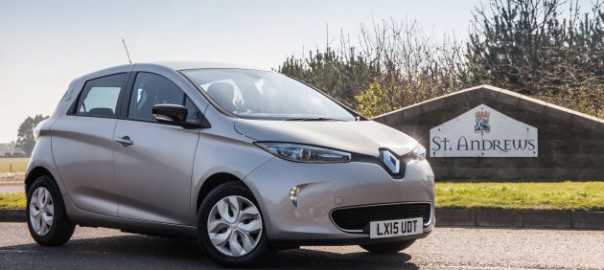
Chargemaster provide home charging for Renault ZOE

  • Chargemaster appointed to install home chargers for ZOE owners
  • Free home charging wall-box offer remains unique in EV market
  • ZOE can charge at home from 0 to 100% in three to four hours
  • ZOE able to rapid charge in public from 0 to 80% in 30 minutes
  • ZOE now available with a range of up to 149 miles (NEDC)
  • Award-winning ZOE priced from £13,445 (inc PiCG)

Renault ZOE owners can now charge their all-electric superminis at home with a free domestic wall-box from electric infrastructure market leaders Chargemaster.  Renault is unique in the electric vehicle market by offering a completely free home charging solution.

Customers buying a new Renault ZOE will receive a 7kW (30A) wall-box charger fully installed at their home for free by Chargemaster which allows a full charge, from zero to 100 per cent full, in three to four hours.  This provides sufficient range for a ZOE to travel up to 149 miles on the official NEDC cycle – comfortably more than most electric vehicle owners’ daily mileage.

be1393e978dcb6da_Renault_Zoe_AutoBild

The wall-box is built in Britain by Chargemaster and is weatherproof so can be installed indoors or outside, with a choice of tethered or socketed cables that can be neatly coiled when not in use.  The charger is protected by key controlled access and is covered by a four-year warranty – matching the vehicle manufacturer cover.

Once installed, owners are eligible to apply for a POLAR Network Card which grants access to UK’s largest public charging infrastructure with over 3,000 charging points.   The wall-box offer is available to retail customers who have access to off-street parking and an electricity supply.

Ben Fletcher, Electric Vehicle Product Manager, Renault UK commented:

“We’re delighted to be continuing our unique wall-box included offer, which allows us to ensure ZOE customers have the simplest and most convenient electric vehicle ownership experience.  Chargemaster offer market leading technology and is dedicated to delivering great customer service so they’re the perfect partner to help us deliver the offer.”

Chargemaster is the UK’s leading provider of electric vehicle charging infrastructure, benefitting from over 25 years of experience working within the telematics and automotive industry.  Commenting on the partnership, David Martell, Chargemaster CEO, said:

“We are delighted to be Renault’s official charging partner in the UK.  As government figures show, plug-in car sales are increasing as more and more motorists choose to reduce their emissions and their running costs.”

The ZOE is an all-electric, five-door family hatchback available in three trim levels that comes with a very high level of standard specification, despite its competitive price-tag.  Standard specification includes items such as climate control and sat-nav.

ZOE is available with a number of features that make for seamless electric vehicle ownership including remote monitoring of the battery and pre-heating the cabin via your smartphone.  ZOE’s patented Chameleon charger is able to always make the best use of any charging source ensuring that, unlike some competitors, charging times are always kept to a minimum.

Depending on version, ZOE is able to charge from empty to 80 per cent full in just 30 minutes using a rapid charger and has a range of up to 149 miles (New EDC).  Renault’s research shows that this equates to a real-world range of between 71 and 106 miles depending on driving style, the use of electrical features like air conditioning, the season and where the car is being driven.

Awarded the titles of What Car? 2015 ‘Best Electric Car for less than £20,000’ and ‘Best Electric Vehicle’ in the Auto Express Driver Power 2015 survey, the Renault ZOE is an affordable route to zero emissions (in use) motoring.  ZOE can be purchased in two ways – from £13,445 with a battery lease from £45 per month (including the Government Plug-in Car Grant) or outright as a ZOE i version, from £18,445, with no monthly leasing charge.

In addition to the ZOE supermini, the Renault Z.E. range includes the Twizy urban runaround, an innovative open-sided two-seater vehicle, and the Kangoo Van Z.E. which is perfectly suited to many commercial applications with its choice of four bodystyles, 106 mile range (NEDC) and, like all EVs, its zero emissions and silent operation in use mean that it is perfect for environmentally-friendly and serene motoring.

Sales of Renault electric vehicles in the UK were up by 145.9 per cent, to 949 vehicles, in the first six months of 2015 compared to the same period last year.  Renault car sales were up 14.9 per cent on the first half of 2014 to 36,840 vehicles – significantly outpacing the UK car market growth of seven per cent.

Source: Renault Press
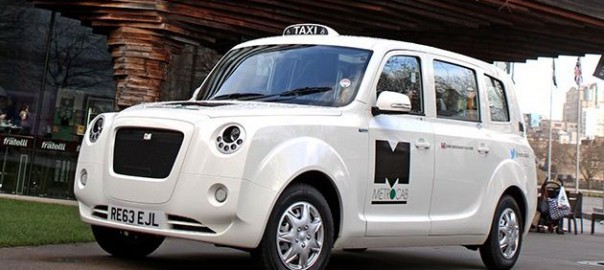
Metrocab Plug-in Taxi

More cities to get plug-in taxis

This is encouraging news, though it should be rolled out to all cities

Eight cities have received a huge boost in their bid to win part of a £20 million fund to increase the number of plug-in taxis.

The shortlist of 8 potential winning schemes will each receive a government-backed study into providing more environmentally-friendly travel opportunities in their area.

The studies will gather vital information into how local authorities could use the money to reduce the upfront cost of purpose-built taxis and install charging infrastructure for taxi and private hire use.

The government will announce the winning schemes in April next year.

Transport Minister Andrew Jones said:

Plug-in taxis are cheaper to run, better for the environment and an example of Britain leading the way in an innovative industry. That is why government is investing £500 million in low emission vehicles over the next 5 years to make them an accessible and affordable choice for all.

These cities have shown they are commitment to adopting greener technology and the government is backing their ambition by showing the benefits a share of £20 million of funding could deliver.

Today’s announcement is the latest example of the Office for Low Emission Vehicles (OLEV) helping support the government’s aim for every car and van to be zero emissions by 2050.

Metrocab Plug-in Taxi

The 8 feasibility studies, each backed by £30,000 of government funding, will be independently carried out by the Energy Saving Trust (EST).

Philip Sellwood, Chief Executive, Energy Saving Trust, said:

“We’re really looking forward to working alongside government in taking this pioneering scheme forward and witnessing the huge benef its it will bring to businesses.”

“Our experience in this area gives us every confidence that organisations as diverse as licensing authorities, car manufacturers, district network operators and charge-point installers can become leading players in rolling out ultra-low emission taxis and private hire vehicles right across the country.”

Local authorities who are not shortlisted are still able to submit bids for a share of the £20 million fund, but will have to cover the cost of their own feasibility study.

View the interactive map of the areas involved in the bidding

The 8 shortlisted bids who will each receive a feasibility study are:

  1. Birmingham City Council
  2. Cambridge City Council
  3. Coventry City Council
  4. Dundee City Council
  5. Nottingham City Council
  6. Oxford City Council
  7. Sheffield City Council
  8. West Yorkshire Combined Authority

Source: DfT

Electric Car Tipping Point Within 10 Years

It’s encouraging to hear this kind of optimisim made public!

Tesla Motors CTO JB Straubel was the headliner at Intersolar North America last week. He talked about the transition to lithium-ion batteries and how that opened the floodgates for electric cars and stationary storage (eventually); the synergy between EVs, solar, and grid storage; the growth of solar power and grid storage; blah blah blah.

I know, I actually love all that stuff as much as the rest of you — it’s what I read, edit, & write about every day(!) — but it’s basically all general history and trends we know all about. But then JB dropped the awesome-bomb:

“I think we’re at the beginning of a new cost-decline curve, and, you know, this is something where there’s a lot of similarities to what happened with photovoltaics. Almost no one [would have predicted] that photovoltaic prices would have dropped as fast as they have, and storage is right at the cliff, heading down that price curve. It’s soon going to be cheaper to drive a car on electricity — a pure EV on electricity — than it is to drive a gasoline car. And as soon as we see that kind of shift in the actual cost of operation in a car that you can actually use for your daily driver, you know, from all manufacturers I believe we’re going to see electric vehicles come to dominate the whole transportation fleet.

“Also, that same battery cost decrease is going to drive batteries in the grid. There’s going to be much faster growth of grid energy storage than I think most people expected. You suddenly get to have energy that’s 100% firm and buffered from photovoltaics that’s cheaper than fossil energy. And we’re within sort of grasping distance of that goal, which is very, very exciting.

“Because once we get to that, and there really is no going back, it will make sense to do this economically without any environmental consideration whatsoever. So that’s the amazing tipping point that’s going to happen within I’m quite certain the next 10 years.

Read more: EV Obsession

90% of EV users in survey regularly use public EV charging facilities

Public EV charging network important

Next Green Car today announces the first results from the latest EV survey conducted in partnership with KiWi Power, Carbon Trust and the High Speed Sustainable Manufacturing Institute (HSSMI) who are working with InnovateUK to investigate viable ways of integrating electric vehicles (EVs) into the national grid.

The survey, which was conducted in July 2015, provides strong evidence that the availability of charge points can influence where EV drivers decide to park. This implies that car destinations can attract more customers by investing in EV charging infrastructure.

90% of EV users in survey regularly use public EV charging facilities

The results of the survey also shows that, despite most EV users having a home-based charger, almost 70% use a public charging point at least once per week. In contrast, the results indicate that workplace chargers are far less common with over half of EV users having no charging facilities at work.

Read more: Next Green Car

First Drive of 2015 VW Passat GTE

If anyone needs proof that the world is slowly changing, look no further than the major car manufacturers. These lumbering dinosaurs are being forced, kicking and screaming, into the eco driven future to the extent that they’re even converting their major sellers into green machines. The latest example is this Volkswagen Passat GTE, a plugin hybrid (PHEV) which boasts ‘official’ consumption figures of 149 mpg and 31 miles of all electric range. And at a price which is very nearly the same as the diesel version it will presumably one day replace.

What makes this new car so special is the fact that 70% of all Passat sales go to fleet buyers, the faceless men who buy thousands of cars for their corporate, mile eating executives who spend their lives driving up and down the nation’s highways. These guys demand the best deal for their bulk buying, so when a hybrid becomes a part of the menu, you know that times have indeed changed.

First impressions

The new Passat is an impressive saloon/sedan, no question. The sleek elongated bodyline looks every inch a motorway cruiser, and it’s clear that the company has its sights set on the BMW and Mercedes equivalents with the introduction of this new 2015 model. The car we tested had all the fancy trim and upmarket materials of a deluxe limo, thankfully with a character to match. Watch our video below to get an idea of how the car performs in practice.

Read more: Red Ferret

Tesla on industry magazine - end for oil? (Image: Wikipedia)

Tesla is the beginning of the end for oil?

A good find by our friends at EV Obsession, apparently a trade magazine from the oil industry, Alberta Oil, has put a Tesla Model S electric car on its cover (“Hell on wheels”) and published an article with this title and sub-title: “Is Tesla’s Model-S the Beginning of the End for Oil? Why battery technology could drive the electric vehicle to new heights – and disrupt the fossil fuel industry in the process”.

You get the feeling that the thinking of many inside the oil industry is starting to change; for the longest time, most of the comments and official forecasts from the industry basically said that, yes, electric vehicles are coming, but they won’t be a big deal for many decades, and that maybe in 30-40 years they’ll represent a few percents of the vehicles out there.

Tesla on industry magazine - end for oil? (Image: Wikipedia)
Tesla on industry magazine – end for oil? (Image: Wikipedia)

This reassuring (for them) prognostication about the status quo was repeated like a mantra until even most people who heard it over and over in the media accepted it as truth. But that’s not how things work. We can’t know that far in advance how things will be, and if you had asked someone in 2006 whether billions of people were going to own super-powerful internet-connected smartphones within less than a decade, they’d have thought you were crazy. What looks obvious in hindsight isn’t obvious at all looking forward. Why? Because change is non-linear. Things move slowly for a long time, and then you reach a special tipping point where change accelerates. For example, solar power adoption was relatively slow until the price per watt of solar started getting close to other sources (first with incentives, and now without). That changed the game and things shifted in a higher gear. And as we get close to solar being cheaper than all other sources of energy, things will shifter in even higher gear…

Read more: Treehugger

Rapid charging at Birmingham Airport

Birmingham Airport provides rapid charging

This could be very useful for me and other EV drivers based in the Midlands

Birmingham Airport has become one of the first British airports to join the Electric Highway and offer fast charging for electric motorists.

Green energy company Ecotricity powers their Electric Highway with 100% renewable energy from the wind and the sun, allowing 35 different models of electric and plug-in hybrid cars to recharge in between 20 and 30 minutes.

Rapid charging at Birmingham Airport

Such is the rate of growth in electric cars, that the motoring industry is on track to sell more electric vehicles in the first six months of 2015 than in the previous four years combined.

The Electric Highway is a central part of this success story – for the first time powering one million miles in a month during May and scheduled to reach two million miles a month by the end of the year.

Jo Lloyd, commercial director at Birmingham Airport, said:

“We’re always looking at new and innovative ways of improving the passenger experience at Birmingham Airport, which is why we have installed these electric charging points.

“The growing popularity of electric and hybrid cars means it is vital we provide the facilities that will enable our passengers to travel to-and-from the airport as easily as possible. We’re extremely proud to support this green form of energy and the obvious benefits it brings to the environment.”

Read more: Birmingham Airport

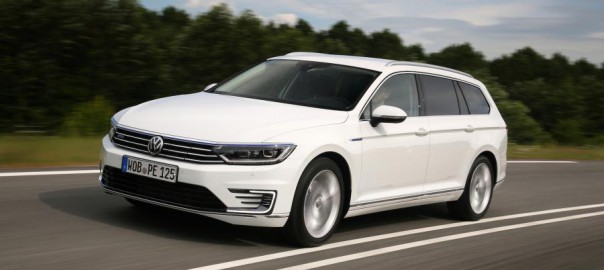
Volkswagen Passat GTE (Image: Autocar)

Autocar reviews the Passat GTE

A pretty positive review overall

The Volkswagen Passat GTE is the latest in a burgeoning number of ultra-low-emission mid-size plug-in petrol-electric hybrids to be launched in recent times.

Volkswagen Passat GTE (Image: Autocar)

To be sold in the UK in both saloon and, as driven here, estate bodystyles, the Passat GTE shares various elements of its high-tech driveline with the recently introduced Golf GTE. As with the smaller hatch, the plug-in Passat has the capability to run exclusively on electric propulsion for extended distances or on a combination of petrol and electric power.

Overall refinement in electric mode is superb, with a smooth delivery and silent running traits making it a pleasurable steer

Set to rival the Volvo S60 Plug-In Hybrid and BMW 340e, the new Passat GTE sports a specially tuned version of Volkswagen’s turbocharged 1.4-litre four-cylinder petrol engine that develops 164bhp and 184lb ft as its primary form of propulsion.

The transversely mounted combustion engine is supported by an electric motor sited within the forward section of a standard six-speed dual-clutch automatic gearbox, from where it produces 113bhp and 243lb ft. The disc-shaped unit can operate on its own in zero-emission electric mode or in tandem with the petrol engine for added performance

Volkswagen quotes a combined system output for the Passat GTE of 215bhp and 295lb ft, giving Wolfsburg’s latest plug-in petrol-electric hybrid a subtle 14bhp and 37lb ft more than the smaller Golf GTE.

The driver can choose between four different driving modes: E-mode, Hybrid, Battery Charge and GTE. Volkswagen claims an electric range of up to 31 miles at speeds up to 81mph in the default E-mode, in which the Passat GTE always starts. In the GTE mode, the efforts of the petrol and electric motor are pooled to provide a claimed 0-62mph time of 7.6sec and a 140mph top speed.

Read more: Autocar