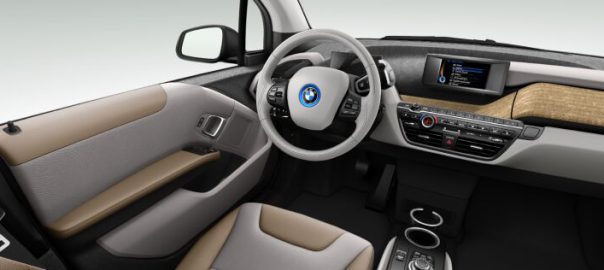
When ordering a new BMW i3 it’s important not just that you get the right exterior paint colour but that you get an interior that complements it and that you’re happy with.
To be honest BMW don’t make interior selection easy in the sense that you might expect to be able to just choose a fabric and a colour. Instead there is a standard interior plus three optional (i.e. extra cost) interior arrangements; BMW refer to these interiors as ‘worlds’.
These worlds have a choice of trims (essentially the dashboard inlay material):
Andesit Silver matt (Atelier only)
Dark Andesit matt (Loft only)
Eucalyptus matt (any world but Atelier)
Oak dark matt (any world but Atelier)
The four ‘worlds’ are as follows:
Atelier (standard) interior world: Neutronic cloth with Andesit Silver trim
Lodge interior world: Solaric climate active wool/leather, standard trim is Eucalyptus
Loft interior world: Electronic cloth/Sensatec artificial leather, standard trim is Dark Andesit
Suite interior world: Stellaric natural leather, standard trim is Oak
There are therefore a total of 8 different world/trim options; these are illustrated below (click to enlarge).
BMW i3 interior: Atelier interior world with Andesit Silver trim (Image: BMW.co.uk)BMW i3 interior: Lodge interior world with standard Eucalyptus trim (Image: BMW.co.uk)BMW i3 interior: Lodge interior world with optional Oak trim (Image: BMW.co.uk)BMW i3 interior: Loft interior world with standard Dark Andesit trim (Image: BMW.co.uk)BMW i3 interior: Loft interior world with optional Eucalyptus trim (Image: BMW.co.uk)BMW i3 interior: Loft interior world with optional Oak trim (Image: BMW.co.uk)BMW i3 interior: Suite interior world with standard Oak trim (Image: BMW.co.uk)BMW i3 interior: Suite interior world with optional Eucalyptus trim (Image: BMW.co.uk)
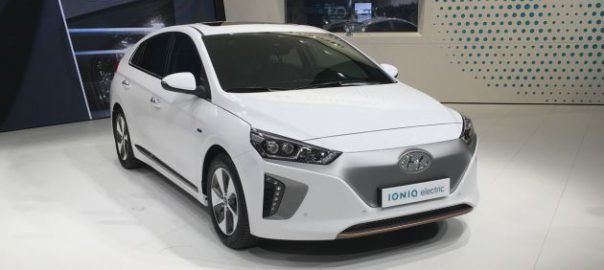
Together with my wife I set off to our local Hyundai dealer in Hendon for a test drive of the all-electric IONIQ Premium.
We are currently Leaf drivers and thinking of upgrading to the 30 kWh version. However, given the very positive range reports being given for the IONIQ, it made sense to try it as a possible alternative.
The IONIQ electric car
It was a booked test drive so we were disappointed to be kept waiting an extra 30 minutes, but eventually we got to go on the road.
My wife had her turn first, and took a few minutes to run over the controls and get everything set up. Our host took us on a route through rather slow, congested roads, so there was little chance to swoop on the open road. However, my wife enjoyed adjusting the regenerative braking to different levels and feeling the effect, as well as switching between the ECO, NORMAL and SPORT modes of drive. What she didn’t like was the bar across the back window where the spoiler is placed. Apparently, this is a major contributor to a low drag coefficient, but because they add glass below the spoiler, it does look a bit odd from the inside. I didn’t mind it myself.
After a few miles we swapped over and I enjoyed the feel of the sporty steering wheel. The layout of the controls was good and intuitive; I certainly preferred the steering wheel paddles for adjusting the regenerative levels, against the rather tiresome central lever in the Leaf. Eventually we came to a spot of more open road, and I was pleased at the sporty feel of the car to the throttle, even with 3 adults inside. As ever, the instantaneous response of an electric drive was satisfying (petrol automatics always have an annoying lag). We also saw some of the advanced driver support features such as accidental lane change warnings and car follow.
And of course, it has all the usual features of satnav, timers to pre-heat the car in the morning, and a good stereo. Unusually it doesn’t have an app to allow you to trigger pre-heat from your phone.
Cons: a slightly ordinary look externally, split glass on the back window, no app available for remote pre-heat.
So, a very impressive car. Left to me we would get the IONIQ, but my wife is a big Leaf fan. Watch this space. I’ll let you know what we choose eventually.
The Hyundai Ioniq Electric is the latest addition to a growing class of city-friendly battery-powered hatchbacks. We pit it against its rivals
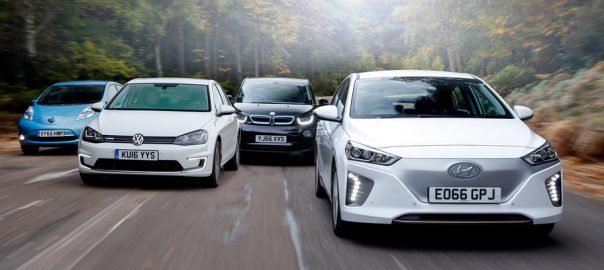
The electric vehicle market is growing, so we’ve collected the Hyundai Ioniq, Volkswagen E-Golf, BMW i3 and Nissan Leaf together to see which comes out on top.
Hyundai Ioniq, Volkswagen E-Golf, BMW i3 vs Nissan Leaf – electric vehicle group test (Image: Autocar)
A watched EV never boils. More to the point, it doesn’t bleep, flash, pop, ping or do anything else that you might imagine an all-electric hatchback ought to do to indicate a completed charge. Shame. I like the idea of a Nissan Leaf gradually browning, wafting warm toast smells in every direction, before spontaneously hopping three feet into the air like a slice of Warburton’s ready for the butter knife.
It would at least make an interesting spectacle in the motorway services car park in which we’re now waiting. We’ve got four brand-new battery cars lined up in front of Ecotricity’s fast chargers, each suckling almost noiselessly in turn from the national grid, before setting off on an exercise we’ve been waiting a long time to carry out.
It was six years ago that the Nissan Leaf and Mitsubishi i-MiEV first tested the appetite of drivers all over the developed world for a compact, affordable electric hatchback. It’s an appetite that’s needed plenty of encouragement, but it’s finally growing at something close to the rate those evangelical early market entrants had hoped for. Viewed globally, the market for pure EVs and plug-in hybrids will total more than 600,000 cars this year, up about 50% year on year. Just over half of all those ‘plug-in’ cars sold this year will be wholly electric-powered.
More important, as concerns today’s agenda, the all-electric hatchback market now provides the UK motorist with enough choice to populate a full Autocar group test. Welcome, then, the new Hyundai Ioniq Electric to UK showrooms. And allow us to introduce it to the similarly priced, all-electric rivals against which its stature must be measured: the Nissan Leaf, Volkswagen e-Golf and BMW i3.
Having followed the early-stage development of these zero-emissions pioneers, we’ve become used to the strengths and limitations of electric propulsion at the affordable end of the ownership spectrum. An £80,000 Tesla may already offer the sort of cruising range it takes to replace internal combustion in a car for almost any occasion or journey, but a £25,000 Leaf doesn’t – and probably won’t for a few years yet.
Where affordable EVs have already shown strength is when performing as responsive, relaxing, cost-efficient short-range transport, in the role typically served by the second car in a family. And that’s how we’re going to test today’s field. We’ve plotted a route across north London, taking in some of its most congested streets and winding up at Queen Elizabeth Olympic Park in Newham. We simply want to know which of these cars would serve you best with predominantly urban use in mind.
Before we set off, time for a quick poke around our newbie: the Hyundai Ioniq. The Leaf, i3 and e-Golf are well known to us, all having been the subject of Autocar road tests over the past few years and all serving customers looking for slightly different things from their first EV. And rather than competing for exactly the same customers as any of its new-found rivals, the Ioniq definitely adds to the breadth of choice in the market.
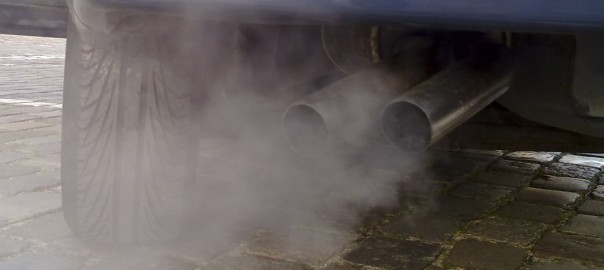
The overwhelming cause of air pollution in large cities is vehicle emissions (see DEFRA Website), and the answer is already here. Accelerate adoption of Electric Vehicles (EVs), including cars, buses and ancillary vehicles.
For any EV driver, you will already know that traffic jams are much less stressful than in a petrol or diesel car. Each time you stop, you just stop. You don’t produce any emissions or waste any further energy. This was a delightful and unexpected insight to me when I got my first EV; that part of the stress of a traffic jam for me was the sheer sense of waste – not only was I burning fuel but it was achieving nothing.
Car exhaust pollution (Image: Wikipedia)
A government genuinely committed to delivering clean air could achieve an enormous amount by designing fiscal “carrots” to allow serious growth of EVs to actively reduce air pollution. For example:
Hybrids are likely to be a passing phase in car technology that will be surpassed by electric vehicles in a matter of a few years, predicts Glass’s.
The vehicle data provider says that EV technology is advancing so quickly that a new hybrid vehicle being bought today could be effectively obsolete by the time it reaches the end of its normal life.
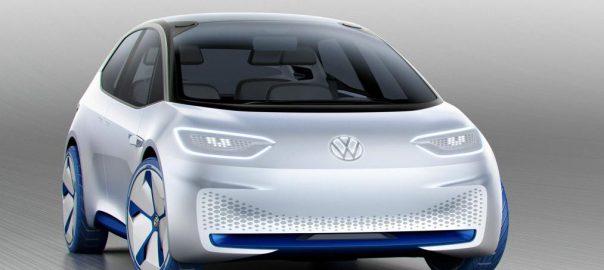
Volkswagen ID Concept electric car (Image: VW)
Rupert Pontin, director of valuations, said:
“Hybrids are designed to solve two of the problems that EVs have faced in recent years – high cost and low range.
“However, there are very clear signs that these issues are being resolved very quickly. For example, the revised Renault Zoe announced at Paris Motor Show has a 250-mile range and costs £17,000.
“Similarly, the new battery in the BMW i3 lasts around 190 miles and Volkswagen is claiming that its ID, which will come to market in 2020, will go up to 373 miles between charges and be priced competitively.
“The fact is that vehicles such as this effectively remove the rationale for hybrids. Within a few years, hybrids could be seen as little more than a curiosity and this will undoubtedly affect their values.”
At this point, most industry watchers would agree that car dealers are a barrier to the electrification of the car industry.
Recent studies have painted a negative (borderline disastrous) picture of the electric vehicle shopping experience. Car dealers’ lack of interest in selling EVs have led to poor knowledge about the vehicles, no inventories, cars often being left uncharged and not ready for test drives.
Knowing car dealers make most of their money from service and that EVs have fewer moving parts and therefore require less service, Tesla anticipated the issue and decided to operate its own sales force. But other automakers are stuck with their dealership networks and they are now trying to get them on-board with EVs in order to be competitive in the ongoing electrification of the industry.
The National Automobile Dealers Association (NADA) were holding their annual convention and exhibition in New Orleans last week and during his keynote address, Audi of America President Scott Keogh tried to convince car dealers to embrace electric vehicles.
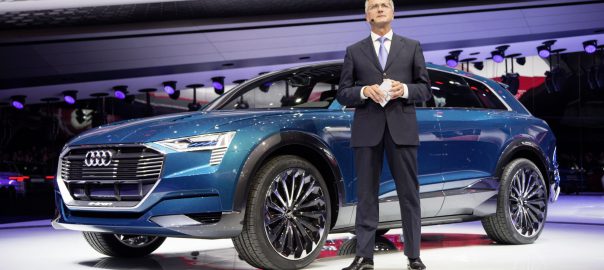
Audi has several electric vehicles coming to market soon, starting with the production version of its quattro e-tron concept (pictured above) next year, and they would appreciate if their dealers would get behind the new electric lineup of vehicles.
Audi Quattro e-tron concept
Keogh told dealers that range anxiety concerns will disappear in the next few years with electric vehicles achieving longer ranges and a more extensive charging infrastructure.
The executive expects that most of the industry will go entirely “battery-electric” within the next 10 years (via WardAuto):
“All this fright about where am I going to get a charge is going to go away extremely fast. The technology on this front is moving at a staggering pace. You’re going to be looking at a marketplace in the next seven, eight, nine, 10 years where for 30 or 40 some brands their entire business is going to be battery-electric vehicles.”
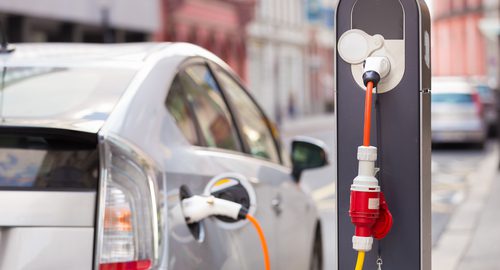
The City of Westminster is to offer a greater number and variety of electric vehicle (EV) charging points available to drivers in the borough from early 2017.
The council announced yesterday (30 November) that from January 2017, charging points will be upgraded and up to 20 new outlets will be installed, including some rapid chargers.
The smart grid technology company BPL, under the Source London network, is putting in place a new model for electric charging, while Chargemaster is rolling out public charging network ‘Polar’.
PodPoint will be upgrading the equipment and the council will be working with new operators to increase provision for EV users across the borough. A new range of tariffs tailored for different users of different types of EV technology is being introduced by the operators.
Charging points will be upgraded and up to 20 new outlets will be installed
Westminster city council was the first local authority in the UK to launch on-street charging points for electric vehicles. It now has over 60 on-street charging points, with an additional 200 available off-street.
The council claims that the expansion of the EV network will also help its Marylebone Low Emission Neighbourhood and other air quality hotspots in the borough by reducing the emission of harmful pollutants.
Cllr Heather Acton, Cabinet Member for Sustainability and Parking, said:
“Poor air quality is a continuing problem for us in Westminster, but we’re doing all we can to help improve our environment through our Greener City Action Plan. This includes encouraging a switch away from diesel vehicles, with easy parking for electric vehicles and improving electric vehicle infrastructure, encouraging car club use as an alternative to a private car, reducing freight and waste vehicle movement, promoting more cycling and walking, eliminating vehicle engine idling and reducing emissions from buildings.”
Cllr Acton also explained that the authority is also trialling new measures within its Marylebone Low Emission Neighbourhood which “will help make real improvements to air quality in central London.” And, she added:
“Electric vehicles can help by cutting reliance on more polluting cars. The expansion of the EV network offers an improved service for those who need a vehicle.”
Drivers could be forced to give up their vehicles and switch to electric cars in some urban areas.
Car exhaust pollution (Image: Wikipedia)
Radical new plans have been drawn up which could see petrol and diesel vehicles banned in some parts of Scotland within eight years.
The Scottish Government have pledged to cut emissions by 80 per cent by 2050.
Academics and industry experts on Scotland’s future energy taskforce say some tough changes are required for targets to be met.
They have published a strategy suggesting ministers should start introducing a phasing out of petrol and diesel vehicles in 2025, with urban areas and cites facing the ban first.
The taskforce, convened by WWF Scotland, also suggested central and local government should make sure they buy and lease only low carbon vehicles that produce fewer emissions.
The report backs the development of low carbon energy sources, highlighting the need in particular for carbon, capture and storage (CCS) technology.
It also suggests a programme be put in place for all homes to be brought up to a minimum energy efficiency standard by 2025, where practicable to do so.
With the Scottish Government expected to publish its draft energy strategy in the coming week, Dr Keith MacLean, the chair of the UK Energy Research Centre advisory board, and taskforce facilitator said there was
“an excellent opportunity for the Scottish Government to assert overall leadership and control over the nation’s energy future”.
No longer a futuristic novelty, electric cars are becoming an increasingly common sight on Britain’s streets.
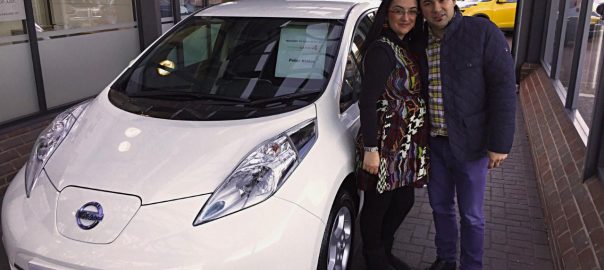
Petar Kralev and his wife, Lyuba, collecting their Nissan LEAF (Image: Evening Standard)
Most of the major car manufacturers are now either selling or developing electric and hybrid models, even the supercar makers at Ferrari are planning on fitting every new car with a hybrid powertrain by 2019. There will be roughly 500,000 electric cars on Europe’s streets by the end of the year.
The Nissan LEAF is the world’s best-selling fully electric car, with more than 180,000 sold last year. It’s a true all-electric vehicle – with no range-extending or hybrid petrol engine in sight.
It comes in several variations, with prices ranging from £21,000 to £27,000 but that’s before the UK Government plug-in car grant of £4,500. WhatCar recommends a target price of £12,863-£24,535 for a new LEAF, which is also road tax and Congestion Charge exempt.
Petar and Lyuba Kralev are a London couple who traded in their Audi A3 Cabriolet and purchased the Nissan LEAF 24kwh, which comes with an everyday driving range of 124 miles. Their Leaf will soon have its two year anniversary with couple, who are now going the whole-hog and installing solar panels on their house, providing them with free electricity from renewable source.
Many potential customers looking at the EV market are put off by fears that the battery won’t carry them far enough, but Petar Kralev tells me this has not been an issue. Petar has a daily 40-60 minute commute between Romford and London’s Canary Wharf, and tells me he has never suffered from “range anxiety”, even on a 150 mile round trip.
I caught up with Petar Kralev and asked him about life with his electric motor.
Why the move to EV?
Electric vehicles are the cars of the future, there’s no doubt about it. They’re cheaper to run and also quieter than any other car on the road. I find it easier to drive an electric car compared to other options – more so than any other vehicle with an automatic transmission. All the power is instant, whether you’re moving or from a standstill.