Category Archives: Electric Cars

News and reviews of the latest electric cars (full electrics and plug-in hybrids).

ZOE_E-Sport_Wheel(image:UNK)

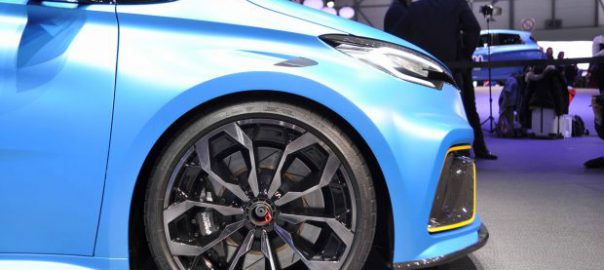
Geneva ’17: Why the Zoe e-sport was the most important car at the show

This pocket rocket draws tech straight from the championship-winning Renault e.dams Formula E machines.
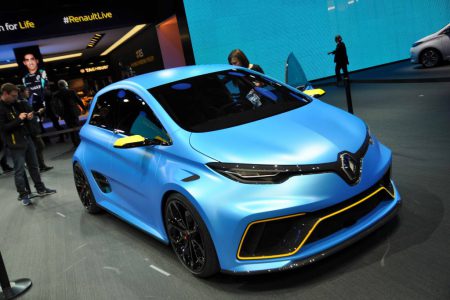
ZOE E-Sport at Geneva Motor Show

Our prayers have been answered!

We’ve been warbling on for years now about how there’s been a distinct lack of small, fun electric cars to bolster a cool, youthful appearance of these future-fuelled machines.

But finally, FINALLY, Renault has attempted to fill in the gaps by unveiling an EV hot hatch concept at this year’s Geneva Motor Show, in the form of the Zoe e-sport.

Strictly a concept car for now, the pumped-up version of the popular electric supermini ticks all the right boxes for us here at EV Performance towers. Time to get more excited about EVs…!

“The brief for the Renault ZOE e-sport concept couldn’t have been simpler: ‘Have fun!’. So we came up with something midway between a production model and a racing car… It’s perfect for lovers of extreme driving sensations!”

said Stéphane Janin, Director of Concept Car Design for the firm.
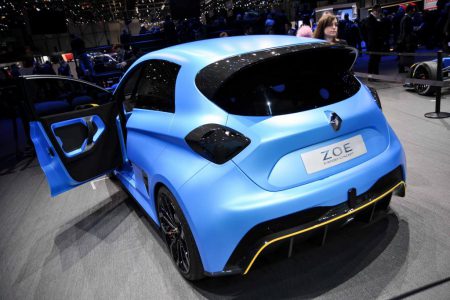
ZOE E-Sport at Geneva Motor Show

Although it might be a million miles away from a production model, it’s absolutely fantastic to see a firm such as Renault addressing the fun side of electric cars. It’s all too easy to be overwhelmed with range statistics and kW figures in this crazy world of electric cars, so it’s nice to see some serious hints at performance models potentially being in the pipeline in the coming years.

Read more: EV Performance 
Zoe Battery Recovery (Image: Jo Pegram-Mills)

Driving style (example shown in Renault ZOE 22kWh)

One thing any existing or soon to be, Electric Vehicle driver should always bear in mind is ‘Driving Style’, this can sometimes, quite dramatically, impact your expected range.

Electric Vehicles are smart, they analyse your driving style and take this into account when estimating your expected range. If you are a rapid accelerator and tend to brake hard, you might find that your estimated range will drop quite low. I certainly have a tendency to forget this and simply enjoy the ride a bit too much when I’m doing short journeys, I find myself in this situation quite a lot.

But it can easily be rectified, you simply need to adjust your driving style, drive more economically and with a bit more consideration, soon you won’t realise you’re doing it and the car will give you better range expectations. The good news is that this is easy to do by just reacting to the feedback that the acceleration indicator on the dashboard gives you.

Your Visual Guide to Acceleration

Zoe Accelerating (Image: Jo Pegram-Mills)

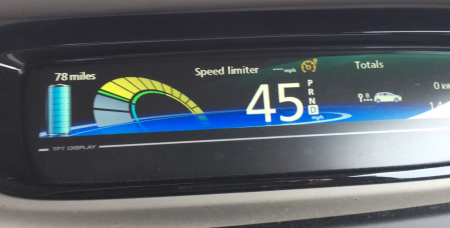
When you use rapid acceleration/peddle to the metal, it shows as many Yellow bars.

If you find you are constantly in yellow, be prepared to see your estimated range drop quite considerably.

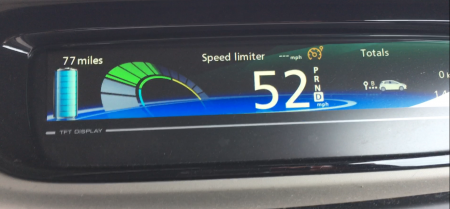
ZOE gradual acceleration (Image: Jo Pegram-Mills)

When you start driving more economically, with gradual acceleration, you can see this as fewer Green bars.

Get the most out of your range, try and stay within the green bars. If you switch to Eco mode the car will help you do this by restricting your maximum acceleration.

Success! Your range will become more predictable and consistent.

Your Visual Guide to Regenerative Braking

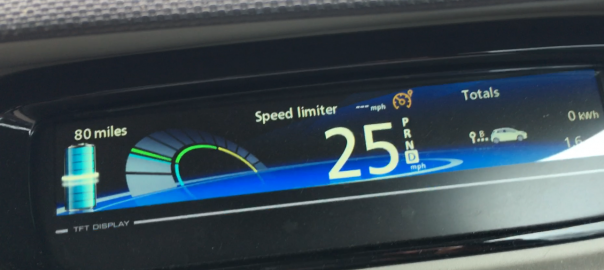
Regenerative Braking, also known as Battery Recovery is the clever trick where an Electric Vehicle reverses the behaviour of an electric motor. Instead of using electricity from the battery to create car motion, it uses the motion of the car to create electricity and recharge the battery. This results in the car slowing down.

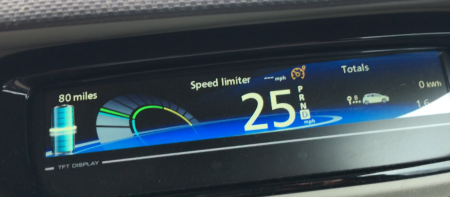
Zoe Battery Recovery (Image: Jo Pegram-Mills)

So, the battery recovery allows the car to slow itself when the road allows, and shows visually as Blue bars.

You will also notice the battery bar on the left gives a visual indication that a recharge is taking place. As a result, your range will sometimes increase the longer the car is moving without acceleration.

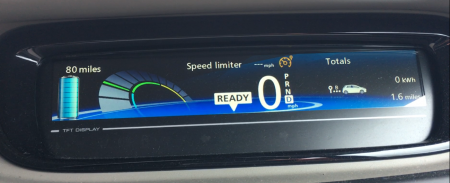
ZOE Display (Image: Jo Pegram-Mills)

An especially nice surprise is finishing your journey with more range than you started with. This can actually happen if you dramatically change your driving style during your journey, or if you do short trips. It’s a very satisfying moment and often results in excessive smugness.

ZOE on Charge (image: UNK)

The beginning of the end for the infernal combustion engine

WHAT WE LEARNED IN 2016: After many false dawns, 2016 was the year electric cars showed they are on a path to rapidly replacing the infernal combustion engine.

There are now more than half a million battery electric and plug-in hybrid vehicles on Europe’s roads, and annual sales are expected to top 1.5% of the market for the first time. While the figures are modest, Dieselgate has created an EV earthquake, shaking carmakers from their complacency.

Renault ZOE
Renault ZOE

The Paris Motor Show was a turning point. Volkswagen launched its “revolutionary” I.D concept and announced it aspired to a quarter of its sales being electric by 2025. Mercedes launched an equivalent Generation EQ concept range, announcing it was “flipping the switch”, which was backed up with an €11 billion investment. Opel confirmed the launch of the 300km range Ampera-e; Renault and BMW announced upgrades of the Zoe and i3, both with significantly longer ranges; and Renault commented:

“Our vision of the electric market is that it is not a niche market.”

Also, around a quarter of Mitsubishi sales can be plugged in and 7% of Porsche’s.

The U-turn in European carmakers’ attitude has resulted from a combination of market, technology and policy changes. Dieselgate has brought about much needed realism that outside Europe the tiny 5% share of new diesel cars will in the future decline, not grow.

In Europe, the scandal is stiffening the resolve of regulators to effectively enforce better tests that commence in 2017. Several countries, including France, are also increasing fuel excise duties and cities are proposing to ban or charge diesels or all combustion cars. UBS shockingly forecast diesel sales will fall to just 10% of the market by 2025 from 50% today.

Read more: Transport & Environment

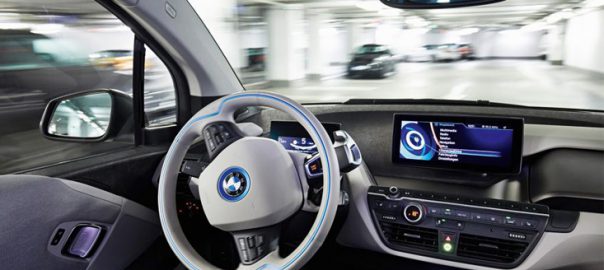
BMW sees chance for full autonomy by 2021

BMW has confirmed it has ‘the chance’ to deliver a self-driving car with complete Level 5 autonomy by 2021, according to its senior vice president for autonomy Elmar Frickenstein. This matches the date of their upcoming next-generation flagship, the iNext – a collaboration with Mobileye

However, as the turning point looms around 2020 for when self-driving moves from concept tech to serious deployment, a timeline split is developing between more careful established players and assertive new challengers. Issues beyond the tech’s capability also weigh on the date of its deployment.

As usual, Tesla is the most bullish, saying it is already ready for full autonomy, if only it were allowed to do so. This is despite several high-profile crashes last year.

The next closest deadlines come from challenger Nvidia, now aggressively competing against Intel’s Mobileye. It expects its Level 3 autonomous chips to be available in cars by 2018, with Level 4 following by 2019. Level 5 autonomy requires no human intervention under any scenario, whereas at lower forms, Level 3 requires a steering wheel for the driver to take over in case of a problem. Level 4 means the car can drive itself in most environments. Most cars currently on the road are below these at Level 2.

This Level 4 Nvidia 2019 deadline is in time for the typical 2020 self-imposed deadlines of OEMs. Volvo, Audi and Ford aim to have Level 5 autonomous cars on the road by 2020 or 2021.

BMW too hopes to reach Level 4, or even Level 5, autonomy by 2021, but is most confident about achieving Level 3 by then. Its head of autonomous driving Elmar Frickenstein said it is in progress to deliver a Level 3 autonomous car by 2021, but could actually produce Level 4 or 5 autonomous cars in the same year. He said:

‘We believe we have the chance to make level three, level four and level five doable.’

He added to Reuters that

‘the decision on which levels to release would depend in part on the market, and that cars with more autonomy might first be produced in small batches for single fleets.’

Chipmaker Nvidia’s CEO Jen-Hsun Huang has also said carmakers may speed up their plans given technological advances and that fully self-driving cars could be on the road by 2025. However, Nvidia does not even agree with its partner Bosch, the world’s largest auto supplier, which gives a timeline as much as six years longer (2031) to reach full autonomy, and would not even be drawn on a time for when fully autonomous cars would be deployed.

Read more: Autovista Group

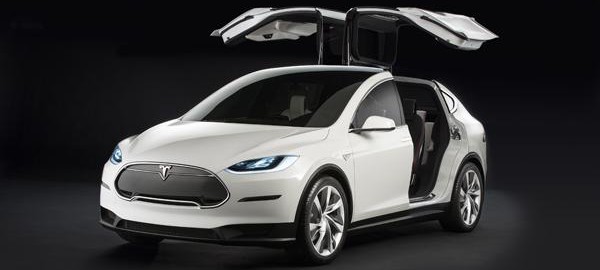
Tesla Model X (Image: Tesla)

Emirates Electric Road Trip | Fully Charged

The Emirates Electric Road Trip was an amazing experience.
A combination of educational exercise, motivation to open new charging stations throughout the Emirates and a wonderful tour of an incredible area of the world.
The Emirates are investing more in renewables than you can literally poke a stick at.
They extract huge amounts of oil that they sell to us and they are using the money to create a long term, viable and sustainable energy infrastructure.
Okay, and they are building some ridiculously tall towers.

The EVRT team are organising a pan-European trip later this year. Details here: https://www.europeevrt.com/

BMW i3

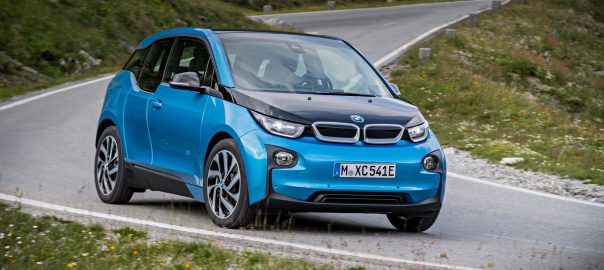
New BMW i3 the best electric car this side of a Tesla

Not cheap, but charming, fun and with seriously practical performance and range.

It’s funny how perceptions change. When I was young in a sepia-toned world the drivers who were on the receiving end of most abuse were those behind the wheels of BMWs. Arrogant, aggressive and antagonistic with an addiction to tailgating was the accepted caricature of this firm’s car owners.

Times have changed though. BMW, for all its massive sales success in Ireland in the past 15 years, now has a slightly less combative image, one of classiness and desirability with a little less of the disdain from those unable to afford one.

BMW i3
BMW i3

With the i3, there is the chance for BMW to slip seamlessly into full-on caring and sharing mode. The little electric car has been around since 2014, but had failed to make much of a dent in Irish buyers’ collective consciousness, mostly down to a combination of being small, with a big price tag and, well, electric.

For all the talk of Ireland being a perfect test case for the introduction of electric motoring, few brave souls have taken on the mantle of early adopter. A combination of cost, lack of infrastructure and that ever-present spectre of range anxiety has held people back.

Fortunes

Well, BMW has answered that in part by boosting the range of the i3 to a much more acceptable level. While the lithium-ion battery pack hasn’t been made physically larger, it has increased in capacity, to a very healthy 33kWh (up from 22kWh) and the i3’s part-carbon-fibre structure, light but strong and costing BMW several fortunes to develop, was always there to make the most of any extra range.

In fact, one-charge range climbed to 300km on the European NEDC (New European Driving Cycle), but cognisant that the official test has been thoroughly undermined in the public eye, BMW says 200km is a more realistic day-to-day figure.

So it proves. A writer must write of what they know, so I can only speak of how the i3 performed on my own regular driving cycle, but it is significantly improved.

I was testing the ‘REX’ version, the range-extender, which uses a tiny two-cylinder moped engine and a seven-litre tank of petrol to keep the batteries alive should you run out of charge with mileage still to go to get home. It adds, generally, around 100-120km of extra range, easing many the furrowed brow.

Read more: Irish Times

Untethered and Tethered Charge Points (Image: POD Point)

Choosing a Charge Point

When buying an electric car it is nearly always worthwhile to get a dedicated charge point installed at home.

It’s more convenient than an ‘occasional use’ or ‘granny’ (13 Amp) charge cable because you don’t need to reel it up and put it away each time.

Home Charging a Renault ZOE with a Dedicated Charge Point (Image: Charging Solutions)
Charging a Renault ZOE with a Home Charge Point (Image: Charging Solutions)

It will also be significantly faster because a dedicated charge point can provide more power without the risk of overheating. Also some electric cars, such as the Renault ZOE, don’t come with such a cable and buying one yourself can be very expensive (£500+).

The good news is that the installation of domestic charge points is subsidised by the UK government.

There are 3 decisions to be made when selecting the type of charge point for your car:

  • Tethered or Untethered
  • Connector Types
  • Power Level


Tethered or Untethered

There is usually the choice of a ‘tethered’ cable (it is fixed to the charge point) or an ‘untethered’ cable (it plugs into and can be removed from the charge point).

Untethered and tethered charge points (Image: Chargemaster)
Untethered and Tethered Charge Points (Image: Chargemaster)

Untethered has the advantage of allowing different cables to be connected (for example you can use the same charge point for a Nissan Leaf and a Renault ZOE). However, most people choose tethered because it avoids the inconvenience of connecting a cable whenever you need to charge (usually daily). It also reduces the risk of the cable being stolen.

A charge point with a tethered cable will usually cost more than an untethered one (typically about £50 more) because of the cost of its cable.

Untethered and Tethered Charge Points (Image: POD Point)
Untethered and Tethered Charge Points (Images: POD Point)

If you choose untethered you will need to use your own cable to connect to the car; it is the same cable that would be used to connect to a public charging point. It may come free with the car, for example the Renault ZOE or the Nissan Leaf with the 6.6kW charge option come with one. Otherwise you will need to buy one (we can advise you on suppliers).


Connector Types

All untethered domestic charge points supplied in the UK come with a Type 2 socket on the charge point, just as all public charge points now have (or at least officially should have) Type 2 sockets. Similarly all charge cables have a Type 2 plug at the charge point end.

Type 1 (5 pin) and Type 2 (7 pin) connectors

If the cable is tethered then you need to tell the installer the type of plug you want at the car end. This will depend on the car:

  • Type 1 socket: Nissan Leaf, Mitsubishi Outlander PHEV, Kia Soul EV
  • Type 2 socket: Renault ZOE, BMW i3, Tesla, VW e-Golf and Hyundai IONIQ

The Type 2 or ‘Mennekes’ connector is the official standard in Europe and should eventually replace the Type 1.


Power Level

A dedicated charge point can provide higher powers than a typical occasional use charging cable which will run at 10 Amps, equivalent at 230 Volts to 2.3 kilowatts. The charge will take place at the highest power that both the charge point can provide and the car can use.

There are two common power levels:

  • 16A = 3.5kW: This is the maximum charge level of the Nissan Leaf 3.3kW, the Mitsubishi Outlander and the VW e-Golf.
  • 30A/32A = 7kW: This is the maximum charge level of the Nissan Leaf 6.6kW, BMW i3, Kia Soul EV and Hyundai IONIQ. The standard Renault ZOE can use this level, in fact anything up to 22kW.

The higher power reduces the charge time so a typical EV battery will charge in about 8 hours at 16A but in about 4 hours at 32A.

It may be best to install the highest power charge point you can afford; even if your current car can’t use all the power, the next one almost certainly will be able to.

Kia Niro PHEV, Plug In Hybrid, Geneva Motorshow 2017 (Image: Kia)

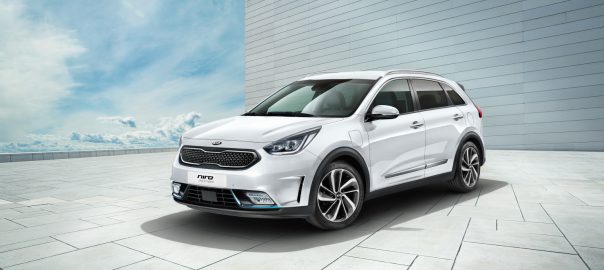
Crossover Practicality from New Kia Niro Plug-in Hybrid

  • Niro Plug-in Hybrid model on sale across Europe during Q3 2017
  • 8.9 kWh High-capacity lithium-polymer battery pack and 1.6-litre GDI engine
  • Development engineers target pure-electric range over 55 kilometres
  • CO2 emissions targeted to fall below 30 g/km
  • Plug-in Hybrid crossover offers 324-litre cargo space and spacious cabin
  • Advanced energy-saving measures and unique styling features
  • Optional Towing Pack with 1,300 kg capacity

Kia Motors has today unveiled the Niro Plug-in Hybrid at the Geneva International Motor Show. The new derivative combines high versatility and crossover design appeal with maximum fuel efficiency from its advanced new plug-in hybrid powertrain.

The Niro Plug-in Hybrid will go on sale across Europe during Q3 2017, pairing an economical 1.6-litre GDI (gasoline direct injection) engine with a 8.9kWh high-capacity lithium-polymer battery pack. The latest addition to Kia’s hybrid crossover range substantially reduces emissions over the more conventional Niro hybrid – engineers are targeting CO2 emissions below 30 g/km (combined, New European Driving Cycle) and a zero-emissions pure-electric driving range of over 55 kilometres. Final electric range and CO2 emissions figures will be published closer to the car’s on-sale date.

Kia Niro PHEV, Plug In Hybrid, Geneva Motorshow 2017 (Image: Kia)

Michael Cole, Chief Operating Officer, Kia Motors Europe, commented:

“Annual sales of plug-in hybrid models in Europe are expected to grow to more than 600,000 units by the end of 2023, while the crossover market is also forecast to expand in the coming years. There is a clear demand from customers for a vehicle which combines the practicality and ‘cool’ image of a compact crossover with the ultra-low emissions of an advanced plug-in powertrain. The Niro Plug-in Hybrid will be the only car on the market to offer this combination.”

“The Niro Plug-in Hybrid is one of the latest low-emissions cars from Kia which will help the company achieve its global target for 2020 – to improve fuel efficiency by 25% compared with 2014 levels.”

The Niro Plug-in Hybrid is one of two low-emissions vehicles unveiled by Kia at the Geneva International Motor Show, alongside the new Optima Sportswagon Plug-in Hybrid.

Read more: Kia Press Office

This is a screenshot of a video featuring the all-new Nissan Leaf EV (Image: HouseBear/YouTube)

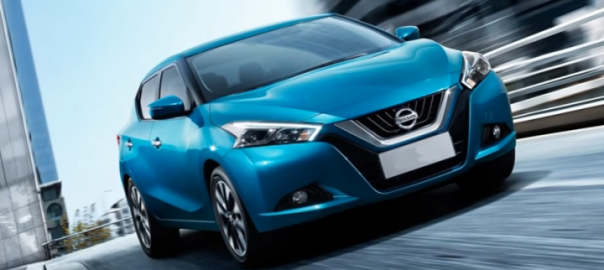
Tweet Confirms Global Release of the new Nissan Leaf

Nissan has taken to social networking and microblogging site Twitter to announce the reveal of its next-generation all-electric vehicle.

The Japanese auto manufacturer tweeted on Friday, March 10, that the company’s all-new Nissan Leaf EV will be officially revealed in September and will go on sale before the year ends.

This is a screenshot of a video featuring the all-new Nissan Leaf EV (Image: HouseBear/YouTube)

Nissan tweets about the official release of its all-new Nissan Leaf. A September unveiling of its new Leaf means that excited fans could possibly see the all-electric vehicle at the Frankfurt Motor Show. The design of Nissan’s all-new EV is said to take inspiration from the IDS concept. The IDS concept debuted at the 2015 Tokyo Motor Show.

The Japanese auto manufacturer’s tweet specifically said that the all-new Leaf “will be globally revealed” in September. The tweet also mentioned that the vehicle will “go on sale before the end of the year.”

The current Leaf model has a range of 107 miles on a single charge. The next generation model is said to have increased mile range, possibly close to the Chevrolet Bolt EV’s range of 238 miles.

Asked if the all-new Nissan Leaf electric vehicle would be able to compete with Chevrolet’s Bolt EV at the 2017 Consumer Electronics Show, Nissan research and advance engineering Vice President Takao Asami answered,

“We can get to 200 or even 300. We can.” He further added, “The question is cost.”

The technology behind of the electric vehicle will most likely be the same one on the Renaut Zoe EV. The Renaut Zoe EV debuted at the Paris Motor Show in the previous year. The electric vehicle uses a lithium-ion battery pack supplied by LG Chem who also supplied Chevrolet with the Bolt EV’s battery. The Renaut Zoe EV, however, only boasts of a humble range of 189 miles compared to the Bolt EV.

Source: Auto World News

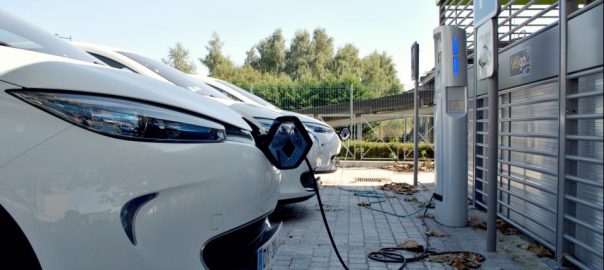
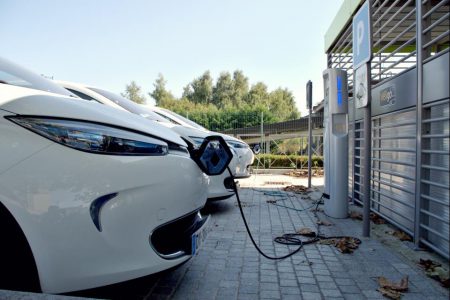
Electric cars charging in Milton Keynes (Image: T. Larkum)

The Guardian view of the car industry: an electric future

The world is moving faster than we think towards more automated vehicles powered by renewable energy

Gone are the days when cars made in Britain were British. Monday’s sale of Vauxhall/Opel to Peugeot meant only the transfer of two large English factories from the German subsidiary of an American firm to a French company, accompanied by the ritual promises that jobs would be safe. These seem insubstantial, given that the new management plans to save €1.7bn a year from the old Opel operation, while the Vauxhall factories made a heavy loss after the pound’s post-referendum slide. Yet the contortions of government policy which once accompanied threats to the car industry went quite unseen this time. But there is one small aspect of the deal in which it appears that Mrs May’s industrial strategy might be an intelligent deployment of very limited resources. The future of the car industry is clearly electric, and the development of battery technology – something the government plans to support – will be vital.

Electric cars charging in Milton Keynes (Image: T. Larkum)

Against the protectionism practised by the Chinese government, which is determined to dominate the world market, and to supplant the Japanese and Korean firms which now provide most of the world’s batteries, any effort by the British government is likely to prove inadequate. Especially a British government which has ended its own participation in the single market; but at least it is playing in the right game.

At the moment, wholly electric cars are still a tiny minority of those on the road, but their number is growing very fast as they become more affordable and more practical. Their advantages to society are obvious: they pollute far less than internal combustion engines, and use less energy too. A city of electric cars will be cleaner and quieter than our present stinking streets. And at some stage in the next decade, their advantages to private drivers will become overwhelming. The electric car will become a mainstream status symbol and it is the buyers of internal combustion vehicles who will feel like weird outsiders. The Dutch parliament has considered a measure which would make all cars sold there electric by 2025. A recent thinktank report suggests that 10 years after that a third of all the vehicles sold in the world will be electric.

New electric cars must travel further and need less time to recover from their journeys than those that can be bought today, when long journeys are still fraught with anxiety. This means lighter batteries that hold more charge and can be charged more quickly; they are appearing already and the huge amounts of global investment make it likely that progress will continue and technology will supply what the market needs.

Stepping back for a moment, the rise of electric and largely automated cars might change the world around us almost as profoundly as the internal combustion engine did. Part of this is their obvious role in transportation. All-electric traffic will be faster, reversing the trend of the last century. Lighter cars will accelerate and brake more quickly, while increasing automation will mean traffic moves more freely. If those trends continue, the private car might disappear altogether, replaced by a network of hired autonomous vehicles, at least within cities. The beginnings of this development are already visible in the reluctance of young people to learn to drive.

Less obvious, but just as important, are all the symbolic values of cars. It’s not just for Bruce Springsteen that they embody freedom, autonomy and power. The car that you own says almost as much about your social position and your aspirations as the clothes you wear. Car ownership was for much of the world a mark of status in the way that owning a horse made you a knight. The coming revolution threatens far more than the vehicle manufacturing industry. If cars do come to be valued for their usefulness, not as means of ostentation, the motor car would become only a status symbol for the rich, as useless, if still as loved, as the private horse now is.

Source: The Guardian