Category Archives: Electric Cars

News and reviews of the latest electric cars (full electrics and plug-in hybrids).

Mexicans Lining up Electric to Beat Pollution

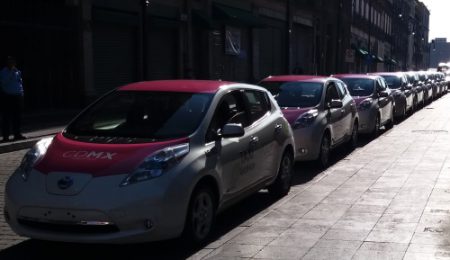
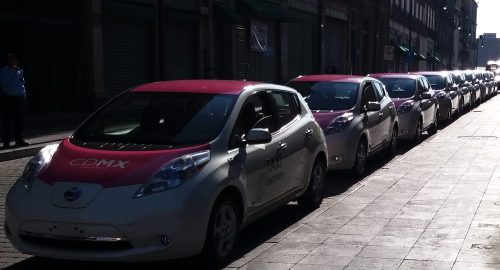
On a trip to Mexico City this week, I have just seen a lovely sight. A long row of all-electric Nissan Leafs lined up in a taxi rank ready to start the day.

Electric Taxi Rank in Mexico City

If you have ever been to Mexico City, then you will know that air pollution is a major issue here, as it is now becoming in all large cities. The taxi rank is not yet a full solution, and the city is still filled with diesels and petrol guzzlers blasting out noxious fumes, but it is a step in the right direction. I hope for many more.

Renault Kangoo Z.E. Gets 50% More Range

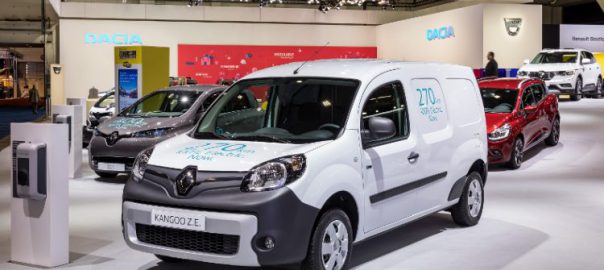
As promised, Renault has introduced a new larger battery equipped Kangoo Z.E. with up to 50% more range.

And while we are happy to see the upgraded “ZE 33” model, and its 33 kWh pack (instead of 22 kWh), the vans battery stills looks tiny as compared to the recently updated ZOE with a 41 kWh pack.

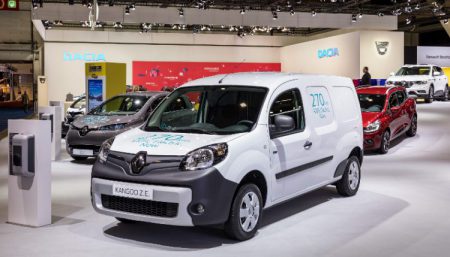
Renault Kangoo Z.E. 33 (33 kWh)

Renault pegs the new Kangoo ZE 33 at a range of 270 km/167 miles under the NEDC rating system, which translates to about 200 km/125 miles in ‘real world’ driving conditions.

The Z.E. 33 is shared with new Master Z.E. heavy commercial van.

Renault lineup – from left Twizy, ZOE, Kangoo Z.E., Master Z.E.

Renault has also utilized a new electric motor found originally on the ZOE R75/90, rated at 60 hp (44 kW), and has replaced the original (and fairly weak) charging system. The new Kangoo ZE can charge at near twice the rate of the previous version – up to 7 kW.

As you can see, the 7 kW charging capability still isn’t near on par with the 22 kW charging found in ZOE.

Anyway, the new Kangoo Z.E. is still far better then the previous version, so perhaps we should not be too critical. Renault promises the “ZE 33” will be available on the European market from mid-2017.

Read more: Inside EVs

Blades Being Installed on Turbine 5, Yelvertoft Wind Farm (Image: T. Larkum)

Low carbon drive ‘cuts household bills’

Britain’s low carbon energy revolution is actually saving money for households, a report says.

Blades Being Installed on Turbine 5, Yelvertoft Wind Farm (Image: T. Larkum)
Blades Being Installed on a Wind Turbine at Yelvertoft Wind Farm (Image: T. Larkum)

Households make a net saving of £11 a month, according to analysis from the Committee on Climate Change.

It calculates that subsidies to wind and solar are adding £9 a month to the average bill, but that rules promoting energy efficiency save £20 a month.

Savings

The trend is being driven by government and EU standards for gas boilers and household appliances like fridges and light bulbs. These bring down carbon emissions and bills at the same time.

It means households don’t need to try specially hard to reduce energy usage – it just happens when they replace their old freezer.

The report says bills are about £115 lower in real terms since the Climate Change Act in 2008, having risen around £370 from 2004 to 2008 as international gas prices rose.

Gas and electricity use have been cut by 23% and 17% respectively, saving the average household £290 a year.

Many of the easy savings on highly inefficient devices have already been made, but the committee says it has been assured by manufacturers that more can be done.

The authors predict an annual bill reduction of £150 by 2030, driven by a mass switch to LED lights, and full take-up of more efficient condensing gas boilers.

This, they say, would more than compensate for another £100 a year rise from increased renewables deployment.

“What’s interesting, is that people aren’t having to strive to make these savings. They could save much more energy if they consciously set about it.”

said the committee chair Lord Deben

Read more: BBC News

Electric cars are set to arrive far more speedily than anticipated

Carmakers face short-term pain and long term gain

Electric cars ready for free test drives in Milton Keynes (Image: T. Larkum)

THE high-pitched whirr of an electric car may not stir the soul like the bellow and growl of an internal combustion engine (ICE). But to compensate, electric motors give even the humblest cars explosive acceleration. Electric cars are similarly set for rapid forward thrust.

Improving technology and tightening regulations on emissions from ICEs is about to propel electric vehicles (EVs) from a niche to the mainstream. After more than a century of reliance on fossil fuels, however, the route from petrol power to volts will be a tough one for carmakers to navigate.

The change of gear is recent. One car in a hundred sold today is powered by electricity. The proportion of EVs on the world’s roads is still well below 1%. Most forecasters had reckoned that by 2025 that would rise to around 4%. Those estimates are undergoing a big overhaul as carmakers announce huge expansions in their production of EVs.

Morgan Stanley, a bank, now says that by 2025 EV sales will hit 7m a year and make up 7% of vehicles on the road. Exane BNP Paribas, another bank, reckons that it could be more like 11%. But as carmakers plan for ever more battery power, even these figures could quickly seem too low.

Ford’s boss is bolder still. In January Mark Fields announced that the

“era of the electric vehicle is dawning”

and he reckons that the number of models of EVs will exceed pure ICE-powered cars within 15 years. Ford has promised 13 new electrified cars in the next five years. Others are making bigger commitments. Volkswagen, the world’s biggest carmaker, said last year that it would begin a product blitz in 2020 and launch 30 new battery-powered models by 2025, when EVs will account for up to a quarter of its sales. Daimler, a German rival, also recently set an ambitious target of up to a fifth of sales by the same date.

Read more: The Economist

The Pros and Cons of Electric Cars

Even though the total number of electric cars has been on a steady rise for more than half a decade (and up 38% in the USA in 2016), many organizations and individual consumers still aren’t aware of how electric vehicles compare to traditional gas-guzzlers.

Pros of Electric Cars

They’re Cheaper to Run

Performing basic calculations, the average electric vehicle can save a driver who drives 15,000 miles in a year about $850 annually on fuel. Keep in mind that these estimates have been made without taking any special charging systems into consideration. For EV owners and fleets participating in a smart charging program, the savings can be much higher.

You Can Charge at Home or at Work

One overlooked advantage of electric vehicles is the ability to charge them at home or at a parking lot. People who live in family houses can simply plug in their vehicles after they return home from work, and leave the next morning with batteries fully charged. Fleet vehicles can be charged using smart EV charging systems that offer maximum cost savings, thanks to advanced energy management tools.

There’s No Engine Noise

Noise pollution is detrimental to human health, and the engines of gasoline- and diesel-powered vehicles are among its most significant sources. According to a study published by the National Institute of Environmental Health Sciences (NIEHS),

“Tens of millions of Americans suffer from a range of adverse health outcomes due to noise exposure, including heart disease and hearing loss.”

The same study claims that

“nearly 100 million people in the United States (about 50% of the population) had annual exposures to traffic noise that were high enough to be harmful to health.”

They’re Quick

Most recent speed records have been achieved by electric vehicles. For example, the Tesla Model S P100D hit 60mph in 2.28 seconds, making it the first production car to reach 60mph in under 2.3 seconds. That’s because electric vehicles offer superior power-to-weight-ratios compared to traditional cars.

They’re Environmentally Friendly

Battery electric vehicles (BEVs) don’t produce any tailpipe emissions, which are known to be a serious threat to human and environmental health. In comparison, the average gasoline car produces over 350 grams of CO2 per mile.

Cons of Electric Cars

Some Have Limited Range

At the moment, the biggest perceived negative of battery electric cars is their limited range, which leads to what is known as range anxiety. To give an example, the 2016 Nissan Leaf can travel up to 107 miles on a single charge. The thought of only being able to drive 100 miles on a charge worries a lot of potential customers, who think that the somewhat limited range of electric vehicles isn’t enough to meet their needs.

A Higher Initial Cost

Electric vehicles usually cost more upfront than their gasoline- or diesel-powered counterparts, but they are expected to be cheaper than conventional vehicles by 2022, even if the conventional cars improve their fuel efficiency by 3.5% a year.

Fewer Options to Choose From

New electric vehicles are being introduced on a weekly basis, but it will take years before customers will be able to choose from the same range of models as they can now when it comes to cars with internal combustion engines. After all, the first automobile, Benz Patent Motor Car, started its engine for the first time on New Year’s Eve 1879.

Read more: Fleetcarma
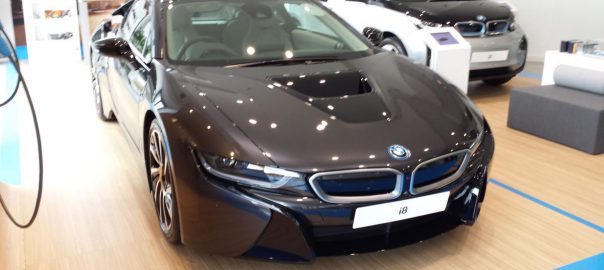
BMW i8 in Sophisto Grey (Image: T. Larkum)

BMW i8 Gallery

During a test drive of the BMW i3 I took the opportunity to photograph a pair of i8’s on show there.

BMW i8 in Sophisto Grey (Image: T. Larkum)

The i8 is a rather good looking car by any account.

BMW i8 in Sophisto Grey (Image: T. Larkum)

Of course, it is marred by the fact that it has a fossil fuel engine as well as an electric motor, giving it only about 20 miles of electric range.

BMW i8 in Sophisto Grey (Image: T. Larkum)

But then no car is perfect.

BMW i8 in Ionic Silver (Image: T. Larkum)

My thanks to Vines of Guildford BMW for arranging the visit.

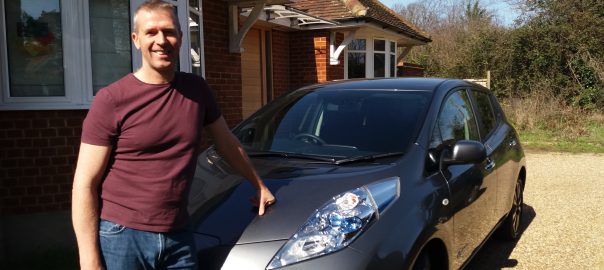
A Look Around my New Nissan Leaf 30 kWh

I just took delivery of my new long range Nissan Leaf and I love it.

Check out the short video. This is the Tekna and the interior shots show the nice leather (heated) seats front and back, and the roomy boot.

New stuff I have noticed:

  • The extra range is wonderful.
  • DAB radio is great and the software interface is much improved.
  • It tucks in the wing mirrors automatically when you lock it.
  • It comes with both 13A and type 2 charge cable as default.
  • It seems to accelerate a little quicker than before in normal mode (in spite of the extra battery weight).
  • It seems to accelerate a little slower in eco mode. I guess that is good for eco.
  • Gun Metal grey looks fantastic.

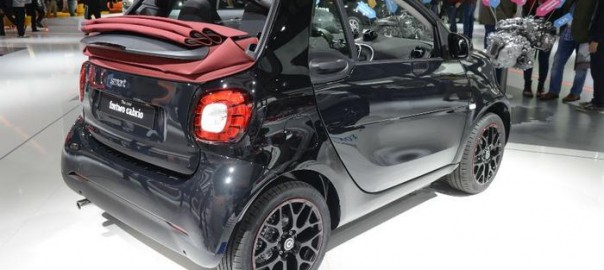
Smart unveiled its latest ForTwo Cabrio at the Frankfurt show

SMART Electric Drive | Fully Charged

This is the 260th episode of Fully Charged and just possibly, the very first proper, informative and clear car review. This is very much down to the talent and experience of Jonny Smith, his first time on the series (but definitely not the last).

After watching this, I know I have to up my game, I’m so thrilled Jonny could do this show with us and I’m really intrigued to hear your reaction.

Thank you Smart for flying Jonny and Mark out to Toulouse and organising the cars.