Category Archives: Electric Cars

News and reviews of the latest electric cars (full electrics and plug-in hybrids).

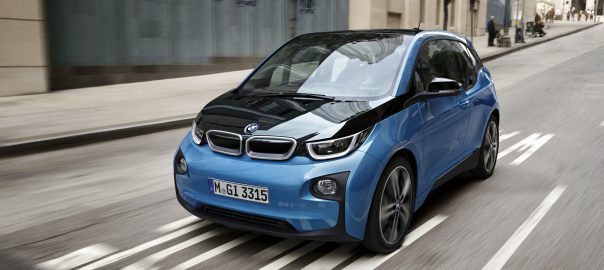
Why BMW’s i3 is the ideal city car

Believe it or not the BMW i3 was unveiled back in 2013, long before Brexit dominated the news, and the presidency was just a glint in Trump’s eye. But despite that, it still looks and feels like one of the most futuristic cars on the road in the UK.

Design and features

The BMW i3 was one of the first electric cars which, in our opinion, actually looks good. It’s distinctive, and looks futuristic. But it’s under the surface where the i3 really shines – it’s been designed from the ground up as an electric vehicle (unlike most other electric cars) and therefore is a lot more revolutionary than its competitors.

It’s based around a carbon-fibre passenger cell with an aluminium subframe for the suspension, motor and battery pack. This maximised the space inside, while minimising the size outside.

Tooling up for carbon-fibre construction is just the beginning of the i3’s techfest. All i3s get Bluetooth, DAB radio, iDrive Touch, cruise control, BMW Business Navigation, BMW Online, BMW Apps and Advanced BMW ConnectedDrive.
You’ll also get bags of clever connected and remote features. Things like streaming music from the internet and support for sending navigation destinations direct from your phone or laptop to your i3. Or unlocking remotely with a smartphone app.

Performance

Thanks to the instant torque from the electric motor, even the i3 Range Extender with its heavy lithium battery and petrol generator will hit 62 mph in 8.1 seconds. That’s impressively swift, and especially useful when darting around in London traffic.

The i3, just like any electric car, is at its best around town. It’s quick, it’s responsive and it’s refined. Even the best combustion cars make noises, shift gears and take critical moments to respond to throttle inputs but the i3 is silent, and quick (yet also relaxing with great visibility).

When we first received the i3 we’d try to charge it at every possible opportunity, and suffered from major range anxiety. But after some time with the vehicle, we quickly became more relaxed, and would let the battery run down to around 10-percent before we plugged it in. That’s where the petrol generator comes in useful – it provides peace of mind.

Read more: T3.com
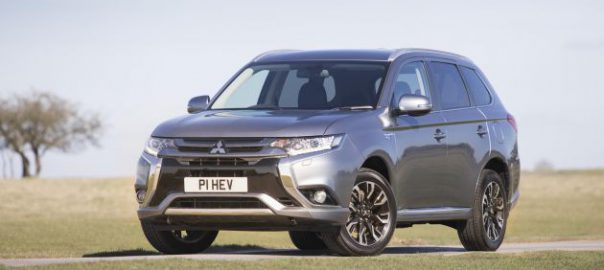
Mitsubishi announces updated Outlander PHEV Juro spec

Mitsubishi has upgraded the levels of equipment in its Outlander PHEV Juro – the one of the best value trim levels available for the UK’s best selling plug-in car.

Following on from a recent raft of revisions to the Outlander range, the Juro trim now has an electronic parking brake with auto hold, smartphone connectivity with Apple CarPlay and Android Auto, DAB added to the audio system, a reversing camera, and EV Priority mode.

The Juro trim level benefits from improved equipment levels

This last function allows the driver to hold the car in electric-only mode for as long as there is charge in the battery pack. Without the engine kicking in, it means the Outlander PHEV can be driven effectively as an EV for short distances.

The improved smartphone connectivity allows for safer driving and greater convenience. Drivers can use the phone’s voice commands and certain apps through the car, for traffic updates for example. Other features on the Juro specification include 18-inch alloy wheels, heated front seats, climate control, and Mitsubishi PHEV app for pre-conditioning capability.

The new model is available to order now, with prices staring at £33,499 after the UK Government’s Plug-in Car Grant – worth £2,500 for the Mitsubishi Outlander PHEV – has been taken off.

Source: Next Green Car

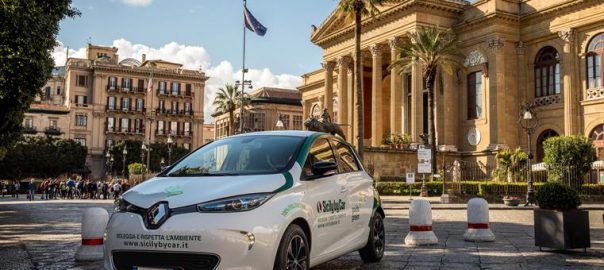
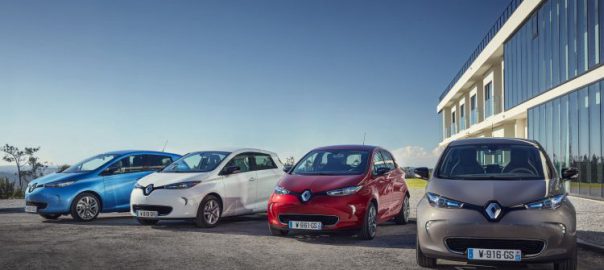
The Eco Tour Di Sicilia And Renault Zoe Help Put Italy’s Cultural Heritage Centre Stage

  • Renault signs partnership agreements with Sicily by Car and Enel, two prominent mobility players in Italy, to launch the Eco Tour di Sicilia
  • The first of its kind, the Eco Tour di Sicilia will showcase Sicily’s rich culture while protecting its environment by employing a fleet of 200 Renault ZOE

Renault today announced the signing of an exclusive partnership with Sicily by Car, a leading car rental company in Italy, and Enel, the country’s largest energy supplier, to roll out the Eco Tour di Sicilia. This initiative by Sicily by Car will make it possible to tour the whole of Sicily exclusively by electric car and will add 200 Renault ZOEs to Sicily by Car’s fleet.

The first of its kind in Italy and Europe, the Eco Tour di Sicilia aims to overcome the obstacles that hamper green mobility in Sicily, such as limited vehicle range or a lack of charging stations.

ZOE is currently the only mass-market electric car on the market to offer an NEDC range of 250 miles, equivalent to about 186 miles in real-world conditions. The eco-tour project will also deploy a network of charging stations on the island: up to 400 Enel chargers are to be installed in the region’s principal cities and along tourist itineraries. Residents will be able to use these public charging stations for their own electric vehicles. The opportunity to take a long road trip while enjoying regular access to charging points will bring unexplored freedom of movement to all-electric travel in both urban and rural settings.

Bernard Chrétien, CEO, Renault Italy said:

“By supporting e-mobility, we are enhancing and protecting the extraordinary natural, artistic and cultural heritage of which the Sicily region is such an excellent example.”

An electric vehicle is a zero-emissions[1] form of mobility and the ideal means of transport to fight the greenhouse effect responsible for global warming. Electric vehicles are also key to cleaner air and better health for city dwellers. And since they do not run on fossil fuels, they help drive the automobile industry’s energy transition.

Source: Groupe Renault

VW diesel cheating produced 1,200 premature deaths: MIT study

In September 2015, the U.S. Environmental Protection Agency revealed Volkswagen’s use of illegal “defeat device” software in its diesel cars.

The software routines allowed cars to pass emissions tests while still producing up to 35 times the legal limits of nitrogen oxides in real-world driving, setting off a scandal that is still being dealt with.

Volkswagen is proceeding with buybacks and modifications of affected cars, both in North America and Europe, but the excess pollution may have already had a significant public-health effect.

Excess emissions generated by Volkswagen diesel cars between 2008 and 2015 will cause 1,200 premature deaths in Europe, according to a new MIT study (via ScienceDaily).

Published in the journal Environmental Research Letters, the study looked only at the emissions from affected cars sold in VW’s home market of Germany, which researchers pegged at 2.6 million.

That number includes cars sold under the main Volkswagen brand, as well as Audi, Seat, and Skoda.

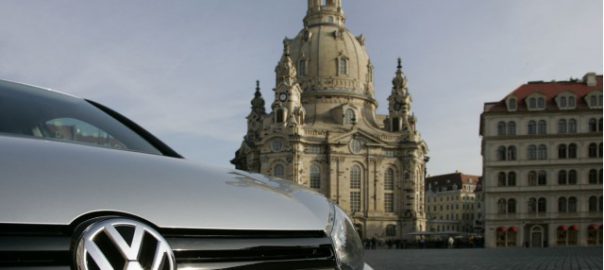
Volkswagen Golf TDI 2010

It also dwarfs the roughly 560,000 cars in the U.S. confirmed to have illegal “defeat device” software, and that are subject to settlements mandating buybacks, modifications, and restitution for owners.

While the diesel vehicles studied were sold only in Germany, their emissions affected people in other European countries, according to the study.

Of the 1,200 premature deaths predicted by the study, 500 were in Germany, while the rest were in other countries.

Read more: Green Car Reports

2017 Renault Zoe review: A cure for range anxiety

It’s just like the original Zoe, but this version of Renault’s electric car goes on and on.

Portugal, Renault, and electric cars are becoming indivisibly linked in my mind. I test drove the Renault Fluence in Lisbon in November 2011, and then the Renault Zoe a few miles up the coast in March 2013. I liked both cars, but with effective touring ranges of around 80 miles, I’d be the first to admit they had their limitations.

The latest version of the Zoe, the Z.E. 40, is an attempt to address that limitation. While the 2013 model had a 22kWh battery, the 2017 incarnation packs nearly twice as much energy: 41kWh, to be precise, with a real-world range of about 190 miles.

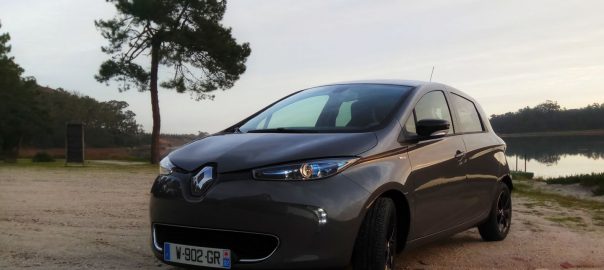
Renault ZOE (image: Ars Technica)

Same-sized battery, twice the range

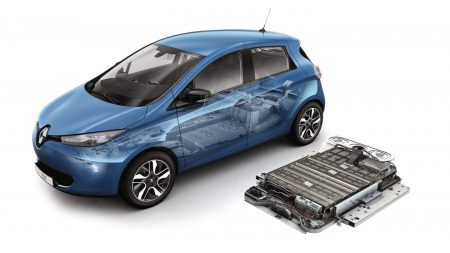
The increase in battery capacity is a pretty impressive achievement when you consider that the lithium-ion pack occupies the same space as the old unit and weighs only 15 kilos more.

Developed by LG Chem, the new battery has improved chemistry and a redesigned internal structure that has increased the active surface area within the cells by 10 percent. The individual cells are now also thicker and the empty space between them has been reduced. If that all sounds a bit vague, it’s because neither Renault or LG Chem are about to spill the really interesting technical beans.

Renault ZOE, Battery illustration (image: Renault)

The end result of fitting a higher-capacity battery is that the Zoe 40 has an NEDC-certified range of 250 miles or, as Renault freely admits, a real-world summer range of 186 miles. It reckons that figure drops to 124 miles in full-on winter running.

Fair weather notwithstanding I didn’t quite manage to hit that magic 186-mile range. On two long-distance runs that included a mix of high-speed motorway driving and energetic hustling along Portugal’s back roads, I managed to get 175 and 163 miles from two full charges.

The second run included a rapid approach into Lisbon along the A8 from Caldas da Rainha with my foot down and the Zoe bowling along at close to its maximum speed. The weather was mild during the test so the climate-control system was seldom needed, but a fair amount of night-time driving was involved. The Zoe’s headlights may be efficient but they are also dismal.

Considering that on both days of the test I found myself running behind schedule and was therefore driving in a manner that I’d politely describe as energetic, I was happy with those range numbers. Improving on them really wouldn’t have been difficult.

But as with all electric cars it’s the psychology of range that is as important as the actuality. Because each morning the Zoe 40 told me I had a minimum of around 180 miles of range rather than 90 I didn’t experience the kind of range anxiety induced by the original model.

Even when forced to double back in the middle of nowhere because of a flooded road, take a 15 mile detour, and drive down a rutted track in the pitch dark (satnavs and Portugal are not a stellar combination), my range-sphincter didn’t pucker.

Read more: Ars Technica

Cheapest electric car uk

New Renault ZOE ZE40 Prices


Warning: preg_match(): Compilation failed: invalid range in character class at offset 4 in C:\inetpub\vhosts\fuelincluded.com\httpdocs\wp-content\plugins\maxbuttons\assets\libraries\simplehtmldom\simple_html_dom.php on line 1389

Warning: preg_match_all(): Compilation failed: invalid range in character class at offset 4 in C:\inetpub\vhosts\fuelincluded.com\httpdocs\wp-content\plugins\maxbuttons\assets\libraries\simplehtmldom\simple_html_dom.php on line 694

Warning: foreach() argument must be of type array|object, null given in C:\inetpub\vhosts\fuelincluded.com\httpdocs\wp-content\plugins\maxbuttons\assets\libraries\simplehtmldom\simple_html_dom.php on line 701

Warning: preg_match_all(): Compilation failed: invalid range in character class at offset 4 in C:\inetpub\vhosts\fuelincluded.com\httpdocs\wp-content\plugins\maxbuttons\assets\libraries\simplehtmldom\simple_html_dom.php on line 694

Warning: foreach() argument must be of type array|object, null given in C:\inetpub\vhosts\fuelincluded.com\httpdocs\wp-content\plugins\maxbuttons\assets\libraries\simplehtmldom\simple_html_dom.php on line 701

Fatal error: Uncaught Error: Attempt to assign property "href" on array in C:\inetpub\vhosts\fuelincluded.com\httpdocs\wp-content\plugins\maxbuttons\blocks\basic.php:171 Stack trace: #0 C:\inetpub\vhosts\fuelincluded.com\httpdocs\wp-content\plugins\maxbuttons\classes\button.php(382): MaxButtons\basicBlock->parse_button() #1 C:\inetpub\vhosts\fuelincluded.com\httpdocs\wp-content\plugins\maxbuttons\classes\button.php(476): MaxButtons\maxButton->parse_button() #2 C:\inetpub\vhosts\fuelincluded.com\httpdocs\wp-content\plugins\maxbuttons\classes\button.php(903): MaxButtons\maxButton->display() #3 C:\inetpub\vhosts\fuelincluded.com\httpdocs\wp-content\plugins\maxbuttons\classes\maxbuttons-class.php(525): MaxButtons\maxButton->shortcode() #4 C:\inetpub\vhosts\fuelincluded.com\httpdocs\wp-includes\shortcodes.php(434): MaxButtons\maxButtonsPlugin->shortcode() #5 [internal function]: do_shortcode_tag() #6 C:\inetpub\vhosts\fuelincluded.com\httpdocs\wp-includes\shortcodes.php(273): preg_replace_callback() #7 C:\inetpub\vhosts\fuelincluded.com\httpdocs\wp-includes\class-wp-hook.php(324): do_shortcode() #8 C:\inetpub\vhosts\fuelincluded.com\httpdocs\wp-includes\plugin.php(205): WP_Hook->apply_filters() #9 C:\inetpub\vhosts\fuelincluded.com\httpdocs\wp-includes\post-template.php(256): apply_filters() #10 C:\inetpub\vhosts\fuelincluded.com\httpdocs\wp-content\themes\twentythirteen\content.php(43): the_content() #11 C:\inetpub\vhosts\fuelincluded.com\httpdocs\wp-includes\template.php(812): require('...') #12 C:\inetpub\vhosts\fuelincluded.com\httpdocs\wp-includes\template.php(745): load_template() #13 C:\inetpub\vhosts\fuelincluded.com\httpdocs\wp-includes\general-template.php(206): locate_template() #14 C:\inetpub\vhosts\fuelincluded.com\httpdocs\wp-content\themes\twentythirteen\category.php(28): get_template_part() #15 C:\inetpub\vhosts\fuelincluded.com\httpdocs\wp-includes\template-loader.php(106): include('...') #16 C:\inetpub\vhosts\fuelincluded.com\httpdocs\wp-blog-header.php(19): require_once('...') #17 C:\inetpub\vhosts\fuelincluded.com\httpdocs\index.php(17): require('...') #18 {main} thrown in C:\inetpub\vhosts\fuelincluded.com\httpdocs\wp-content\plugins\maxbuttons\blocks\basic.php on line 171